How Do You Specify a Decoiler for a Coil Line? Capacity, Type, Mandrel and Control
Most decoiler specifications get written backwards. The purchase order is drafted first, then someone hunts for a machine that fits the budget, and the coil data is filled in at the end. Six months later the mandrel is marking pre-painted stock, or the brake cannot hold back tension at 180 SPM, and the only fix left is a different machine.
This guide runs through the sequence we use when a customer sends coil data: the five numbers first, then capacity, then type, mandrel interface, control, and only after that loading, layout and spares. It is the order our decoiler range is quoted against, and it is the one that survives contact with a real press line.
On this page
- 01 Start with the coil, not the machine
- 02 Capacity: where weight and width set the ceiling
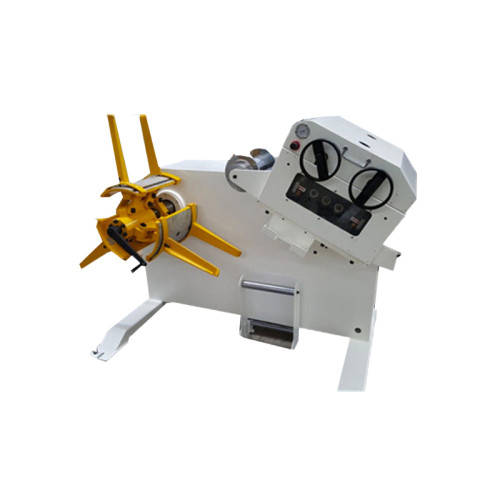
- 03 Manual, motorized or hydraulic
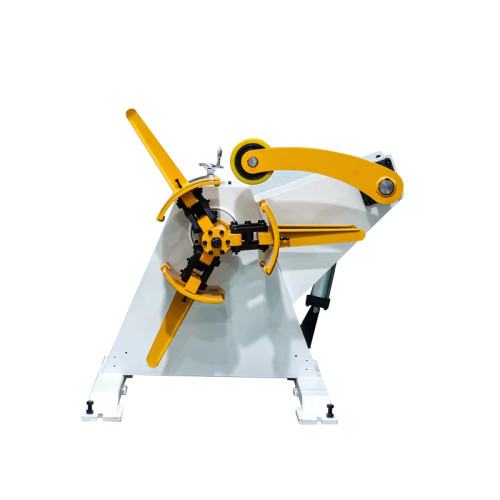
- 04 The mandrel interface
- 05 Tension, braking and loop control
- 06 Loading, threading and floor space
- 07 Where a specification goes wrong
- 08 What to put in the inquiry
- 09 Maintenance and spares before you buy
- 10 Coil handling knowledge base
Start With the Coil, Not the Machine
A decoiler is sized by the coil it has to carry, not by the press it feeds. Five numbers decide almost everything downstream, and four of them are usually missing from a first inquiry.
- Outer diameter. Sets the frame height, the mandrel centre height and the floor area the machine occupies. It also decides whether a hold-down arm can still reach the coil at full diameter.
- Inner diameter. Sets the mandrel expansion range and the number of segments. A 508 mm bore and a 610 mm bore need different mandrels. One machine can cover both, but a wider expansion ratio lowers the torque it can transmit.
- Coil weight. Sets the load rating, the mandrel section, the bearing size and the base plate thickness. This is the number most often understated, because a nominal 3-ton coil can arrive at 3.4 tons with the eye liner and strapping.
- Strip width. Sets the mandrel face length and the span between the side plates. A machine built for 1,000 mm will physically hold a 1,250 mm coil, and the overhang will bend the mandrel once load comes on.
- Thickness and grade. Sets the back tension the brake has to hold and how hard the coil wants to spring when the band is cut. HSLA 420 at 3 mm stores far more elastic energy than SPCC at 1 mm, even at identical coil weight.
| Coil number | What it sizes | Where getting it wrong bites |
|---|---|---|
| Outer diameter | Frame height, mandrel centre height, footprint | A coil that clears the frame on paper can still foul the hold-down arm at full diameter, so the operator trims it and loses material |
| Inner diameter | Mandrel expansion range, segment count | The grip goes sloppy, the coil creeps on the mandrel under brake load, and pay-off tension drifts through the shift |
| Coil weight | Load rating, mandrel section, bearings, base plate | The mandrel bows, the coil tilts, and strip starts wandering at the entry guide. Everyone blames the guide |
| Strip width | Face length, side-plate span | Overhang loads the mandrel as a cantilever. The unloaded edge lifts and the coil loses squareness |
| Thickness and grade | Back tension, brake torque, motor sizing | Too little tension and the loop collapses into the floor; too much and the strip is pulled off the mandrel instead of off the coil |
| Surface and coating | Mandrel and roll contact material | Marking shows up on the first shift, usually on pre-painted or mirror-finish stock, and it is not a setting you can adjust out |
Collect these six before you talk to anyone. If a supplier quotes without asking for them, the quotation is a price for a machine class, not for a machine that will work in your line.
Capacity: Where Coil Weight and Width Set the Ceiling
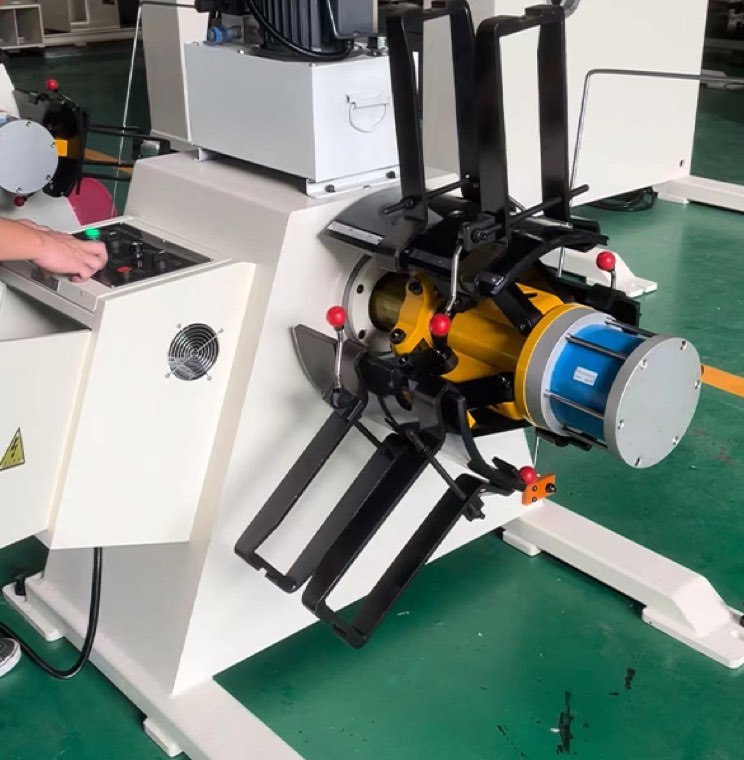
"A 5-ton decoiler" means five different things depending on who is quoting. Ask what the rating refers to: the coil mass on the mandrel, the mass on the mandrel plus the eye liner and any residual banding, or the mass the mandrel can hold at the maximum outer diameter.
The last one matters most. A mandrel loaded to 5 tons at 1,200 mm outer diameter sees a much larger bending moment than the same 5 tons at 800 mm, because the load centre sits further from the bearing. Machines are frequently rated at a mid-range diameter and then run at the top of their range.
The second ceiling is width. Frame stiffness falls with the cube of span, so a decoiler that holds 3 mm at 600 mm width will not hold the same gauge at 1,250 mm without a heavier mandrel and a wider base.
| Typical coil class | What it usually covers | Where it becomes the wrong buy |
|---|---|---|
| Light, up to 1 ton | Narrow strip, small bores, low SPM lines, job shops | Cannot absorb the shock of a heavy coil landed slightly off-centre, and has little reserve if coil weight creeps up |
| Medium, 2 to 3 tons | The mainstream of appliance and general press work | Runs at its limit with 1,250 mm wide stock, so mandrel life drops and nobody notices until the segments wear unevenly |
| Heavy, 5 to 8 tons | Automotive and thicker gauge, wider coil | Needs real floor space and a coil car. Buy the capacity but skip the loading equipment and the line stalls on every changeover |
| Heavy-duty, 10 tons and up | Wide heavy gauge, high-tonnage presses | Overkill for one-off jobs. You pay for structure you never load, and the machine is slower to thread |
If your coil mix is wide, size for the heaviest coil at your maximum outer diameter and then check the light end of the range. A machine sized for heavy coil is perfectly capable of running light coil, provided the mandrel can still expand down to the smallest bore you use.
That is the whole idea behind this guide. Every section that follows is downstream of the coil numbers, and each one narrows the choice further. The next decision is the one buyers ask about first, and the one that gets the most arguments: which drive type.
Manual, Motorized or Hydraulic: The Decision Inside the Specification
The drive type is not a quality ranking. It is a choice about which failure mode you can live with, and it belongs after the coil numbers rather than before them. A shop running one material and one gauge does not need the same answer as a shop changing coil six times a day.
Put the three options against the two things they actually change: how the coil is loaded and expanded, and how tension is controlled once the line is running.
| Drive type | What it gives you | Where it costs you |
|---|---|---|
| Manual | Lowest purchase price, no control wiring, nothing to calibrate. Expansion is done by hand with a wrench or a screw mechanism. | Changeover time is measured in minutes of operator effort, not seconds. On a light coil this is fine; on a 1.2-ton coil it is a two-person job. |
| Motorized | Powered expansion and powered rotation, so the coil is threaded and rotated by button. Speed and direction control are straightforward. | Tension control is coarser than hydraulic braking. On thin, fast strip the loop is harder to hold steady without an extra device. |
| Hydraulic | Highest expansion force and the most stable braking. Holds back tension well on heavy and high-tensile coil, and expansion pressure is measurable. | Needs a power unit, so there is oil, cooling and a service interval. The unit takes floor space and adds a heat source near the line. |
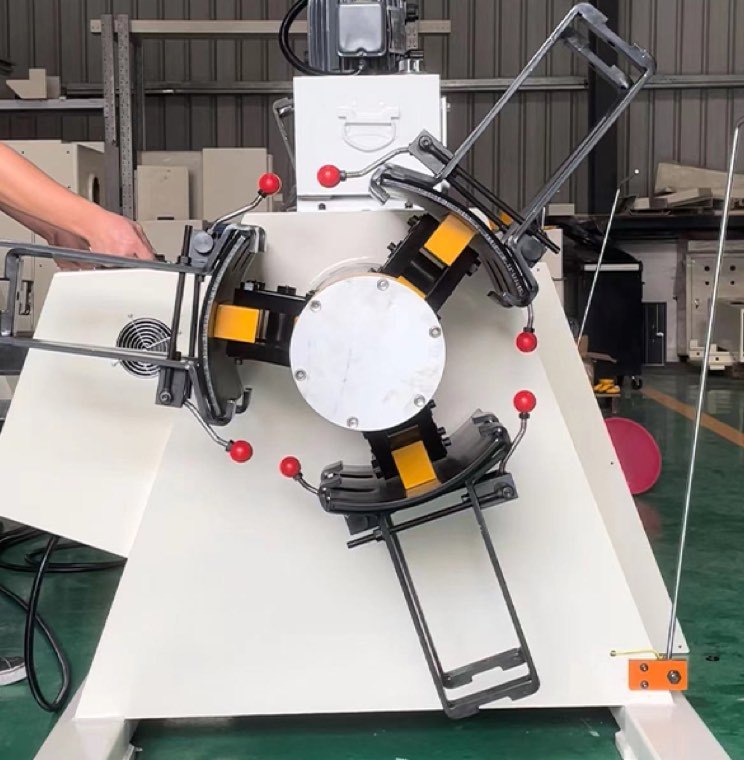
Two rules of thumb survive most comparisons. Below roughly 800 kg and one material, manual is usually enough and spending more buys nothing. Above roughly 2 tons, or wherever back tension has to be held tightly on thin strip, the extra cost of hydraulic braking is recovered from yield, not from labour.
If you want the long version of this comparison, we keep both arguments in separate guides: one on choosing between the three drive types, and one on the narrower question of hydraulic against motorized when only two of the three are realistic.
The Mandrel Interface: Bore, Expansion and Grip
The mandrel is the only part of the machine that touches the material, and it does its job through friction. Torque passes from the mandrel segments into the coil bore, and that joint has to hold while the line pulls strip off at running speed.
Grip fails for three reasons, and only one of them is "not enough pressure". The first is bore roundness. A coil that has been stored on its side, or banded unevenly, is not circular, so some segments touch and others do not.
The second is oil. Coil bore surfaces carry a light mill oil on most cold-rolled stock, which cuts the friction coefficient roughly in half. The third is wear. Segment faces flatten with use, contact area rises, and pressure per unit area quietly falls.
- Check the expansion range against your real bore spread, including the smallest bore you run. A mandrel that barely reaches the small end has almost no reserve grip.
- Measure expansion pressure, not just expansion travel on any hydraulic machine. Pressure is what tells you grip is still there after two years of segments wearing in.
- Plan for oil. If bore gripping keeps slipping, the answer is a segment profile or liner that tolerates oil, not a higher pressure setting that dents the bore.
This is also where surface-critical work gets decided. Every segment edge is a contact point, and on pre-painted or mirror-finish strip the bore is usually the least of your problems because the outer wraps take the marking instead. If that matters, it has to be raised before the machine is specified, not after.
Tension, Braking and Loop Control
Brake torque is the number that decides whether the line runs smoothly at speed or fights itself. It is not a large figure in absolute terms, and that is exactly why it gets treated as an afterthought.
Size it from the strip, not from the coil. The brake has to resist the pull the line applies to the strip, and the tension that matters is set by the strip width and thickness rather than by coil mass. A 300 mm wide, 1 mm strip running at 20 kN of tension requires a fraction of the torque a 1,250 mm wide, 3 mm strip needs at the same tension per unit area.
A single worked example makes the point. Take a 1,000 mm wide, 1.5 mm SPCC strip held at a modest 25 N/mm², which is around 38 kN of strip tension. On a decoiler with a 300 mm coil radius, that is roughly a 11.4 kN·m demand at the mandrel. Nearly every failure we see starts with a brake sized from a coil weight figure instead of this calculation.
Loop control is the second half of the same problem. Without it, the brake and the line pull against each other, and the strip oscillates between slack and tight. A dancer arm or a loop sensor closes that gap by telling the brake what the line is actually doing.
Over-run is the third symptom and it is often misdiagnosed as a brake fault. When a heavy coil is braked hard and stopped quickly, the coil keeps turning on the mandrel. That is a grip problem, not a brake problem, and increasing brake pressure makes the mark it leaves worse.
Loading, Threading and Floor Space
Floor space is usually the last thing checked and the first thing that causes trouble. A decoiler needs its own footprint plus a loading envelope, and the envelope is bigger than the machine.
Start with the operating radius. The coil at maximum outer diameter defines a circle around the mandrel centre, and nothing structural can sit inside it. Then add the loading path: how the coil arrives, and which side of the machine it has to clear.
There is also the exit side. Strip has to leave the machine at a workable angle, and the distance to the next stage sets how much loop there is to control. Squeeze the machine against a wall and the loop gets short at exactly the moment tension becomes hardest to hold.
- Coil car or crane. Above roughly 1 ton, hand loading stops being practical. A coil car is a separate purchase with its own footprint, travel distance and pit depth if it runs below floor level.
- Threading. Opening the coil, removing the band and feeding the first wrap by hand is the most hazardous step in the cycle. Plan where the operator stands before the machine is positioned, not after.
- Service access. Mandrel segments, brakes and bearings all need access from one side. A machine pushed flush to a wall saves a metre and costs an afternoon on every repair.
- Changeover route. The distance from coil storage to the mandrel is a changeover cost. On a line changing coil six times a day, five extra metres is measurable time.
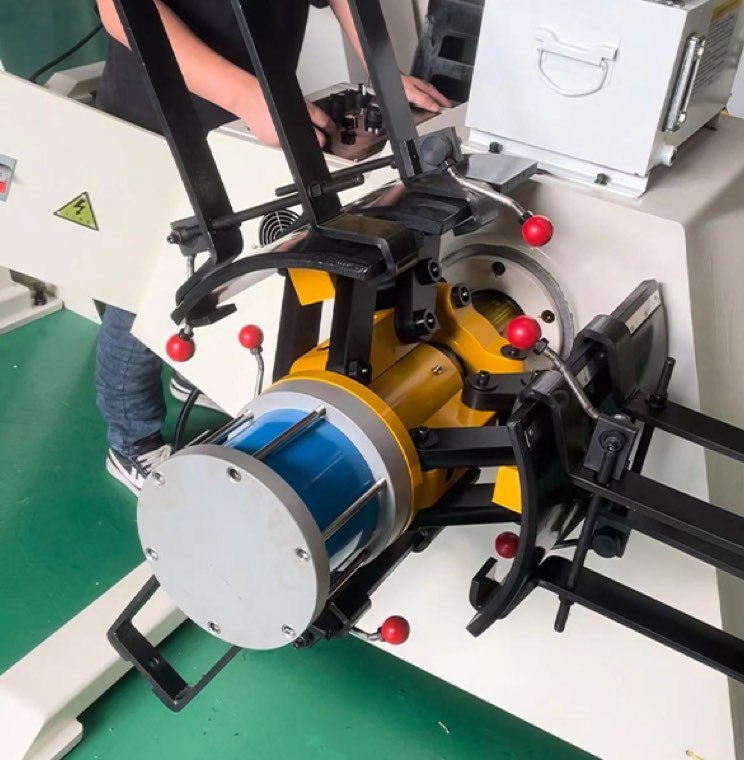
Two of our guides go deeper on this stage: one on choosing a coil car and one on how much floor space a coil line really needs, including the clearances that are easy to forget. For the safety sequence itself, there is a separate walkthrough on threading a coil safely.
Where a Specification Goes Wrong
A good specification says what the machine will do. A better one says what it will not do, and under which conditions. The rows below are the cases where we have seen a properly sized decoiler still turn out to be the wrong answer.
| Your situation | Where the specification is limited | What to look at instead |
|---|---|---|
| Pre-painted, coated or mirror-finish coil | Every mandrel segment and every guiding surface is a marking risk, and the outer wraps take it first. This is a contact-material problem, not a setting | A machine specified with non-marking segment faces and lined guides from the start |
| Very thin gauge, 0.2 to 0.3 mm | Thin strip needs high tension to stay flat and low contact pressure to stay unmarked. Those two pull in opposite directions | A line where tension is set by a separate device rather than by mandrel friction alone |
| One material, one gauge, no changeover | Most of the value of powered expansion and auto-centring is changeover time. With no changeovers, that value never gets collected | A simpler machine at lower cost, sized correctly on capacity |
| Mixed bores below 400 mm | Small bores reduce contact area sharply, so grip has to come from pressure. That raises the risk of bore deformation on thin-walled cores | A mandrel with a dedicated small-bore sleeve rather than one expanded mandrel covering everything |
| Coil wider than about 1,250 mm at heavy gauge | Width and weight load the same structure. The cantilever grows and frame stiffness, not motor power, becomes the ceiling | A wider-base machine, or splitting loading from pay-off to shorten the loaded span |
| Very high SPM on thin strip | At speed the loop has less time to correct. Brake response, not brake torque, becomes the limiting factor | A closed-loop tension system with fast response, and a shorter distance to the next stage |
There is one more caveat that applies to our own figures as much as anyone's. The capacity classes, changeover times and tension values in this guide describe typical machines against typical coil data. Change the bore, the outer diameter or the grade and the numbers move. Use them to frame the conversation, then confirm against the machine drawing for your own coil.
Two conditions also sit outside what any decoiler can fix. Coil that arrives badly wound, with telescoping or edge damage already present, will keep causing problems no matter how the machine is set.
Coil stored on its side for months takes a set that shows up as a flat spot in the strip, and the line behind the decoiler cannot remove it. Both are storage and handling questions, and both are cheaper to fix upstream than at the machine.
What to Put in the Inquiry
A quotation is only as good as the data behind it. Send these and you will get a machine specification rather than a price for a machine class, and you will get it on the first reply instead of the third.
- Coil range, not a single point. Minimum and maximum outer diameter, minimum and maximum inner diameter, minimum and maximum weight. The spread tells us how much expansion range and capacity reserve the mandrel needs.
- Strip range. Width and thickness at both ends, plus the material grades. SPCC, SPHC, HSLA 340/420 and SUS304 behave differently on the mandrel even at identical dimensions.
- Line conditions. Running speed in SPM, required strip tension if it is already known, and the distance from the decoiler to the next stage. Distance sets the loop.
- Changeover frequency. Coils per shift and how many different materials per week. This single answer decides whether powered expansion and auto-centring earn their cost.
- Site constraints. Available floor area, ceiling height, power supply, and whether a pit is acceptable. These rule machines in or out before any technical comparison starts.
- Surface requirements. Say it explicitly if the material is pre-painted, coated or finish-critical. It changes contact materials and cannot be retrofitted cheaply.
If you are still unsure how the machine will be matched to the rest of the line, there is a dedicated guide on matching the decoiler to the equipment downstream. Two related sizing questions come up often enough to have their own pages: how much coil weight a decoiler can actually carry and how to pick the mandrel size for your bore range.
Maintenance and Spares Before You Buy
The spares question belongs in the specification, not in the third year of ownership. Three items wear predictably, and their lead times should shape what you keep on the shelf.
Mandrel segments wear first, because they carry every load cycle. Wear is even and slow when the machine runs one bore size, and uneven and fast when it runs a wide spread. Ask for the segment part number and the expected life in load cycles at your coil weight.
Brake friction elements wear second. Their life depends on how much work the brake does, which is a function of coil radius and running speed rather than of calendar time. A brake that is correctly sized lasts far longer than an oversized one, because an oversized brake spends its life working at a fraction of its range.
Bearings and seals wear third, and both are sensitive to how well the mandrel is kept clean. Strip debris and mill scale around the mandrel face accelerate seal wear more than running hours do.
We keep separate maintenance guides for the two drive types: a service routine for hydraulic machines, a maintenance schedule you can actually hold to, and a troubleshooting guide for brake problems on motorized machines. For symptoms that show up as line behaviour rather than machine behaviour, start with the common decoiler problems guide.
Coil Handling Knowledge Base
This page is the hub for the coil handling and decoiling stage. Every guide below deals with one decision inside that stage, and each one links back here. They are grouped the way the work actually happens: the machine itself, then the coil going on, then keeping it running.
1. Sizing and machine selection
Capacity, width, drive type and head count. These decide what the machine is before anything else is discussed.
- Sizing a decoiler for a coil processing line
- Sizing a decoiler for your own coil
- How much coil weight a decoiler can carry
- How much motor power a heavy-duty machine needs
- Choosing the right coil width
- Manual, motorized or hydraulic: which type
- Hydraulic or motorized: choosing between two
- Single-head or double-head
2. Getting the coil onto the mandrel
Bore, grip, balance and the loading sequence. Most coil-handling incidents happen inside this group.
- How the mandrel grips a coil
- Selecting the right mandrel size
- Running mixed coil inner diameters
- Adjusting for different inner diameters
- What causes the coil to slip
- Balancing coils on the mandrel
- Which way the coil eye should face
- Threading a coil safely
- Loading a heavy coil
- Loading coils safely on a hydraulic decoiler
3. Keeping the coil stable while it runs
Tension, braking and the ways a coil misbehaves once the line is at speed.
4. Installing, maintaining and laying out
The work either side of the purchase: commissioning, spares, troubleshooting and floor space.
- Maintaining a hydraulic decoiler
- A maintenance schedule you can hold to
- Fixing common brake problems
- Common decoiler problems and their fixes
- Installing a decoiler machine correctly
- How much floor space the line needs
- Choosing a coil car
- What auto-centering actually saves
- Matching the decoiler to the line behind it
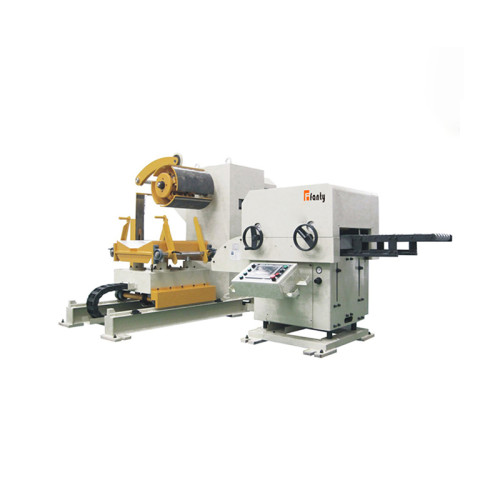
Looking at a specific coil weight, bore or grade? Send the numbers through the inquiry form and we will size the machine against your actual data. Our decoiler range lists the standard configurations if you already know what you need. For the wider picture of how the decoiler fits a coil-fed press line, start with the the coil line guide library.
Questions That Come Up in Every Quote
At what coil weight does a manual decoiler stop being practical?
Around 800 kg on a machine that is changed over more than twice a shift. Below that, hand expansion costs a few minutes a day and nothing else. Above roughly 1.5 tons it stops being a one-person task at all, and the risk is to the operator rather than to the schedule.
How much brake torque does a decoiler need for 1,000 mm wide, 1.5 mm strip?
Work from strip tension, not coil weight. At 25 N/mm² of strip tension the pull is about 38 kN, and on a 300 mm coil radius that asks for roughly 11.4 kN·m at the mandrel. Confirm against the machine drawing, because the same strip asks for about twice that torque when the coil is nearly spent.
Can one decoiler run coils with different inner diameters?
Yes, within the mandrel expansion range, but there is a trade-off. Covering a wide bore spread with a single mandrel lowers the grip available at the top of the range. If your mix includes bores under 400 mm alongside 610 mm, a dedicated small-bore sleeve usually beats one mandrel trying to cover everything.
What expansion pressure should a hydraulic mandrel run at?
Enough to hold torque without deforming the bore, and the setting belongs in your maintenance record rather than in a manual on a shelf. If grip is failing, the usual causes are bore roundness, oil on the bore surface, or worn segment faces. Raising pressure treats the symptom and marks the bore.
What should be in the contract when a decoiler is quoted?
The rating condition, meaning the outer diameter at which the stated capacity applies. Without it, two quotations for a "5-ton decoiler" are not comparable, and neither one is checkable at commissioning.
Why does the strip wander at the entry guide when the coil looks fine?
Usually it is not the guide. The coil may be tilting on a mandrel that is bowing under load, or creeping because grip has fallen away. Check mandrel deflection and expansion pressure before adjusting anything on the line, because tuning the guide hides the cause and costs you a set of guide rollers.
Specification is mostly a discipline of asking the boring questions early. Coil range, weight at maximum diameter, strip tension, changeover frequency and floor area will settle more of the machine than any comparison of features. Get those five right and the rest of the line has a chance to run the way it was designed to.
Sizing a decoiler for your own coil data?
Send the coil range, strip range and changeover frequency. We will come back with a specified machine rather than a catalogue number, and we will tell you where a decoiler is the wrong answer.
Request a coil line specification