How to Prevent Coil Looping and Snaking with a Decoiler?
Every press shop operator knows the sound: the sudden slap of loose strip, the hiss of a coil edge catching, the bang when a loop collapses and the line stops. Coil looping and snaking are among the most common and most damaging faults on a stamping line, and they almost always trace back to how the coil is unrolled.
A decoiler is not just a stand that holds a coil; it is the first quality gate of your entire line. When the decoiler releases strip unevenly, the material builds slack, the strip wanders side to side, and everything downstream, including the straightener, the feeder, and the die, pays the price.
This guide explains why looping and snaking happen, how to prevent them at the decoiler, and how to build a line that feeds strip flat, centered, and under control from the first meter to the last.
Understanding Looping and Snaking: Two Different Faults
Looping and snaking sound similar but are distinct problems with different cures. Looping happens when the strip pays off the coil faster than the line consumes it, so material accumulates in a sag or a loop between the decoiler and the next machine.
A common misconception is that the feeder downstream will pull the strip straight. It will not. If the strip arrives at the feeder already angled or with a loop, the feeder cannot cancel that error; it can only pass it closer to the die.
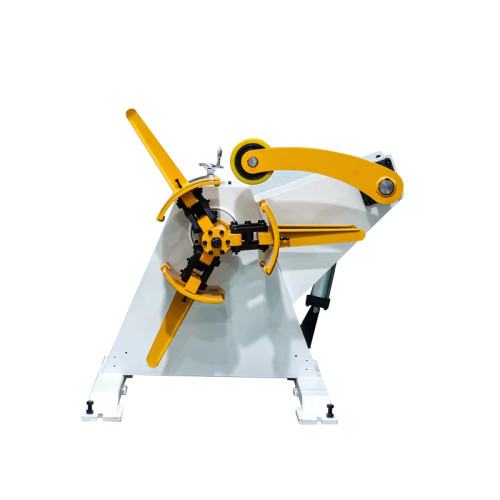
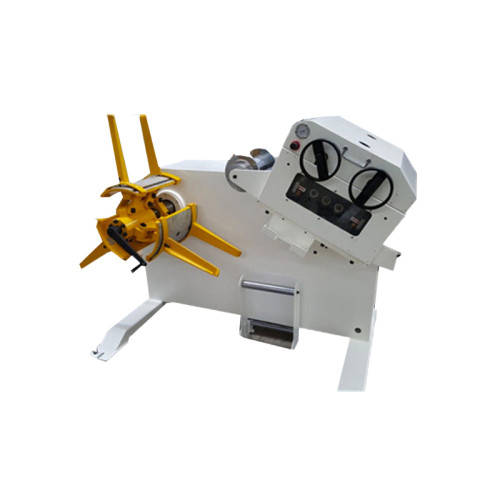
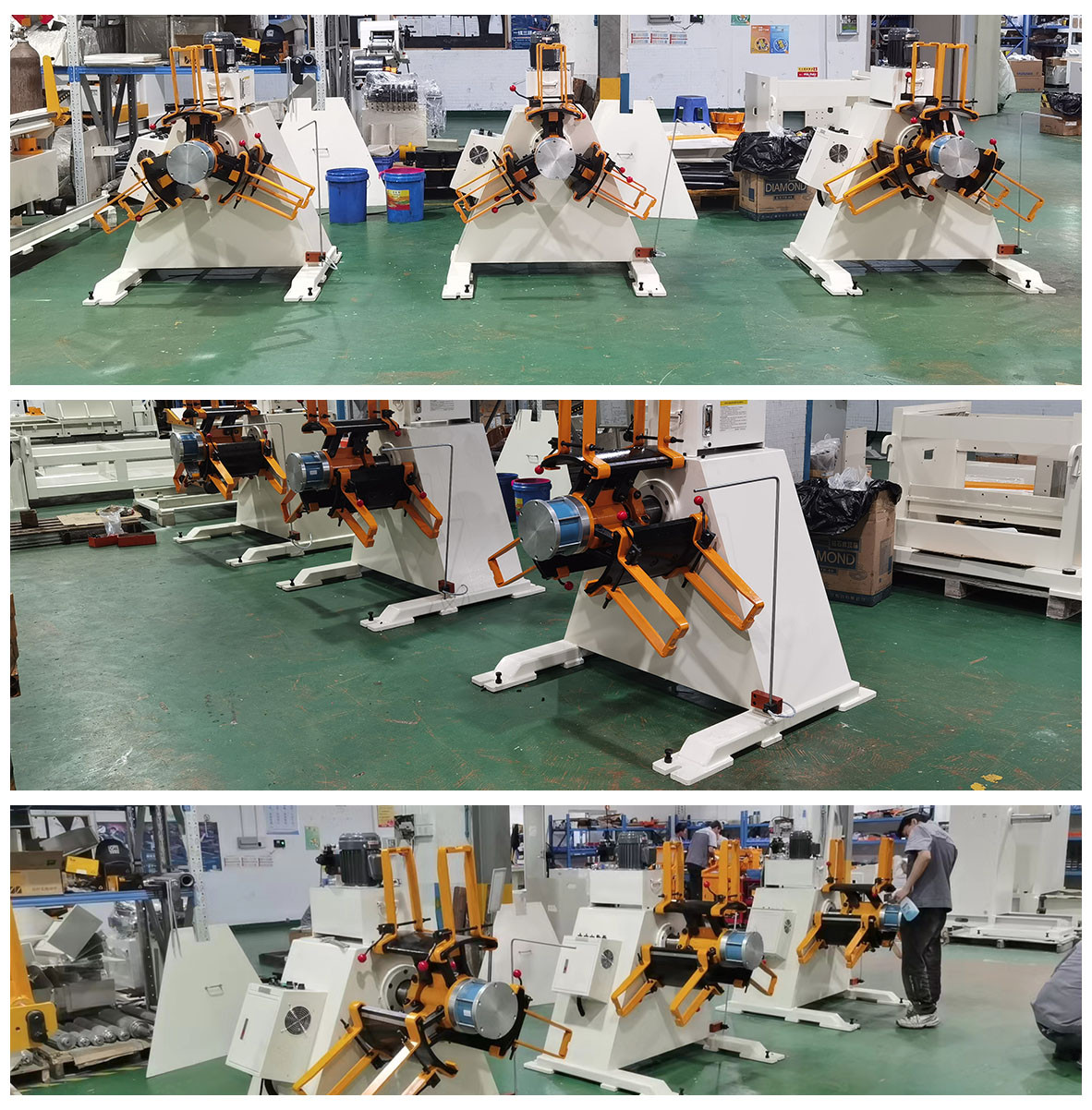
Prevention has to happen at the decoiler, which is why the design of the expanding mandrel, the guide arms, and the braking system matter so much.
A mandrel that grips the coil true to the machine centerline, guide arms that hold the strip width, and a brake or motor drive that matches line speed keep the strip flat, centered, and under tension from the moment it leaves the coil.
Five Ways to Prevent Looping at the Decoiler
The first defense against looping is correct coil loading. The coil must sit centered on the mandrel with its inner diameter expanded evenly.
The third defense is the pitfall guard or loop sensor. A sensor that monitors strip sag between the decoiler and the straightener can stop the line the instant a loop forms, protecting the material and the equipment before damage occurs. The fourth is strip guides.
Adjustable guide arms or side guides keep the strip centered and prevent the edge wander that becomes snaking further down the line. The fifth is maintenance: worn mandrel segments, dry bearings, and a sticky brake all create the uneven release that starts looping.
A monthly check of the mandrel, guides, and braking system prevents most looping problems before they cost a shift.
| Cause of Looping / Snaking | Symptom on the Line | Decoiler-Side Fix |
|---|---|---|
| Coil not centered on mandrel | Payoff speed varies every revolution | Expand the mandrel evenly against the bore |
| Brake or drive not matched to speed | Slack builds between machines | Calibrate tension to line consumption speed |
| Strip edge wander | Snaking into the straightener | Set adjustable side guides to strip width |
| No loop monitoring | Loops grow into tangles | Install a pitfall guard or loop sensor |
| Worn mandrel segments or bearings | Eccentric rotation, jerky payoff | Inspect and service monthly |
| Coil telescoped in storage | Edges uneven from the start | Store and handle coils vertically, evenly |
How the Right Decoiler Prevents Snaking Downstream
Snaking is rarely fixed by yelling at the operator; it is fixed by alignment. The decoiler, straightener, feeder, and press should all share one centerline, and the coil should be loaded so its edges run parallel to that centerline.
Material condition matters too. A coil that was damaged in transit or stored improperly may telescope, meaning the wraps slide sideways so the coil edges are no longer even.
No decoiler can fully correct a telescoped coil, but a good one contains the damage: the guide arms hold the strip width while the operator slows the line, preventing a small telescope from becoming a line-stop.
For everyday coils, the combination of a true mandrel, matched tension, and precise guides prevents the looping and snaking that eat into production time and scrap rates.
Once the decoiler is doing its job, the rest of the line has to keep the strip under control.
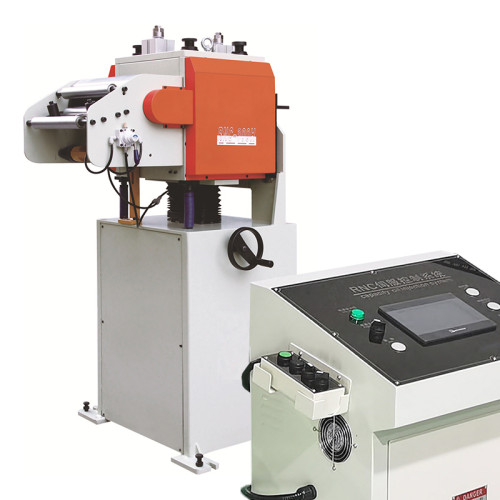
The straightening stage pulls the strip from the decoiler through staggered rolls, and if the strip arrives at the straightener already wandering, the rolls cannot re-center it; they can only pass the wander on to the feeder and the die.
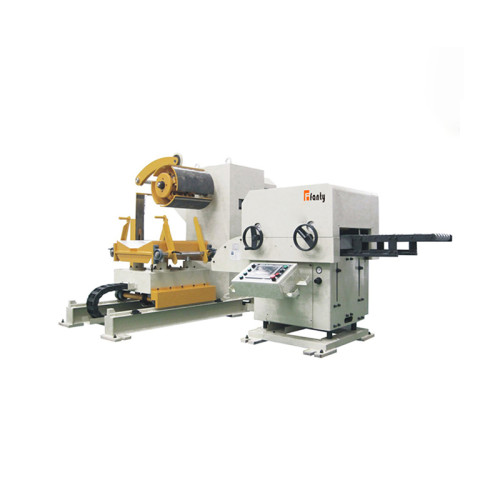
This is why FANTY engineers treat the decoiler, straightener, and feeder as one system rather than three standalone machines.
In an integrated 3-in-1 decoiler straightener feeder, the three stages share a common frame and a common centerline, so the strip is unrolled, leveled, and metered in one straight path with no gaps for loops to form and no offsets for the strip to follow.
For shops that already have separate machines, the fix is alignment: the decoiler exit, the straightener entry, the feeder, and the press bolster must all sit on the same centerline, and the operator should verify this after every machine move.
A strip that leaves the decoiler centered, travels a straight path, and enters an NC Straightener Feeder square will not snake, and a line that cannot snake will not loop.
- Load every coil centered on the expanding mandrel, gripping the full bore evenly.
- Match decoiler braking or drive tension to the line's consumption speed.
- Set side guides to the strip width so edge wander cannot start.
- Keep a loop sensor or pitfall guard between decoiler and straightener.
- Align decoiler, straightener, feeder, and press on one centerline.
- Inspect the mandrel, guides, and brake monthly before problems appear.
Decoiler Operation FAQ
Why does my strip loop even when the decoiler is new?
Looping is usually a setup issue: the coil may be loaded off-center, the brake tension may be too low, or the line speed may have changed without adjusting the decoiler. Check the coil position, then the tension, then the guides in that order.
What is the difference between looping and snaking?
Looping is excess material accumulating vertically between machines because payoff is faster than consumption. Snaking is the strip wandering sideways because it is not centered or not aligned to the line. Both start at the decoiler and both damage material downstream.
Can a decoiler fix a telescoped coil?
No decoiler can restore a telescoped coil to perfect edge alignment, but a good one with adjustable side guides contains the damage so the line can run slowly. Preventing telescope starts with correct storage and handling before the coil reaches the machine.
Should I choose a motorized or brake-type decoiler?
For heavy coils or high-speed lines, a motorized decoiler with controlled tension tracks line speed smoothly and prevents the surges that cause looping. For lighter, slower lines, a well-adjusted brake decoiler is simpler and very reliable. Match the choice to your coil weight and line speed.
Related reading
- how a decoiler mandrel grips a coil
- what causes coil telescoping
- how to specify a decoiler for a coil line
Part of the the coil line guide library — the full library of coil handling, straightening and feeding guides from FANTY.
Stop Looping and Snaking at the Source
Get a decoiler engineered to hold coils centered and strip under control, from FANTY's 45,000 m² factory.
Request a Quote