How Much Motor Power Does a Heavy-Duty Decoiler Need?
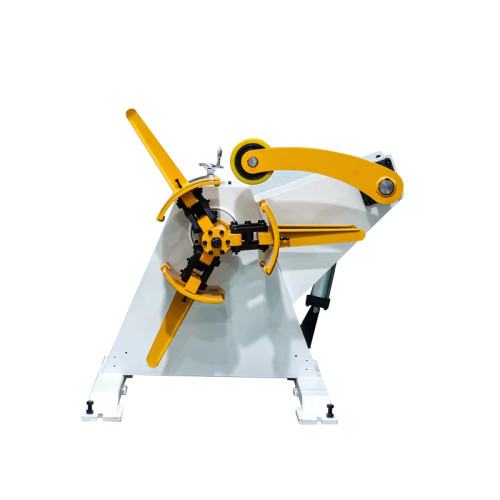
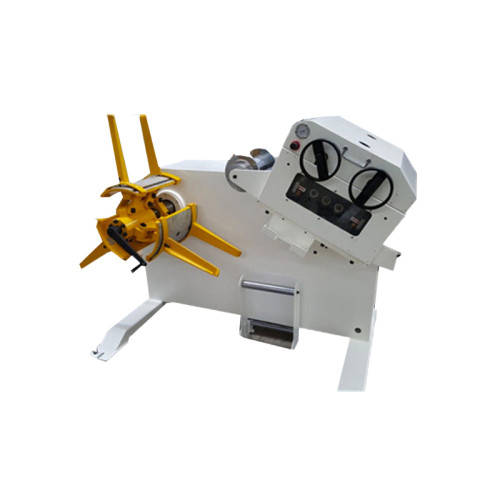
Ask three suppliers to quote a heavy-duty decoiler for the same 10-tonne coil and you may get three different motor sizes, each defended with confidence. That is because coil weight alone does not set the motor — strip tension, coil inertia, and how often the line stops and starts do. A motor that is too small stalls on a thick strip pull or overheats across a shift; one that is too large wastes energy and inflates the frame, the price, and the floor load. This guide lays out the sizing logic behind a motorized decoiler — the coil feeding range on our product index covers the machines we build — so you can check any quote against physics instead of marketing.
Torque, not horsepower, is the number that matters
What the decoiler motor really delivers is torque at the mandrel: the turning force that pays out strip under tension while it also accelerates the rotating mass of coil, mandrel, and gearbox. Horsepower is just torque multiplied by speed. On a line running at a constant moderate speed, the steady-state torque demand comes from strip tension — the pull the downstream straightener feeder or press feeder creates. Thicker strip and higher-strength material need more tension to stay flat and feed cleanly, and that tension is reacted directly at the mandrel.
The bigger surprise for most buyers is inertia. Starting a full coil from rest — or re-accelerating it after every die jam, coil splice, or operator stop — demands torque that can be several times the steady-state value. A decoiler rated for continuous running at 20 m/min can stall or trip its drive if the line cycles stop-and-go all shift. When you compare motorized decoiler quotes, ask for the drive rated for the acceleration duty, not just the steady uncoiling speed.
Put a number on it and the effect stops being abstract. A 10-tonne coil at 1,200 mm outside diameter stores enough rotational energy that stopping it and re-starting it inside a few seconds is a genuine torque event, not a rounding error. That is why a properly quoted drive carries two ratings: continuous power for the steady pull, and peak torque for acceleration. If a data sheet lists only one number, ask which one it is — a machine that satisfies the continuous spec can still trip on the first re-start after a jam.
Six factors that change the motor size
Work through these factors in order and the right motor class becomes obvious. Each one either adds torque demand or it does not — and the table below shows which direction each factor pushes the specification.
| Factor | Effect on motor demand | Why it matters |
|---|---|---|
| Coil weight and OD | Raises inertia, not steady torque | A heavy full coil needs more torque to accelerate, not to unwind |
| Strip thickness and strength | Raises required strip tension | Thick or high-tensile strip resists straightening and pulling |
| Line speed | Raises power (torque × speed) | Higher uncoiling speed needs more watts for the same tension |
| Stop/start frequency | Raises peak and RMS torque | Cyclic lines overheat undersized motors even at low speed |
| Mandrel diameter and expansion | Changes the torque lever arm | Smaller effective mandrel diameter at low coil ID raises required torque |
| Downstream equipment | Sets the tension target | A straightener or loop control demands a defined pull range |
Notice what is not in that list: painted color, brand of gearbox, and the brochure headline. Two decoilers of identical rated tonnage can legitimately need different motors when one feeds a light stamping line at 15 m/min and the other pulls 4 mm strip into a heavy straightener at 30 m/min.
A worked example from the shop floor
Take two lines running the same 8-tonne coils. Line A feeds 1.2 mm mild steel into a light press at 15 m/min with long steady runs; its decoiler needs a modest motor because the tension demand is low and the coil rarely stops. Line B pulls the same coils but feeds 3.0 mm high-strength strip at 25 m/min into a straightener feeder, stopping for coil changes and die adjustments several times an hour. Line B can need roughly double the motor power — not because the coil is heavier, but because strip tension is higher, the line runs faster, and the stop/start duty is far more punishing. The same nominal "10-tonne decoiler" can therefore ship with genuinely different drive sizes depending on the job, which is exactly why quoting from coil weight alone produces the wrong machine.
Drive type: what sits between the motor and the mandrel
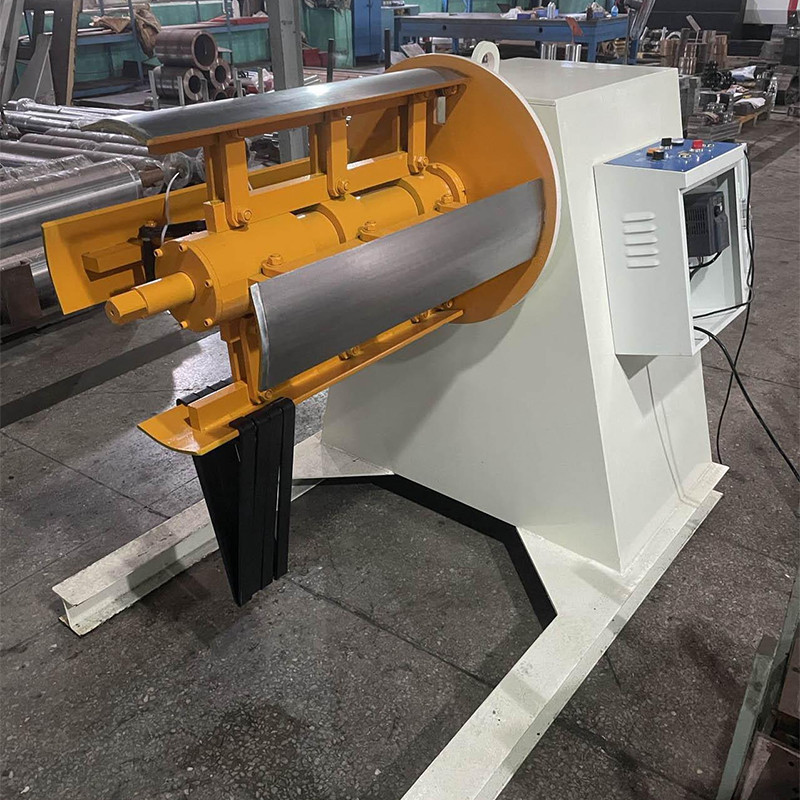
The motor is only half the story; the drive arrangement decides whether that power reaches the strip smoothly. On modern heavy-duty decoiler lines, a gear motor driven by a variable-frequency drive (VFD) is the standard: the VFD manages the acceleration ramp, holds tension through the control loop, and lets the operator dial uncoiling speed to match the press feeder. Hydraulic drives still appear on very large coils where compact torque density wins, but they bring an oil system to maintain.
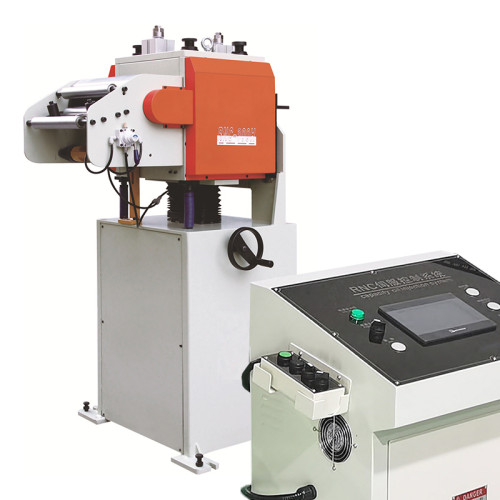
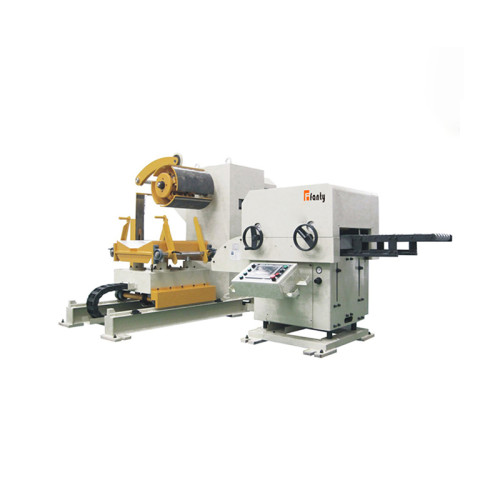
Whichever drive you choose, demand a control strategy that talks to the downstream feeder. A decoiler that merely runs at a fixed speed relies on the loop or the operator to absorb the difference, which shows up as strip flutter or snatch. The same sizing logic applies whether the decoiler feeds a standalone NC servo feeder, an NC Straightener Feeder, or the integrated sections of a 3-in-1 decoiler straightener feeder — the downstream machine defines the tension the decoiler must hold, so its motor spec has to be set against that machine, not in isolation. FANTY has built this matching into 200+ coil lines across 60+ countries, and it is why our sizing engineers always ask about your feeder before they quote a motor.
Do not forget the brake when you review the drive. The motor accelerates the coil, but something has to hold it the moment the feeder stops, and on a heavy-duty decoiler that job falls to a brake or to regenerative braking inside the drive. Ask what happens on a power loss while a full coil is still spinning — the answer separates a machine engineered for safety from one engineered for the brochure.
Five questions to put to any decoiler supplier
These five questions separate a properly engineered quote from one built around a catalogue. Write the answers into the order file — they will matter the day the machine starts.
- Is the motor sized for continuous duty at my line speed, or for intermittent duty? The rating class must match how I actually run.
- What strip tension range does the drive hold, and how is tension measured — dancer roll, load cell, or estimated from motor current?
- What is the acceleration torque from a standing start with a full coil, and how long does the ramp take? This is where undersizing fails.
- Does the control interface with my press feeder for speed and tension, or will I be tuning two machines separately?
- Ask for the duty-cycle calculation: motor class, ambient temperature, and the torque curve for my heaviest and my fastest coil.
Heavy-duty decoiler motor FAQ
Can a bigger motor fix a decoiler that stalls on thick strip?
Only if the stall comes from insufficient torque. If the line stalls because the strip cannot be pulled flat, or the loop control is fighting the feeder, a larger motor just makes the machine strain harder against a process problem. Diagnose before you upsize.
How do I know if the motor is overheating from duty, not from a fault?
Compare the motor frame temperature against the duty cycle. An undersized motor for stop-start running will climb steadily during the shift and cool only at breaks. If the enclosure is hot to the touch during normal cycling, ask for the RMS torque calculation.
Is a hydraulic decoiler better for very heavy coils?
Hydraulic drives offer compact torque at the mandrel and suit extremely large coils, but they add an oil power unit, hoses and maintenance. For most stamping lines up to heavy industrial sizes, a gear motor with VFD is simpler, cleaner and easier to control with a feeder.
Does the mandrel diameter change the motor requirement?
Yes. Torque at the mandrel equals tension times the radius where the strip leaves the coil. As the coil unwinds toward a small inner diameter, the effective lever arm shrinks, so the drive must deliver higher torque for the same strip tension at the end of the coil.
Why does my supplier quote power in kW and another in HP?
Regional convention. One horsepower equals roughly 0.746 kW. Ignore the unit and compare the torque curve and duty class instead — two motors with the same kW can have very different starting and peak torque behaviour.
Does line speed change the motor size even when tension is the same?
Yes, because power is torque multiplied by speed. Hold the same strip tension but double the uncoiling speed and the motor must deliver roughly double the power. A drive sized for 15 m/min will run hot or trip at 30 m/min even though the coil never got heavier.
Send us your coil and line data
Coil weight, OD/ID, strip width and thickness, line speed, and how often you stop — FANTY's engineers (12 years, 45,000 m² plant, 370 staff) will size the heavy-duty decoiler drive honestly, with the calculation, not a guess.
Request a Decoiler Sizing ReviewFanty · Coil Handling Equipment
From 1 to 20 Ton Coils, We Build the Decoiler to Fit
Share your coil spec sheet and we confirm hydraulic versus mechanical, single versus double head, and the expansion range that keeps changeover under five minutes.
Get a Free QuoteFANTY Machinery · 13 years on stamping automation · 2,000+ coil lines installed · engineers reply within 24 hours