How Does Auto-Centering Help a Decoiler Handle Coils Faster?
Every minute the line waits for a coil to be loaded is a minute the press is not stamping.
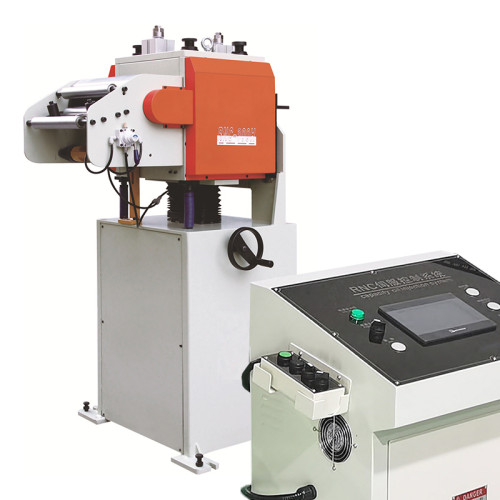
On a line feeding an NC straightener feeder, coil changeover happens several times per shift, and the way the coil is centered on the decoiler determines both how fast the changeover goes and whether the strip edge arrives at the straightener undamaged.
An auto-centering decoiler removes the guesswork from that step: the expanding head finds the coil's inner diameter, centers it, and clamps it without the operator sighting down the strip edge by eye.
This guide explains how auto-centering works, what it saves, and the situations where the extra cost is worth every cent.
The ideas here come from real coil-fed lines: progressive die shops, appliance panel lines, and electrical steel stamping cells that run multiple coil widths in a single shift. If your operators still center coils with a flashlight and a tape measure, the numbers below will show you exactly what that habit is costing.
What Auto-Centering Actually Does
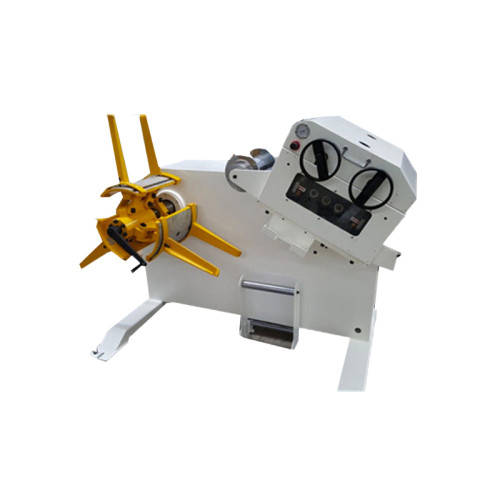
A conventional decoiler has a set of expanding segments driven by a screw or hydraulic cylinder. The operator raises the coil on a coil car or with a crane, aligns the coil's inner diameter with the collapsed head by eye, then expands the head until the segments grip the coil.
An auto-centering decoiler removes the alignment judgment. The head expands under controlled motion and uses sensors or a synchronized mechanical linkage to detect contact with the coil bore on both sides.
Expansion continues until the coil is gripped evenly, which places the coil's center line exactly on the machine center line. The operator still controls the process, but the machine does the precise part of the job every time, regardless of who is running it.
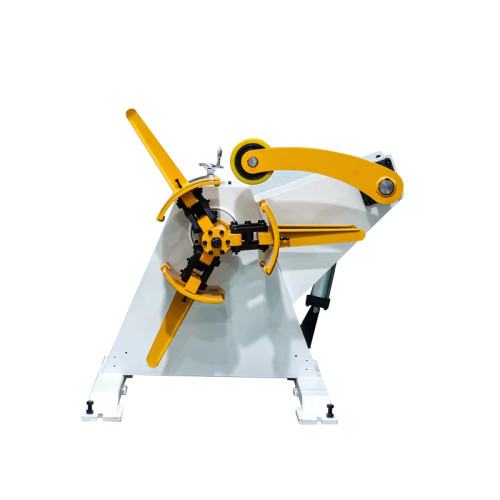
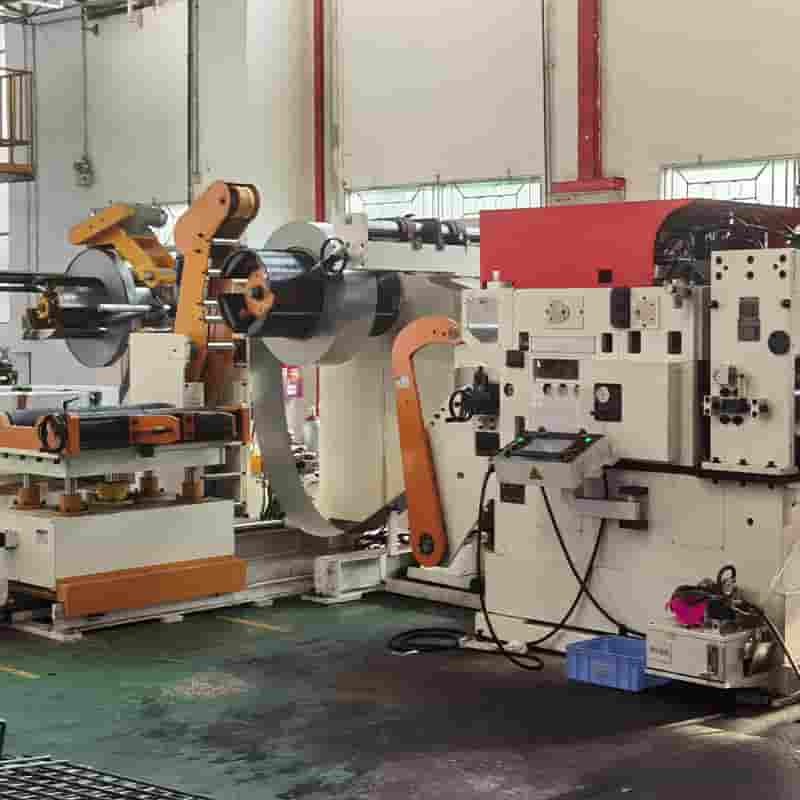 An auto-centering decoiler head gripping a coil ready for feeding.
Three Wins You Can Measure
Auto-centering pays off in three measurable ways, and the size of each win depends on how many coil changes your line does per day.
- Shorter changeover time. Operators stop fiddling with alignment and the coil is ready in one clean motion, cutting five to fifteen minutes per change.
- Fewer damaged strip edges. Consistent centering stops the strip rubbing the side plate, which is a leading cause of edge burrs and scrap at the die.
- Consistent straightener input. A centered coil feeds the NC straightener feeder on a stable line, so flatness and feed accuracy stay consistent from the first stroke.
On a line that changes coils four or more times per shift, saving eight minutes per change adds more than half an hour of stamping time per shift.
Auto-Centering vs Manual Centering: A Comparison
The table below compares the two approaches across the factors that matter most on a production line.
| Factor | Manual centering | Auto-centering |
|---|---|---|
| Time per coil change | 5-15 minutes depending on operator skill | 2-4 minutes with a coil car |
| Dependence on operator skill | High; results vary by shift | Low; consistent every change |
| Risk of strip edge damage | Moderate when alignment is off | Minimal when head sensors are set |
| Repeatability on different coil IDs | Poor; each coil is a new guess | High; the head self-adapts to the bore |
| Upfront cost | Lower | Higher by a few thousand dollars |
| Payback on a busy line | Not applicable | Often under six months |
For a shop that changes coils once or twice a day, the payback period stretches out and manual centering may be acceptable. For a line running many narrow coils or frequent job changes, auto-centering is usually the cheapest downtime reduction you can buy.
How Auto-Centering Combines with a Coil Car
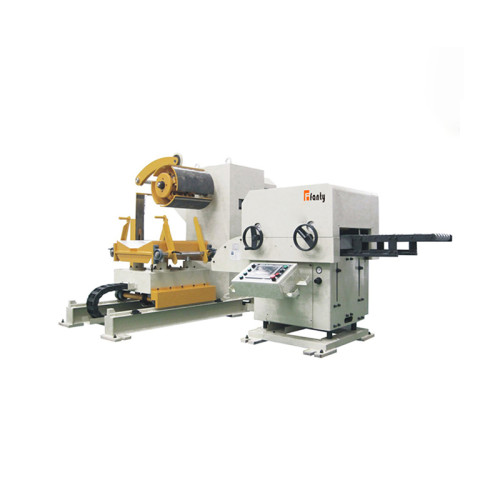
Auto-centering delivers its full value when it is paired with a coil car, the motorized trolley that lifts the coil from the floor or the storage rack and presents it to the decoiler head.
The combination also protects the coil's inner diameter. A crane lowers a coil onto a head that may be slightly off center, and the impact can dent the bore or score the strip's inner wraps. A coil car lowers gently and the auto-centering head takes the load evenly, so the first wraps stay clean.
That matters on thin materials where a damaged inner wrap becomes a break that stops the line minutes after the changeover.
Which Coils Benefit Most?
Not every coil needs auto-centering, and understanding the boundary helps you spend wisely. The benefit grows with three factors: coil width, the number of changes per shift, and the value of the strip.
Wide coils magnify alignment errors. A coil 1500 millimeters wide that is off center by ten millimeters puts a visible sideways load on the straightener entry, and the strip will snake or bow before the feeder can correct it.
Narrow coils are more forgiving of small errors but are changed more often because they hold less material, so the time saving matters more. High-value materials such as copper, brass, and electrical steel make edge damage expensive enough that the protection alone justifies the upgrade.
If your line runs one coil width all day from large coils, auto-centering is a convenience. If you run three or four widths with narrow coils, it is a production tool. Discuss your coil schedule with the equipment builder before choosing, and ask for the changeover time comparison on your actual coil mix.
Can You Retrofit Auto-Centering to an Existing Decoiler?
In many cases, yes. Auto-centering can be added to an existing motorized decoiler by replacing the expanding head assembly and adding the control elements, provided the frame and the hydraulic or screw drive have enough capacity.
Before committing to a retrofit, have the builder inspect three things: the condition of the head slide surfaces, the capacity of the drive against your heaviest coil, and the state of the sensors or limit switches that the new system will replace.
If the decoiler is already worn or under-sized for your coil range, the retrofit cost is better applied to a new machine. A reputable builder will tell you honestly which route makes sense.
Frequently Asked Questions
Does auto-centering work with coils of different inner diameters?
Yes. The expanding head has a working range, typically covering several standard inner diameters such as 300 to 520 millimeters or 450 to 610 millimeters. As long as the coil's bore is inside the head's range, the auto-centering system adapts without tooling changes.
How long does an auto-centering coil change really take?
With a coil car and an operator who knows the sequence, a change typically takes two to four minutes from press stop to strip ready for threading, compared with five to fifteen minutes for careful manual centering.
Is auto-centering worth it for one coil width only?
If you run the same width and the same bore all day from large coils, the time saving is small and a simpler decoiler may be the better investment. The feature pays when widths or bores vary during the shift.
Does the auto-centering head add maintenance work?
It adds sensors and a control sequence that need periodic checks, but the main moving parts are the same expansion mechanism as a manual head. Most builders recommend a simple sensor check during the regular maintenance schedule.
Can auto-centering prevent strip edge damage completely?
It removes the alignment-related causes of edge damage, which are among the most common. Edge damage can still occur from a damaged coil, a worn side plate, or misalignment elsewhere in the line, so it is a major reduction rather than an absolute guarantee.
Related reading
- how much coil weight a decoiler handles
- how much floor space a coil line needs
- how to specify a decoiler for a coil line
Part of the the coil line guide library — the full library of coil handling, straightening and feeding guides from FANTY.
Speed Up Your Coil Changes with the Right Decoiler
Tell us your coil widths, inner diameters, and changes per shift, and FANTY will recommend whether auto-centering, a coil car, or both will cut your changeover time the most. Every coil line we build is sized around your actual production schedule.
Get a Decoiler Sizing RecommendationFanty · Coil Handling Equipment
Let an Engineer Size Your Decoiler in 24 Hours
Tell us what your press consumes per shift and we work backwards to the decoiler capacity, coil car and control mode your line really needs. If a smaller model does the job, we say so.
Get a Free QuoteFANTY Machinery · 13 years on stamping automation · 2,000+ coil lines installed · engineers reply within 24 hours