Why Is Your Decoiler Not Working Properly? Common Decoiler Problems and Proven Solutions for Higher Productivity
FANTY Decoiler Troubleshooting Guide
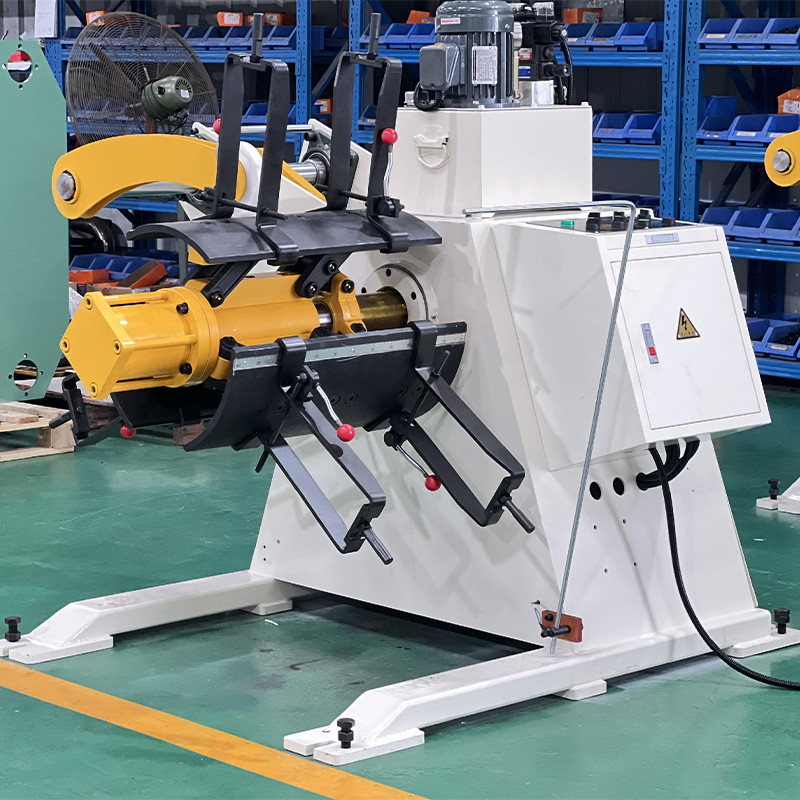
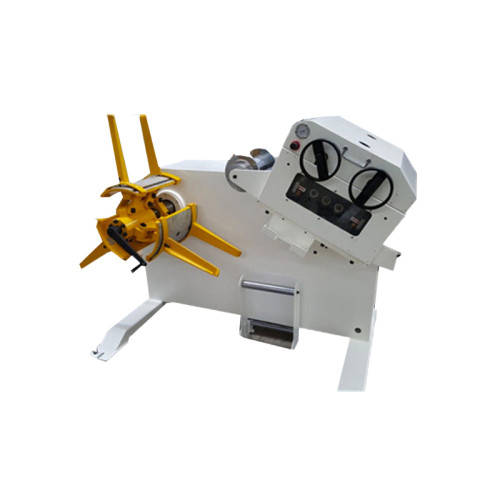
Decoiler problems can stop an entire stamping line. This guide explains the most common decoiler issues, why they happen, how to fix them, and when it is time to upgrade to a more reliable coil handling solution.
A decoiler may look simple from the outside, but in a real stamping workshop, it plays a critical role in production stability. Once the decoiler fails to release coil material smoothly, the whole line can suffer: the feeder becomes unstable, the press stops frequently, material gets scratched, and operators spend more time solving problems than producing parts.
For manufacturers using steel coils, aluminum coils, stainless steel coils, or copper strips, understanding common decoiler problems is not only a maintenance topic. It is also a productivity topic. A small issue in coil loading, tension control, mandrel expansion, or sensor detection can directly affect feeding accuracy and final part quality.
As a coil handling equipment and stamping automation solution provider, FANTY focuses on helping factories reduce downtime, improve feeding stability, and build more reliable production lines. This article explains the most common decoiler problems in practical language, with troubleshooting suggestions that production managers, maintenance engineers, and purchasing teams can use before selecting or upgrading a decoiler system.
Table of Contents
- Common Decoiler Problems Overview
- 1. Coil Not Feeding Properly
- 2. Coil Slippage on Mandrel
- 3. Coil Telescoping
- 4. Hydraulic Expansion Failure
- 5. Decoiler Motor Problems
- 6. Excessive Loop Formation
- 7. Material Surface Scratches
- 8. Sensor and Control System Failure
- Preventive Maintenance Checklist
- How FANTY Helps Prevent Decoiler Problems
- FAQ
Common Decoiler Problems Overview
Most decoiler problems do not happen suddenly. They usually start with small signs: unstable coil rotation, unusual noise, irregular loop height, material deviation, or frequent press line stops. If these signs are ignored, they may develop into serious downtime problems.
| Common Problem |
Main Cause | Production Impact | Recommended Action |
|---|---|---|---|
| Coil not feeding properly | Incorrect synchronization, tension issue, worn rollers | Press stops, inaccurate feeding, lower output | Check feeder-decoiler coordination and tension settings |
| Coil slipping on mandrel | Insufficient expansion force or wrong coil I.D. | Unstable coil release and safety risk | Adjust expansion system and verify coil specification |
| Coil telescoping | Poor coil loading, uneven winding, lack of side guide | Material damage and line interruption | Use coil keeper, pressing arm, and correct loading method |
| Hydraulic expansion failure | Low oil pressure, leakage, damaged seals | Coil cannot be fixed securely | Inspect hydraulic pump, cylinder, oil level, and seals |
| Motor failure | Overload, wiring issue, brake problem | Decoiler cannot rotate or rotates unevenly | Check power supply, motor load, reducer, and brake |
| Material scratches | Damaged rollers, dirty surface, poor alignment | Rejected parts and material waste | Clean rollers, inspect guides, improve coil path alignment |
1. Why Is the Decoiler Not Feeding Coil Material Properly?
This is one of the most common decoiler problems in stamping production. Operators may notice that the coil does not unwind smoothly, the feeder pulls too hard, or the loop between the decoiler and feeder becomes unstable.
Common symptoms
- The coil stops unexpectedly during production.
- The material moves forward with jerking or vibration.
- The feeder pulls the strip too tightly.
- The press line stops because the loop is too short or too long.
- The feeding length becomes inconsistent.
Main causes
The problem is often related to poor synchronization between the decoiler, straightener, feeder, and press machine. In many production lines, the decoiler is not working alone. It must release material according to the demand of the feeder. If the loop control, sensor position, or motor response is incorrect, coil feeding becomes unstable.
Another common cause is incorrect tension. Too much tension causes the feeder to pull against the coil. Too little tension may allow excessive looping, material shaking, or coil backlash. Worn feeding rollers, wrong coil loading direction, and poor coil centering can also create feeding problems.
How to fix it
- Check whether the decoiler rotation direction matches the feeding direction.
- Verify that loop control sensors are positioned correctly.
- Adjust the decoiler speed to match the feeder demand.
- Inspect whether the coil is centered on the mandrel.
- Check whether the straightener and feeder rollers are clean and not worn.
- Make sure the material path is straight from decoiler to feeder.
2. Why Does the Coil Slip on the Decoiler Mandrel?
Coil slippage is a serious issue because it affects both production stability and operator safety. When the mandrel cannot hold the coil firmly, the coil may rotate unevenly, shift position, or create sudden movement during unwinding.
Common causes of coil slippage
- The mandrel expansion force is not strong enough.
- The coil inner diameter does not match the decoiler specification.
- The coil is not centered during loading.
- The mandrel surface is worn or contaminated with oil.
- The coil weight exceeds the rated capacity of the decoiler.
For example, if a decoiler is designed for a coil inner diameter of 460–530 mm but the actual coil is outside that range, the mandrel may not expand correctly. If the coil is too heavy for the machine, the mandrel and frame may also experience excessive stress.
Solutions
- Confirm coil I.D., O.D., width, thickness, and weight before loading.
- Adjust hydraulic or manual expansion according to coil size.
- Clean oil, dust, and metal particles from the mandrel surface.
- Use a pressing arm or coil keeper for heavy or loose coils.
- Never exceed the rated loading capacity of the decoiler.
3. What Causes Coil Telescoping During Decoiling?
Coil telescoping happens when the coil layers shift sideways and form a cone-like shape. This problem is common with loose coils, poorly wound coils, narrow strips, thin materials, and coils that were not properly packaged or transported.
Why coil telescoping matters
Telescoping is not just a visual problem. It can damage material edges, block smooth unwinding, increase the risk of coil collapse, and cause unexpected line stops. In high-speed stamping lines, telescoping can quickly become dangerous.
Common causes
- The coil was not wound tightly by the supplier.
- The coil was damaged during transportation.
- The decoiler does not have a proper side guide or keeper.
- The coil is loaded off-center.
- The line speed is too high for the coil condition.
Recommended solutions
- Inspect the coil before loading it onto the decoiler.
- Use a coil pressing arm for loose or heavy coils.
- Add side guide devices to prevent lateral movement.
- Reduce unwinding speed for unstable coils.
- Use a coil car to improve loading accuracy and safety.
| Coil Condition | Risk Level | Recommended Decoiler Feature |
|---|---|---|
| Loose steel coil | High | Pressing arm and hydraulic expansion |
| Thin aluminum coil | Medium | Stable loop control and soft contact rollers |
| Narrow strip coil | Medium | Side guide and accurate centering |
| Heavy coil | High | Heavy-duty frame, coil car, and hydraulic mandrel |
4. Why Does the Hydraulic Expansion System Fail?
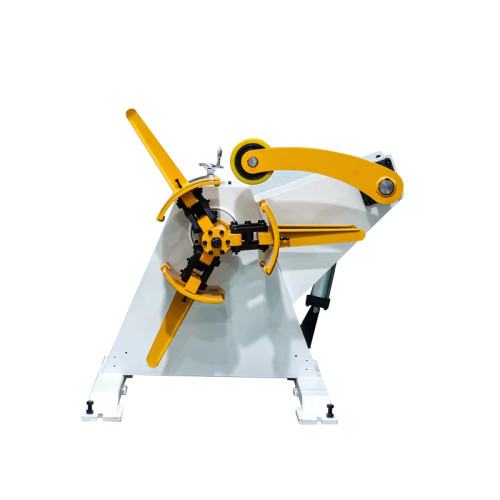
Many heavy-duty decoilers use hydraulic expansion to open the mandrel and secure the coil. Compared with manual expansion, hydraulic expansion is faster, safer, and more suitable for heavy coils. However, if the hydraulic system is not maintained correctly, the mandrel may fail to expand or hold pressure.
Common symptoms
- The mandrel cannot expand fully.
- The coil becomes loose after loading.
- Hydraulic oil leaks from the cylinder or hose.
- The pressure gauge shows unstable pressure.
- The hydraulic pump makes abnormal noise.
Main causes
Hydraulic problems usually come from low oil level, dirty hydraulic oil, damaged seals, aging hoses, pump failure, or incorrect pressure settings. In some cases, the operator may load coils that exceed the rated weight, causing long-term stress on the hydraulic system.
Solutions
- Check hydraulic oil level regularly.
- Replace dirty or aged hydraulic oil according to maintenance schedule.
- Inspect cylinders, hoses, joints, and seals for leakage.
- Confirm that the pressure setting matches the coil weight.
- Avoid overloading the machine beyond rated capacity.
5. Why Does the Decoiler Motor Stop or Run Unevenly?
Motorized decoilers are widely used in automatic stamping lines because they can release coil material more efficiently than manual decoilers. But when the motor, reducer, brake, inverter, or electrical system has a problem, the decoiler may stop, rotate unevenly, or fail to respond to production demand.
Possible causes
- Power supply instability.
- Motor overload caused by excessive coil weight.
- Brake failure or incorrect brake adjustment.
- Reducer wear or lack of lubrication.
- Loose electrical connection.
- Control signal failure from sensor or PLC.
Troubleshooting steps
- Check whether the power supply voltage is stable.
- Confirm that the coil weight is within the rated capacity.
- Inspect the motor temperature during operation.
- Check the reducer oil and mechanical transmission parts.
- Verify electrical wiring and control signals.
- Inspect the brake system and adjust if necessary.
If motor problems happen repeatedly, the issue may not be only the motor. It may indicate that the decoiler capacity is too small for your production line. In this case, upgrading to a heavier-duty decoiler may be more cost-effective than frequent repair.
6. Why Is There Too Much or Too Little Loop Between Decoiler and Feeder?
The loop between the decoiler and feeder acts as a buffer. If the loop is too short, the feeder pulls against the coil. If the loop is too long, the material may touch the floor, twist, or become scratched. Stable loop control is essential for smooth coil feeding.
Common loop problems
- The loop rises and falls too quickly.
- The material touches the floor.
- The decoiler starts and stops too frequently.
- The feeder pulls material with too much tension.
- The sensor cannot detect the loop correctly.
Root causes
Loop problems are often caused by incorrect sensor placement, poor speed matching, low motor response, or wrong line layout. If the distance between the decoiler and feeder is too short, there may not be enough space to form a stable loop.
Solutions
- Adjust loop sensor position and detection angle.
- Check whether the decoiler speed matches the feeder speed.
- Ensure enough space between decoiler, straightener, and feeder.
- Use a loop control system suitable for your line speed.
- Keep the material path clean and free from obstacles.
7. Why Does the Decoiler Scratch or Damage the Material Surface?
Surface scratches are a major concern for industries such as automotive parts, home appliances, electronics, and precision hardware. Even if the decoiler is running, damaged material can lead to rejected parts and higher production costs.
Common causes of scratches
- Dirty rollers or guide wheels.
- Sharp edges on worn mechanical parts.
- Incorrect material path alignment.
- Material dragging on the floor due to excessive loop.
- Coil edge damage before loading.
- Improper straightener pressure adjustment.
Solutions
- Clean rollers, guides, and support parts before production.
- Inspect all contact points along the material path.
- Use protective rollers for sensitive materials.
- Adjust loop height to prevent floor contact.
- Check coil quality before production begins.
- Train operators to identify early signs of surface damage.
| Material Type | Common Risk | Suggested Protection |
|---|---|---|
| Cold rolled steel | Edge burrs and surface marks | Clean rollers and accurate guide adjustment |
| Aluminum coil | Easy surface scratches | Soft contact rollers and controlled loop |
| Stainless steel | Visible surface defects | High-quality rollers and clean feeding path |
| Copper strip | Soft surface deformation | Low pressure contact and careful alignment |
8. Why Do Decoiler Sensors and Control Systems Fail?
Modern decoilers often use sensors, PLC control, inverters, and electrical cabinets to coordinate with feeders and press machines. Sensor problems may appear small, but they can create repeated line stops and unstable feeding.
Common sensor problems
- The sensor does not detect the loop correctly.
- The decoiler starts too late or too early.
- The machine stops without clear reason.
- The control panel shows inconsistent signals.
- Dust, oil, or vibration affects sensor performance.
How to solve sensor issues
- Clean the sensor surface regularly.
- Check sensor position and detection distance.
- Inspect wiring and terminal connections.
- Protect sensors from oil mist, dust, and impact.
- Calibrate sensor signals after machine relocation.
- Use reliable electrical components for long-term stability.
Root Cause Analysis: Decoiler Troubleshooting Table
| Symptom | Possible Cause | Quick Check | Long-Term Solution |
|---|---|---|---|
| Material stops suddenly | Sensor failure or loop shortage | Check loop sensor and wiring | Improve loop control and sensor protection |
| Coil slips on mandrel | Low expansion force | Check mandrel pressure | Use hydraulic expansion and correct coil I.D. |
| Coil moves sideways | Poor centering or no side guide | Check loading position | Add side guide or coil keeper |
| Material scratches | Dirty rollers or poor alignment | Inspect contact points | Use clean rollers and accurate guide adjustment |
| Motor overheats | Overload or mechanical resistance | Check coil weight and reducer | Select correct capacity decoiler |
| Hydraulic pressure drops | Oil leakage or damaged seal | Inspect oil level and hoses | Replace seals and maintain hydraulic system |
Preventive Maintenance Checklist for Decoilers
The best way to solve decoiler problems is to prevent them before they affect production. A simple maintenance schedule can significantly reduce unexpected downtime.
Daily Inspection
- Check coil alignment before production.
- Clean dust, oil, and scrap from the machine.
- Check sensor response.
- Listen for abnormal noise.
- Confirm emergency stop function.
Weekly Inspection
- Inspect mandrel expansion condition.
- Check hydraulic oil level.
- Check bolts and mechanical connections.
- Lubricate moving parts.
- Clean electrical cabinet ventilation area.
Monthly Inspection
- Check reducer, motor, and brake condition.
- Inspect hydraulic hoses and seals.
- Test sensor accuracy.
- Check frame and mandrel wear.
- Review downtime records.
Annual Inspection
- Replace worn bearings or seals.
- Inspect electrical components.
- Check machine level and alignment.
- Review whether capacity still matches production needs.
- Plan upgrades for higher automation.
When Should You Replace or Upgrade Your Decoiler?
Repair is not always the best answer. If your decoiler is too small, too old, or not designed for your current production requirements, frequent maintenance may cost more than upgrading to a better system.
| Situation | Upgrade Recommended? | Reason |
|---|---|---|
| Frequent downtime every week | Yes | The machine may no longer meet production demand. |
| Coil weight has increased | Yes | Overloading reduces machine life and safety. |
| Manual loading takes too long | Yes | Hydraulic expansion and coil car can improve efficiency. |
| Material changes frequently | Yes | More flexible adjustment improves production stability. |
| Only minor sensor issue | Not always | Repair or replacement may be enough. |
How FANTY Helps Prevent Common Decoiler Problems
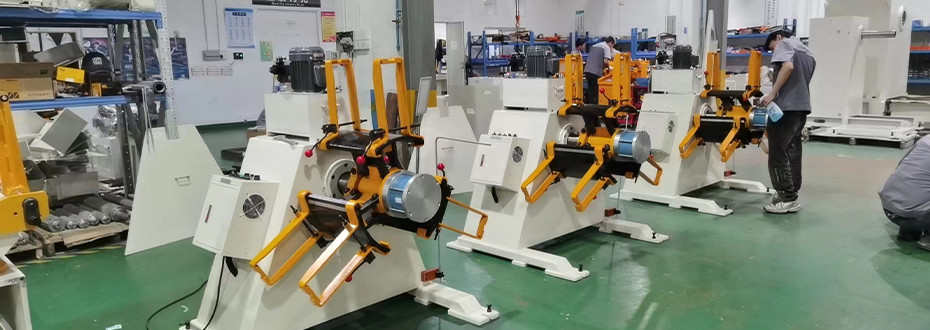
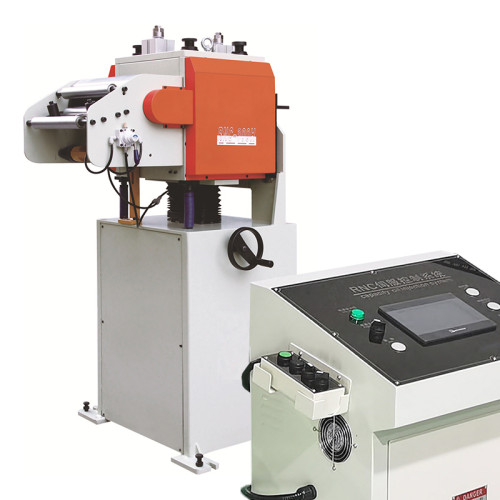
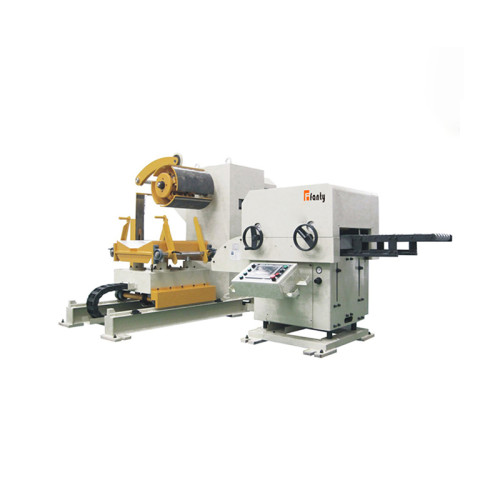
FANTY provides decoiler machines, straighteners, servo feeders, and complete coil handling systems for stamping automation lines. Our goal is not only to supply a machine, but to help customers build a stable production process from coil loading to press feeding.
Many decoiler problems come from poor machine selection. A factory may choose a low-cost decoiler without fully considering coil weight, coil width, material thickness, line speed, feeding accuracy, operator safety, and future production expansion. FANTY helps customers evaluate these factors before choosing the right model.
FANTY focuses on practical reliability
- Heavy-duty machine frame for stable coil loading.
- Manual or hydraulic expansion options based on coil weight.
- Optional coil car for safer and faster loading.
- Pressing arm and side guide options for loose or heavy coils.
- Integrated decoiler straightener feeder solutions for better synchronization.
- Customized coil handling systems for stamping, appliance, automotive, electronics, and metal parts industries.
Need Help Choosing the Right Decoiler?
Tell FANTY your coil width, thickness, weight, material type, and press line requirement. Our team can recommend a suitable decoiler or complete coil feeding solution.
Contact FANTYRecommended Decoiler Selection Checklist
Before purchasing a decoiler, prepare the following information. This helps avoid wrong model selection and reduces future troubleshooting problems.
| Information Needed |
Why It Matters |
|---|---|
| Coil width | Determines machine width, guide design, and feeding path. |
| Material thickness | Affects straightening force, tension, and machine structure. |
| Coil weight | Determines decoiler capacity and frame strength. |
| Coil inner diameter | Determines mandrel expansion range. |
| Coil outer diameter | Affects machine size and safety design. |
| Line speed | Affects motor power and loop control design. |
| Press type | Helps match decoiler, feeder, and stamping process. |
| Automation level | Determines whether coil car, hydraulic expansion, or integrated feeder is needed. |
Final Thoughts
Common decoiler problems such as unstable feeding, coil slippage, telescoping, hydraulic failure, motor issues, excessive looping, sensor errors, and material scratches can all reduce production efficiency. However, most of these issues can be prevented through correct machine selection, proper installation, regular maintenance, and reliable system design.
If your production line is losing time because of decoiler problems, do not only repair the visible fault. Look at the full coil feeding process: coil loading, mandrel expansion, loop control, feeder synchronization, material guidance, sensor detection, and operator workflow.
For manufacturers planning to improve stamping productivity, a high-quality decoiler is not an optional accessory. It is the foundation of a stable coil feeding line. FANTY can help you select a suitable decoiler machine or design a complete coil handling solution based on your real production requirements.
FAQ: Common Decoiler Problems
What is the most common decoiler problem?
The most common decoiler problem is unstable coil feeding. It is usually caused by poor synchronization, incorrect tension, sensor problems, or improper coil loading.
Why does my decoiler stop during production?
A decoiler may stop because of sensor failure, motor overload, unstable power supply, incorrect loop control, or mechanical resistance from the coil.
Why does the coil slip on the decoiler mandrel?
Coil slippage usually happens when the mandrel expansion force is too low, the coil inner diameter is incorrect, or the coil weight exceeds the machine capacity.
How can I prevent coil telescoping?
You can prevent coil telescoping by checking coil quality before loading, using a pressing arm, adding side guides, centering the coil correctly, and controlling decoiling speed.
How often should a decoiler be maintained?
Basic checks should be done daily. More detailed inspections should be completed weekly and monthly, especially for hydraulic systems, sensors, motors, reducers, and mandrel parts.
Can a decoiler damage coil material?
Yes. Poor alignment, dirty rollers, damaged guides, excessive loop, and worn contact parts can scratch or deform coil material during production.
When should I upgrade my decoiler?
You should consider upgrading when downtime becomes frequent, coil weight increases, manual loading is too slow, material changes often, or your current machine cannot match the feeder and press line.
Does FANTY provide customized decoiler solutions?
Yes. FANTY provides decoiler machines, straighteners, servo feeders, and customized coil handling systems for different stamping automation applications.