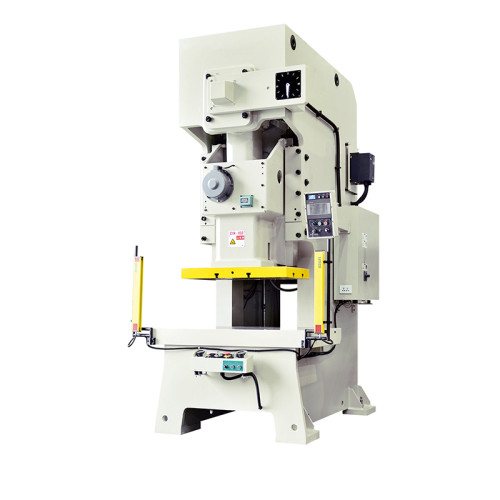
How to Load a Heavy Coil onto a Motorized Decoiler?
Loading a heavy coil onto a motorized decoiler is one of the most dangerous and most damaging jobs on a stamping floor.
A three-ton coil swinging on a crane is unforgiving: one misaligned mandrel can crush a bearing housing, one wrong clamp can telescope the coil, and one careless operator can lose fingers under a descending coil. The good news is that every step of the job can be made safe and repeatable with the right procedure.
This guide covers how to prepare a motorized decoiler before loading, how to guide a heavy coil onto the expanding mandrel, the checklist that prevents damage, and the safety rules that keep operators out of the danger zone.
FANTY has manufactured motorized decoilers and complete coil feeding lines for twelve years, with more than 200 active installations in 60+ countries from a 45,000 m² factory staffed by 370 people and 80+ R&D engineers, and the procedure below is the one we train our customers' operators on during commissioning.
What Can a Motorized Decoiler Actually Handle?
Before you load anything, know the machine's rated capacity and the coil's actual weight. A motorized decoiler is rated by maximum coil weight, maximum coil outer diameter, maximum coil width, and the range of inner diameters the expanding mandrel can grip.
The coil itself must be inspected before it leaves the storage rack. Check the coil for edge damage, telescoping (layers sliding sideways), and a loose outer wrap, because a damaged coil is harder to load and more likely to cause a crash during pay-off.
Weigh the coil if the tag is missing, and confirm the inner diameter matches the mandrel range before the crane moves anything.
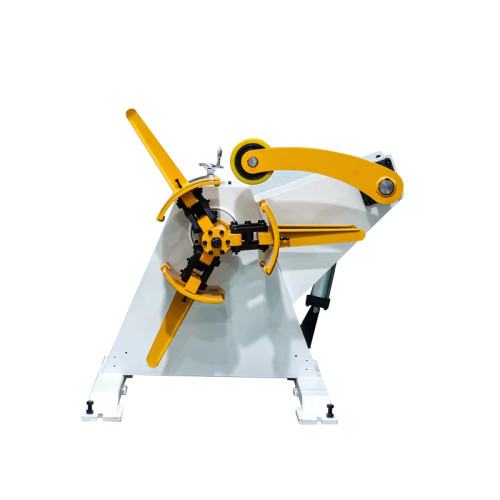
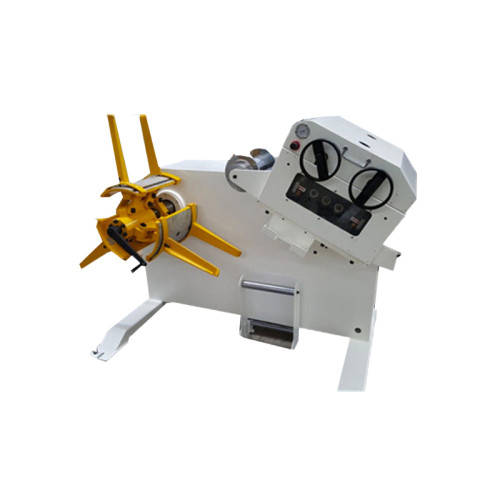
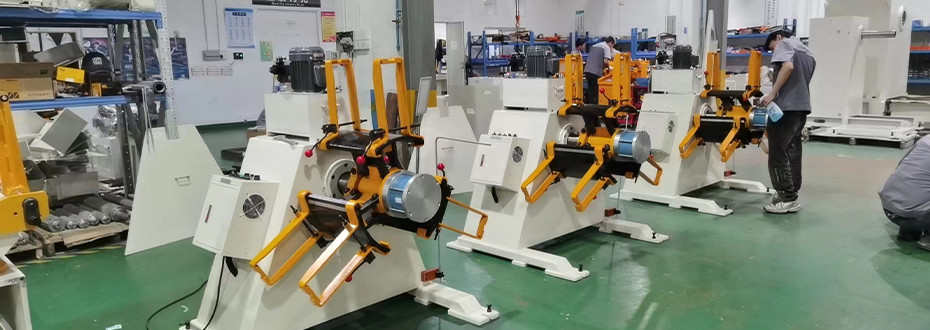 motorized decoilers assembly before shipping.
How Do You Prepare the Motorized Decoiler Before Loading?
Preparation is the step most operators rush, and rushing is where the damage happens. Work through this list in order before the crane lifts the coil.
- Check the mandrel position. Retract the expanding mandrel segments fully and confirm the coil holder arms are in the open position.
- Set the mandrel height. Adjust the decoiler (or use the coil car) so the mandrel center height matches the coil's inner bore center.
- Align the coil car. If the line uses a coil car, position it under the storage rack and center it on the decoiler axis.
- Confirm the brake is applied. Engage the decoiler brake and lock the payout so the coil cannot rotate during loading.
- Clear the danger zone. Remove loose tools, oil spills, and anyone not involved in the load from the area around the decoiler.
- Check the lifting equipment. Verify the crane, C-hook, or lifting beam rating matches the coil weight and that the slings have no cuts.
How Do You Guide a Heavy Coil onto the Expanding Mandrel?
With the decoiler prepared, the load itself is a slow, controlled sequence. The operator on the crane and the operator at the decoiler must use a standardized signal system, and the same person should call the shots every time. First, lift the coil and move it directly over the mandrel axis, keeping it as low as possible while traveling. Second, lower the coil slowly until the inner bore is level with the mandrel, then slide it forward a few centimetres. Third, guide the bore onto the mandrel tip using a wooden guide block or your gloved hands only for light nudging, never forcing the coil. Fourth, once the coil is fully on the mandrel, expand the segments until they contact the bore, then stop; the mandrel should grip evenly without over-expanding, which can crack the bore edge on thin coils. Fifth, engage the hold-down arm or coil holder to keep the coil centered, release the brake slowly, and rotate a quarter turn by hand or jog to confirm the coil spins true without wobble.
For lines that load coils frequently, a coil car removes most of the risk: the coil sits on the car at floor level, the car travels to the mandrel, and a lifting cradle raises the coil into place with no crane swing at all.
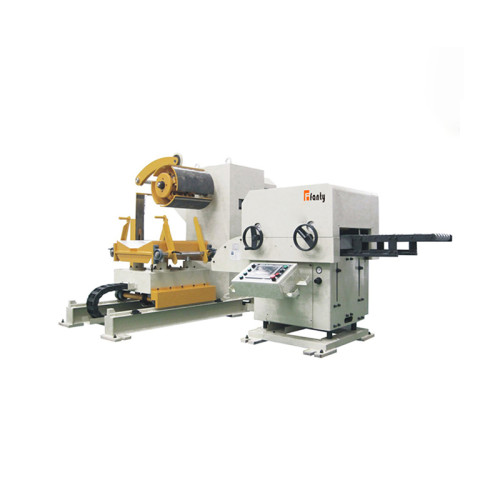
FANTY supplies motorized decoilers with integrated coil cars, hydraulic mandrel expansion, and hydraulic hold-down arms as standard options, which turns the highest-risk job on the floor into a one-button operation.
Heavy Coil Loading Checklist for a Motorized Decoiler
Print this checklist and keep it at the decoiler. Every line item is a known failure mode from real stamping plants.
| Checkpoint | What to Confirm | Failure If Skipped |
|---|---|---|
| Coil weight vs rating | Coil weight is below the decoiler's rated capacity. | Bearing and mandrel overload, structural damage. |
| Inner diameter vs mandrel | Coil bore is inside the mandrel's expanding range. | Poor grip, coil slip during pay-off, bore damage. |
| Coil condition | No telescoping, edge damage, or loose outer wraps. | Crash during loading, strip damage on pay-off. |
| Mandrel retracted | Segments fully retracted before the coil slides on. | Bore edge gouged, coil stuck on the mandrel. |
| Height alignment | Bore center lines up with mandrel center. | Bent mandrel, bearing housing damage. |
| Brake engaged | Payout brake locked before lifting. | Coil rotates during loading, operator injury. |
| Lifting equipment | Crane and slings rated for the coil weight. | Sling failure, dropped coil, serious injury. |
| Danger zone clear | No personnel near the load path. | Crush or pinch injury. |
| Expansion pressure | Segments grip evenly without over-expanding. | Bore cracking, coil deformation, slip. |
| Rotation test | Coil spins true without wobble after loading. | Snaking and vibration during production. |
What Safety Rules Apply When Loading Heavy Coils?
Safety on a coil line is a system, not a poster. The rules below are the minimum for any plant loading coils onto a motorized decoiler. First, never stand under a suspended coil and never reach between the coil and the mandrel while the crane is holding the load.
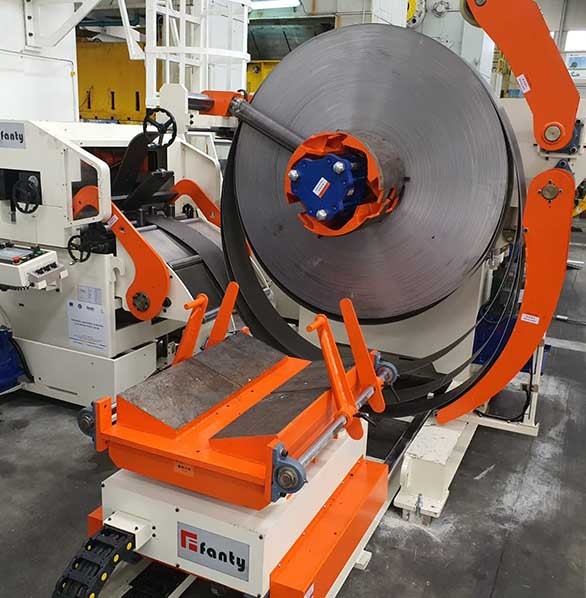 Using a coil car to load a heavy coil onto a motorized decoiler, keeping the operator clear of the load path.
Frequently Asked Questions About Loading Coils on a Decoiler
How do I know if a coil is too heavy for my motorized decoiler?
Check the rated maximum coil weight on the nameplate and compare it with the coil tag. If the coil is at 90% of the rating or above, consider a larger decoiler; running at the limit wears bearings and shortens mandrel life.
Why does my coil keep slipping on the mandrel?
Usually because the mandrel is not expanding enough for the coil's inner diameter, or the bore is oversized from previous damage. Check the expansion pressure and the bore condition; hydraulic expansion with a hold-down arm solves most slipping.
What is a coil car and do I need one?
A coil car carries the coil at floor level and raises it onto the mandrel, eliminating crane swing during loading. It is strongly recommended for coils above 3 tons or any plant that changes coils more than twice a shift.
Can one motorized decoiler handle different inner diameters?
Yes, within the mandrel's expansion range, typically 380 to 530 mm for standard models. If your coils use very different bores, order segmented sleeves or a wider-range mandrel at purchase time.
How do I prevent coil telescoping during loading?
Telescoping usually starts with a damaged coil or a misaligned load. Inspect coils before loading, align the bore with the mandrel axis, and use the hold-down arm. If a coil is already telescoped, do not load it; set it aside for edge trimming.
What maintenance keeps a motorized decoiler safe?
Weekly: check brake function, mandrel expansion, and hold-down arm. Monthly: inspect bearings, gearbox oil, and hydraulic hoses. Quarterly: verify emergency stops and guards. FANTY provides a maintenance schedule and spare-parts kit with every decoiler.
Your Heavy Coil Loading Action Plan
Loading a heavy coil onto a motorized decoiler is a procedure, and procedures are only as good as the training behind them.
Related reading
- what causes coil telescoping
- how much coil weight a decoiler handles
- how to specify a decoiler for a coil line
Part of the the coil line guide library — the full library of coil handling, straightening and feeding guides from FANTY.
Loading heavy coils safely starts with the right decoiler.
Send your coil weight, width, and inner diameter. FANTY will recommend the right motorized decoiler with coil car and safety options for your line.
Get a Decoiler Sizing