
Our Blog
NC Servo Straightener Feeder Guide
 How Does Coil Storage Position Load a Straightener?Nov 3,2026Two coils of the same grade can need completely different roll settings, and storage decides why. This compares eye-to-sky, eye-to-wall and stacked storage, shows what each leaves in the strip, explains why the loading angle decides whether the first wrap buckles, separates what a roll set removes from what it merely reduces, and names three defects no storage change can fix.
- How to Commission a 3-in-1 Straightener Feeder on SiteNov 2,2026A five-day commissioning sequence for a 3-in-1 line, in the order we run it on site, with the pass thresholds for each step. Covers foundation and supply checks, level and pass-line alignment, interlock proof tests, first-strip threading, feed length and pilot timing, and a speed ramp table that names how each test can flatter you.
- Is a Second Straightening Pass Cheaper Than a New Head?Oct 31,2026A plant running 1,800 tonnes of 1.5 mm pickled coil ran a second straightening pass instead of buying a heavier machine, and the numbers held for two years. This costs the second pass per tonne across labour, edge damage, rewind capital and floor space, then sets the result against a $96,000 machine premium. It shows why rewinding on a 508 mm core plastically re-curls 1.5 mm strip, where the break-even sits at 1,100 tonnes, and which defects neither route touches.
- What Does Roll Diameter Change Do to Flatness?Oct 30,2026A roll set was ground 0.35 mm on the radius, refitted, and produced 2.4 mm of centre buckle on the first coil. This explains why a regrind opens the working gap by twice the radius removed, works a 42 mm to 41.3 mm example on 1.2 mm SPCC, and gives a sensitivity table by strip thickness. It also names what the geometry cannot explain: crown, bearing play, residual stress and coating loss.
- Why Does Straightening Put Edge Wave in Narrow Strip?Oct 29,2026A 9-roll 3-in-1 straightener feeder left 1.1 mm of edge wave on 180 mm SPCC while the centre stayed flat, and the toolroom checked the die twice. This separates edge wave from centre buckle, runs a two-hour sequence from the coil tail to the lead wire, and shows how 12 mm of off-centre tracking and a roll crown cut for wider strip each contributed. It also explains why slit-edge wave cannot be straightened out, only hidden.
- How Much Speed Does a 3-in-1 Give Up for 0.05 mm?Oct 28,2026A bracket die asked for 45 mm of feed at 190 SPM and the line delivered the speed with 3.2% scrap. A feed trace showed 0.09 mm of error at 190 and 0.04 mm at 140, all of it in the settle window rather than in the machine. Four free setting changes recovered 35 SPM, and the article closes with a three-term formula for calculating your own ceiling.
- Is a Cassette Roll Head Worth It on a Straightener Feeder?Oct 27,2026A cassette roll head turns a two-hour gauge change into a twenty-minute one, and puts a locating joint in the middle of the most highly loaded part of the machine. This article compares the two heads on the five decisions that change a production week, names the four cases where a cassette is the wrong purchase, and works the payback from one changeover a week to eight. It also covers what a 6 mm job does to the joint and how to test one before ordering.
- How to Set Loop Height on a 3-in-1 Straightener FeederOct 26,2026Loop height takes thirty seconds to adjust and moves feed length by a few hundredths of a millimetre. This checklist covers the four settings that matter on a 3-in-1 decoiler straightener feeder: neutral height found by marking the pit wall, a sensor window of plus or minus 30 mm, a decoiler speed reference 5% to 10% above demand, and a pitch measurement at the die face. It also lists the settings that pass a visual check and fail a part measurement.
- Why Does an NC Straightener Feeder Chatter at 180 SPM?Oct 24,2026Chatter that starts at a specific speed is a measurement, not a mystery. This article separates five causes that sound identical, from an over-tight roll gap to a loose base anchor, and shows how mark spacing on the strip identifies which roll is responsible. It also explains when the noise is arriving from the press or the die rather than the machine, and the four adjustments worth making before calling for service.
- Can a Straightener Feeder Fix a Flatness Complaint Alone?Oct 23,2026Three service visits, one flatness complaint, and a line that measured inside spec every time. What the strip sample showed, what the coil brought in, and how to attribute a flatness complaint in two hours.
- How Does a Roll Change Knock the Line Out of Square?Oct 22,2026This covers the six things a roll change disturbs, the dial indicator checks that come before any gap adjustment, the order that keeps the setting, and the two-metre sample that proves it.
- Why Does Strip Curl After the Straightener?Oct 21,2026Strip curl after the rolls is the most common flatness complaint and the least often diagnosed. This separates up-curl from down-curl, explains why penetration rather than pressure is the control...
- How Much Strip Length Does an NC straightener feeder Need?Oct 20,2026The distance between the NC straightener feeder and the die is usually whatever the bay allows. It should be a calculation, because too short a span transmits straightener correction into the die.
- Which 3-in-1 Layout Fits a Tight Press Bay?Oct 19,2026Straight-through, L-shaped and side-entry differ in rigging cost, coil access and changeover time, and the cheapest drawing is rarely the cheapest installation.
- What Did a 0.1 mm Roll Gap Error Cost in Scrap?Oct 18,2026A progressive die job started rejecting on flatness, and every check on the line passed. The cause was a roll gap that had been set correctly and had drifted 0.1 mm over a week of running.



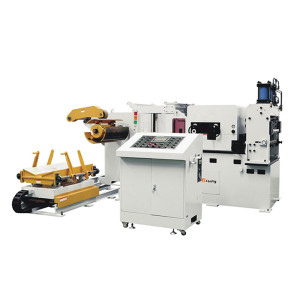
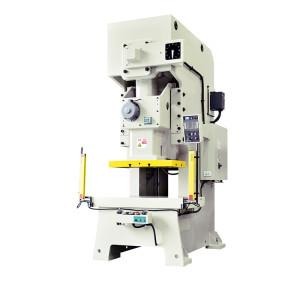
Are you looking for a reliable manufacturer of metal coil processing equipment?
subscription
Or send us messages online !
- *Phone
- *Title
- *Content