How to Prevent Coil Telescoping Damage in Your Coil Line?
Coil telescoping — the condition where the layers of a wound coil slide sideways so that one edge overhangs the next — is one of the most damaging and least understood problems on a stamping line. A telescoped coil that is loaded onto an unprotected mandrel can jam, tear, and even throw the coil off the decoiler, creating a safety hazard that no production manager wants to explain. Worse, the deformation usually does not stay in the coil: the damaged strip feeds into the straightener and the die with inconsistent geometry, causing misfeeds, die wear and scrap. Understanding how to prevent coil telescoping damage starts with knowing why coils telescope in the first place, and ends with a set of practical controls — from coil inspection at receipt to the right decoiler configuration — that protect both your material and your people.
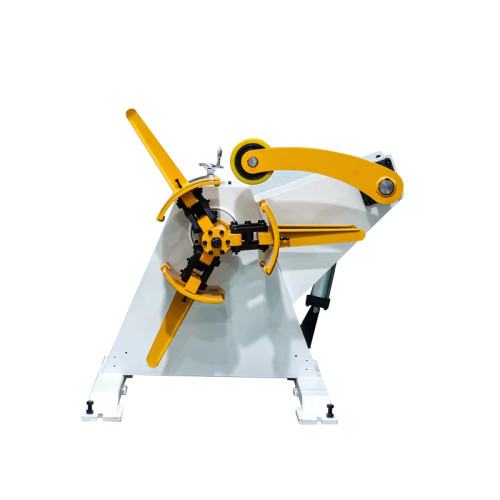
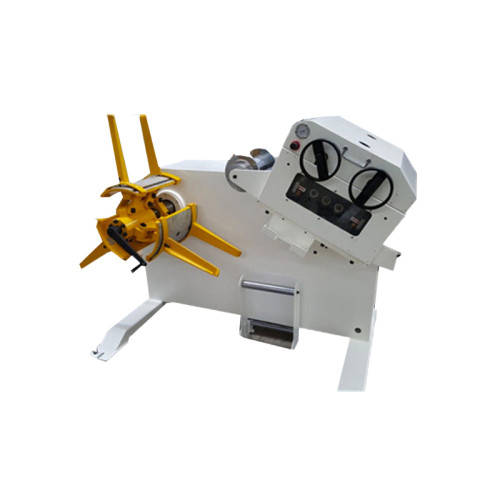
At FANTY Machinery, our decoilers handle coils weighing up to several tons every day, and we have built twelve years of field experience into their design: expandable mandrels with proper taper, edge-guide control, and loading systems that never drag the coil across the floor. This guide shares what we tell customers who call us about telescope-damaged coils, so you can catch the problem before it reaches your press.
What Telescoping Is — and Why It Escalates Quickly
Telescoping appears when the lateral forces between coil layers exceed the friction holding them together. The outer wraps slide toward the overhang side, and the coil takes on the look of a stack of progressively larger coins — hence the name. A mild telescope of a few millimeters is often cosmetic and can be tolerated, but once the offset grows past roughly 1 percent of the strip width, the problem becomes self-reinforcing: the overhanging wraps catch on anything they touch, the edge of the strip gets damaged, and the unspooling tension becomes uneven, which pulls the coil further out of shape.
The danger is highest at the moment of loading. When a telescoped coil is lowered onto a horizontal mandrel, the weight distribution is no longer centered, so the coil can rock, bind against the mandrel, or slide entirely off the sleeve if the expander does not grip the inner diameter evenly. This is why coil handling safety rules universally demand that coils be inspected and, where necessary, banded or protected before they are lifted. A coil that looks fine on the truck can be a serious hazard by the time it reaches the mandrel.

Beyond the physical hazard, telescoped strip degrades product quality. As the strip leaves the coil, its lateral position relative to the line centerline oscillates. An unguided decoiler passes that oscillation straight into the straightener, and the die sees strip that enters at an angle. Parts cut near the edge become incomplete, guides wear unevenly, and the operator compensates by slowing the line — a triple penalty of scrap, wear and lost productivity that telescopes can impose on a shop for weeks after the damaged coil is gone.
Why Coils Telescope: Root Causes to Investigate
Telescoping is rarely a random event. It has identifiable root causes, and each one points to a different fix. The most common causes we see in the field are:
- Uneven strip tension during winding — if the mill's tension varies across the width, the coil builds with a built-in bias. Thicker edges or a strip with crown always wrap at different diameters, pushing layers sideways.
- Coil stored on its side or stacked improperly — coils should rest on flat, clean surfaces, usually eye-to-the-side on cradles or pallets. Stacking coils on their flat faces or leaning them against racks distorts the winding and starts a telescope.
- Impact damage in transit — forklift contact, sudden braking in a truck, or a coil dropped even a few centimeters creates a lateral shear plane between layers. Inspect every inbound coil before acceptance.
- Worn or undersized mandrel expansion — if the mandrel does not expand to grip the coil's inner diameter with even pressure, the coil shifts during unwinding. Check the expander travel and the condition of the gripping segments.
- Overhang or side-loading during unspooling — strip that enters the straightener at an angle, or a line that pulls the strip laterally, drags the remaining coil wraps sideways as they unspool.
Notice that most of these causes are detectable before the coil ever reaches the mandrel. A disciplined receiving inspection — check the coil edge alignment, feel for steps between layers, look for banding damage, and confirm the inner diameter — catches the majority of telescoping coils while they are still easy to return to the supplier. Once the coil is on the line, the cost of the problem is already sunk; prevention has to start at the gate.
Prevention Controls: From Receiving Dock to Mandrel
Prevention is a chain, and every link matters. The table below summarizes the controls that protect coils through the four stages of handling, with the equipment features that support each stage:
| Stage | Control | Supporting equipment |
|---|---|---|
| Receiving | Inspect edge alignment and banding; reject telescopes beyond tolerance | Coil inspection station, measuring tools |
| Storage | Flat, clean surface; eye-to-side orientation; no stacking | Coil cradles, pallets, racking with clear labeling |
| Lifting | Use lifting beam or C-hook sized to the coil; never lift by the strap alone | Coil lifting beam, C-hooks, spreader bars |
| Loading | Centered placement on mandrel; even expansion before rotation | Motorized decoiler with expanding mandrel, coil car |
| Unwinding | Edge guidance to keep strip centered; tension control to avoid pulling | Edge-guide system, peeler/straightener entry table |
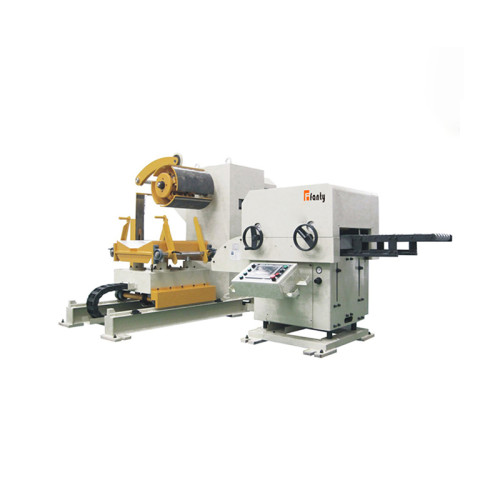
The coil car deserves special mention because it removes the most dangerous step in the whole sequence: positioning a heavy coil against the mandrel by hand or with an unguided forklift. A hydraulic or motorized coil car lifts the coil, aligns it to the mandrel axis, and feeds it forward smoothly, so the coil engages the expander concentrically. On lines where telescoping damage was a recurring theme, adding a coil car and expanding-mandrel decoiler has repeatedly cut the incident rate to zero.
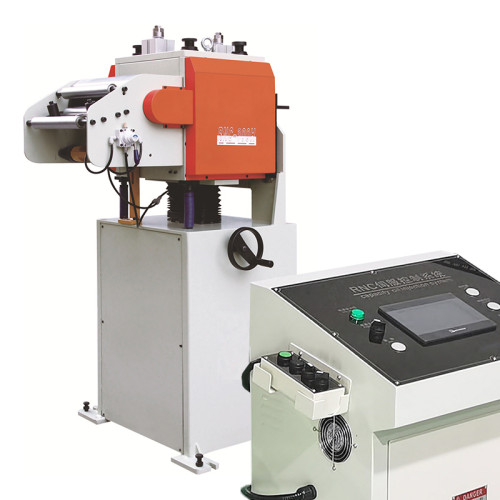
Edge guidance matters on the unwinding side. As the coil diameter shrinks, the strip's natural tendency to wander increases, and any lateral pull translates directly into telescope growth on the remaining wraps. An active edge-guide system reads the strip edge with a sensor and shifts the whole decoiler or straightener entry to keep the strip on the line centerline. Combined with a straightener that removes camber, this closes the loop: the strip enters the die straight, and the coil unwinds without lateral loading.
What to Do With a Telescoped Coil You Cannot Return
Sometimes a telescope is discovered after the coil is already on the line, or the supplier refuses the return. The safe procedure is to slow down, not to force it. Stop the line, inspect how much offset exists, and decide whether the coil can be partially consumed: many coils telescope progressively, and the outer layers may be usable if the offset is small. If the offset is significant, unspool the coil slowly with a second person monitoring the wrap edges, or have it rewound at a service shop that can re-tension it properly.
Never attempt to straighten a severely telescoped coil by hammering or by running it through the line "to see what happens." The lateral forces involved can exceed several hundred kilograms, and a sudden wrap release can eject strip at high speed. A better long-term answer is to build the telescoping check into your quality system: record the supplier, coil number and offset measurement on every inbound coil, and you will quickly identify which suppliers and which storage conditions produce the problem. That data turns a recurring annoyance into a manageable supply-chain metric — exactly the kind of process control that keeps a stamping line profitable.
Coil Telescoping: Frequently Asked Questions
How much coil telescoping is acceptable before loading?
As a rule of thumb, an offset up to about 1 percent of the strip width is tolerable for most lines, and up to roughly 2 percent if the coil is fully banded and handled with a coil car. Beyond that, the risk of binding, edge damage and uneven tension grows quickly. Your decoiler manufacturer can give a specific limit for your mandrel design, and your quality department should define a reject threshold for incoming coils.
Does a telescoped coil always have to be scrapped?
No. If the telescope is mild, the outer layers can often be consumed carefully at reduced speed. If the offset is severe, professional rewinding service can restore the coil geometry by re-tensioning under controlled conditions, at a fraction of the coil's value. Scrapping should be the last resort, not the default reaction.
Can the decoiler itself prevent telescopes from growing?
Yes, in two ways. A properly expanded mandrel grips the coil concentrically so it cannot shift, and an active edge-guide system prevents the lateral pull that grows a telescope during unwinding. On the loading side, a coil car ensures the coil meets the mandrel on-axis. Together these features stop the problem at each stage instead of letting it escalate.
Should I report telescoping to the steel supplier?
Absolutely, and document it with photos and measurements. Telescoping is frequently caused by winding tension or handling at the mill, and suppliers who see consistent, documented reports will correct their process. Keep a log with supplier, coil number, date and offset — it is your evidence for claims and your data for supplier scorecards.
Protect Your Material, Your Die and Your Team
Talk to FANTY about a decoiler package with expanding mandrel, coil car and edge guidance — engineered to keep telescoped coils off your line.
Ask About Our Decoiler Line