How to Uncoil Aluminum Strip with a Motorized Decoiler?
Aluminum coils behave very differently from steel coils on a decoiler. The strip is soft enough to scratch with a fingernail, light enough to tangle at the slightest tension error, and easily damaged by the edge of a misaligned mandrel.
Yet aluminum stamping work is common in heat sinks, electronics enclosures, reflectors, and automotive parts, so running it profitably depends on how carefully the coil is uncoiled. This guide explains how to uncoil aluminum strip with a motorized decoiler without scratches, edge damage, or loose-loop jams.
FANTY Machinery builds decoilers and 3-in-1 decoiler straightener feeder lines that handle both steel and non-ferrous strip, and the rules below reflect what our service engineers see on real production floors. The details are simple, but each one prevents a specific and expensive failure.
Why Aluminum Needs Different Handling
The physical properties of aluminum explain almost every problem you will meet. Its surface hardness is low, so any contact with a rough guide, a burred roller, or a misaligned side plate leaves a visible scratch.
None of these problems is a machine defect. They are interactions between a sensitive material and a line set up with steel in mind. Once you adjust the decoiler, guides, and tension control for aluminum, the same machine that feeds steel all week can run soft strip cleanly at the end of the shift.
Prepare the Coil and the Decoiler First
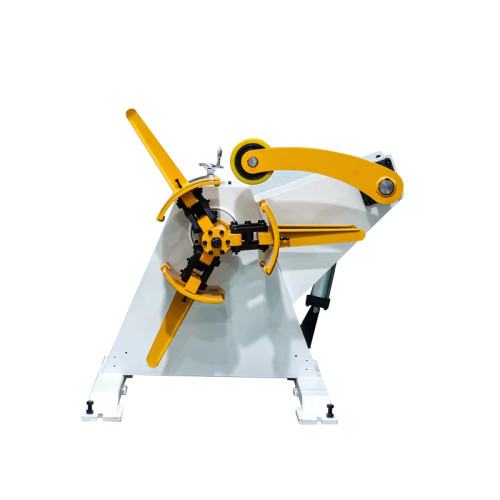
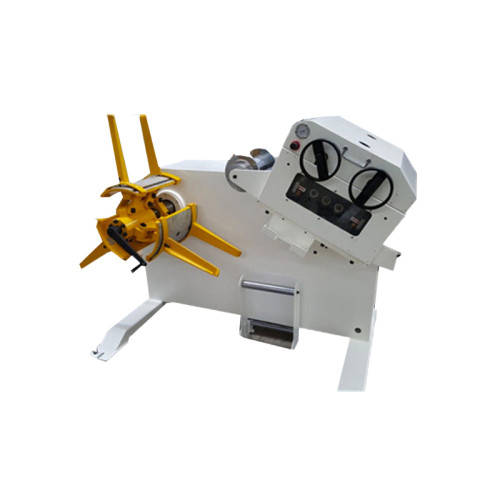
Start with the coil itself. Check the inner diameter of the aluminum coil against the decoiler mandrel range, then expand the mandrel evenly so the coil is gripped on its full width of contact.
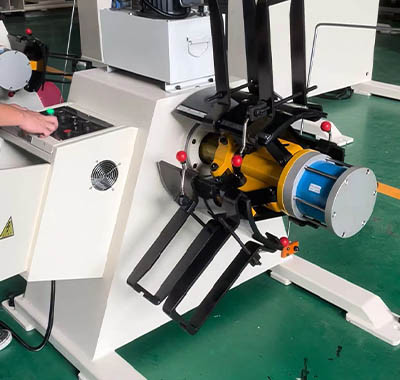
Set the coil guides or side plates only slightly wider than the strip, with clean, smooth faces. Remove any burr or dried adhesive from the guide faces before the job. On a motorized decoiler, check that the brake or motor drive is responding smoothly at low speed, because aluminum lines usually run slower than steel lines and a grabby brake is far more dangerous on soft strip.
Control Tension and Loop Carefully
Aluminum strip should be uncoiled with the lightest tension that still keeps the strip flat and tracking.
Watch the strip tail. When an aluminum coil ends, the tail often springs outward because of the coil set, and if it is not controlled it can whip into the guides or the operator. Slow the line down as the tail approaches, or use a coil end holder, so the last meters of every coil feed through calmly.
Aluminum vs Steel Uncoiling Settings
| Parameter | Steel strip | Aluminum strip |
|---|---|---|
| Uncoiling tension | Higher, to control heavy strip | Low and steady to avoid stretching or scratching |
| Line speed | Up to rated feeder speed | Often 20-30% slower for first setups |
| Mandrel grip | Standard expansion | Even expansion, avoid oversize ID contact |
| Guide / side plates | Standard clearance | Smooth faces, minimal clearance, no burrs |
| Loop size | Medium loop is fine | Small, constant loop to prevent tangling |
| Roller surfaces | Standard finish | Clean, polished rollers to prevent marking |
Straightening and Feeding Soft Strip
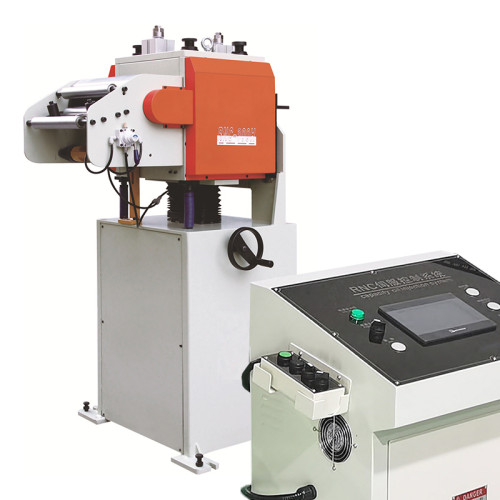
After the decoiler, the strip usually passes into a straightener and feeder. With aluminum, reduce the straightening roll pressure to the minimum that removes the coil set, because excessive roll penetration work-hardens the surface and can leave a visible roller pattern on decorative parts. Use the fewest straightening passes that produce flat strip.
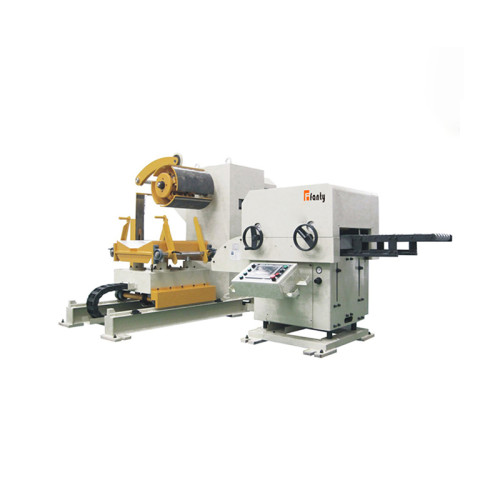
In a 3-in-1 decoiler straightener feeder configuration, the decoiler, straightener, and NC servo feeder share one frame, which shortens the strip path and removes the unsupported spans where soft aluminum is most likely to sag or scratch.
The NC straightener feeder then feeds the leveled strip to the die at a controlled pitch. If the job allows, a thin protective film on the aluminum surface can be run through the rollers to protect mirror finishes, with the film removed at the die exit.
Lubrication and Surface Protection for Aluminum
Many aluminum stamping jobs run better with a light rolling oil or dry lubricant on the strip.
For bright or anodized finishes, a strippable protective film applied at the coil stage can be left on through the decoiler and straightener, then peeled at the die exit. The film absorbs the minor roller contact that would otherwise leave hairlines on the surface.
If film is not practical, keep every contact surface polished and clean, and consider dedicating rollers to aluminum work so that steel jobs never transfer embedded particles onto the soft strip.
Aluminum Coil Changeover Checklist
- Confirm coil ID, width, and thickness match the mandrel and guide settings before lifting.
- Clean the mandrel, guides, and straightening rollers to remove any steel dust or burrs.
- Expand the mandrel evenly and center the coil to avoid edge contact with the side plates.
- Set light uncoiling tension and a small, constant loop through the loop control.
- Reduce straightener roll pressure and check strip flatness on the first test parts.
- Slow down as the coil tail approaches and guide the tail end through by hand or with a holder.
Frequently Asked Questions
Why does my aluminum strip scratch even though the rollers look clean?
Scratches often come from steel dust or tiny burrs transferred onto the rollers, or from the strip edge rubbing the side plates. Clean the full strip path and reduce the side-plate clearance before every aluminum job.
Should I run aluminum coils slower than steel?
For the first setup of a new job, yes. Aluminum is easier to control at moderate speed, and a slow first run lets you check flatness, tracking, and loop control before you ramp up to full production speed.
Can a motorized decoiler handle both steel and aluminum coils?
Yes. A motorized decoiler with adjustable mandrel expansion, smooth speed control, and clean guides handles both materials. The settings change between jobs, not the machine itself.
Does straightening damage the surface of aluminum strip?
Excessive roll pressure can mark or work-harden aluminum. Use the minimum pressure that removes the coil set and check the strip surface on the first parts. Polished rollers help protect decorative finishes.
Is a 3-in-1 decoiler straightener feeder good for aluminum work?
A 3-in-1 decoiler straightener feeder shortens the strip path and reduces unsupported spans, which helps protect soft aluminum from sagging and scratching. Many FANTY customers run both steel and aluminum on the same 3-in-1 machine.
How do I stop aluminum strip from tangling at the coil tail?
Slow the line as the coil tail approaches and guide the tail end by hand or with a coil end holder. Keep a small, constant loop, and never let the decoiler overrun the press demand, because slack strip is what tangles.
Related reading
- how much coil weight a decoiler handles
- how much floor space a coil line needs
- how to specify a decoiler for a coil line
Part of the the coil line guide library — the full library of coil handling, straightening and feeding guides from FANTY.
Need a line that runs steel and aluminum cleanly?
FANTY builds motorized decoilers and 3-in-1 decoiler straightener feeder lines sized for your coil range. Send us your material list and our engineers will recommend the right configuration.
Send Inquiry to FANTY