How to Run Lights-Out Stamping with an NC Servo Feeder?
Lights-out manufacturing is no longer reserved for automotive giants with dedicated automation teams. Mid-size press shops are now running second and third shifts with minimal operators by combining a dependable NC servo feeder, a stable coil handling setup, and a few well-chosen sensors.
The payoff is large: more press strokes per day, lower labor cost per part, and consistent quality that does not depend on who happens to be standing at the machine at 3 a.m.
This guide walks through the real prerequisites of unattended stamping, from coil end management to die protection and data monitoring, and shows how a properly configured servo feeding system becomes the backbone of your night shift. Use the material below to plan your own lights-out trial, step by step, without gambling on production output.
What Lights-Out Stamping Really Demands
Running a press unattended sounds simple until you list everything that can go wrong: a coil that runs out at 2 a.m., a strip that buckles between the straightener and the die, a double feed that could crash the die, or a lubrication fault that damages the tooling.
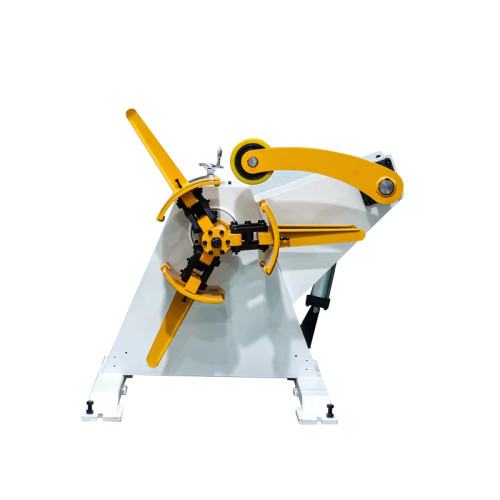
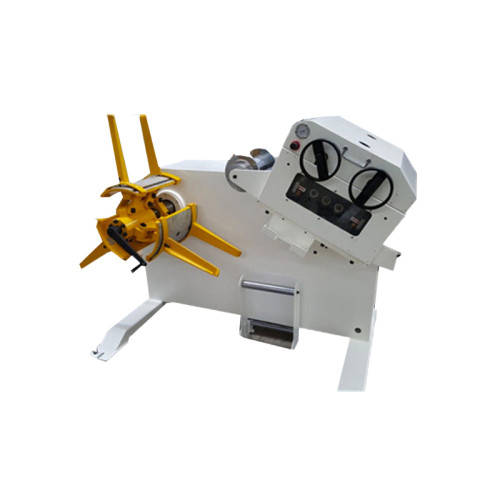
Beyond the feeder you need three supporting systems: a coil handling arrangement that signals a low-coil condition, a die protection system that monitors part ejection and strip position, and a production data screen that tells the day-shift supervisor exactly what happened overnight. None of these are exotic.
They are the same building blocks used on hundreds of progressive lines, simply integrated so the line can supervise itself.
Step One: Make Coil Feeding Predictable with Servo Control
The biggest single reason press shops stay on day shift is the fear of a coil feeding fault in the middle of the night.
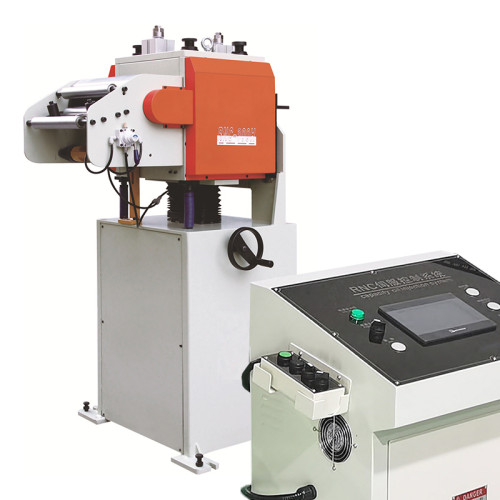
Integrate the feeder with the press cam signal so feeding is always synchronized with the stroke. Modern NC servo feeder controllers accept a simple cam input and can also communicate with the press PLC over a standard protocol, reporting feed count, fault codes, and pitch error.
That data stream is what makes lights-out operation auditable: in the morning you should be able to review every feed of the night shift, including any fault that stopped the line and the reason it stopped.
Step Two: Watch the Strip, the Coil, and the Die
Three sensors do most of the supervision work on a lights-out line.
Do not underestimate the small details. Choose a coil size that gives several hours of run time so changeovers fall at convenient moments, keep the straightening rolls and feeder rollers clean and correctly adjusted, and verify lubrication schedules for the press and the feeder gearbox.
A line that is well maintained during the day is the only line that can safely run at night with one operator checking multiple presses.
Unattended Stamping Readiness Checklist
- Confirm the NC servo feeder holds pitch within ±0.05 mm across a full shift and faults on feed-length drift automatically.
- Install a low-coil detector at the decoiler and program a controlled end-of-coil stop routine in the feeder controller.
- Fit a strip buckle or slack sensor between the straightener and the feeder, wired into the emergency stop circuit.
- Verify the die protection system monitors pilot position, part ejection, and scrap discharge on every stroke.
- Log feed count and faults to the control screen or plant network so the night shift is fully reviewable.
- Schedule coil changeovers and lubrication at shift boundaries, and keep a tested spare-roller set by the line.
Step Three: Design the Feed Program for Autonomy
An unattended line rewards careful program design. Set the feed speed curve so the material accelerates and decelerates smoothly, which protects both the die and the straightening rolls during long runs. Use the feeder's batch counter to stop the line after a defined number of strokes for tool inspection, rather than running until something fails. If your parts run in families, store the feed programs by part number so a changeover is a one-minute recall instead of a fresh setup at night.
Think about the end of the coil in advance. A typical coil of 1.0 mm strip holds thousands of parts, but the last few meters are the risky ones. Program the line to stop automatically when the low-coil signal appears, leaving the die empty and the strip clear of the tool area.
The morning crew then loads a fresh coil, resets the counter, and the line resumes exactly where it stopped, with no scrap cascade and no risk of a crashed die from a coil tail.
Monitoring Setup Reference for an Unattended NC Servo Feeder Line
| Monitoring Point | Recommended Sensor or Method | Action on Fault |
|---|---|---|
| Coil remaining on the decoiler | Photoelectric low-coil detector or mechanical sensing arm | Run the last meters of strip, then a controlled stop with the die left empty |
| Strip tension between straightener and feeder | Loop arm or slack/buckle limit switch in the strip pass line | Immediate stop before the next press stroke, alarm to the operator screen |
| Feed pitch accuracy | Servo encoder feedback compared with programmed length every cycle | Fault if drift exceeds tolerance; prevents progressive misfeed damage |
| Part ejection and strip pilots inside the die | Die protection sensors with adjustable check windows per stroke | Stop the press at top dead center; identify the station that failed |
| Production status overnight | Feeder counter, fault log, and simple data export to the plant network | Morning review of stop reasons and feed counts for continuous improvement |
What Output Gains Should You Expect?
The value of lights-out stamping is best understood as extra press hours, not extra speed. A press running 200 strokes per minute that gains six unattended hours per night adds roughly 70,000 strokes per day of capacity without adding labor.
Even accounting for lower utilization during trial runs, most shops recover their feeder and sensor investment within months simply by moving work from expensive day-shift hours into the night.
The quality argument is equally strong. Because an NC servo feeder repeats the same program at the same speed all night, the parts made at 3 a.m. are dimensionally identical to the parts made at 9 a.m., which simplifies SPC monitoring and reduces customer complaints.
Consistency of this kind is why stamping suppliers who adopt structured unattended operation report fewer rejects and better on-time delivery performance.
Why FANTY Machines Are Built for Unattended Duty
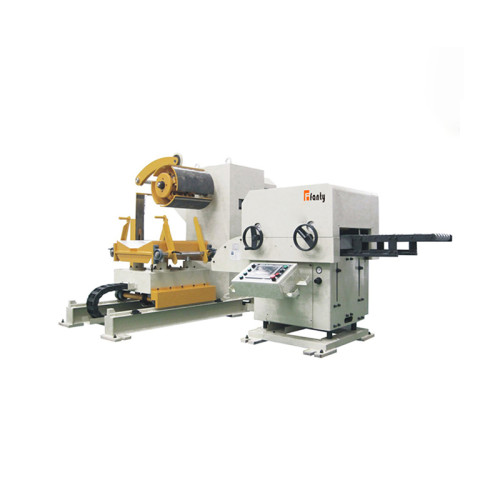
FANTY Machinery has supplied coil feeding systems for twelve years from a 45,000 m² factory with 370 employees and more than 80 R&D engineers, and our equipment feeds presses across more than 60 countries in industries that run continuous shifts.
Is lights-out stamping realistic for a small press shop?
Yes, if you start with one well-prepared line. Choose your most reliable die, run a supervised night trial first, and expand only after the line has completed several clean unattended shifts.
What is the most common cause of an unattended line stopping?
Coil exhaustion and strip handling faults are the most frequent stops. Both are manageable: a low-coil detector gives a controlled stop, and a strip buckle sensor prevents die damage before it happens.
Do I need expensive MES software for lights-out operation?
No. Start with the feeder controller's own counters, fault log, and a simple data export. Add plant-level software later if you need consolidated reporting across multiple presses.
Can an NC servo feeder detect a die problem automatically?
The feeder detects feed-side problems such as slipping, jamming, and pitch drift. Die-side problems such as misfeeds inside the die are handled by the die protection system, which you should always fit for unattended runs.
How do I convince my team that unattended operation is safe?
Run a structured trial with documented stop reasons, review the fault log together each morning, and fix every repeat cause before the next trial. Visible data removes most of the fear.
Related reading
Part of the the coil line guide library — the full library of coil handling, straightening and feeding guides from FANTY.
Plan Your Own Lights-Out Trial
Tell us your press tonnage, strip specification, and target part, and FANTY will help you size an NC servo feeder with the sensors and program logic for safe unattended running. We will also share reference settings from installed lines in your industry.
Talk to a Stamping Application Engineer