How to Set the Roll Gap on an NC Straightener Feeder?
The straightener roll gap is one of those settings that looks simple from the outside and quietly controls everything that matters inside. Set it too loose, and the strip keeps its coil set, parts come out bowed, and the die wears unevenly.
Set it too tight, and you overload the rolls, stretch the material, and create waves that are worse than the original problem.
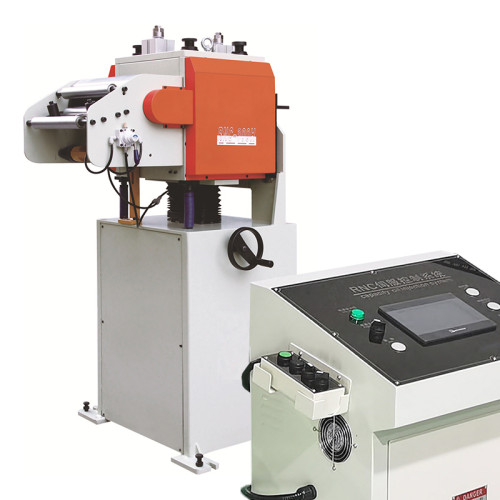
This guide explains how the roll gap works on an NC straightener feeder, how to set it correctly for different materials, and how to know when your setting is right by looking at the strip itself.
Getting this one adjustment right pays off in flatter parts, longer die life, and fewer rejected pieces, and it is a skill every operator on a coil-fed line should understand.
Why the Roll Gap Controls Strip Flatness
When steel is wound into a coil, the material permanently bends into an arc, a condition called coil set.
The job of the straightener in an NC straightener feeder is to bend the strip back and forth through a series of rolls, each bend slightly exceeding the elastic limit of the material, until the residual stresses are balanced and the strip runs flat.
The roll gap is the distance between the upper and lower roll banks, and it determines how much bending each roll applies.
Think of the straightener as a wave machine. The strip snakes between alternating top and bottom rolls, and the depth of that wave is controlled by the gap. A smaller gap makes a deeper wave, which applies more bending force and removes more coil set. A larger gap makes a shallower wave, which applies less force.
The correct gap is the smallest one that fully removes the coil set without overworking the material, and finding it is a matter of understanding your material and watching the result.
Material properties matter enormously here. A thick, high-tensile steel needs a smaller gap to be bent past its elastic limit, while a thin, soft material like aluminum or galvanized sheet needs a gentler touch.
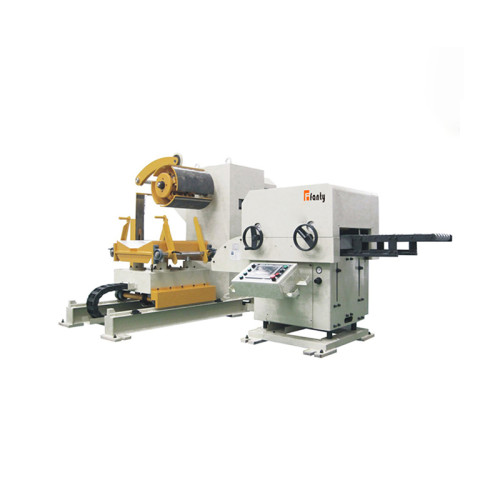
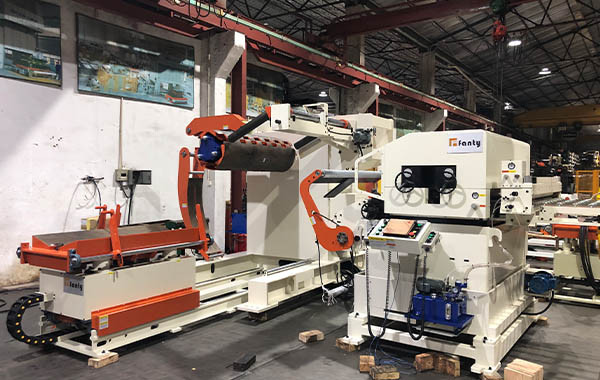
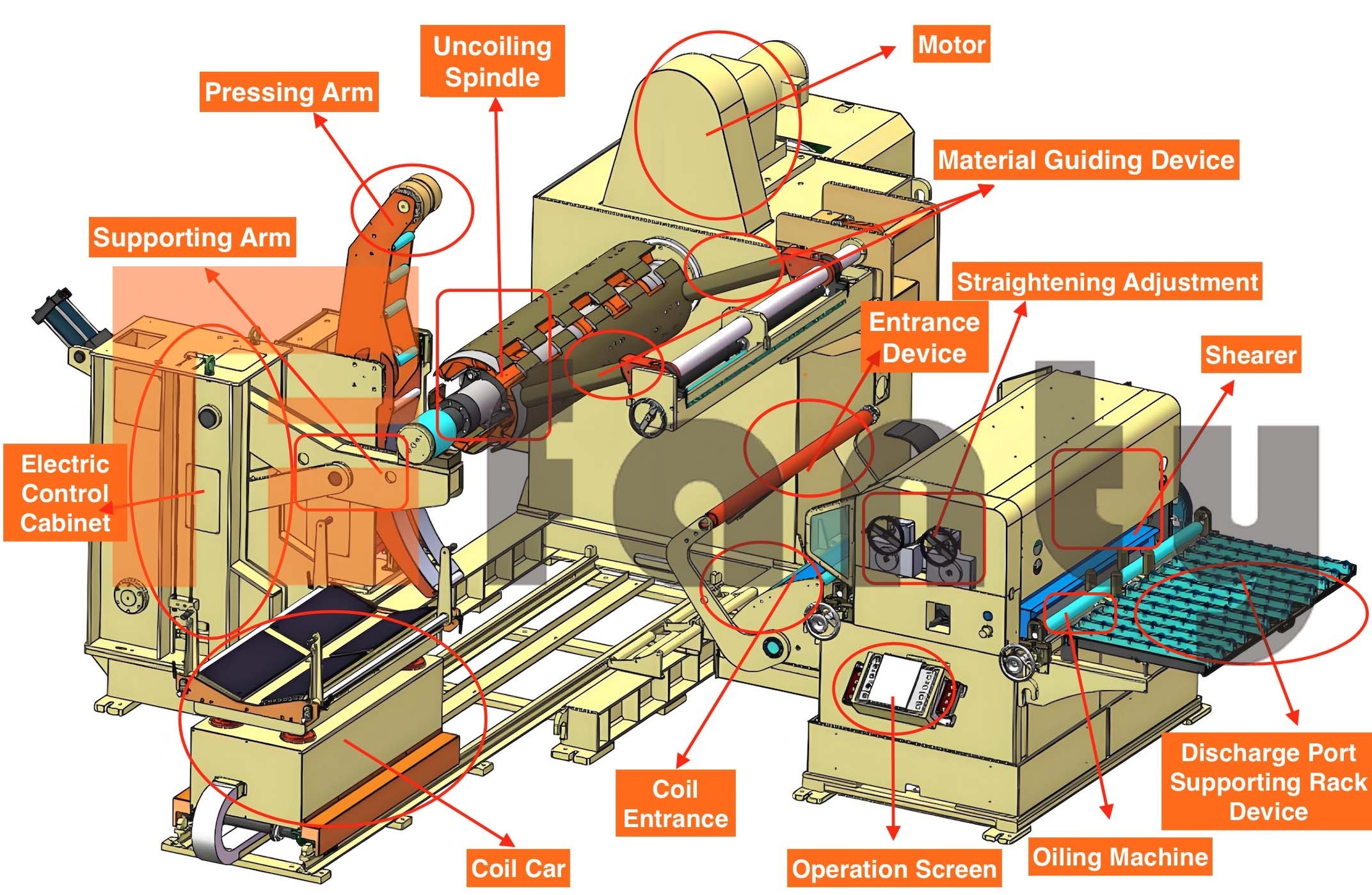
This is why a machine with more straightening rolls, such as a 3-in-1 decoiler straightener feeder, has more latitude to fine-tune the bend pattern for different materials, and why the roll configuration is one of the most important lines on the specification sheet.
How Gap Settings Show Up in the Strip
The strip itself is your best measuring instrument. Every imperfection in the output tells you which way to turn the adjustment, and learning to read those signals turns gap setting from guesswork into a repeatable procedure.
| Symptom on the Strip | What It Means | Adjustment |
|---|---|---|
| Strip still bowed or curled after straightening | Gap too large, coil set not removed | Decrease the roll gap in small steps |
| Waves or buckles across the strip width | Gap too small, material overworked or center rolls too tight | Increase the gap or release the center rolls |
| Strip drifts or snakes to one side | Uneven gap between left and right sides | Re-check leveling and balance the gap side to side |
| Scratches or marks on the strip surface | Rolls too tight or debris on the rolls | Loosen slightly and clean the roll surfaces |
| Thinning or stretching at the edges | Edge rolls too tight relative to the center | Open the edge rolls to equalize the pressure |
| Consistent chatter lines along the strip | Vibration or worn roll bearings | Check bearings, then re-set the gap after repair |
The most common mistake is chasing one symptom without reading the whole picture. For example, if the strip comes out with a slight bow, an inexperienced operator slams the rolls closed, and now the strip comes out wavy.
The correct approach is to reduce the gap gradually, checking the strip after each small step, until the coil set disappears and before any wave appears. There is a narrow window between those two conditions, and that window is the correct setting.
Step-by-Step Roll Gap Setting Procedure
Here is a practical procedure that works on most NC straightener feeder models. Always check your machine manual first, because the exact controls vary between manufacturers, but the logic is universal.
- Start with the gap slightly wider than the material thickness
- Thread the strip through and run a short test length
- Reduce the gap in small, equal steps on both sides
- Check the strip flatness by laying it on a flat table
- Stop at the first setting where the strip lies flat
- Record the setting for this material and coil profile
Recording the setting is the step that most shops skip, and it is the step that saves the most time in the long run.
Temperature is another factor worth watching. In summer, or in shops without climate control, the machine frame and the rolls expand slightly, which changes the effective gap. Operators who run the same material in winter and summer often need a small seasonal adjustment, typically a fraction of a millimeter.
This is normal behavior, not a machine fault, and it is one more reason to check flatness at the start of every shift rather than assuming yesterday's setting still holds.
Finally, keep a simple log for each material you run: grade, thickness, coil width, straightener roll count, and the gap value that produced flat strip. After a few months, that log becomes a reference table your operators trust, and new setup personnel can reach a good starting point without years of experience.
Small documentation habits like this are what turn a good straightener into a great one in daily operation.
How FANTY Engineering Supports Correct Settings
FANTY Machinery has spent twelve years building straightening and feeding equipment for stamping plants in more than 60 countries, and roll gap is one of the topics our engineers discuss with customers almost every week.
FANTY operates a 45,000 square meter factory with 370 employees and more than 80 R&D engineers. Our machines are CE certified and more than 200 FANTY production lines are running worldwide, which gives our team real experience across thousands of material and coil combinations.
When a customer is struggling with flatness, our engineers can usually diagnose the cause from a photo of the strip and a few details about the coil, and guide the operator to the correct setting quickly.
Remember that the roll gap is not a set-and-forget value. Material hardness varies slightly between coils, the rolls wear over time, and the machine frame settles, so the ideal gap drifts. A good practice is to check flatness at the start of every new coil and at the start of every shift, and to adjust in small steps.
That ten-minute habit protects your die, your parts, and your reputation for quality.
Frequently Asked Questions
How do I know the correct roll gap for my material thickness?
Start slightly wider than the material thickness and close the gap in small steps until the strip lies flat on a table. Record that value for the material grade and coil profile so the next setup starts from a proven point.
What happens if the roll gap is set too tight?
The material gets overworked: you may see waves across the width, edge thinning, surface marks, or even work hardening that makes the strip harder to form in the die. If you see these signs, open the gap slightly.
Why does my strip curve to one side after straightening?
That usually means the gap is uneven between the left and right sides of the roll bank. Re-check that both sides are adjusted equally, and verify the strip is entering the straightener centered.
Do I need to adjust the roll gap for every new coil?
Check flatness at the start of each new coil, but only adjust if the strip is not flat. Coils from the same mill and grade usually need the same setting, and the stored program recalls it automatically on an NC straightener feeder.
Related reading
- how leveling improves strip flatness
- how to set roll pressure
- how to hit a flatness spec on a coil line
Part of the 3-in-1 decoiler straightener feeder — the full library of coil handling, straightening and feeding guides from FANTY.
Get Your Strip Flatness Right the First Time
Send us your material grade, thickness, and a photo of the strip. FANTY engineers will help you confirm the correct roll gap and straightener settings for your NC straightener feeder.
Ask a FANTY Stamping Engineer