How to Reduce Stamping Setup Time with an NC Servo Feeder?
Setup time is the quiet killer of stamping productivity. Every time you change a die, the press stops, the coil line is cleared, new feed parameters are dialed in, trial parts are produced and measured, and only then does production resume.
With an NC servo feeder, most of that time can be eliminated because the machine stores parameters, positions the strip automatically, and synchronizes with the press stroke without manual adjustment.
This article explains exactly how an NC servo feeder cuts stamping setup time, what to configure before your next die change, and how to combine the feeder with quick die change practice for the fastest possible changeovers.
These are the same methods FANTY applies on more than 200 installed stamping lines across 60 countries.
Where Setup Time Actually Goes
To reduce setup time you first have to see where it disappears.
Now look at the same changeover with an NC servo feeder in the line. The operator calls up the stored program for the new part, which already contains the feed pitch, feed speed, acceleration curve, roll pressure, and the synchronization signal settings. The press die is changed while the feeder parameters load.
The strip is threaded once, the first part is stamped at jog speed, and if the stored parameters are correct the very next parts are within tolerance. The setup that used to take an hour now takes minutes, and the saving repeats on every single job change through the day.
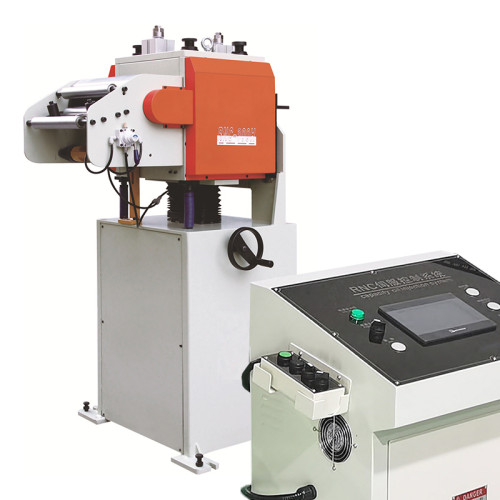
The mechanism behind this speed is worth understanding. An NC servo feeder uses a servo motor directly coupled to the feed rolls, so the feed length is controlled electronically rather than mechanically. There is no crank to set, no cam to change, and no clutch to adjust.
The controller measures the feed and compensates for acceleration and deceleration, which is why stored parameters reproduce the same feed length every time without recalibration.
Set Up Parameter Memory Before the Changeover
The single biggest time saver is parameter memory, and it only works if you prepare it.
FANTY NC servo feeder controllers can store a large library of programs, and the more complete each program is, the faster the changeover. Include notes such as the die stop position, the number of pitches before the first part, and any special actions like a slow first feed.
Operators should be trained to update the program whenever the setup is improved, so the stored parameters stay as good as the best setup ever achieved.
For families of similar parts, use the copy function to create a new program from an existing one and adjust only the pitch and speed. This turns a thirty-value setup into a two-value adjustment, and it is one of the most underused features on modern feeders. If your team is not using program memory today, implementing it alone can cut average setup time by half.
Combine the Feeder with Quick Die Change Practice
An NC servo feeder removes the feed-related setup, but the die itself still has to be swapped.
It also helps to standardize the die height and shut height across your tooling family. When dies are the same height, the feeder, the press bolster, and the strip line stay at the same level, so the feed line height does not need adjustment at every changeover.
Standardizing the feed direction and the strip entry point makes the feeder setup identical from die to die, which further reduces the variables an operator has to check.
Sequence the work to remove waiting. Change the die and the feeder program at the same time, prepare the new coil while the press is still running the previous job, and have the trial parts checked against a checklist rather than by trial and error. These are simple habits, but they compound with the feeder's automation to produce dramatic reductions in total changeover time.
Typical Setup Time Comparison
The table below compares a manual-feeder changeover with an NC servo feeder changeover on the same job. Times are typical values from actual stamping shops and will vary with part size and operator skill, but the ratio is consistent.
| Setup Step | Manual Feeder | NC Servo Feeder |
|---|---|---|
| Stop press and clear strip | 5 min | 3 min |
| Swap die | 10 min | 10 min |
| Set feed pitch / stroke | 15 min | 1 min (stored program) |
| Adjust roll pressure and guides | 10 min | 2 min |
| Thread and trial parts | 20 min | 6 min |
| Total changeover | 60 min | 22 min |
Notice that the die swap time is identical, because the feeder cannot change the die for you. The savings come entirely from eliminating manual feed adjustments and trial-and-error setup. On a shop running ten changeovers per day, saving 38 minutes each gives back more than six hours of press time every day, which is production capacity you already paid for.
Best Practices That Multiply the Savings
- Save every proven setup as a named program the moment the job runs well, and train operators to update it after improvements.
- Prepare the next coil, die, and setup sheet while the press is still running the current job to eliminate idle waiting.
- Standardize die heights and strip entry positions so the feed line never needs re-leveling between jobs.
- Use hydraulic die clamping and a die cart so the physical swap takes under ten minutes even for medium dies.
- Measure trial parts against a checklist and record first-piece results in the program notes for faster approval next time.
These practices cost nothing to implement but turn the feeder's hardware advantage into a measurable productivity gain. FANTY, with 12 years of experience and a 45,000 m² factory staffed by 370 people including more than 80 R&D engineers, builds the NC servo feeder and NC Straightener Feeder lines that make fast changeover possible, and every unit is CE certified and proven at up to 200 SPM in the field.
Frequently Asked Questions
How much setup time can an NC servo feeder save?
Typical savings are 40 to 60 percent of total changeover time on lines where feed adjustment used to be manual. A changeover that took 60 minutes commonly drops to around 20 to 25 minutes with stored parameters and quick die change practice, and the saving repeats on every job change.
Does the NC servo feeder remember settings after power off?
Yes. Programs are stored in non-volatile memory and remain available after the machine is switched off, including feed pitch, speed, acceleration, roll pressure, and synchronization settings. No battery backup is needed for the program library on modern controllers.
Do I still need to thread the strip manually at every changeover?
The strip still has to be physically threaded once, but with stored parameters there is no trial-and-error feeding. You select the program, jog the strip to the die stop, and produce the first part, which usually comes out within tolerance if the stored parameters match the job.
Can an NC servo feeder work with quick die change tooling?
Absolutely. The feeder synchronizes with the press stroke and supports hydraulic clamping setups. Combine stored feeder programs with hydraulic die clamps and a die cart for the fastest possible changeovers, often under fifteen minutes for small and medium dies.
Related reading
Part of the the coil line guide library — the full library of coil handling, straightening and feeding guides from FANTY.
Want faster changeovers on your press line?
Talk to FANTY about an NC servo feeder with program memory and get a payback analysis for your shop.
Send Your Inquiry