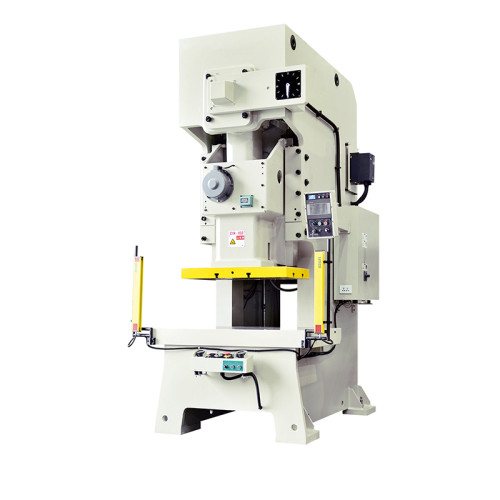
How to Match Servo Feeder Capacity to Your Press Line?
An NC servo feeder that is too small will stall the line, and one that is far too large will waste energy, floor space and money — but choosing the right capacity is not as simple as reading the brochure. Servo feeder capacity is a combination of strip width, thickness, feed length, feed rate and the acceleration the servo drive can deliver against the inertia of the material and rollers. Each parameter interacts with the others, and the interactions change with the speed of your press. This guide explains how to size a servo feeder correctly for your press line, how to verify the numbers with a simple calculation, and which mistakes most commonly lead to feeders that cannot keep up — or are never pushed anywhere near their limit.
FANTY Machinery has manufactured NC servo press feeders for twelve years, supporting lines up to 200 SPM with ±0.05 mm feeding accuracy. We have also seen the consequences of mis-sizing on both ends, so this article reflects the selection method our engineers actually use when a customer sends us a new project.
The Five Parameters That Define Feeder Capacity
Every servo feeder is built around five capacity parameters, and each one has a hard limit you cannot cheat: maximum strip width, maximum strip thickness, maximum feed length per stroke, maximum feed speed, and the servo torque needed to accelerate the strip and rollers within the press cycle. The first three are geometry — they define the physical size of the machine. The last two are dynamics — they define how fast and how accurately the machine can move. A feeder that fits your strip but cannot accelerate fast enough will arrive at the die late, and the press will wait, or worse, the feed will slip and the part will be wrong.
Most buyers focus on width and thickness because those are the numbers printed largest in the catalog. That is understandable but incomplete. The parameter that actually limits production is feed rate: the product of feed length per stroke and strokes per minute. A line feeding 100 mm at 100 SPM needs a linear speed of 10 meters per minute on average, but the servo must accelerate to a peak speed several times higher and then decelerate to a precise stop — all within the fraction of the press cycle the die allows. This is where capacity engineering, not catalog reading, decides whether the line hits its rated speed.
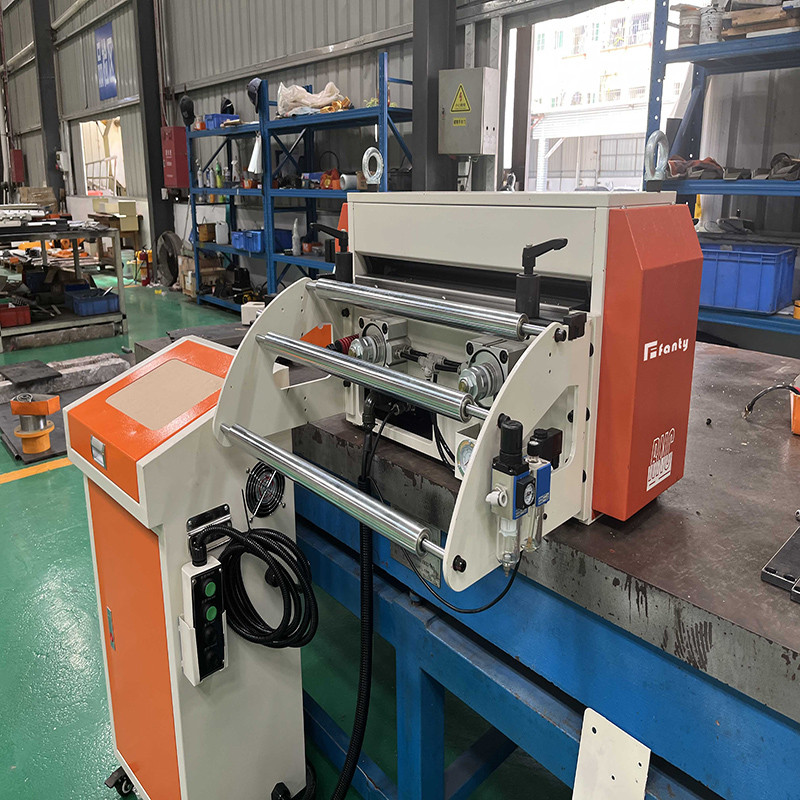
The relationship is non-linear, which is why rule-of-thumb sizing fails. Doubling the feed length roughly doubles the required peak speed but more than doubles the torque demand, because acceleration force scales with mass and the strip mass also grows with length. Doubling the strip thickness roughly doubles the strip mass per meter, again raising torque. And every increase in SPM shortens the time window for the whole move. A feeder selected for 150 mm feed at 80 SPM may fail completely at 150 mm feed and 120 SPM, even though both jobs "fit" the same machine.
Matching the Feeder to the Press Cycle
The servo feeder does not run on its own schedule; it must synchronize with the press crank. In a typical NC servo feeding system, the feeder receives a signal from the press — usually from an encoder or cam switch — and must complete the feed stroke while the press is in the open phase of the cycle, then hold the strip precisely during the closed phase. The shorter the cycle time, the faster the feed must be, and the accuracy of the stop depends on the servo's ability to control deceleration to within a few hundredths of a millimeter. This is the real meaning of capacity: the ability to deliver the required length at the required SPM with the required accuracy, every stroke.
Three practical rules keep the match reliable:
- Size for the worst job, not the average job — your feeder must handle the longest feed length at the highest SPM you will ever run, with margin for the die's angular dwell requirements. Average-based sizing guarantees an upgrade later.
- Include 20 percent torque margin — material thickness, alloy hardness and strip camber all add drag beyond the catalog values. A servo running at its torque ceiling overheats, trips, or loses accuracy.
- Check the anti-backlash and pinch force — roller material and spring pressure must hold the strip without slipping during acceleration and without marking soft materials. Ask for the maximum pinch force and roller hardness.
Speed rating deserves one more warning. Catalog "maximum feed rate" figures are usually measured with no strip, or with a light strip at minimal length. Real production adds strip mass, guide friction and straightener drag. When comparing feeders, ask for the rated feed rate at your actual strip width, thickness and feed length, and ask how the number was measured. A supplier who can answer precisely is a supplier who has tested the machine — which is exactly the evidence your TCO model needs.
A Quick Sizing Worksheet for Your Line
Use this worksheet to collect the numbers you need before contacting any supplier. The more complete the input, the more precise the recommendation — and the less likely you are to discover a capacity gap after installation:
| Input | Your value | Why it matters |
|---|---|---|
| Strip width and thickness | — | Defines machine size and strip mass |
| Material type (steel, stainless, aluminum, copper) | — | Hardness and friction affect pinch force and torque |
| Maximum feed length per stroke | — | Drives peak speed and acceleration demand |
| Maximum press speed (SPM) | — | Defines the time window for each feed |
| Required feeding accuracy | — | NC servo holds ±0.05 mm; tolerance sets servo class |
| Available space and power | — | Feeder length, motor power and control voltage |
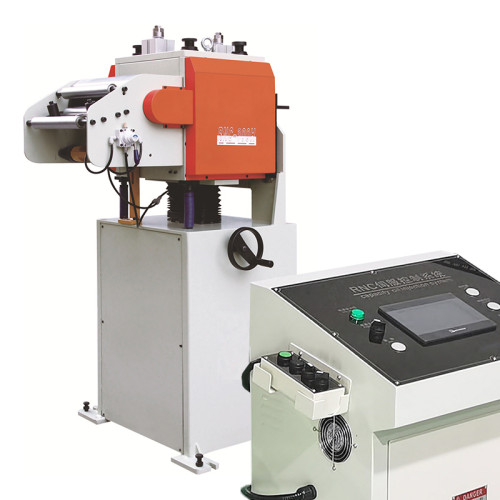
Once you have these values, the supplier can simulate the feed profile: acceleration ramp, constant-speed segment, deceleration ramp, and the settle time needed to hit the target length within tolerance. A modern NC controller displays this profile on screen, so you can watch the feed command versus the actual encoder feedback in real time during commissioning. That transparency is worth a lot — it is how a FANTY engineer proves the feeder will hold ±0.05 mm at your rated SPM before the first production part is ever made.
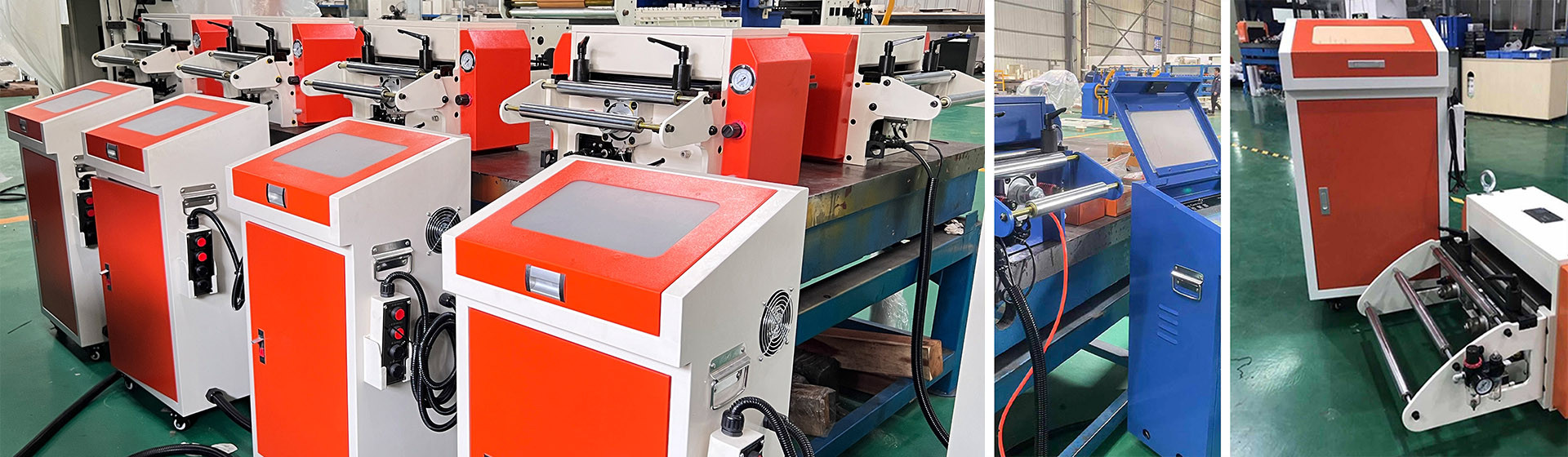
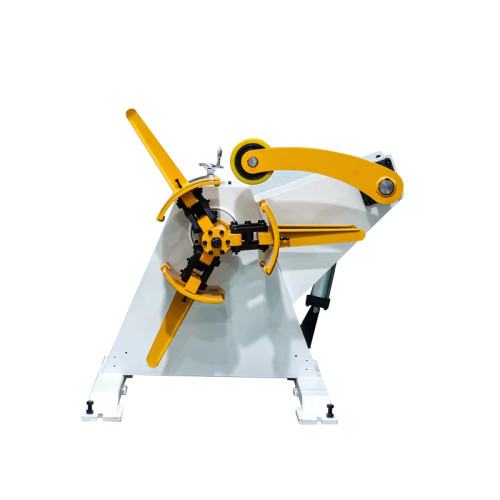
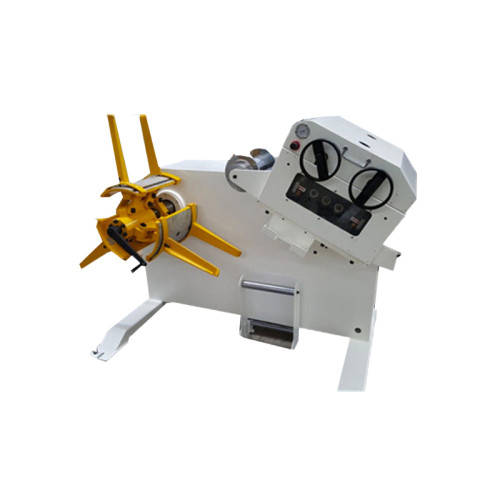
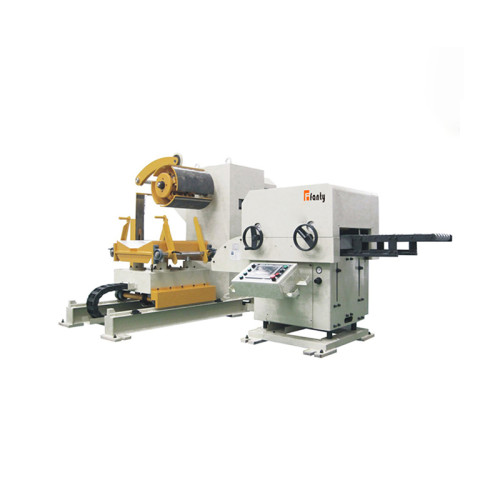
Do not forget the strip entry side. The feeder can only feed what the straightener hands it: if the strip enters with residual camber or crossbow, the feed rollers fight the shape and accuracy suffers. This is why FANTY sells decoiler, straightener and NC feeder as an integrated package — the straightener's exit speed is synchronized with the feeder's intake so the strip is always under gentle tension, never stretched, never slack. Capacity planning that stops at the feeder and ignores the upstream loop usually leaves 10 to 20 percent of line speed on the table.
Common Sizing Mistakes to Avoid
The first mistake is buying on strip width alone. A feeder that handles 400 mm wide strip but only 6 meters per minute of feed speed will strangle a job that needs 12 meters per minute at 150 SPM. The second is ignoring the die's dwell window: deep-drawing dies keep the strip clamped longer, leaving less time for the feed, so the same SPM rating needs a faster feeder than a simple blanking die. The third is neglecting future work — the job that will be awarded next year with a longer feed length or a heavier coil. Sizing for today's portfolio and hoping for the best is how lines become bottlenecks.
Finally, respect the accuracy requirement. If your parts need ±0.05 mm pitch consistency, a standard servo feeder with ordinary rollers will not reliably deliver it at speed; you need hardened, precision-ground rollers, rigid anti-backlash gearing, and a controller with fine-tuned deceleration profiles. Accuracy is a capacity parameter in its own right — the most expensive one to add later. When you compare quotes, compare the tested accuracy at speed, not the static accuracy on the bench. That is the number that determines whether your die survives the year.
Servo Feeder Capacity: Frequently Asked Questions
How do I know if my current feeder is undersized?
The clearest signs are press stops waiting for the feed signal, feed-length errors that grow at higher SPM, and motors that run hot or trip. Watch the servo drive's torque readout during the worst job: if it regularly peaks above 80 percent of rated torque, the feeder is working too hard and accuracy is at risk.
Can one servo feeder handle multiple different jobs?
Yes, within its capacity envelope. NC servo feeders store multiple feed programs — length, speed, acceleration and dwell per job — and operators recall them by part number at changeover. As long as every job stays inside the machine's width, thickness, length and rate envelope, one feeder covers a whole die family. If one future job exceeds the envelope, the feeder becomes the bottleneck.
Does feeding accuracy change with line speed?
It can, which is why accuracy must be specified at speed. A well-tuned NC servo feeder maintains ±0.05 mm from low speed up to its rated SPM because the controller compensates for inertia and settling time programmatically. A poorly matched system drifts as speed rises. Always ask for the accuracy figure at your operating speed, not just at the catalog point.
What is the difference between a servo feeder and a roll feeder for capacity planning?
A roll feeder moves the strip by a fixed mechanical stroke linked to the press, so its feed length is limited by crank geometry and it is hard to change between jobs. A servo feeder drives the rollers with an independent motor, so feed length is software-defined and can be tuned per job. For capacity planning, the servo feeder's advantage is flexibility: the same machine covers a much wider range of lengths and speeds.
Send Us Your Job List, Get a Feeder Recommendation
Share your strip dimensions, feed lengths and target SPM, and FANTY will size an NC servo feeder for your press line — with verified accuracy and a commissioning plan.
Request a Feeder Sizing