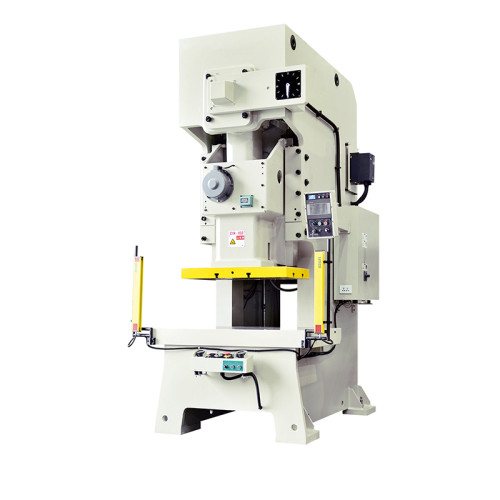
Roller Feeder vs NC Servo Feeder: Which Should You Buy?
When a press shop upgrades its feeding equipment, the most common question is whether to buy a simple roller feeder or invest in an NC servo feeder.
Both machines push strip into the die, but they do it in fundamentally different ways, and the right answer depends on your production mix, your speed, and how often you change jobs. This guide compares the two technologies honestly so you can choose the one that pays for itself on your floor.
FANTY builds both types, so we have no reason to push one over the other. What we can share is what 12 years of installations and 200+ coil feeding lines have taught us about where each design earns its keep.
How a Roller Feeder Works
A roller feeder (often called a gripper or hitch feeder) uses a mechanical linkage from the press crankshaft to drive two pinch rolls. As the press stroke rotates, the linkage pulls the strip forward by a fixed distance that the operator sets with an eccentric adjustment.
The limitation is flexibility. Changing the feed length means stopping the press and adjusting the mechanism, and the feed length is not measured, so accuracy depends on the mechanical setup and on the strip not slipping between the rolls.
For a dedicated, long-running job with one material and one pitch, none of that matters. For a job shop that changes parts every few hours, it does.
How an NC Servo Feeder Works
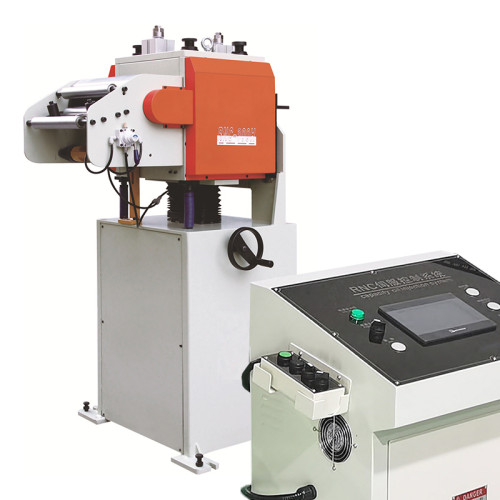
An NC servo feeder replaces the mechanical linkage with a servo motor that turns the feed rolls under closed-loop control. The operator enters the feed length, speed profile, and number of feed pulses on a touchscreen, and the servo drive measures the actual roll travel every cycle and corrects any deviation instantly.
Changing a job is a matter of recalling a program, not adjusting cams and eccentrics.
Because the motion profile is software, an NC servo feeder can accelerate gently, reach the programmed pitch, and stop without the shock that mechanical linkages produce at high speed.
FANTY NC servo feeders hold pitch accuracy within plus or minus 0.05 mm at speeds up to 200 SPM, and they communicate directly with the press control so the feeder and the die always stay in step.
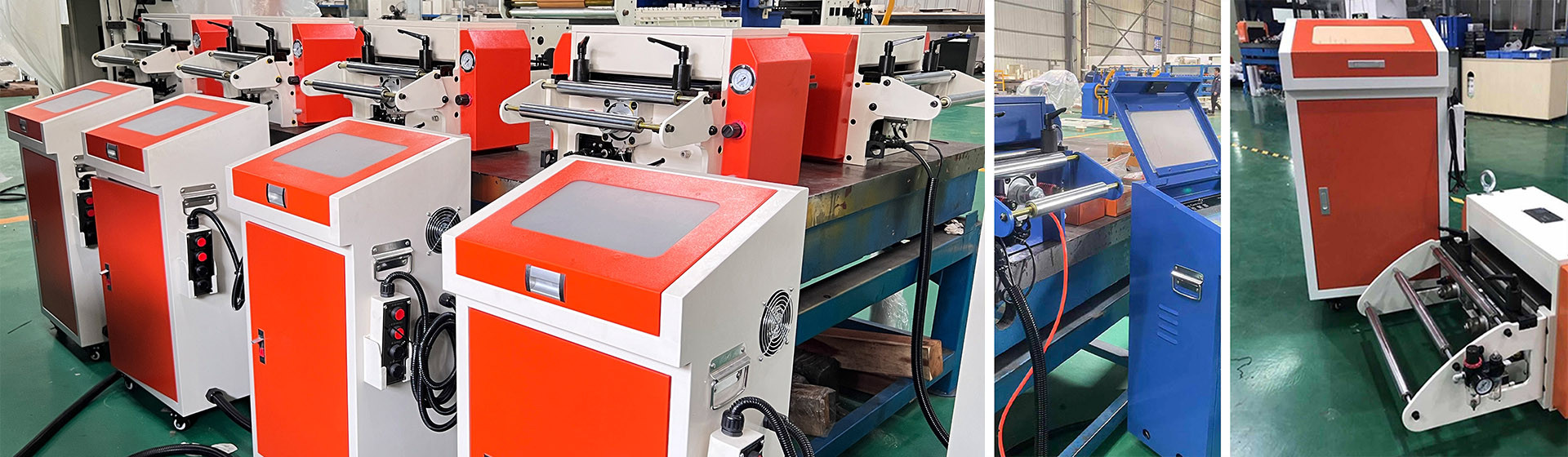
Roller Feeder vs NC Servo Feeder
| Comparison | Roller feeder | NC servo feeder |
|---|---|---|
| Feed length change | Manual adjustment, press stopped | Program change on touchscreen in seconds |
| Accuracy | Depends on setup and strip grip | Closed-loop, ±0.05 mm measured every cycle |
| Speed range | Excellent on fixed long runs | Excellent, with programmable acceleration |
| Job flexibility | Low; best for dedicated runs | High; ideal for job shops and short runs |
| Operator skill | Mechanical setup experience | Simple program recall, less skill needed |
| Investment | Lower initial cost | Higher initial cost, faster payback on mixed work |
| Maintenance | Linkage wear parts | Servo drive, fewer moving parts |
When a Roller Feeder Is the Smart Choice
A roller feeder is still the right answer for a press that runs the same part for weeks or months at a time. If the pitch never changes, the material never changes, and the line runs three shifts a day, the simplicity of a mechanical feeder is a genuine advantage: lower purchase price, easy maintenance, and no electronics to fail in a dusty environment. Many high-volume automotive and appliance suppliers use roller feeders exactly this way.
The mechanical design is also tolerant of very high cycle rates on a single pitch, because there is no electronic control loop to limit the response. If your production plan for the next five years is stable and predictable, spend the saved money on tooling or material handling instead of feeder sophistication.
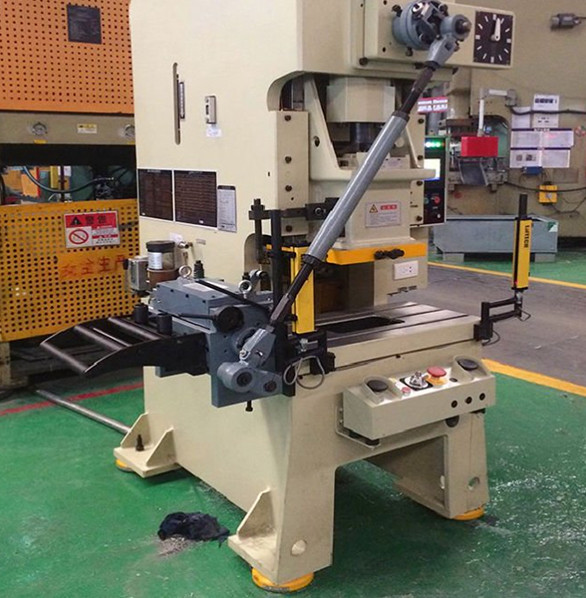
When an NC Servo Feeder Pays for Itself
The economics flip the moment your press room runs multiple parts, frequent die changes, or materials that slip differently.
Job shops and contract stampers see the fastest payback, because their revenue depends on changeover speed and first-part accuracy.
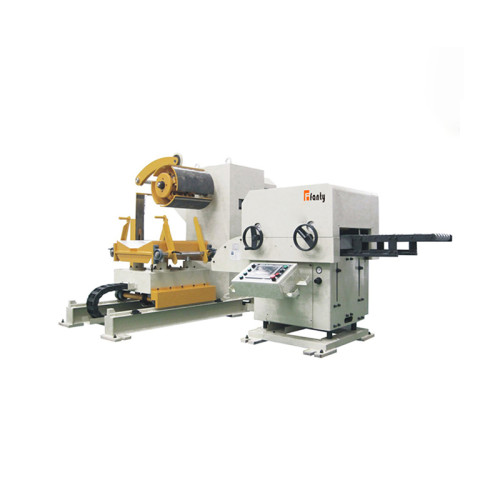
The ability to store hundreds of programs, the repeatable plus or minus 0.05 mm pitch, and the direct link to the press control also make the NC servo feeder the natural partner for progressive dies and for lines that combine with a straightener in a 3-in-1 decoiler straightener feeder configuration.
If you quote new work regularly, ask yourself how many minutes a program recall is worth.
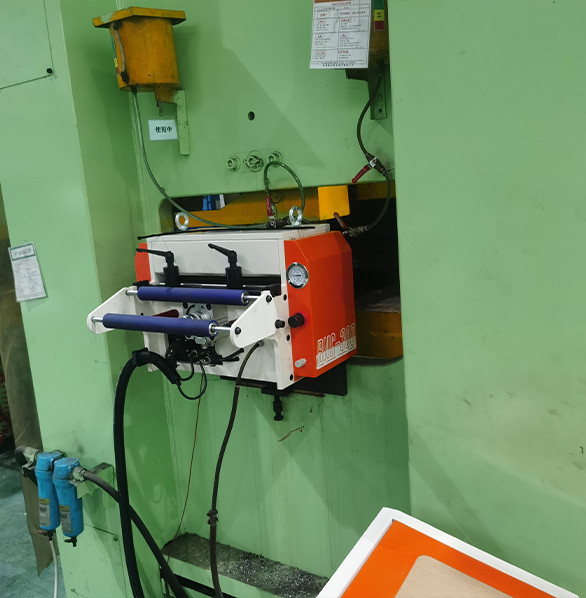
Total Cost: Look Past the Purchase Price
A roller feeder looks cheaper on the invoice, but the full comparison includes installation, setup labor, scrap, and lost press time. Every minute an operator spends adjusting a mechanical feed length is a minute the press is not making parts.
Maintenance also differs over the life of the machine. A mechanical linkage has cams, clutches, and one-way mechanisms that wear and need periodic adjustment, while an NC servo feeder relies on a servo drive and encoder that hold their settings for years with little attention.
The roller feeder will still win on very stable, dedicated work, but on mixed production the lower scrap rate, faster changeover, and repeatable accuracy of the NC servo feeder usually deliver a faster return on the extra investment.
When you ask suppliers for a quotation, ask them to split the numbers: purchase price, installation and training, expected setup time per job change, and maintenance cost over five years. Comparing those four lines is far more honest than comparing only the first one, and it is exactly how a professional press room buys feeding equipment.
Decision Checklist for Your Press Room
- Count your job changes per week: more than a few favors an NC servo feeder.
- List the feed pitch range you run; wide and variable ranges favor program control.
- Measure current scrap from feed drift; ±0.05 mm accuracy removes that scrap.
- Consider material variety: slipping materials are corrected automatically by servo control.
- Check press speed: both designs run fast, but servo acceleration protects thin strip.
- Ask your supplier to quote both machines with installation and training included.
Frequently Asked Questions
Is an NC servo feeder more accurate than a roller feeder?
Yes, in practical terms. An NC servo feeder measures actual roll travel every cycle and holds pitch to about ±0.05 mm, while a roller feeder relies on a fixed mechanical setting and can drift if the strip slips or the linkage wears.
Can a roller feeder handle high speed stamping?
Yes. On a single, fixed pitch, a roller feeder is very fast and reliable. Its weakness is not speed but flexibility: changing the pitch requires stopping the press and adjusting the mechanism.
How long does it take to change the feed length on an NC servo feeder?
Just a few seconds. The operator recalls or edits the stored program on the touchscreen, and the servo drive sets the new length automatically. There is no mechanical adjustment.
Which type should a small job shop choose?
Most small job shops run many different parts, so an NC servo feeder usually pays for itself through faster changeovers and lower first-part scrap. A roller feeder is a better fit only if the shop runs one or two permanent jobs.
Does FANTY supply both roller feeders and NC servo feeders?
Yes. FANTY builds mechanical and servo designs, and our engineers will recommend based on your real production mix rather than on a single product line.
How much training does an NC servo feeder need?
Operators usually learn program recall and basic adjustments within half a day. Because the machine stores hundreds of programs and handles the motion control automatically, the daily skill required is lower than with a mechanical roller feeder.
Related reading
Part of the the coil line guide library — the full library of coil handling, straightening and feeding guides from FANTY.
Not sure which feeder fits your press room?
Send FANTY your parts list, press tonnage, and job-change frequency. Our engineers will compare roller feeder and NC servo feeder options with a clear payback estimate for your shop.
Send Inquiry to FANTY