How to Set Up an NC Straightener Feeder for Fast Stamping?
High-speed stamping changes everything about how a line must be set up, and the NC Straightener Feeder sits at the heart of that setup. At 200 SPM a strip that was perfectly flat at 60 SPM can ripple, wander, or fight the die because the forces involved grow with speed squared.
Getting an NC Straightener Feeder ready for fast stamping is about roll gaps, pressure, feed synchronization, and vibration control, and each of these must be set deliberately rather than left at a slow-speed default.
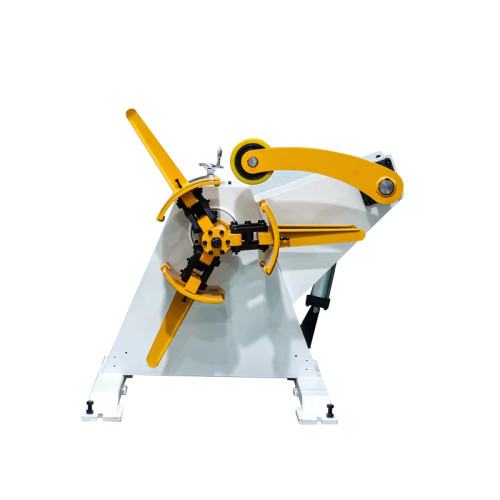
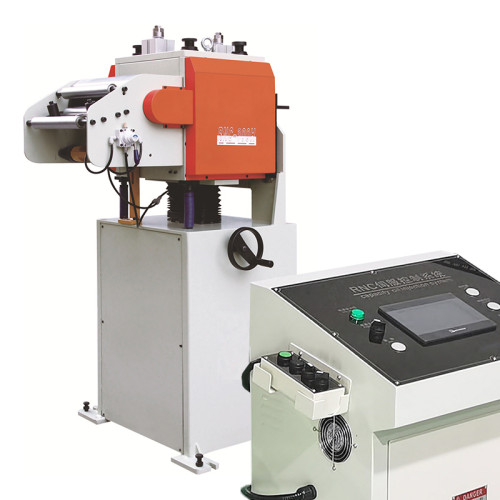
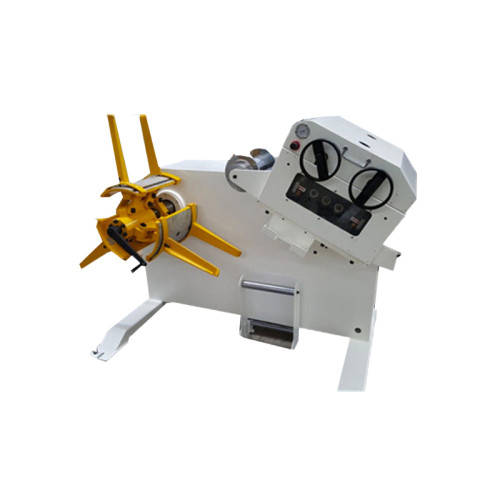
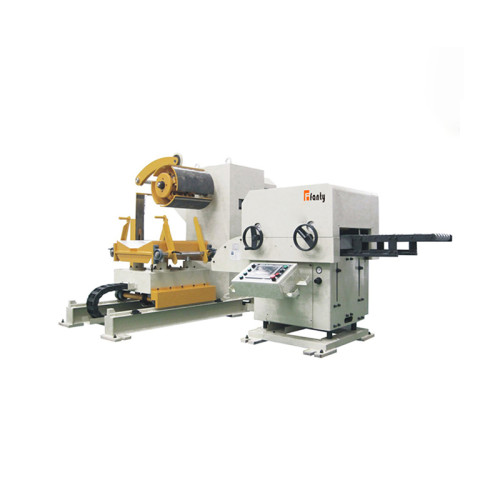
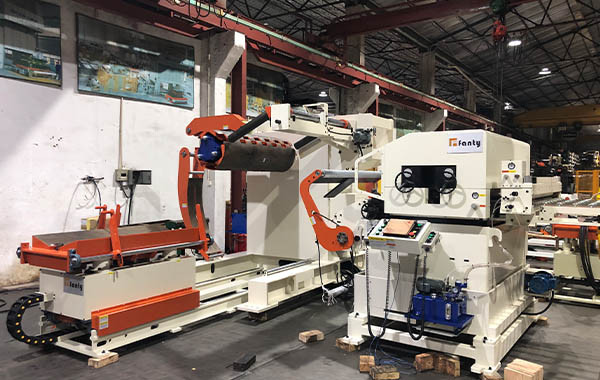
This guide walks through the complete fast-stamping setup procedure used by FANTY engineers, and it applies to a standalone straightener feeder or a complete 3-in-1 decoiler straightener feeder line.
Why High-Speed Setup Is Different
At low speed, the strip spends enough time between straightening rolls that small setup errors smooth themselves out.
The second difference is dynamics. At high speed the whole line vibrates, and vibration in the straightener translates into strip variation. The machine must be level and anchored, the rolls must be concentric and balanced, and the feed rolls must grip without slip.
A straightener that was fine at moderate speed can develop a rhythmic flatness defect at high speed simply because the machine is not rigid enough or the rolls are worn.
The third difference is synchronization. The NC Straightener Feeder must feed in perfect phase with the press stroke, which at high speed leaves almost no tolerance for delay.
The synchronization signal, the acceleration ramp, and the feed timing all have to be tuned as a system, not as individual settings, because a few milliseconds of delay at 200 SPM becomes several millimeters of positioning error.
Set the Roll Gaps and Pressure for the Material
Roll gap is the foundation of flatness. Start from the material thickness and the straightener's recommended interference, which is usually expressed as a percentage of the material thickness.
Pressure must be even across the strip width. If the strip exits with a center wave, increase the pressure at the center rolls; if it exits with edge waves, increase the edge pressure.
This is the classic diagnosis taught in every stamping shop, and at high speed it is even more important because a small pressure imbalance at low speed becomes a visible wave at high speed. Adjust in small increments, run a sample, and check the strip by eye and by feel before opening the machine fully.
For the NC servo feeder section, set the feed roll pressure to the minimum that holds the strip without slip at maximum acceleration. At high speed the acceleration forces are large, so the pressure needed for grip is higher than at low speed, but it should never be so high that it marks the strip.
Test by running at full speed and watching for feed length variation; if the length wanders, increase pressure slightly and re-test until it is stable.
Tune Feed Synchronization and Acceleration
Feed synchronization is the difference between a line that runs and a line that fights. The NC Straightener Feeder must receive the press signal at the correct point in the stroke cycle and deliver the feed in the window the die allows.
Acceleration is the setting that most affects high-speed performance. A feed that accelerates too slowly takes too long to reach pitch length within the available window, forcing the press to slow down; a feed that accelerates too fast creates slip and vibration.
Modern controllers let you set separate acceleration and deceleration ramps, and the correct values depend on the material, pitch, and speed. Start with the controller's suggested values, run a trial, and adjust in small steps until the feed is stable at the target speed.
Watch the feed length consistency at full speed. Feed length is the final judge of the whole setup: if it holds within tolerance part after part, the straightener and feeder are working as a system. FANTY's NC Straightener Feeder units hold ±0.05 mm accuracy at up to 200 SPM when set up correctly, and that accuracy is the payoff of all the tuning described here.
Slow-Speed vs High-Speed Setup Settings
The table below compares typical straightener feeder settings at moderate and high speed. Use it as a starting reference, then fine-tune for your material.
| Setting | Moderate Speed | High Speed |
|---|---|---|
| Straightening interference | 10–15% of thickness | 10–15%, but verified per roll |
| Feed roll pressure | Minimum reliable grip | Slightly higher for acceleration force |
| Acceleration ramp | Gentle, comfortable | Sharp but slip-free, tuned to pitch |
| Synchronization check | Occasional | Every setup, signal timing verified |
| Vibration monitoring | Visual | Level, anchor, roll balance checked |
Notice that the straightening interference itself does not change much with speed; what changes is the discipline around verifying it. At high speed there is no margin for a roll that has drifted, so the verification routine becomes part of the setup rather than an occasional check.
Fast-Stamping Setup Checklist
- Level and anchor the straightener feeder before any adjustment; vibration at speed amplifies every misalignment.
- Set entry rolls lighter than exit rolls and verify the strip exits flat with no center or edge wave.
- Check the feed rolls for slip at full acceleration and adjust pressure until feed length is stable.
- Verify the press synchronization signal timing at the target speed, not at jog speed.
- Measure feed length on five consecutive parts and confirm all five are within the same tolerance band.
Fast stamping rewards preparation. FANTY brings 12 years of experience, a 45,000 m² factory, 370 employees, and more than 80 R&D engineers to the design of its NC Straightener Feeder and NC servo feeder ranges, all CE certified and proven on more than 200 lines in over 60 countries. When the setup procedure in this guide is followed, the line starts fast and stays stable, which is exactly what high-speed production demands.
Frequently Asked Questions
How much straightening interference should I use at high speed?
Start with 10 to 15 percent of material thickness as interference, with entry rolls slightly lighter than exit rolls. Verify the strip is flat at full speed and adjust the center or edge rolls if a wave appears. The percentage is similar to low speed; the verification frequency is what changes.
Why does my feed length vary at high speed but not at low speed?
Feed length variation at speed usually means the feed rolls are slipping under acceleration or the synchronization timing is drifting. Increase roll pressure in small steps until the length is stable, and verify the press signal timing at full speed rather than at jog speed.
How often should I check the straightening rolls on a fast line?
On a high-speed line, inspect rolls weekly for wear, glazing, and balance, and check the gap settings at every job change. A roll that wears unevenly creates a ripple that only appears at speed, so routine checks are the cheapest insurance against scrap.
Can a 3-in-1 decoiler straightener feeder really hold accuracy at 200 SPM?
Yes, when the machine is sized correctly and set up as described. FANTY's 3-in-1 decoiler straightener feeder and NC Straightener Feeder units hold ±0.05 mm feeding accuracy at up to 200 SPM in field installations, provided the line is level, the rolls are in good condition, and the feed pressure is tuned for the material.
Related reading
- how to set roll pressure
- how back tension affects straightening
- how to hit a flatness spec on a coil line
Part of the 3-in-1 decoiler straightener feeder — the full library of coil handling, straightening and feeding guides from FANTY.
Set up your line for maximum speed
Get the right straightener feeder configuration and tuning guidance from FANTY's stamping specialists.
Send Your Inquiry