How to Troubleshoot NC Servo Feeder Slippage on Oily Strip?
Every stamping plant that runs oily coil knows the symptom: the NC servo feeder reports a feed pitch error, the part comes out short, and the operator wipes the strip, reruns the job, and hopes. The root cause is usually not the feeder at all.
It is the oil film on the strip robbing the feed rolls of grip, so the rolls turn the correct distance but the strip does not move with them. Slippage on oily strip is one of the most common feeder complaints in the field, and it is also one of the most fixable once you understand the mechanics of grip.
This guide explains why oil causes slip, the adjustments that restore grip, and the material-side controls that stop the problem at the source.
The fixes below are arranged from the quickest to the most structural, so you can stop the bleeding today and then eliminate the cause over the coming weeks.
There is also a maintenance angle that plants overlook. The condition of the feed roll surface changes how the line behaves on oily strip: a glazed or polished roll that has run for years without resurfacing loses its grip far sooner than a roll with the correct surface texture.
Add roll surface inspection to the preventive maintenance schedule, and resurface or replace the rolls at the interval recommended by the builder.
A roll that is resurfaced before it glazes keeps the oil problem manageable, while a neglected roll turns a minor oil issue into a chronic pitch-error battle that no amount of pressure adjustment can fully cure.
Finally, keep the feed rolls parallel. If the roll gap is tighter at one end than the other, the strip is squeezed unevenly and the grip varies across the width, which shows up as intermittent slippage that shifts with the strip position. Check the parallelism whenever you adjust the pressure, and correct any taper before concluding that the oil is the only problem.
Why Oil Breaks the Grip
An NC servo feeder advances strip by clamping it between two rolls and rotating them a precise angle. The strip moves because of friction between the roll surface and the strip surface. Oil changes that friction in two ways.
The result is a slip that is not constant. A light oil film slips a little, producing a feed that is short by a fraction of a millimeter and a die that slowly walks out of position. A heavy film slips a lot, triggering the feeder's pitch-error alarm and stopping the line. Both are the same disease at different intensities, and both damage parts and tooling if ignored.
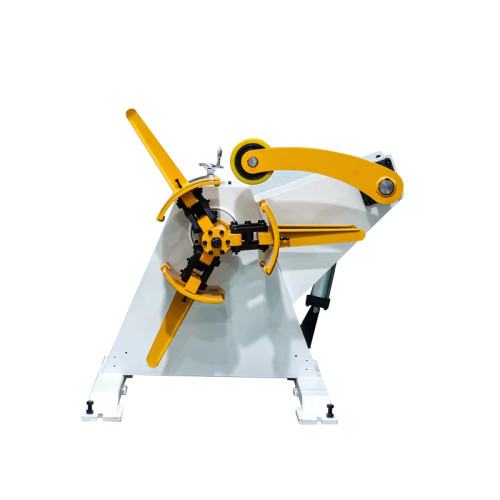
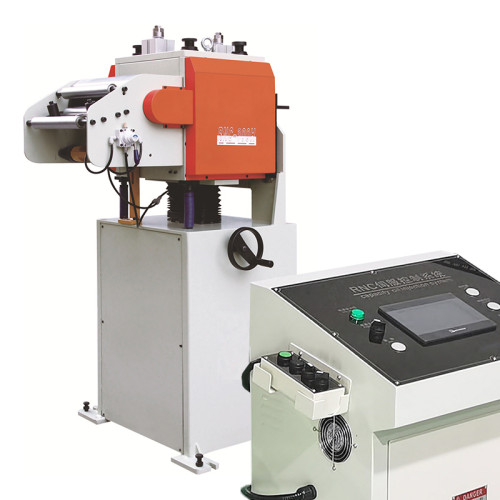
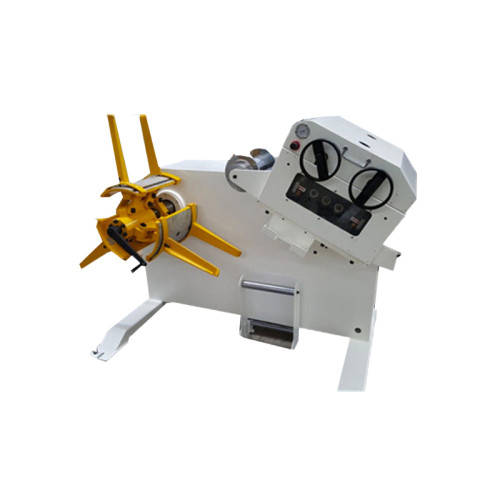
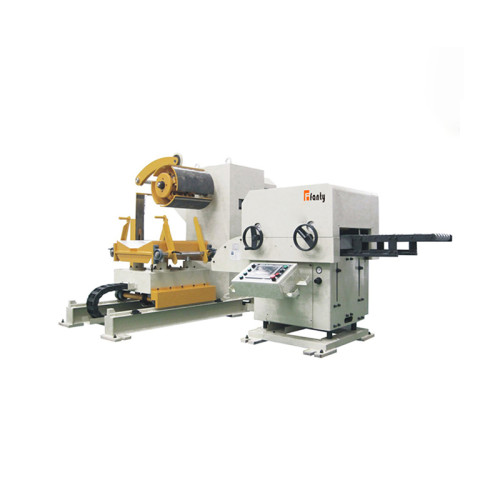
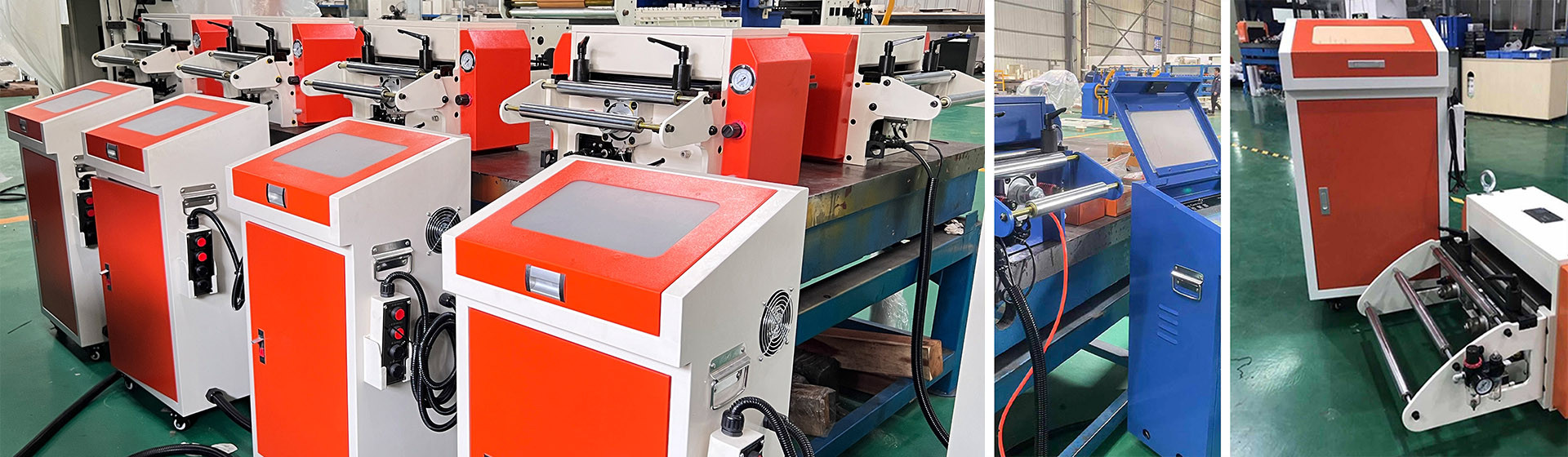 nc servo feeder production line
Quick Fixes You Can Apply Today
Start with these four adjustments. Each takes minutes and restores most of the lost grip without changing the process.
| Fix | What it does | When to use it |
|---|---|---|
| Increase roll pressure | Higher clamping force pushes the rolls through the oil film | Light to moderate oil films |
| Clean the feed rolls | Removes oil and debris that have built up on the roll surface | At the first sign of pitch drift |
| Fit strip wipers | Wipe excess oil from the strip before it enters the rolls | Heavy oil films on incoming coil |
| Slow the feed acceleration | Less acceleration demand means less slip force at the roll | During setup until the root cause is fixed |
These are the everyday tools. If pitch accuracy returns after cleaning the rolls, the problem is contamination buildup and the answer is a cleaning schedule. If the strip is simply too oily, wipers and higher pressure are the immediate medicine.
Roll Coating: The Grip Upgrade
When the strip is chronically oily and higher pressure is not enough, the roll surface itself must change. Standard feed rolls are often steel, which relies entirely on clamping pressure for grip.
Polyurethane-coated rolls are the most common solution for oily strip. The urethane surface deforms slightly around the strip and squeezes the oil out of the contact zone, restoring friction even with a wet strip.
The trade-off is that coated rolls wear faster than steel and must be replaced periodically, and the coating sets a limit on the surface speed and temperature.
For plants running mill-oiled coil as standard, a polyurethane-coated feed roll set is usually the difference between chronic pitch alarms and reliable production.
Controlling the Oil at the Source
The structural fix is to control how much oil reaches the feeder in the first place. Oil arrives on the strip from two places: the steel mill's corrosion-protection oil applied at the rolling mill, and your own upstream processes such as slitting, washing, or an earlier stamping operation that oils the strip.
- Agree an oil spec with the mill. Specify the maximum oil film weight on incoming coils and measure it on arrival.
- Add a wiper or squeezer station. A simple felt or rubber wiper before the feeder removes the bulk of the surface oil.
- Clean after upstream operations. If slitting or pre-punching oils the strip, wash or wipe before the feeder.
- Store coils to limit oil migration. Keep coils upright and cool so the oil stays on the outer wraps instead of pooling.
Each of these moves the oil problem upstream, where it is cheaper and easier to solve than at the feeder rolls.
Verify the Fix with a Pitch Test
Whatever combination of fixes you apply, prove the result with a pitch test rather than trusting the eye. Run the feeder without the die engaged, feed a set length a hundred times, and measure the actual position of the strip edge or a mark on the strip with a reliable scale or sensor. Record the spread of the readings before and after the fix.
A feeder holding a feed-length repeatability within ±0.05 mm across a hundred oily-strip cycles is back in specification. If the spread remains large, the oil film is still robbing grip, and the answer is a more structural fix: coated rolls, a wiper station, or a conversation with your coil supplier about the oil spec.
Frequently Asked Questions
Why does my feeder slip on some coils but not others?
The difference is almost always the oil film weight on the coil. Different mills and different batches apply different amounts of corrosion-protection oil, and the variation shows up as intermittent slippage that is easy to misdiagnose as a feeder fault.
Can I just increase roll pressure to stop all slippage?
Higher pressure helps up to a point, but excessive pressure damages the strip, marks the surface, and overloads the roll bearings. Beyond the correct pressure range, the answer is a coated roll or oil control, not more clamping force.
How often should the feed rolls be cleaned on an oily line?
On a line running oily coil, cleaning the feed rolls at least once per shift is a reasonable starting point. If pitch drift appears before the end of a shift, increase the frequency until the accuracy holds through the full shift.
Will a polyurethane-coated roll solve oily strip completely?
Coated rolls restore grip on moderately oily strip and are the most effective single upgrade, but very heavy oil films can still overwhelm any roll. Combine coated rolls with a wiper or an agreed oil spec for the complete solution.
Does strip tension affect slippage on oily strip?
Yes. Excessive back tension from the straightener or the decoiler brake pulls the strip against the feed direction and adds to the slip tendency. Set the tension just high enough to keep the strip straight and the loop controlled, and no higher.
Related reading
Part of the the coil line guide library — the full library of coil handling, straightening and feeding guides from FANTY.
Make Your Feeder Reliable on Any Coil
FANTY supplies NC servo feeders with roll coating options, wiper stations, and tension control advice for plants running oily or mill-coated strip. Send us your material, oil condition, and current pitch-error rate and we will recommend the grip package that ends the slippage.
Get a Grip Solution for Your LineFanty · NC Straightener Feeder
Coated, High-Strength or Thin Gauge? Each Needs Different Rolls
Roll finish and pressure setting decide whether you mark the surface or hold flatness. Send your material spec and we size the straightener feeder properly the first time.
Get a Free QuoteFANTY Machinery · 13 years on stamping automation · 2,000+ coil lines installed · engineers reply within 24 hours