How to Synchronize an NC Servo Feeder with the Press Stroke?
Synchronization is the difference between a feeder that merely feeds and a feeder that makes money. An NC servo feeder that is properly synchronized with the press delivers strip precisely when the press is ready, holds it during the stamping phase, and never fights the slide.
A poorly synchronized one scrapes parts, jams dies and forces operators to run at half speed. The good news is that modern servo control makes synchronization a systematic, learnable procedure rather than an art.
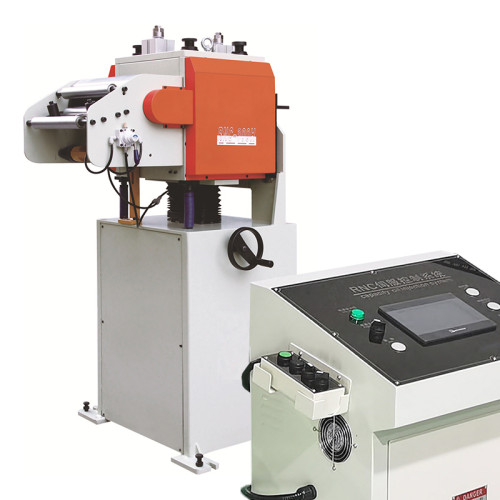
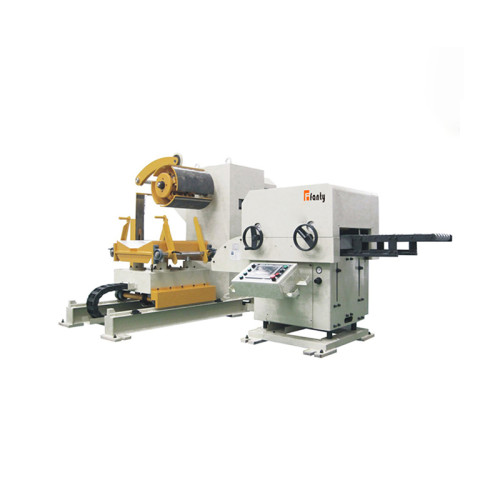
This guide explains how press angle, cam signals and servo motion profiles work together, gives a step-by-step setup sequence, and covers the common synchronization faults that FANTY's service engineers correct on NC Straightener Feeder lines around the world every week.
How Press-Feeder Synchronization Actually Works
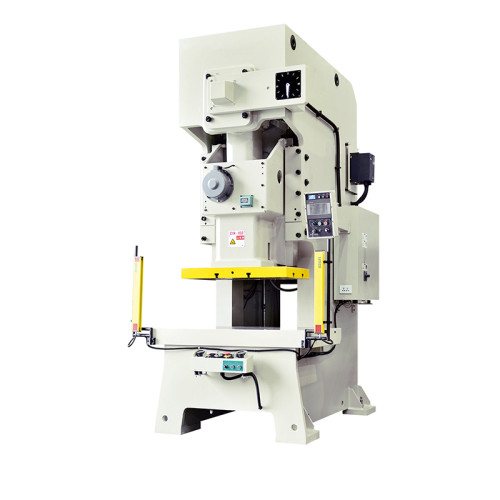
Every mechanical press has a crankshaft angle that defines the slide position, and that angle is the heartbeat of the whole line.
The critical concept is the feed angle window. For a typical single-operation press, the slide is clear of the material from roughly 90 degrees (top dead centre moving down) through 270 degrees (bottom dead centre moving up). The actual usable window depends on die height, strip thickness and press speed.
The feeder must complete its entire feed stroke, including acceleration and deceleration, inside this window, with the strip settled and clamped before the punch touches it.
Servo control adds one more element: the motion profile. A well-tuned NC servo feeder uses an S-curve or trapezoidal velocity profile that accelerates smoothly, travels at controlled speed and decelerates without overshoot.
This profile is what delivers ±0.05 mm repeatability at 200 SPM; a jerky profile would overshoot and oscillate at high speed no matter how good the encoder signals were.
Step-by-Step Synchronization Setup
- Confirm the press cam switch or encoder output; verify feed-start and feed-stop angles are wired to the correct feeder inputs.
- Set the press angle for feed start at the point where the slide is safely clear, typically 95-100 degrees.
- Set the feed stop angle so the strip settles before the punch closes, typically 250-260 degrees.
- Enter the feed length, strip thickness and material in the controller so it can compute the motion profile.
- Run a slow jog cycle and verify the strip advances exactly one feed length per stroke.
- Bring the press to operating speed in steps, watching for feed completion within the window at each speed.
- Verify part-to-part feed length with a micrometer and adjust the profile for overshoot or undershoot.
Key Synchronization Parameters and Their Effect
| Parameter | Typical Setting | What It Controls | Symptom If Wrong |
|---|---|---|---|
| Feed start angle | 95-100° | When feeding begins after slide clears | Die crash or misfeed if too early |
| Feed stop angle | 250-260° | When strip must be settled | Inaccurate parts if too late |
| Acceleration time | 50-120 ms | How smoothly feed ramps up | Overshoot, strip bounce if too short |
| Deceleration time | 50-120 ms | How smoothly feed stops | Overshoot and oscillation if too short |
| Dwell time | As required | Strip settled before clamping | Scrap and variation if too short |
| Feed length | Per part spec | Distance advanced per stroke | Wrong parts if incorrect |
| Strip thickness | Per material | Clamping force and profile | Slip or dimpling if wrong |
Common Synchronization Faults and How to Fix Them
The most frequent synchronization problem FANTY engineers see is a feed that cannot complete inside the window at full press speed. The press runs faster than the feeder can move the specified feed length, so the strip is still moving when the punch descends. The fix is rarely to slow the press; it is to shorten the effective feed time by improving the motion profile, reducing acceleration ramp time without causing bounce, or moving the feed start angle earlier while the slide is still safely clear. If the physical travel time cannot be reduced, the real solution is a feeder with a larger servo drive or higher-feed-rate mechanics, which is why feeder sizing must consider feed length and SPM together, not separately.
The second common fault is encoder or cam noise. A dirty cam switch, a loose encoder coupling or a shielded cable run next to a power cable produces false triggers that make the feeder feed twice or skip a feed.
The symptoms are intermittent: one bad part per hundred, a mysteriously shifted hole pattern, an occasional die jam. Diagnose by watching the controller's angle display while running at low speed, then tighten, clean or replace the signal source and re-route the cable.
Third is the hunting problem, where the feeder constantly makes tiny corrections and never truly settles. This is usually a gain or damping issue in the servo loop, and on a modern FANTY controller it is fixed by running the auto-tuning routine with the actual strip loaded, then verifying at full speed.
A feeder that hunts cannot hold ±0.05 mm, and hunting always shows up first as part-length scatter on the inspection bench.
Getting the Last Micron of Accuracy from Synchronization
Once the feeder is synchronized at speed, the remaining accuracy comes from details. Keep the strip flat and straight before the feed rolls; any bow or camber from the straightener becomes feed-length error at the die.
Set the roll clamping pressure for the actual material, and re-check it when you change coil grade or thickness. Check the feed rolls for wear every few months; grooved rolls slip on smooth material and produce exactly the kind of intermittent length error that is hardest to trace.
Temperature is a subtle factor at high speed. At 200 SPM, motors and drive cabinets generate heat, and feed length can drift by a few hundredths of a millimetre as the machine warms.
The best NC Straightener Feeder installations compensate with temperature-stable mechanics and control logic that re-references on each die change. If your parts show a slow drift over a shift, measure the feed length cold and warm, and add the warm-machine value to your setup notes.
Finally, document your settings. Every die and every coil grade has an ideal parameter set; recording them means the next setup takes minutes instead of an afternoon. FANTY controllers store multiple recipe sets per die, which is why our customers can change over a 3-in-1 decoiler straightener feeder line in under fifteen minutes and go straight to good parts.
Frequently Asked Questions
What is the best feed start angle for my press?
Typically 95-100 degrees, once the slide is safely clear of the material. The exact value depends on die height, strip thickness and press geometry. Start there, verify at slow speed, then advance the angle in small steps while watching for any die contact.
Why does my NC servo feeder feed twice sometimes?
That is almost always a false cam or encoder trigger: a dirty cam switch, loose encoder coupling, or signal cable running beside a power cable. Inspect the signal source and cabling; a clean, shielded signal at low speed followed by re-verification at full speed usually resolves it.
My feeder cannot finish feeding before the punch closes at full speed. What now?
Optimize the motion profile first: shorten acceleration and deceleration ramps without introducing bounce, and check the feed start angle. If the physical travel time genuinely exceeds the available window, the feeder's servo drive or mechanics are undersized for the feed length and SPM combination — a sizing issue.
How do I hold ±0.05 mm feed accuracy all day?
Keep the strip flat before the feed rolls, set clamping force for the actual material, check feed-roll wear regularly, and account for thermal drift by measuring cold and warm. Storing verified recipes per die also lets every setup start from a known-good state.
Related reading
- which part limits feeding accuracy
- what feeding accuracy to expect
- how to hold feed accuracy on a coil line
Part of the the coil line guide library — the full library of coil handling, straightening and feeding guides from FANTY.
Make your press and feeder work as one
FANTY's NC servo feeders synchronize seamlessly with any mechanical press, holding ±0.05 mm at 200 SPM with recipe-based setup. Engineered by 80+ R&D engineers, built by 370 staff in a 45,000 m² factory, exported to 60+ countries.
Talk to a Synchronization Expert