How to Reduce Downtime in Stamping Production Lines?
Unplanned stamping line downtime is the most expensive problem in metal forming: every minute a press stands still, labor costs continue, delivery deadlines slip and overheads keep accumulating. In high-speed stamping operations running at 200 SPM or more, a single unplanned stop can reject dozens of parts, damage tooling and take an hour to recover. The good news is that most downtime is not random. It follows predictable patterns - coil loading, strip feeding, material jams, tooling wear and scheduled maintenance - and each pattern can be attacked systematically. This guide explains how leading stamping plants, including the 200+ lines FANTY has installed worldwide, reduce downtime through machine selection, standard operating procedures, preventive maintenance and data-driven monitoring of the complete coil feeding line.

Where Downtime Actually Comes From
Before you can reduce downtime, you need to measure it. Start by recording every stop for two weeks: the time of day, the duration, the press number, the material, the operator and the cause. In our experience across automotive, appliance and electrical component plants, the same top causes appear again and again. Coil changeover and loading account for the largest share of scheduled stops, often 20 to 30 percent of total available time in plants that still use cranes and manual alignment. Strip feeding faults - misfeeds, feeding pitch errors, strip slipping in the rollers - cause the most frequent unscheduled stops. Material issues such as coil telescoping, edge damage and inconsistent thickness follow closely. Tooling wear and breakage, lubrication failures and electrical faults complete the list.
Once the data is collected, categorize each stop as planned or unplanned, and calculate the classic metric: overall equipment effectiveness, or OEE. OEE multiplies availability, performance and quality. A plant that achieves 85 percent OEE is considered world class, while many conventional stamping shops sit at 60 to 70 percent. The gap is almost never one dramatic failure; it is the slow accumulation of thirty-minute coil changes, five-minute misfeed recoveries and ten-minute tooling adjustments repeated every shift. Each of these is an opportunity. Reducing average coil change time from 30 minutes to 10 minutes on a two-shift plant, for example, can recover hundreds of production hours per year.
Cut Changeover Time with the Right Equipment
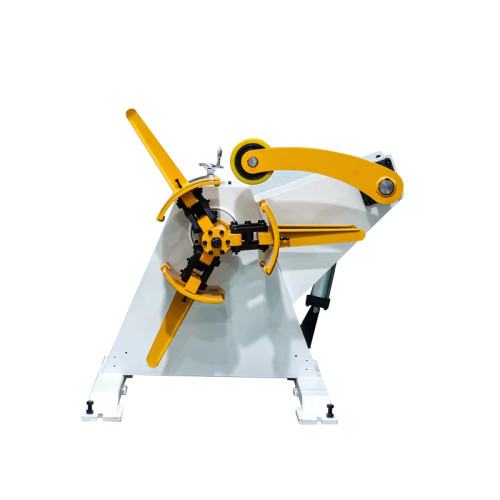
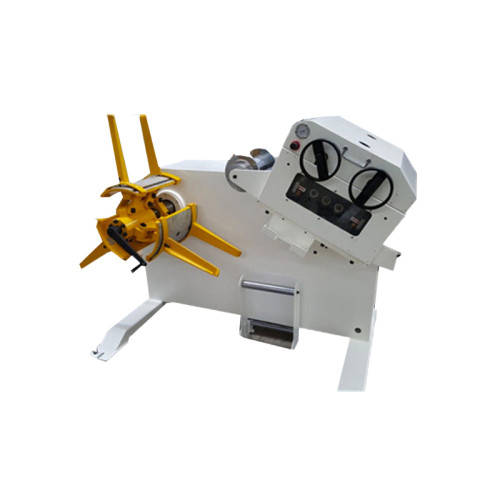
Coil changeover is the largest controllable downtime block in most stamping lines. The most effective single upgrade is a motorized or hydraulic decoiler with powered expansion, which lets one operator expand the mandrel, position the coil and tension the strip in minutes instead of relying on a crane operator and two fitters. Hydraulic coil cars and coil loading trolleys remove the remaining manual handling. On lines that change coil widths frequently, quick-change rollers on the straightener and feeder reduce setup from hours to minutes. The goal is single-minute exchange of die and coil, the stamping version of SMED methodology: separate internal operations that stop the press from external operations that can be prepared while the press is still running.
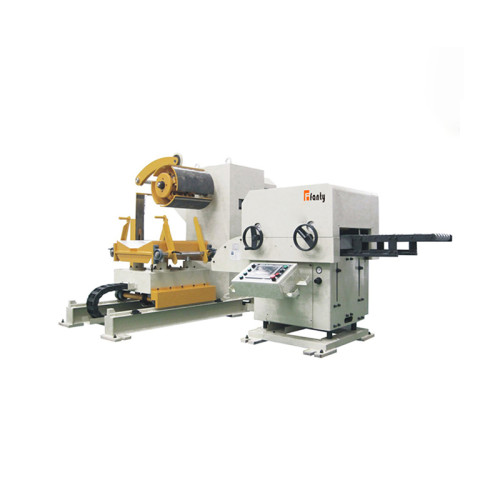
FANTY applies this thinking to every line it builds. Our decoiler-straightener-feeder machines integrate coil loading, leveling and feeding into one synchronized unit, so the operator prepares the next coil while the current one finishes, then switches over with a single command. For plants running mixed batches, we size the line around the most frequent coil and provide powered adjustment for the rest. The investment in powered coil handling typically pays for itself in fewer than twelve months purely from recovered production time - before counting the reduction in injuries and material damage from manual coil handling.
Eliminate Feeding Faults Before They Stop the Press
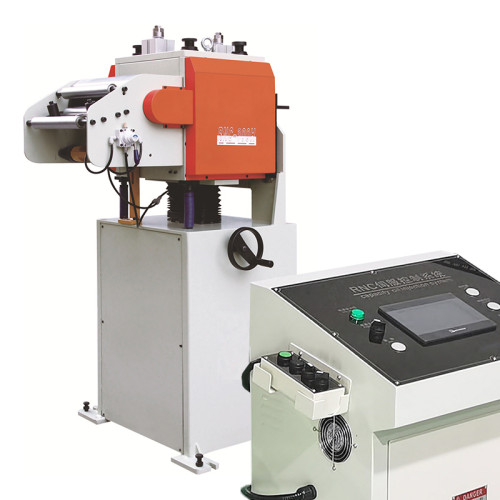
Feeding faults are the most common unplanned stops because the feeder is the interface between the coil and the die. A misfeed means the strip stopped in the wrong position, which usually means a damaged part, a risk of die collision and a production halt. Most misfeeds have four root causes: incorrect feeding pitch programming, worn or incorrectly tensioned feed rollers, inconsistent strip shape from an under-performing straightener, and material slip caused by insufficient clamping force. A modern NC servo feeder attacks all four at once. The servo motor drives both rollers through a rigid transmission, the encoder measures actual strip movement and the controller corrects position in real time, holding feed accuracy within ±0.05 mm even at high speed.
Beyond the machine itself, standardize the setup procedure. Document the correct roller gap for every material thickness, the correct clamping pressure, the correct feed acceleration profile and the correct loop height at the decoiler. Print the parameters on a card attached to the feeder. Train every operator and setter to verify these parameters before starting a new batch. In plants that adopt this discipline, feeding fault frequency typically drops by 60 to 80 percent within two months. The same discipline applies to the straightener: set the intermesh depth according to the material grade and thickness, and check the leveled strip for residual curvature at the start of every coil.
- Standardize feeding pitch, roller gap and clamping pressure for every material.
- Verify leveled strip flatness at the start of every new coil, not after faults appear.
- Install misfeed and over-feed sensors to catch faults before they reach the die.
- Log every feeding alarm and review the alarm history weekly with setters.
- Replace feed rollers and straightening rollers on a schedule, not after failure.
Build a Preventive Maintenance Schedule That Works
Reactive maintenance is the enemy of uptime. Every machine on the line has a known wear cycle, and replacing parts just before they fail is far cheaper than recovering from the failure. The table below shows a practical maintenance cadence for a typical coil feeding line; adjust intervals by actual operating hours and conditions.
| Component | Inspection Point | Recommended Interval |
|---|---|---|
| Feed and straightening rollers | Surface condition, runout, bearing play | Monthly visual, quarterly measurement |
| Servo motor and encoder | Temperature, vibration, coupling tightness, cable wear | Quarterly |
| Hydraulic system | Oil level and quality, filter change, seal leakage | Oil test quarterly, filter every 2,000 hours |
| Decoiler bearing and brake | Noise, temperature, mandrel expansion force | Monthly |
| Gearboxes | Oil condition, backlash, mounting bolts | Annual oil change, half-yearly check |
| Electrical cabinet | Terminal tightness, dust, cooling fan, alarm log | Monthly |
| Safety devices | Guards, interlocks, emergency stops, light curtains | Weekly functional test |
| Air system | Filter, regulator, lubricator, hose condition | Weekly drain, monthly service |
Do not rely on memory for maintenance. Use a simple board or software system that flags tasks by machine and by hours of operation, and close each task with a signature and a photo. FANTY equips its lines with service manuals, spare parts lists and online technical support precisely so that preventive maintenance is a routine rather than a crisis response. For critical plants, we also recommend keeping a starter kit of the fastest-wearing parts - feed rollers, seals, filters, fuses and encoder cables - on the shelf. The cost of the spare kit is a small fraction of one hour of line stoppage.
Monitor the Line with Data, Not Guesswork
Modern NC servo feeders and straighteners generate a stream of data: feeding pitch error, motor current, temperature, cycle count and alarm codes. Use it. Track feeding pitch deviation over time; a gradual increase is the earliest warning that rollers or bearings are wearing. Monitor servo motor current; a steady rise at constant speed indicates growing friction or mechanical drag. Review the alarm history every week and group alarms by type. If the same alarm appears repeatedly, you are treating symptoms, not causes - dig into the root cause before the next shift.

Combine machine data with production records to identify the true cost of each stop. Simple spreadsheets are enough for most plants; dedicated manufacturing execution systems add convenience, not magic. The key habit is the daily review: five minutes every morning with the previous day's stops, asking three questions - what stopped, how long, and what prevents it from stopping again? When the plant manager personally reviews downtime data, stop frequency drops measurably within weeks, because accountability drives improvement. This is the same discipline FANTY's service engineers apply when we commission a line: baseline the normal operating parameters, then watch for deviation.
Common Questions About Stamping Line Downtime
What is the biggest cause of stamping line downtime?
In most plants it is coil changeover, followed closely by feeding faults and material issues. Coil changeover is a scheduled stop that can be dramatically shortened with powered decoilers, hydraulic coil cars and quick-change rollers. Feeding faults are unscheduled stops that respond to standardized setup procedures and modern NC servo feeder controls.
How much downtime is normal for a stamping line?
A well-run line with an 85 percent OEE target typically experiences 15 percent total loss, split between planned maintenance, changeover and minor stops. If your unplanned downtime exceeds 5 to 8 percent of available time, there is usually a systematic root cause worth investigating, such as material variability or missing setup standards.
Can upgrading the feeder really reduce downtime?
Yes. Replacing a manual or pneumatic feeder with an NC servo feeder typically eliminates the most frequent misfeeds, reduces setup time because parameters are stored digitally, and provides alarm diagnostics that cut troubleshooting from hours to minutes. FANTY has documented plants recovering 10 to 20 percent more press time after such upgrades.
Stop Losing Hours to Stamping Line Downtime
FANTY engineers will audit your line, identify the biggest stop causes and recommend equipment and process upgrades - backed by 12 years of experience, 370 staff and 200+ lines running in 60+ countries.
Request a Line Audit