How to Improve Stamping Safety with an NC Servo Feeder?
Safety is the foundation of every productive stamping line, and the coil-feeding equipment that serves the press is where many of the most serious hazards concentrate.
A heavy coil of steel moving at high speed, a servo-driven feed mechanism with significant force, and operators working in close proximity create a risk profile that demands real engineering, not just warning labels.
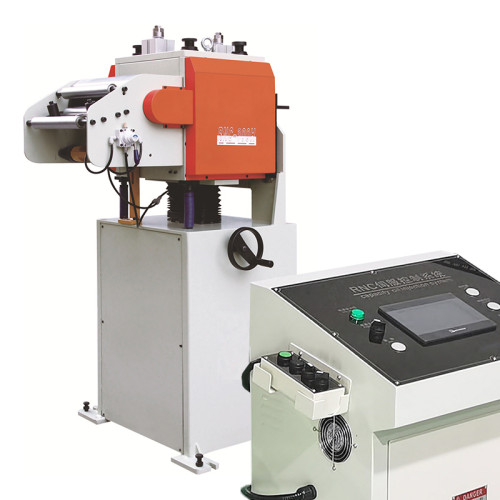
This guide explains how a properly engineered NC Servo Feeder system improves stamping line safety, what safety features to look for in an NC Straightener Feeder, and the safety-first practices FANTY Machinery, with 12 years of coil-feeding experience and CE-certified machines installed in 60+ countries, builds into every line it ships.
Why Stamping Line Safety Starts at the Feeder
The feeder is the component that moves material into the die, and that single function creates three distinct hazard categories.
A modern NC servo feeder addresses all three categories through design, not through operator caution alone.
Guards are engineered to prevent access to moving parts, the control system manages stored energy safely, and the press-feeder interface is interlocked at the electrical level so that the press cannot stroke unless the feeder has completed its cycle correctly.
When these systems work together, the operator's safety no longer depends on remembering to be careful; it depends on machines that are safe by design.
The safety argument for modernizing an old line is compelling. Legacy mechanical feeders often rely on clutches, cams, and exposed mechanisms that are difficult to guard completely, and their control systems were designed before modern safety standards.
Replacing them with a CE-certified NC Straightener Feeder system is one of the most effective single upgrades a plant can make to its safety program, because it removes the oldest, least-guarded machines from the line and replaces them with equipment designed to current safety regulations.
Essential Safety Features in a Modern NC Servo Feeder
Not all servo feeders are equal when it comes to safety, and the feature list is a reliable indicator of the manufacturer's safety culture. The following features should be considered mandatory for any new coil-feeding equipment, and FANTY builds all of them into its machines as standard.
- Two-hand or interlocked guarding: fixed and interlocked guards prevent access to feeding rollers and the strip path while the machine is powered, and opening a guard stops the machine safely.
- Emergency stop with category-rated circuitry: a properly wired E-stop drops power to the drive in a controlled stop, and the circuit meets the safety category required for the application.
- Press-feeder interlock: the feeder and press exchange signals so the press can only stroke when the feed is complete, preventing die crashes and strip misfeeds.
- Safe torque and speed limits: the servo drive limits torque and speed during setup and jog modes, so operators can thread strip without facing full production forces.
- Loop and tension monitoring: automatic detection of strip slack or excess tension stops the line before the strip can tangle, whip, or pull free from the coil.
- Lockout points and energy isolation: clearly identified mechanical and electrical lockout points let maintenance isolate all energy sources before work begins.
These features work as a system.
How Integrated Machines Reduce Risk
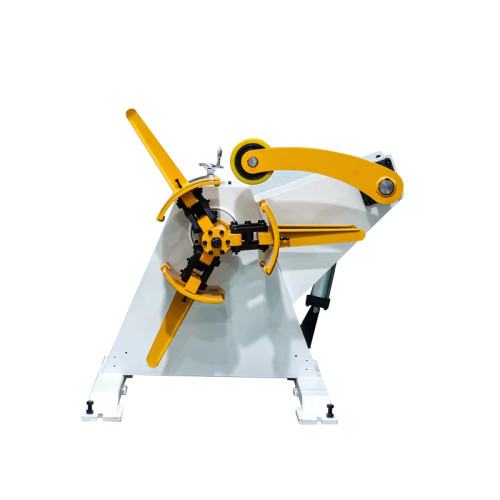
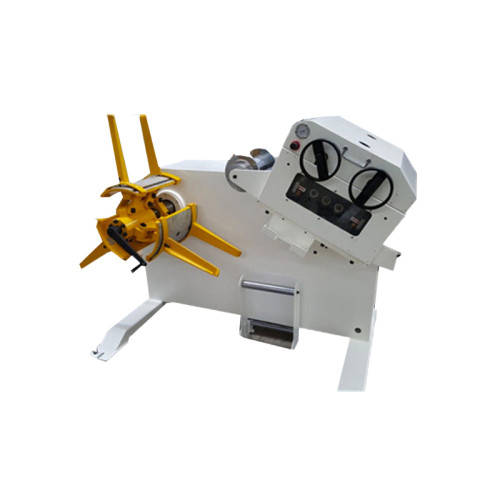
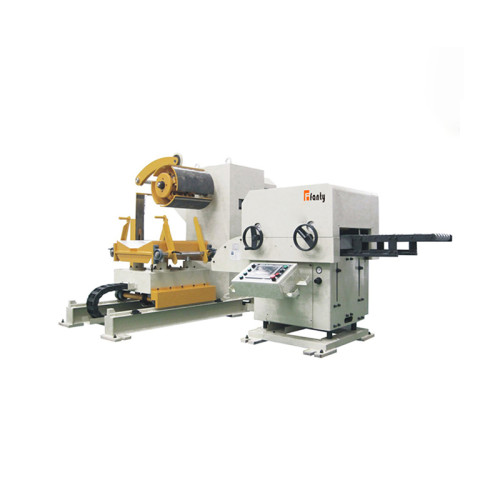
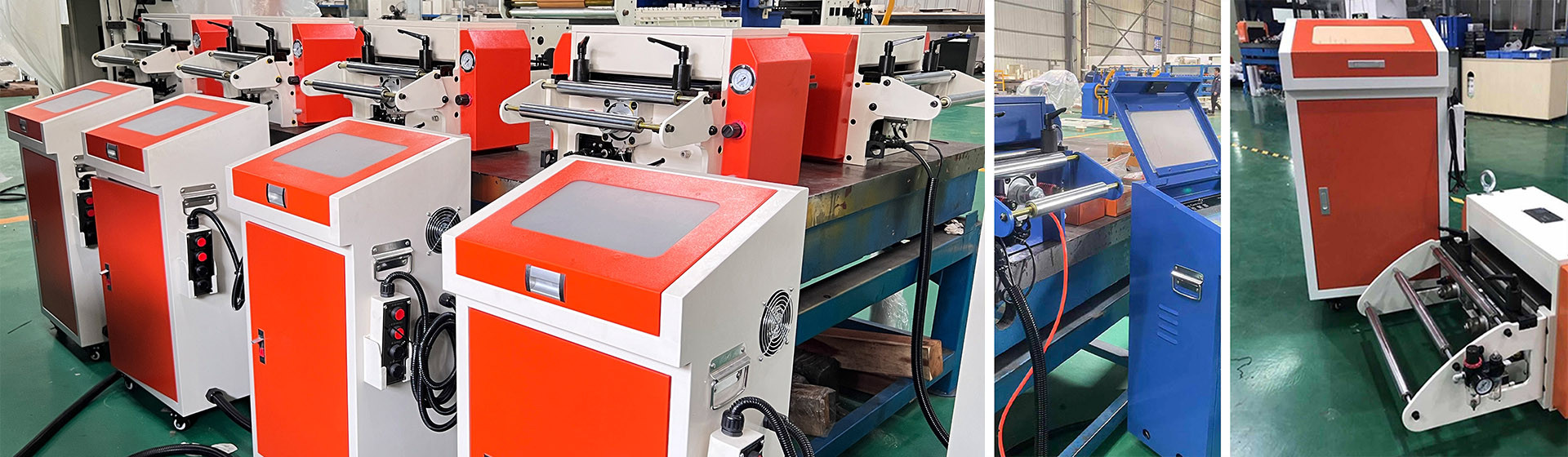
The 3-in-1 decoiler straightener feeder configuration has a genuine safety advantage over separate-unit lines, and it is worth understanding why. In a traditional line, the decoiler, straightener, and feeder are separate machines with open spans of strip between them.
An integrated machine eliminates most of these open spans. The strip passes from the decoiler into the straightener and directly into the feeder through a guarded, enclosed path, so there is far less strip exposed and far fewer places where an operator needs to reach into the machine.
The threading sequence is also more controlled, often guided by the control system, so the operator performs fewer manual operations in hazardous zones. This is a meaningful, measurable reduction in exposure, not a theoretical advantage.
The integrated design also reduces the number of interfaces that can fail. Each interconnection between separate machines is a point where a miscommunication or a mechanical misalignment can create a hazard.
In an integrated NC Straightener Feeder, the decoiler, straightener, and feeder share one control system and one safety architecture, so the interlocking is coherent across the whole unit. Fewer interfaces mean fewer failure modes, and fewer failure modes mean a safer line.
Safety That Protects the Die as Well as the Operator
Safety equipment protects people first, but it also protects the tooling and the machine, and that dual protection is part of the business case. The press-feeder interlock, for example, prevents the press from stroking before the feed is complete.
Loop and tension monitoring has the same dual benefit. When the strip slackens or over-tensions, the system stops the line before the strip tangles around the rollers or whips out of control.
A tangled strip is dangerous for the operator who must free it, and a whipped strip can damage the straightening rolls and the feeder rollers. Automatic monitoring prevents the event entirely, which is always better than responding to it after the fact.
Safe torque and speed limits during setup are likewise protective on both fronts. Threading a strip through the straightener and feeder at full production speed is when operators are most exposed and when the strip is most likely to be damaged by a collision with a moving roll.
Slow, torque-limited jog modes let the operator guide the strip safely, and the machine itself is protected from the shock of an accidental high-speed collision during setup. The result is a line that is safer for people and gentler on equipment.
Building a Complete Safety Program Around the Feeder
Equipment alone cannot create a safe line; it must be supported by procedures, training, and culture. The following framework, which FANTY recommends to every customer during commissioning, turns the safety features of the machine into a complete program.
| Safety Element | What It Involves | Frequency | Responsibility |
|---|---|---|---|
| Machine guarding check | Verify all guards are in place, interlock switches function, and access panels latch correctly | Daily | Operator |
| E-stop verification | Test the emergency stop from each station and confirm the drive stops in the rated time | Weekly | Maintenance |
| Press-feeder interlock test | Confirm the press cannot stroke without a completed feed signal and the sequence is correct | Weekly | Maintenance |
| Safety relay and circuit check | Inspect safety relays, wiring, and contacts for wear, contamination, and correct operation | Monthly | Maintenance |
| Operator safety training | Train operators on threading, lockout, and emergency response for the specific machine | Quarterly / on hire | Supervisor |
| Full safety audit | Complete review of guarding, interlocks, procedures, and documentation against current standards | Annually | Safety officer / manufacturer |
Two elements of this program deserve special emphasis. The first is lockout-tagout. Every person who works on the feeder, the straightener, or the decoiler must be trained to isolate all energy sources: electrical, hydraulic, pneumatic, and stored mechanical energy in the strip tension.
The machine's design should make this easy, with clearly marked isolation points, and FANTY machines are engineered with lockout in mind so that maintenance can be performed safely and quickly.
The second is the operator's role in guarding. Guards that are removed for convenience are the leading cause of feeder-related injuries, and the program must make it unacceptable to run the machine with a guard removed.
Modern interlocks make it physically impossible to run with a guard open, which removes the temptation entirely. That is the real value of interlocked guarding: it converts a rule that depends on discipline into a physical fact that cannot be violated.
Frequently Asked Questions About NC Servo Feeder Safety
What is the most important safety feature on an NC Servo Feeder?
The press-feeder interlock is arguably the most important, because it prevents the press from stroking before the feed is complete, protecting both the operator and the die from a misfeed crash. Interlocked guarding and a properly rated emergency stop are equally essential and work together as a system.
Are integrated 3-in-1 machines safer than separate decoiler, straightener, and feeder units?
Generally yes. The integrated design eliminates open spans of strip between machines, reduces the number of operator actions in hazardous zones, and consolidates the safety architecture into one coherent control system with fewer interfaces that can fail.
Does CE certification guarantee that a feeder is safe?
CE certification means the machine has been assessed against the applicable European directives, including machinery safety, and declared conformant. It is a strong baseline, but the operator still needs procedures, training, and a maintenance program. Choose a supplier that treats CE as the minimum, not the selling point.
How often should feeder safety systems be tested?
Guards and interlocks should be checked daily by the operator, the emergency stop and press-feeder interlock tested weekly by maintenance, safety circuits inspected monthly, and a full safety audit performed annually. The exact intervals should follow the manufacturer's documentation and local regulations.
Related reading
- which part limits feeding accuracy
- what feeding accuracy to expect
- how to hold feed accuracy on a coil line
Part of the the coil line guide library — the full library of coil handling, straightening and feeding guides from FANTY.
Ready to make your stamping line safer by design?
FANTY Machinery engineers will review your line, identify the highest-risk operations, and recommend an NC Straightener Feeder system with the guarding, interlocks, and control architecture to protect your people and your dies, backed by 12 years of experience and CE-certified machines in 60+ countries.
Start a Safety Review of Your Line