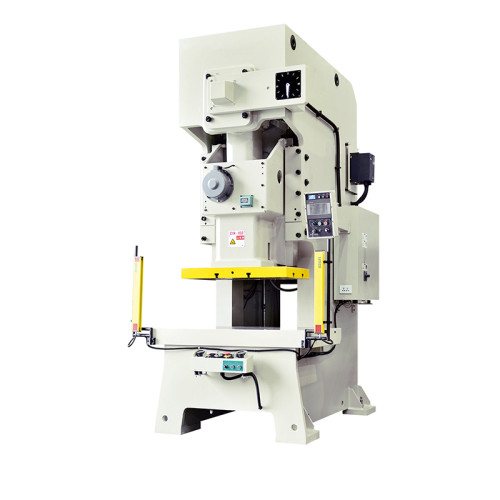
How to Improve Material Utilization in Progressive Stamping?
In progressive die stamping, material cost typically represents 50 to 70 percent of the total production cost of a part. That single fact makes material utilization in progressive die stamping one of the highest-leverage improvement targets a factory can pursue: every percentage point of scrap you eliminate flows almost directly to the bottom line. Yet most shops treat strip waste as an unavoidable fact of life, accepting utilization rates of 55 to 65 percent without ever measuring where the material actually goes. This article explains how to calculate your real utilization rate, identifies the six factors that quietly drain material away, and shows concrete methods — from strip layout optimization to feeding accuracy — that routinely push utilization into the 70s and beyond.
At FANTY Machinery, our engineers have spent twelve years building coil feeding lines that deliver the strip to the die with ±0.05 mm accuracy, and we have measured the effect of that accuracy on scrap in hundreds of installations across more than 60 countries. The message from that data is consistent: material waste is rarely a single dramatic failure. It is the sum of many small losses — carrier strips, pilot holes, edge trim, misfeeds, coil-end waste — that a disciplined shop can attack one by one.
First, Measure Your Real Utilization Rate
You cannot improve what you do not measure. Material utilization is defined as the weight of finished parts divided by the weight of strip consumed, expressed as a percentage. For a simple blanking operation the number is easy to compute; for a progressive die that produces a finished component, you must weigh the actual output, the scrap skeletons, the trimmed edges, the coil stubs left on the decoiler, and the offcuts from setup runs. Many factories are surprised to discover their true rate is five to ten points lower than the theoretical value quoted by the die designer, because real-world losses were never counted.
The gap between theoretical and actual utilization is where the improvement money lives. A line producing 500,000 parts per month with a five-point utilization gap on a 0.8 mm steel strip is quietly discarding hundreds of tons of material per year. At current sheet steel prices that is often enough to pay for a complete feeding system upgrade within twelve to eighteen months. Measuring, therefore, is not an accounting exercise — it is the first step of a payback calculation.
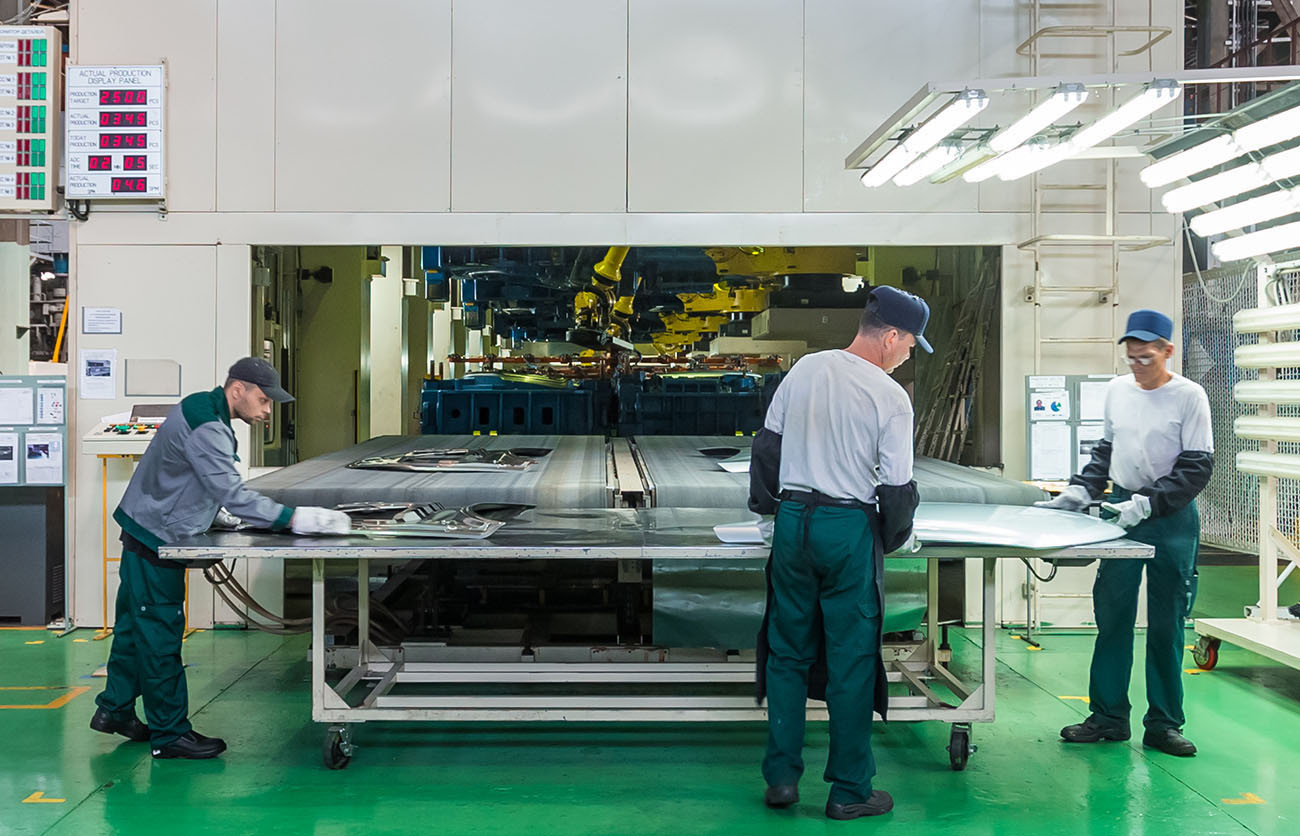
Set up a simple tracking sheet per job: coil weight in, good part weight out, scrap weight sold or disposed, and the number of setup runs that consumed material. After three or four production runs you will have a reliable baseline. With the baseline in hand, the six factors below give you a structured checklist of where the material is going and how to stop the leaks.
Six Factors That Drain Material in a Stamping Line
- Strip layout and nesting — the distance between blanks, the orientation of parts, and the width of the carrier web determine the theoretical yield. Rotating a part by 15 degrees or using two-row nesting can lift utilization by 8 to 15 points without touching the die mechanics.
- Feeding accuracy and misfeeds — a feeder that drifts or slips punches features into the wrong location and destroys the part. Accuracy of ±0.05 mm keeps every stroke exactly on the layout the die designer intended, eliminating misfeed scrap.
- Strip shape entering the die — coil camber, edge waves and residual curvature force the strip to drift sideways in the guides. A straightener that removes these defects allows the narrowest safe strip width, cutting edge trim waste.
- Coil-end and changeover losses — every coil leaves a stub on the mandrel and every job change consumes setup strip. Tightening changeover procedures and using coil cars to stage the next coil can recover thousands of meters per year.
- Die wear and burr growth — as punches wear, burr height rises and parts get rejected. A disciplined die-maintenance schedule keeps reject rates low and prevents the silent scrap that builds up between tool service intervals.
- Process scrap recovery — carrier skeletons and trim can be baled and sold, and in progressive layouts the skeleton itself can be designed to remain rigid enough for safe handling. Recovery turns a disposal cost into a revenue line.
Case Study: A 12-Point Utilization Gain on One Line
Consider a real pattern we see repeatedly: a shop stamping a bracket family on a 200-ton press with a mechanical feeder. Utilization sits at 58 percent. The die layout is single-row with generous spacing, the strip wanders because coil camber was never removed, and the feeder's inconsistency forces the operator to run with extra strip width as a safety margin. Each problem feeds the others: because the strip drifts, the shop buys wider strip; because the strip is wider, the skeleton carries more material; because the feeder slips, misfeed scrap adds on top.
| Optimization step | Action taken | Utilization impact |
|---|---|---|
| Strip layout rework | Two-row nesting, tighter web | +6 points |
| Coil camber removal | Install NC straightener ahead of die | +3 points |
| Feeding accuracy | NC servo feeder, ±0.05 mm | +2 points (misfeed scrap eliminated) |
| Changeover discipline | Staged coils, shorter setup runs | +1 point |
| Total | Same material, same press | 58% → 70% |
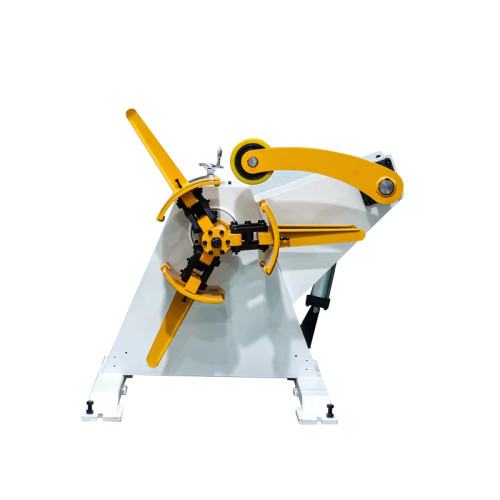
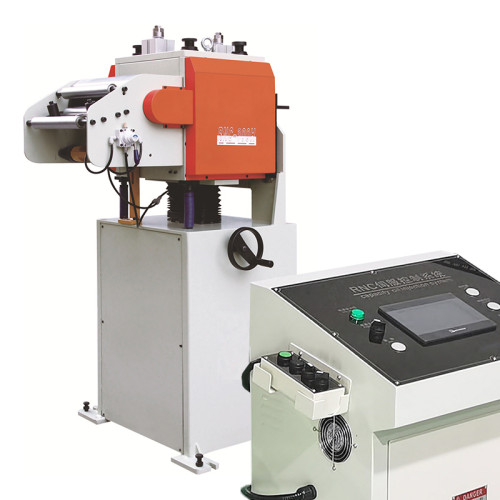
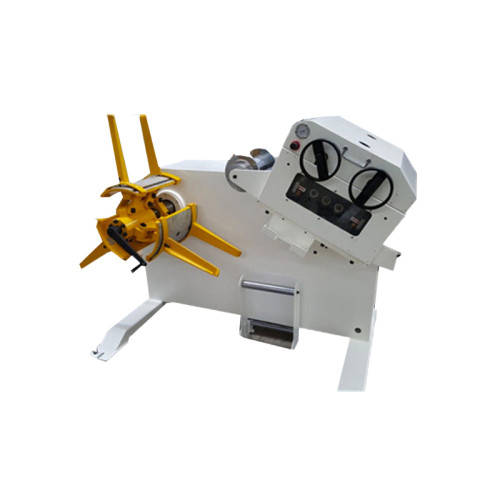
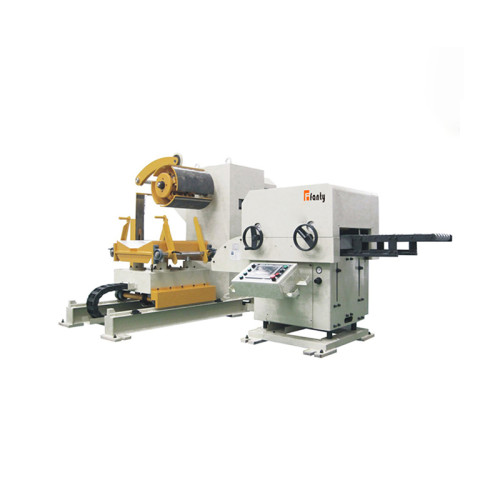
The striking part of this table is that none of the actions required a new press or a new die. The die was reworked once for nesting, and the feeding and straightening equipment paid for itself through material savings alone. In our experience the feeding system — decoiler, straightener and NC servo feeder — is the single most underrated lever for material utilization, because it controls the geometry of the strip at the exact moment the die sees it.
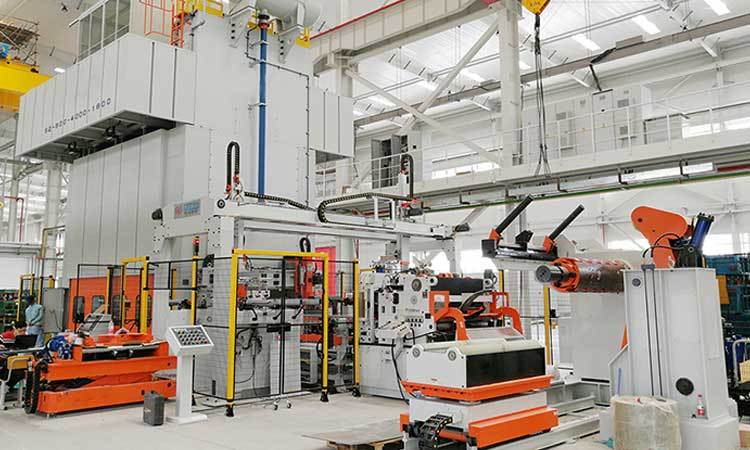
The same logic applies at higher speeds. A line running 200 SPM cannot tolerate manual strip guidance or a wandering web — the losses simply multiply. This is why high-speed progressive stamping lines are built around servo-fed accuracy rather than mechanical linkages: the servo controller synchronizes feed length and press angle electronically, holding position regardless of speed changes, so the strip lands in the die exactly where the layout predicts, every single stroke.
Beyond the Die: Where Else Can You Recover Material?
Utilization thinking extends upstream of the die as well. Coil buying strategy is the first place: purchasing coils to the exact widths your layouts require, rather than accepting whatever the mill offers, can eliminate several points of edge trim before the strip ever reaches the press. Working with a supplier who can slit coils to the optimum width — and doing so with a straightener-feeder combination that runs the narrower strip reliably — converts a logistics convenience into a permanent material saving.
Downstream, consider scrap accounting itself. Many factories treat scrap skeletons as bulk waste without measuring how much of that waste is unavoidable web versus how much is recoverable trim. When the skeleton is designed for rigidity and baled systematically, the resale value of the material improves, and the visibility into the numbers reinforces the improvement loop. Combined with the feeding accuracy and strip-conditioning measures above, these upstream and downstream actions form a complete material-utilization program that FANTY helps customers implement on the 200+ lines we have commissioned worldwide.
Material Utilization: Frequently Asked Questions
What is a realistic material utilization target for progressive die stamping?
For most progressive dies, 65 to 75 percent is a realistic and achievable target, with well-designed layouts and disciplined process control. Simple blanking layouts can reach 80 percent or more, while complex components with many holes and carriers may settle near 60 percent. The important comparison is not against an industry average but against your own baseline after measuring honestly for a few weeks.
How does feeding accuracy affect material utilization?
Accuracy affects utilization through misfeed scrap, required strip-width margins and die damage. A feeder holding ±0.05 mm repeatability lets you run the narrowest strip the layout allows and eliminates the safety margin operators add when they do not trust the feed length. Over a year, those two effects alone typically recover several percentage points of material.
Can an NC straightener really reduce scrap?
Yes, in two ways. First, removing coil camber and edge waves prevents the strip from drifting in the die guides, which eliminates scrapped parts and allows narrower strip widths. Second, flattened, stable strip feeds more consistently through the rollers, reducing misfeed events. Shops that add a straightener upstream of an existing die frequently see an immediate drop in defect rates.
Should I rework my die layout or upgrade the feeding line first?
Start with measurement, then fix the process that feeds the die. A die layout only performs as well as the strip entering it: if the strip drifts or misfeeds, even the best nesting yields scrap. In most cases the fastest payback comes from stabilizing the strip with a straightener and NC servo feeder, then reworking the layout once the process is repeatable.
Want to See Your Real Utilization Number?
Send us your part drawings and current scrap data, and FANTY's engineers will model the material savings a modern coil feeding line can deliver on your press.
Get a Free Utilization Analysis