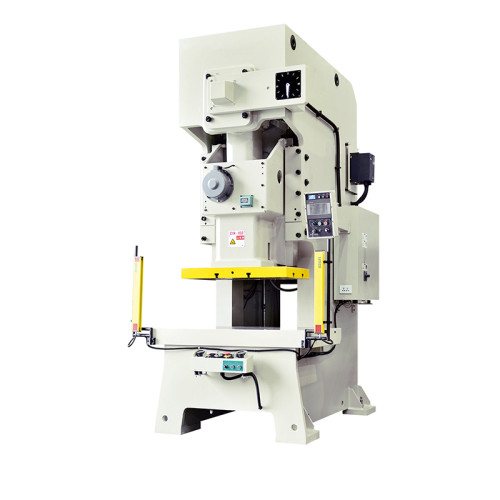
How to Extend the Life of an NC Servo Feeder?
An NC Servo Feeder is the most expensive single module in a modern coil-feeding line, and like any precision machine, its useful life depends far more on how it is operated and maintained than on the quality of its initial build.
A well-maintained servo feeder can deliver consistent plus-or-minus 0.05 mm accuracy for fifteen years or more, while a neglected one starts drifting within two or three years, producing scrap, damaging dies, and eroding the profitability of the whole stamping line.
This guide covers the practical maintenance and operating habits that keep an NC Straightener Feeder system accurate for the long term, drawing on the service knowledge FANTY Machinery, with 12 years of coil-feeding engineering and more than 200 installed lines in 60+ countries, has gathered across thousands of field installations.
Why an NC Servo Feeder Needs a Maintenance Plan
Unlike a mechanical feeder where wear is visible and gradual, a servo feeder fails quietly.
Maintenance planning also protects the largest asset in the system. A servo feeder represents a major capital investment, and its service life of fifteen to twenty years is only achievable with a disciplined program.
The cost of a scheduled inspection is trivial compared with the cost of a motor replacement or a set of damaged feeding rollers, and downtime for planned maintenance is a fraction of the downtime caused by an unexpected failure in the middle of a production run.
Every stamping plant, regardless of size, should have a written maintenance schedule for its feeder.
FANTY's service team recommends a three-tier maintenance program for every NC Straightener Feeder installation: daily operator checks, monthly preventive maintenance, and annual professional inspection.
Each tier has a clear scope, and together they cover the mechanical, electrical, and control-system health of the machine. The sections below detail what belongs in each tier, so you can build or improve your own program.
Daily Checks: Five Minutes That Prevent Big Repairs
Most feeder failures begin as small conditions that an operator notices but does not report. A five-minute daily check, done at the start of each shift, catches these conditions before they become failures.
- Listen to the drive train: any new grinding, ticking, or whining from the servo motor, gearbox, or couplings signals wear. Record it and report it immediately.
- Check the feeding rollers: inspect for scoring, flat spots, embedded debris, or uneven wear across the roller face.
Roller condition directly controls feed accuracy. - Verify strip lubrication: confirm the strip passes through clean, lubricated rollers and that no foreign material is building up on the guides.
- Check the control panel: review the display for alarm history, unusual error codes, or a drift in feed-length error trend since the previous shift.
- Scan for oil and air leaks: check the gearbox breathers, seals, and pneumatic components for leaks, because a small leak today is a breakdown next month.
These checks take longer to describe than to perform.
Monthly Preventive Maintenance
Once a month, or every 500 operating hours, the machine should receive a more thorough preventive maintenance pass. This is normally done by the maintenance department, with the machine stopped and locked out.
The first priority is the feeding rollers and their bearings. The rollers should be removed, cleaned, and inspected for wear. Worn rollers should be reground or replaced, because roller diameter and surface condition directly determine feed length accuracy.
The roller bearings should be checked for play and re-greased according to the manufacturer's specification. FANTY publishes the bearing and lubrication schedule for each feeder model so that maintenance teams do not have to guess at intervals or grease types.
The second priority is the drive train: the servo motor coupling, the gearbox, and the encoder. The coupling should be checked for backlash and wear, and the gearbox oil level and condition verified.
A worn coupling is one of the most common causes of feed-length drift, and catching it at the monthly inspection prevents an expensive motor or gearbox failure later. The encoder, which tells the control system exactly how far the strip has moved, should be checked for secure mounting and clean electrical connections.
The third priority is the electrical system. Terminals should be checked and re-torqued where vibration is a concern, the cable chains and flexible conduits inspected for chafing, and the control cabinet cleaned of dust with the filters checked.
Servo systems are sensitive to loose connections and contaminated contacts, so a monthly electrical check prevents the intermittent faults that are the hardest to diagnose. It is also the right time to verify that the emergency stop and safety interlocks operate correctly.
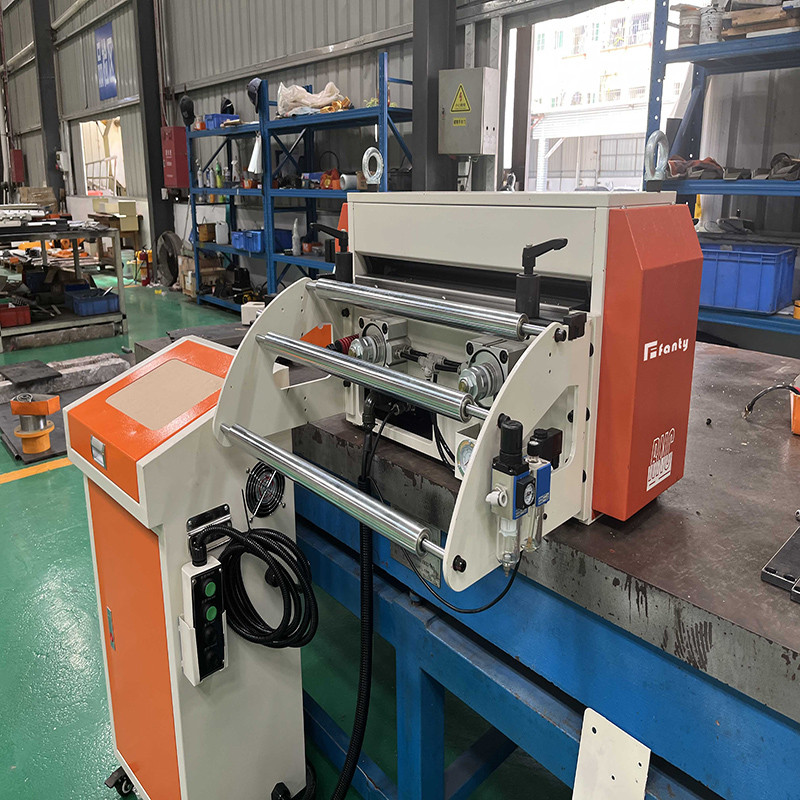
A structured monthly maintenance pass protects the accuracy and service life of an NC Servo Feeder.
Annual Professional Inspection
Once a year, or every 3,000 to 4,000 operating hours, the feeder should receive a professional inspection. This is the tier where precision is verified with instruments rather than by eye.
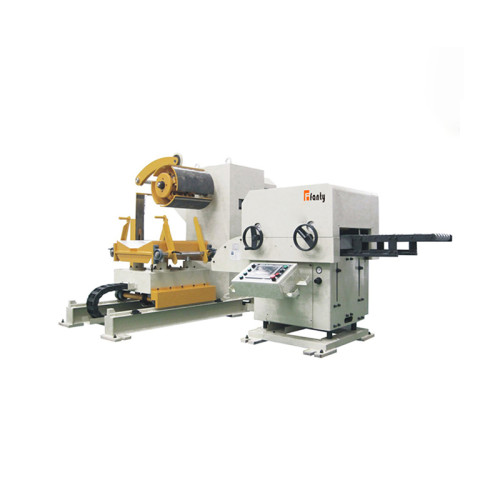
For an integrated 3-in-1 decoiler straightener feeder, the annual inspection should cover all three modules together, because they share the frame and the control system. Misalignment in the decoiler section can load the straightener unevenly, and straightening pressure can affect feeding accuracy.
Inspecting the complete line as a system, rather than inspecting each module separately, is the only way to catch these interactions. FANTY offers annual service contracts that include this full-line inspection, and customers who follow the program consistently report the lowest lifetime cost per part produced.
The annual inspection is also the time to review spare parts. Feeding rollers, couplings, encoder cables, and control fuses are the items most likely to be needed, and having them in stock avoids long downtime when a failure does occur.
FANTY keeps a documented spare-part list for each feeder model and can supply critical spares quickly, but the plant should hold the routine items locally. A feeder that is down waiting for a roller is a feeder that is losing money.
Operating Habits That Extend Feeder Life
Beyond scheduled maintenance, the way the machine is operated every day has an outsized effect on its life. The first habit is proper lubrication of the strip.
The second habit is never exceeding the rated feed length and speed envelope. Pushing a servo feeder to its mechanical limits, especially with heavy or high-tensile strip, stresses the servo motor, the gearbox, and the couplings far beyond their design point.
The machine should be specified with margin for the heaviest material, not run at the edge of its rating day after day. FANTY's engineers size the servo motor and gearbox for the actual duty cycle, and the machine performs best when operated within that envelope.
The third habit is clean shutdown and restart discipline. Operators should follow the manufacturer's sequence for stopping the line, including relieving tension and parking the machine correctly, so that the mechanism is not left under load. Sudden stops and hard restarts are the moments of maximum mechanical stress.
A documented start-stop procedure, posted at the machine, costs nothing and prevents the most common cause of premature gearbox and coupling damage.
Maintenance Schedule Summary
| Maintenance Tier | Frequency | Key Tasks | Who Performs |
|---|---|---|---|
| Daily Operator Check | Start of each shift | Listen for noise, inspect rollers, check panel and alarms, scan for leaks | Operator |
| Monthly Preventive Maintenance | Monthly or every 500 hrs | Clean and inspect rollers, check bearings and coupling, verify electrical connections | Maintenance team |
| Annual Professional Inspection | Annually or every 3,000-4,000 hrs | Accuracy test, alignment check, full electrical and safety audit, data review | Manufacturer service or certified technician |
| Roller Replacement | When wear exceeds specification | Regrind or replace feeding rollers to restore accuracy | Maintenance team |
| Lubrication Service | Per manufacturer schedule | Grease bearings, service gearbox oil, verify strip lubrication | Maintenance team |
This schedule is a framework, not a fixed rule. The exact intervals should be adjusted based on the machine's duty cycle, the materials processed, and the operating environment. A plant running two shifts with high-tensile strip needs more frequent roller inspection than a single-shift shop running mild steel. The important thing is that a program exists, that it is documented, and that it is followed. An NC Straightener Feeder that receives regular care returns years of accurate service; one that does not becomes a source of scrap and downtime.
Frequently Asked Questions About NC Servo Feeder Maintenance
How long does an NC Servo Feeder typically last?
With proper maintenance, a servo feeder typically provides 15 to 20 years of service. The servo motor and control system can last even longer when operated within their rated envelope, while wearing components such as feeding rollers and couplings are replaced on schedule as part of the maintenance program.
What is the most common cause of feed-length drift?
Worn feeding rollers and coupling backlash are the two most common causes. Both wear progressively and quietly, which is why monthly inspection is essential. Encoder mounting issues and loose electrical connections are the next most common contributors to intermittent drift.
Do I need the manufacturer to do the annual inspection?
Not necessarily, but it is recommended at least every two years, because the manufacturer has the calibration equipment, the accuracy test procedure, and the accumulated data from similar machines. In between, a trained technician can perform the mechanical and electrical checks using the manufacturer's documented procedures.
What spare parts should I keep for an NC Servo Feeder?
At minimum, keep a spare set of feeding rollers, a coupling, encoder cables, control fuses, and seals for the gearbox. These are the parts most likely to fail or wear, and having them locally can turn a multi-day breakdown into a same-day repair. Ask your supplier for the documented spare-part list for your model.
Related reading
Part of the the coil line guide library — the full library of coil handling, straightening and feeding guides from FANTY.
Want a maintenance plan matched to your feeder and duty cycle?
FANTY Machinery provides documented maintenance schedules, spare-part lists, and annual service contracts for every NC Straightener Feeder system it supplies, backed by 12 years of experience, CE certification, and support teams serving 60+ countries.
Ask About Our Service Program