How to Cut Energy Costs in Stamping with an NC Servo Feeder?
Energy is one of the quietest leaks in a stamping operation. While die design, material utilization and labour get the attention, the electricity consumed by coil feeding equipment runs every single shift, and in many plants it amounts to a surprisingly large share of the total cost per part.
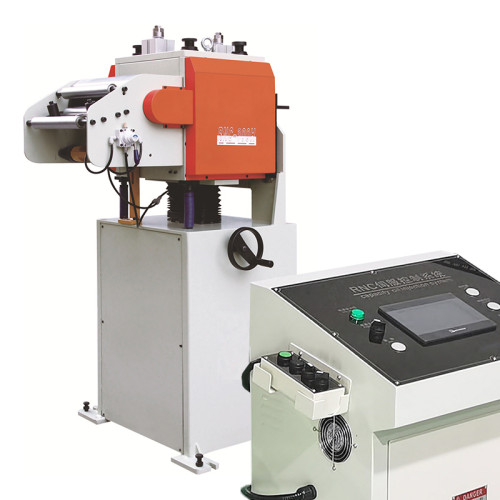
The most effective single change most shops can make is to replace a hydraulic or pneumatic feeding system with an NC servo feeder.
Because a servo drive consumes power only while it is actually moving material, and an NC Straightener Feeder line spends most of its operating time holding strip position rather than moving it, the energy savings are structural, not incidental.
This guide quantifies those savings, explains why servo technology wins on efficiency, and shows how to combine it with other measures to cut your stamping energy bill by a measurable margin.
Why Servo Feeding Beats Hydraulic and Pneumatic on Energy
The physics is straightforward. A hydraulic power unit must keep its pump running continuously to maintain system pressure, whether or not the feeder is moving.
In a typical high-speed stamping application running at 200 SPM, the feeder completes its feed stroke in a fraction of each second and then holds position while the press descends. During that holding phase, the servo system drops to a low standby draw, typically 5-10 percent of peak power.
A hydraulic system under the same duty cycle keeps its 7.5-11 kW pump running continuously, which adds up to thousands of kilowatt-hours per month for no productive work at all.
There is a second, less obvious saving. Because the servo feeder's energy draw is smooth and tightly matched to the actual mechanical work, the press line's peak electrical demand drops. In many regions, industrial tariffs charge not only for energy consumed but for the highest demand peak in the billing period.
Reducing that peak with servo feeding can cut demand charges that are entirely invisible on the energy meter but very visible on the invoice.
Energy Comparison: Servo vs Hydraulic vs Pneumatic Feeding
| Factor | NC Servo Feeder | Hydraulic Feeder | Pneumatic Feeder |
|---|---|---|---|
| Power draw at idle/standby | ~5-10% of peak | Continuous pump load | Continuous compressor load |
| Energy proportional to work? | Yes, drawn only while feeding | No, pump runs regardless | No, compressor runs regardless |
| Typical efficiency gain vs pneumatic | 30-50% lower consumption | — | Baseline |
| Peak demand on the grid | Smooth, low peak | High start/run current | High compressor cycling |
| Heat rejected into the shop | Low | High, requires cooling | Moderate |
| Oil changes and filter costs | None (no hydraulics) | Ongoing | Air filter/maintenance only |
| Energy cost per 100,000 parts* | Lowest | 2-3x servo | 2-4x servo |
*Comparative figures based on typical 200 kN-class stamping lines running two shifts; actual savings depend on duty cycle and local tariffs.
Where the Kilowatt-Hours Actually Go on a Stamping Line
To cut energy costs effectively you need to know where the energy is going. On a typical coil-fed press line, the press motor itself dominates, followed by the feeding system, the decoiler drive, lubrication and pumps, and finally lighting and auxiliaries.
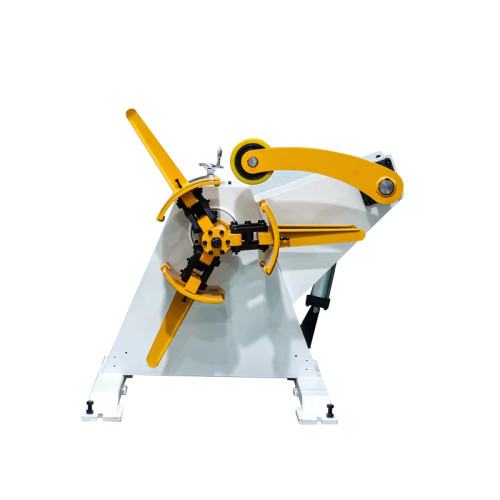
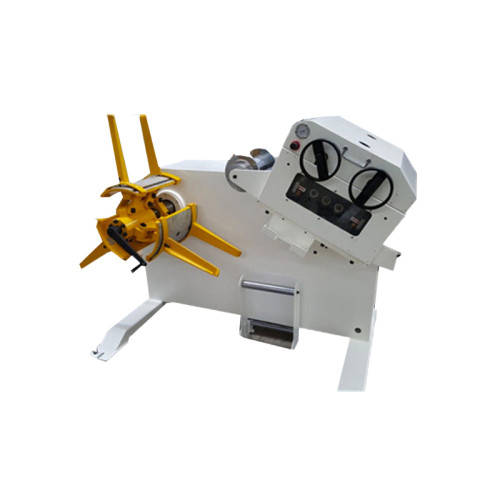
The decoiler is the second target. A motorized decoiler with an active pay-off control draws power only to maintain strip tension and pay out coil, but many older designs use drag brakes that convert strip tension into heat.
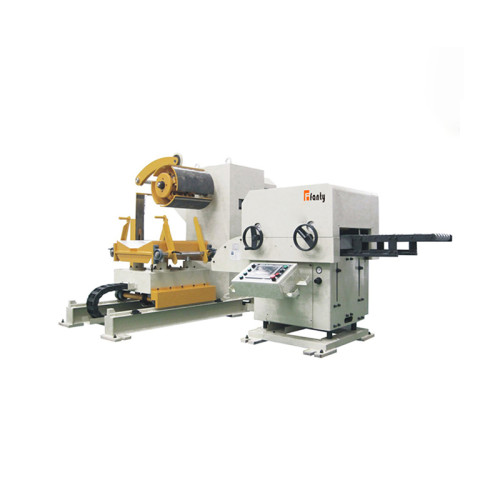
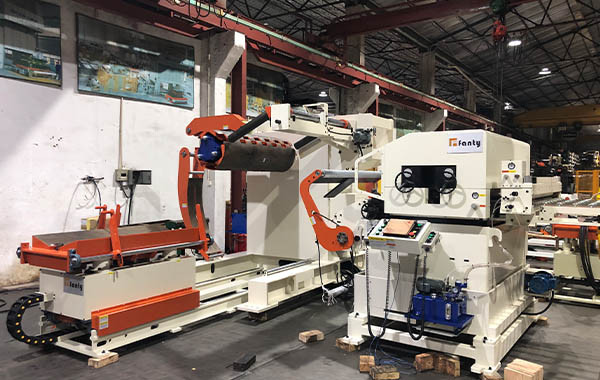
Upgrading to a servo or frequency-controlled decoiler, often available as part of a modern 3-in-1 decoiler straightener feeder, eliminates that continuous drag load.
Pair this with the servo feeder and the entire coil line becomes a demand-responsive system: idle when the press is idle, drawing power only when parts are being made.
Practical Measures to Cut Stamping Energy Costs Today
- Replace hydraulic or pneumatic feeding with an NC servo feeder and eliminate continuous standby loads.
- Upgrade the decoiler to servo pay-off control to remove drag-brake heat losses.
- Use standby modes on the whole line during die changes; a modern control stack does this automatically.
- Fix compressed air leaks; a single 3 mm leak can waste thousands of kWh per year.
- Right-size the press and feeder; an oversized machine burns more energy per part than a correctly matched line.
- Monitor energy per part as a KPI, the same way you track scrap, to keep savings visible and permanent.
The Payback Math: What Servo Feeding Saves You
Let us put numbers on it. A two-shift stamping shop running a hydraulic-fed line with a 7.5 kW pump continuous and an 11 kW press motor will consume roughly 8,000-10,000 kWh per month for feeding-related operation alone. A comparable NC servo feeder installation performing the same work typically consumes 3,000-4,000 kWh for the feeding function. At an industrial rate of USD 0.12 per kWh, that is a saving of USD 500-700 per month, or USD 6,000-8,500 per year, from the feeding system alone before demand-charge reductions are counted.
Add the removal of hydraulic oil changes, filter replacements and compressor maintenance, and the operational saving grows further. With a typical servo feeder investment, most FANTY customers report a payback between one and two years.
Since the new machine also brings ±0.05 mm accuracy and 200 SPM capability, the energy saving is effectively a bonus on top of better parts and higher output.
Energy efficiency is also increasingly a commercial asset. European and North American buyers, who make up the majority of FANTY's exports to more than 60 countries, routinely ask about the energy profile of their supply chain.
A stamping supplier that can document lower energy per part has a genuine bidding advantage, and the audit trail of an NC Straightener Feeder line with energy monitoring provides exactly that documentation.
Frequently Asked Questions
How much energy can an NC servo feeder actually save?
Compared with a hydraulic feeder, expect a 30-50 percent reduction in feeding-system energy consumption, and compared with a pneumatic feeder often more. On a two-shift line this typically translates to USD 6,000-8,500 per year in electricity alone.
Does servo feeding reduce peak demand charges?
Yes. A servo drive draws smooth, work-proportional current instead of a continuously running pump or compressor, which lowers the facility's peak electrical demand. In tariff structures with demand charges, this can be as valuable as the energy reduction itself.
What else besides the feeder should I change to save energy?
Move the decoiler to servo pay-off control to remove drag-brake losses, fix compressed air leaks, right-size the press, and use automatic standby during die changes. A modern 3-in-1 decoiler straightener feeder integrates most of these into one efficient system.
Is the payback for a servo feeder really only one to two years?
For most mid-size stamping shops running two shifts, yes. Energy savings typically cover USD 6,000-8,500 per year, and when oil, filters, compressor maintenance and reduced scrap are included, payback usually lands between 12 and 24 months.
Related reading
Part of the the coil line guide library — the full library of coil handling, straightening and feeding guides from FANTY.
Cut your stamping energy bill with servo precision
FANTY's NC servo feeder and 3-in-1 decoiler straightener feeder lines deliver ±0.05 mm accuracy at 200 SPM while using a fraction of the energy of hydraulic systems. Built in a 45,000 m² factory by a team of 370, with CE certification and exports to 60+ countries.
Request Energy-Saving Quote