How to Convert Feed Length to NC Servo Feeder Motor Pulses?
Behind every accurate feed on an NC servo feeder is a simple idea: distance equals rotation, and rotation is counted in pulses. The servo motor turns a gearbox, the gearbox turns the feed rolls, and the feed rolls advance the strip a precise distance for every degree of rotation.
To feed 87.5 millimeters, the controller must know exactly how many motor revolutions that distance represents, which depends on the encoder resolution, the gearbox ratio, and the feed roll diameter.
This guide explains that relationship in plain terms, shows how the numbers fit together, and explains why the system must be calibrated on the actual machine rather than trusted from a brochure.
Understanding the pulse math helps in three practical situations: setting up a new feeder, diagnosing a feed error that no mechanical cause explains, and evaluating a feeder's claimed accuracy before you buy. The concept is not difficult once the units line up.
The Chain from Length to Pulses
The conversion from a feed length to motor pulses runs through four fixed numbers. Change any one of them and the fed distance changes proportionally.
- Feed roll diameter. The circumference of the feed roll is the distance the strip travels per roll revolution, ignoring slip.
- Gearbox ratio. How many motor revolutions turn the feed roll once, for example 10 to 1.
- Encoder resolution. How many pulses the encoder produces per motor revolution, such as 10,000.
- Electronic gearing. The controller's internal multiplier that matches pulses to millimeters for the HMI display.
Put together: one feed-roll revolution advances the strip by the roll circumference, requires the motor to turn the gearbox ratio times, and produces the encoder resolution times the ratio in pulses.
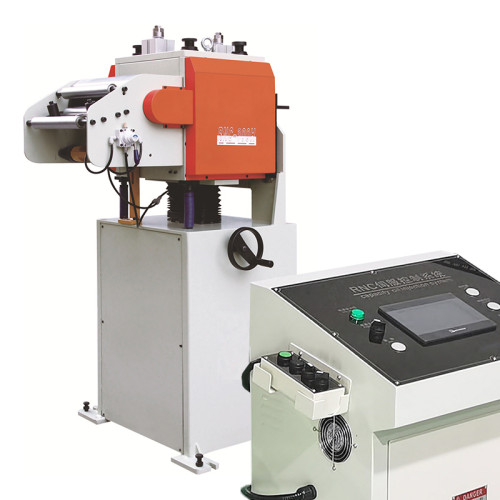
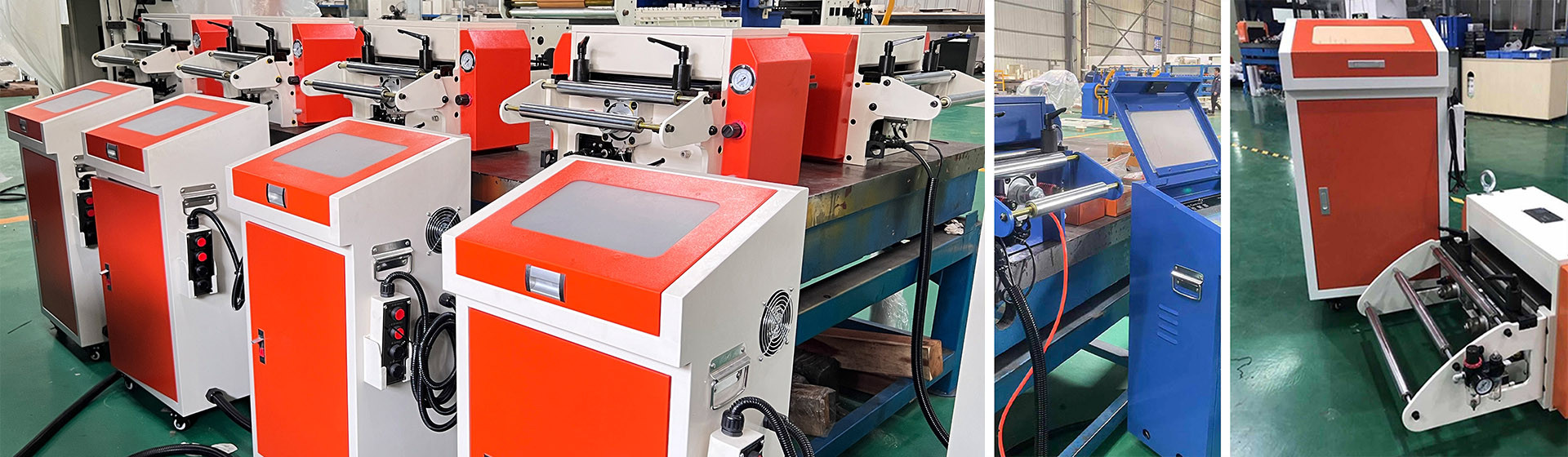 The servo feeder production.
A Worked Example
Walk through the numbers with a typical machine and the logic becomes concrete.
| Parameter | Value | Effect on pulse count |
|---|---|---|
| Feed roll diameter | 120 mm | Circumference = 376.99 mm per roll revolution |
| Gearbox ratio | 10:1 | 10 motor revolutions per roll revolution |
| Encoder resolution | 10,000 pulses/rev | 100,000 pulses per roll revolution |
| Pulses per millimeter | 100,000 / 376.99 | About 265.3 pulses per mm |
| Feed length 87.5 mm | 87.5 x 265.3 | About 23,213 pulses |
Notice the precision available: at 265 pulses per millimeter, one pulse moves the strip about 0.0038 millimeters. That resolution is far finer than the ±0.05 mm accuracy the machine is expected to hold, which is exactly why a modern servo feeder can hit its accuracy target even after mechanical tolerances and strip slip are considered.
Why the Roll Diameter Is the Weak Link
The pulse math is only as good as the roll diameter number, and that number is not as fixed as it looks. Feed rolls wear, and a roll that was 120.00 millimeters when new may measure 119.85 millimeters after years of service.
Worse, the effective diameter changes with roll pressure. The strip is compressed between two rolls, and the neutral point of the contact is not exactly at the roll surface. A change in roll pressure or strip thickness shifts the effective feed diameter by a small but measurable amount.
This is why a feeder calibrated on one material can drift when the material thickness changes, and why the calibration procedure includes a test feed measured against a known standard.
The practical lesson: measure the actual feed length periodically with a test feed, and recalibrate the pulse-per-millimeter value in the controller when the measurement drifts. A feeder that is recalibrated after roll changes and material changes holds its accuracy for years; one that is never recalibrated quietly loses pitch even though every component is healthy.
Closed-Loop Control: The Encoder's Second Job
So far the encoder counts pulses to command the motion, but its more important job is verifying that the motion actually happened. This is the difference between an open-loop system, which trusts the motor to do what it was told, and a closed-loop servo system, which measures the result and corrects the next cycle.
In a closed-loop NC servo feeder, the controller commands the pulse count for the feed, the motor moves, and the encoder reports the actual position back. If the actual position differs from the target by more than the tolerance, the controller flags a feed error or applies a correction on the next cycle.
This feedback is what makes the feeder hold ±0.05 mm repeatability in the presence of strip slip, roll wear, and load changes, because the controller is not guessing; it is measuring and correcting continuously.
Practical Calibration Steps
When you set up a new die or suspect the feed pitch has drifted, run this calibration routine.
- Enter the mechanical values. Confirm the roll diameter, gearbox ratio, and encoder resolution in the controller match the machine's nameplate.
- Jog the feed a known length. Command a round number such as 100.00 mm without the die engaged.
- Measure the actual strip travel. Mark the strip, feed, and measure the true distance with a scale or sensor.
- Calculate the correction. Divide the commanded length by the measured length and apply the ratio to the pulse-per-millimeter value.
- Repeat the test. Feed the same length again and confirm the error is now within tolerance.
- Save the value. Record the calibrated pulses per millimeter for the current roll set and material.
Run this routine whenever the feed rolls are changed or resurfaced, when you switch to a significantly different material thickness, or on a monthly basis as a preventive check. It takes fifteen minutes and prevents the slow pitch drift that otherwise shows up as scrap.
Frequently Asked Questions
Do I need to understand pulse math to operate an NC servo feeder?
No. The controller handles the conversion internally and the operator enters the feed length in millimeters on the HMI. Understanding the math is valuable for setup engineers and for diagnosing pitch problems, but daily operation is simply entering the length and pressing start.
Why does the same feeder feed accurately on one material but not another?
Different materials have different thickness, hardness, and surface friction, which change the effective feed roll diameter and the slip behavior. A feeder calibrated for one material can drift on another, which is why recalibration after a material change is part of the setup procedure.
How much accuracy does a higher-resolution encoder add?
Resolution sets the finest step the controller can command, but the real accuracy is limited by mechanics: roll wear, slip, and deflection. A high-resolution encoder ensures the control loop is not the limiting factor, but it cannot fix a worn roll or a slipping grip.
What happens if I enter the wrong feed roll diameter in the controller?
The feeder will feed the wrong length, because every calculation uses that diameter. The error is proportional: a 1 percent diameter error produces roughly a 1 percent feed error. This is why the first step of any calibration is confirming the mechanical values match the actual machine.
Can the feeder correct for slip automatically?
A closed-loop servo feeder detects the slip through the encoder feedback and raises a feed error when the slip exceeds the tolerance. It cannot force the strip to move if the grip is lost, which is why mechanical grip, roll condition, and material oil level remain essential.
Related reading
- setting up for fast stamping
- which part limits feeding accuracy
- how to hold feed accuracy on a coil line
Part of the the coil line guide library — the full library of coil handling, straightening and feeding guides from FANTY.
Get an NC Servo Feeder That Holds Its Calibration
FANTY NC servo feeders are built with high-resolution encoders and a calibration routine that is simple to run after any roll or material change. Send us your feed length range and accuracy target, and we will specify the drive package that holds your pitch reliably.
Request a Feeder SpecificationFanty · NC Straightener Feeder
Still Fighting Strip Memory After Straightening?
Send the strip thickness, material grade and target flatness. We specify roll diameter, roll count and NC feed pitch so the line holds tolerance from the first coil, not the fiftieth.
Get a Free QuoteFANTY Machinery · 13 years on stamping automation · 2,000+ coil lines installed · engineers reply within 24 hours