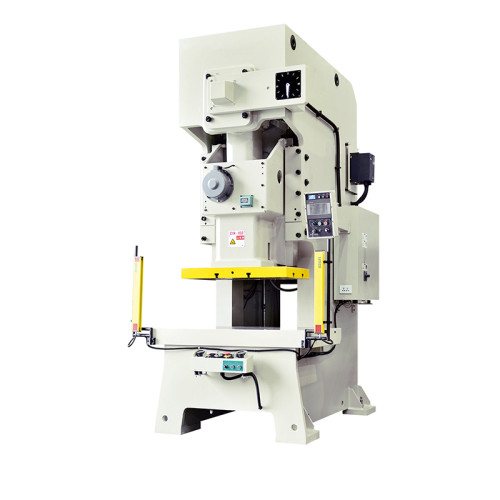
How to Calibrate an NC Servo Feeder for New Materials?
Changing material on an NC servo feeder is not just a coil swap; it is a calibration event, and doing it wrong quietly destroys your feed accuracy. Thickness changes alter the roll gap, width changes alter the guides, and different yield strengths change how the straightener and the servo loop behave.
This guide explains the exact calibration steps for an NC Straightener Feeder when you introduce a new material, and how FANTY engineers set up machines so the first part is always within tolerance.
Why New Materials Break Calibration
An NC servo feeder is a closed-loop system: the controller commands a feed length, the encoder measures what actually happened, and the servo corrects the difference.
Here is a concrete example. Mild steel at 1.0 mm thickness grips the feed rolls differently from stainless at 1.5 mm, because the roll pressure and the surface friction are different.
A servo loop tuned for the thin, soft material will over-drive or under-drive the thicker, stiffer strip, and a pitch that was perfect on the last job drifts by fractions of a millimeter on the new one. In a progressive die, that fraction is the difference between a good part and a scrapped strip.
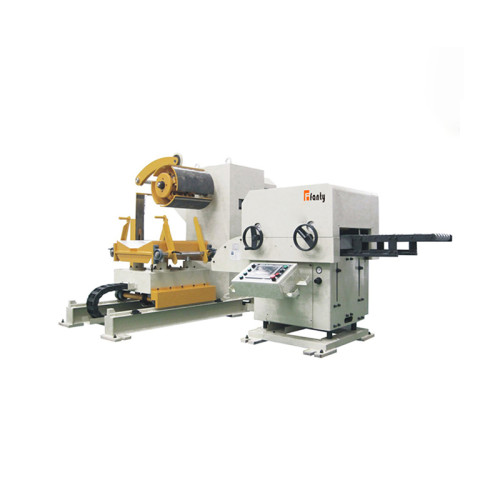
This is why experienced operators treat every material change as a calibration event, not as a simple reload, and why modern machines like the FANTY 3-in-1 decoiler straightener feeder make the process fast and repeatable.
The Five-Step Calibration Sequence
Calibrating an NC Straightener Feeder for a new material follows a fixed sequence that covers the straightener first, then the guides, then the servo. The table below summarizes the five steps and what each one achieves; the paragraphs after it walk through the details that trip up operators.
| Step | Action | What It Achieves |
|---|---|---|
| 1. Straightener gap | Set roll gap to material thickness with a slight overbite | Removes coil set without crushing or overworking the strip |
| 2. Side guides | Close guides to strip width plus 1-2 mm clearance | Centers the strip without edge contact force |
| 3. Roll pressure | Set feeding roll pressure for the new material hardness | Prevents slip without marking or flattening the strip |
| 4. Feed length test | Run a measured feed and compare to commanded length | Quantifies the error you need to correct |
| 5. Servo compensation | Adjust the correction factor and verify with three feeds | Locks in repeatable accuracy for the new material |
Step one deserves extra attention because it is the most common source of straightener-related feed errors. The straightening rolls must remove the coil set from the strip, but if the gap is too small, the rolls pinch the strip and the feeding motion fights the straightener.
If the gap is too large, the strip keeps its curvature, and the curved strip feeds differently at the beginning and the end of each feed, producing an inconsistent pitch that looks like a servo problem but is actually a straightener problem.
The correct starting point is a gap equal to the material thickness with an overbite of roughly 0.2 mm for mild steel, adjusted by feel and by watching the strip exit flat and calm.
The Feed Test That Reveals Everything
The heart of calibration is the measured feed test, and it takes less than a minute when done correctly. With the machine in manual mode, command a fixed feed length, for example 100 mm, and mark the strip at the entry and exit of the feeder.
After the feed, measure the actual travel with a steel rule or calipers and compare it with the commanded value.
Repeat the test three times and note the variation, because you are looking for two different numbers: the average error, which tells you the correction factor, and the spread, which tells you whether the mechanics are stable.
If the three test feeds agree closely with each other but all differ from the commanded length, the machine is mechanically sound and the controller simply needs a correction factor, which is a two-minute touchscreen adjustment.
If the three feeds disagree with each other, the problem is mechanical: roll pressure too low, a worn feed roll, or the strip slipping, and no software setting will fix that.
This distinction is the most valuable diagnostic skill an operator can develop, and it is exactly the kind of reasoning FANTY documents in our machine manuals, supported by more than 80 R&D engineers who have tuned machines for every common material grade in the stamping industry.
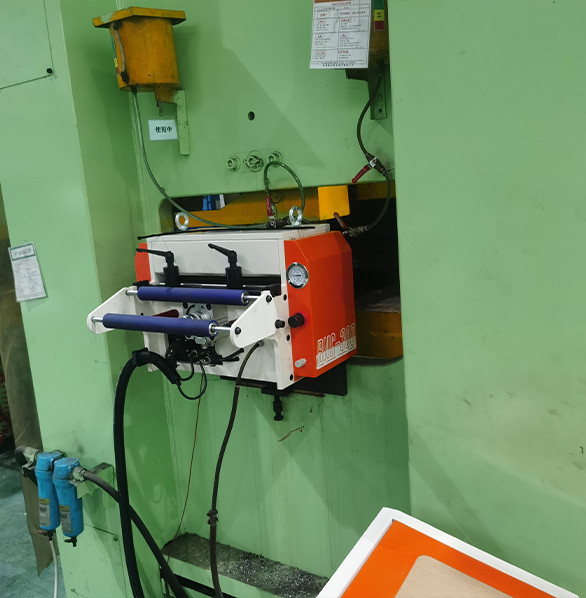
Special Cases: High-Tensile, Stainless, and Soft Materials
Three material families need special attention during calibration, and knowing the difference saves you from chasing ghosts. High-tensile steel is stiff and springy, so it resists the straightener and pushes back against the feed rolls.
Soft materials like aluminum and copper strip are the mirror image: they mark easily, so roll pressure must be just enough to grip without flattening, and the side guides must never squeeze hard enough to burr the edges.
Aluminum also has a high coefficient of thermal expansion, so a line that was calibrated in the morning may drift by the afternoon if the shop temperature changes significantly.
The practical answer for all three cases is to save a job recipe per material, including the calibration factors, so the machine returns to the exact settings that worked last time instead of starting from scratch.
FANTY controllers store complete recipes that include straightener gap, guide position, roll pressure, and correction factors, which is why our customers change materials with confidence.
Calibration Checklist for Your Operator's Board
Print this checklist and keep it at the machine; it turns a vague process into a repeatable routine that any trained operator can follow, and it protects your line when the most experienced operator is on vacation.
- Confirm material grade, thickness, width, and coil weight before loading
- Set the straightener gap first, then the side guides, then roll pressure
- Run the three-feed measurement test and record average error and spread
- Adjust the correction factor; if spread is large, check mechanics, not software
- Produce three trial parts and verify them against the drawing
- Save the verified settings as a named recipe for future runs
The last step is the one that compounds value over time.
Why Calibration Discipline Pays for Itself
Every minute spent on proper calibration saves many minutes downstream.
There is also a safety angle worth mentioning. A strip that feeds unevenly can buckle between the straightener and the die, and a buckle at speed can damage the die or create a hazard for the operator. Calibration that produces a flat, stable strip at the correct tension removes that risk.
FANTY has twelve years of experience building coil feeding equipment, a 45,000 square meter factory, 370 employees, and more than 80 R&D engineers, and our CE-certified machines ship with calibration procedures tested across more than 200 installations in more than 60 countries.
Follow the procedure once, save the recipe, and the next material change takes minutes instead of an afternoon.
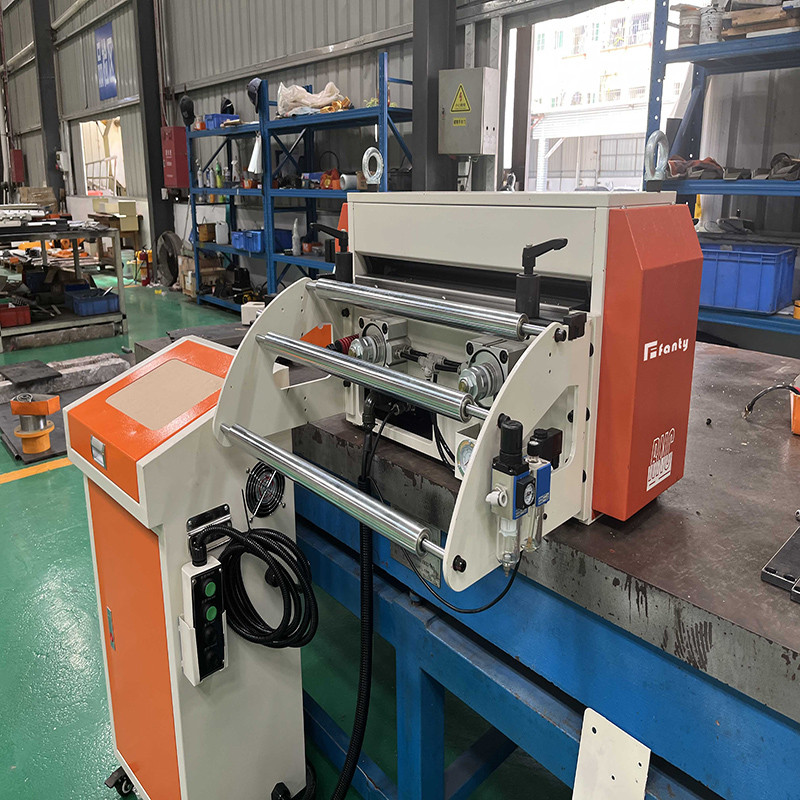
Frequently Asked Questions About Feeder Calibration
How often should I calibrate my NC servo feeder?
Calibrate whenever you change material grade, thickness, width, or coil weight significantly, and after any maintenance that touches the feed rolls, guides, or servo drive. If you run the same material continuously, a monthly verification feed test is a good habit, and always recalibrate after a mis-feed that suggests slippage.
Why does my feed accuracy drift after changing material even with the same settings?
Different materials have different friction coefficients and compressibility under the feed rolls, so the same correction factor no longer applies. That is why every material change needs its own calibration and its own saved recipe, instead of reusing the settings from a different material.
What should I do if the three-feed test shows large variation?
Stop and check the mechanics before touching the software: feed roll condition, roll pressure, guide alignment, and whether the strip is slipping or buckling between machines. Large variation means physical instability, and no correction factor can compensate for it.
Does the straightener need recalibration too?
Yes. The straightener roll gap directly affects feed consistency, because a curved strip feeds differently at the start and end of each cycle. Set the straightener for the new material first, then calibrate the feed loop, and the two adjustments together produce the flat, stable strip your die needs.
Related reading
- which part limits feeding accuracy
- what feeding accuracy to expect
- how to hold feed accuracy on a coil line
Part of the the coil line guide library — the full library of coil handling, straightening and feeding guides from FANTY.
Calibrate Once, Run Confidently on Every Material
Tell us the materials you run and FANTY engineers will share the calibration settings and recipe workflow for your NC Straightener Feeder. CE certified, built in a 45,000 m2 factory, trusted in 60+ countries.
Ask Our Engineers About Setup