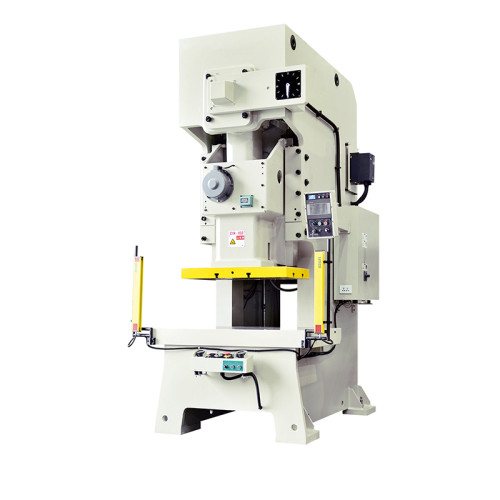
How to Boost Stamping Output with an NC Servo Feeder?
Stamping output is not decided by press speed alone, it is decided by how many good parts leave the line every hour. An NC servo feeder is one of the fastest and most affordable upgrades a stamping shop can make, because it attacks the three real enemies of output: downtime, scrap, and setup time.
In this guide we break down exactly where output is lost in a typical stamping line, and how a modern NC Straightener Feeder recovers those lost minutes hour after hour, shift after shift.
Where Output Really Disappears in a Stamping Line
Most plant managers measure output as strokes per minute and assume that the press is the bottleneck. In reality, a stamping line rarely runs at its rated speed, because the material feeding system, the die, and the operators all impose their own limits.
The deeper problem is that mechanical or pneumatic feeders cannot respond to the press cycle intelligently. They are tuned for one condition, and when material thickness changes, coil tension changes, or the die wears, the feed quality drifts.
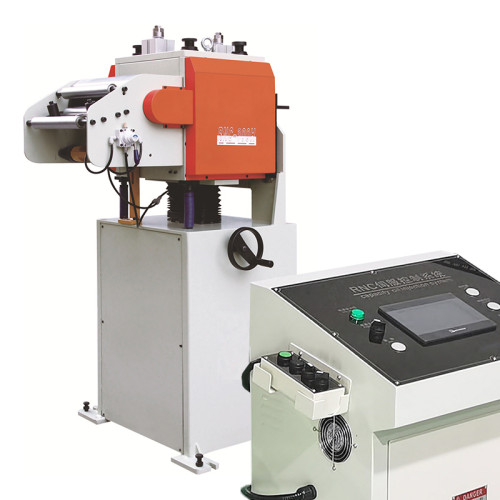
A servo-driven feeder reads the actual position every millisecond and compensates instantly, which is why switching to an NC servo feeder produces an immediate and measurable improvement in consistent pitch, fewer mis-feed alarms, and fewer restart scrap parts.
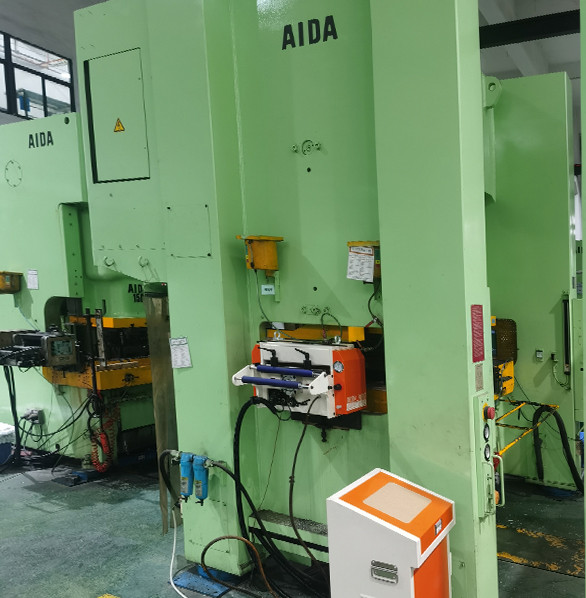
FANTY has installed more than 200 active coil feeding lines in more than 60 countries over the past twelve years, and the output gains we document after retrofits consistently come from the same sources: fewer stops, faster setups, and less scrap.
Three Levers That Raise Good-Parts-Per-Hour
Output improvement is not one change, it is three levers pulled together. The first lever is press utilization: keep the press running at the highest stable speed without feeding errors.
| Output Lever | Typical Result with Servo Feeding | Why It Happens |
|---|---|---|
| Press utilization | +8% to +15% stable running time | Fewer mis-feeds, no mechanical limit switch drift |
| First-pass yield | Scrap down 30% to 50% | ±0.05 mm pitch accuracy holds tolerance every stroke |
| Changeover time | Setup cut by 40% to 60% | Feed length changed on the touchscreen in seconds |
| Operator workload | One operator runs more machines | Auto diagnostics and stored job recipes reduce attention |
Notice that none of these gains require a faster press. The same press, the same die, and the same operator can produce dramatically more good parts simply because the material handling no longer steals time.
This is why we tell customers who are considering a new press line to invest in the feeding system first: the return on an NC Straightener Feeder upgrade is usually faster than the return on a bigger press, because the feeder works for you every single stroke while the extra press capacity only matters during the brief periods when the line is actually the bottleneck.
Cut Changeover Time with Recipe-Based Setup
Changeover is the most visible output killer, because it is pure lost production: the press is idle, the operator is working, and nothing is being made.
A servo feeder eliminates almost all of that. The feed length, feed speed, acceleration profile, and straightener settings are saved as a job recipe in the controller, so switching from part A to part B is a matter of selecting the recipe on the touchscreen and confirming the coil change.
The first part of the new job is typically within tolerance, and the material that used to be wasted on trial blanks becomes good production.
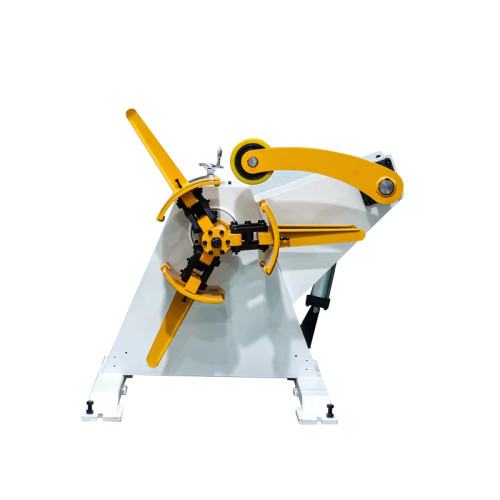
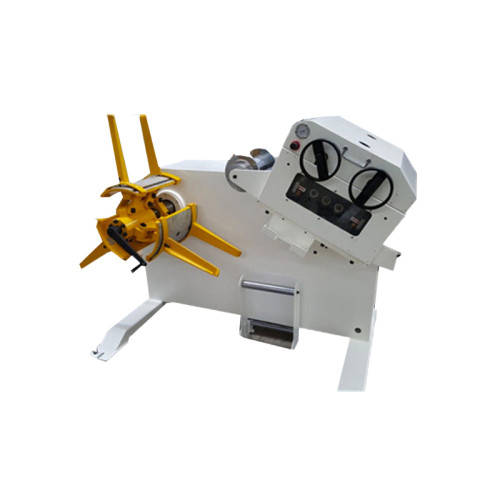
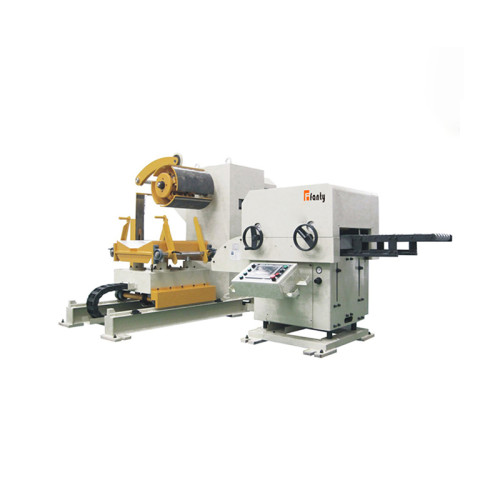
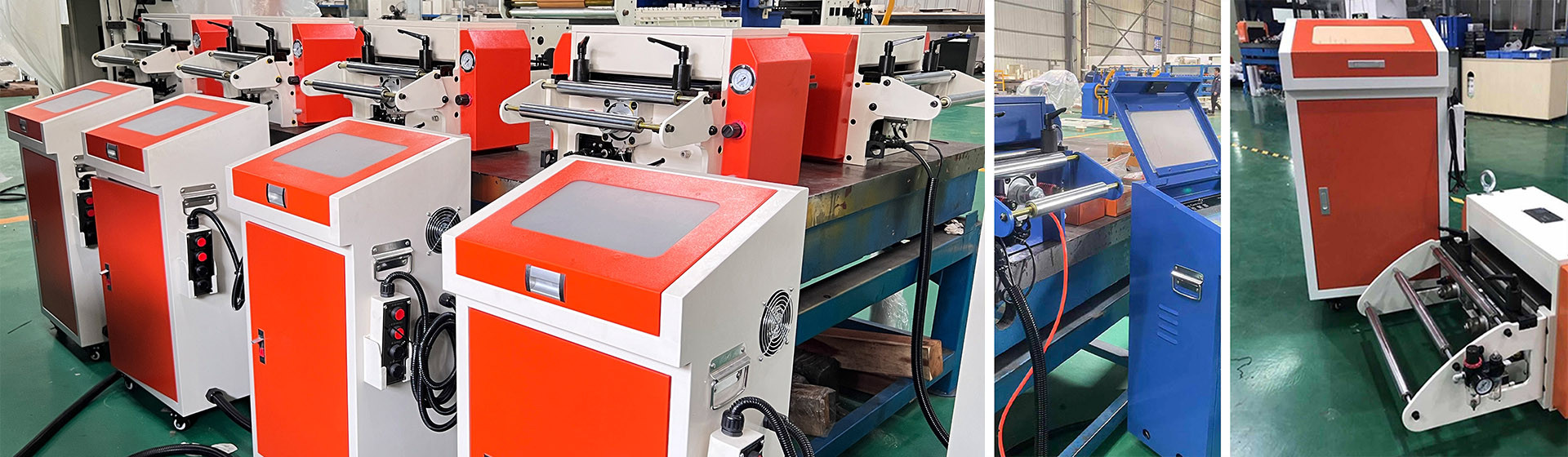
When the 3-in-1 decoiler straightener feeder stores the straightening roll gap and the coil parameters in the same recipe, even the mechanical part of the changeover is reduced, because the machine remembers how to handle that material from the last time it ran.
Hold Tolerance Every Stroke to Kill Scrap at the Source
Scrap is the second output killer, and it is the sneakiest one, because a certain amount of scrap feels unavoidable.
A servo-driven feeding system measures the actual material position with an encoder and closes the loop in real time, which holds pitch variation far tighter than an open-loop mechanical system.
FANTY NC servo feeders are engineered for ±0.05 mm feeding accuracy at production speeds, and that repeatability is what converts borderline parts into confidently good parts.
The straightener section of an NC Straightener Feeder contributes as well: a flat strip enters the die at a consistent angle, which protects the pilots and the die inserts, extends die life, and keeps part dimensions stable across the whole coil.
Less die maintenance is yet another form of hidden output gain, because every die repair removes the press from production.
What a Boosted Line Looks Like in Practice
Consider a typical example from the stamping industry. A shop runs a 110-ton press with a progressive die at 60 SPM, feeding 80 mm wide strip with a 25 mm pitch.
- Higher stable SPM because the feeder never limits the press cycle
- Fewer mis-feed alarms and almost no restart scrap parts
- Feed length changed in seconds on the touchscreen, stored as recipes
- Straightened strip protects pilots, extends die life, and stabilizes dimensions
- One operator supervises more machines, lowering labor cost per part
- Less coil waste at changeover because trial blanks are eliminated
Protecting the Gain with Reliable Equipment
Every output gain depends on the machine running shift after shift, which is why build quality matters as much as control technology. A servo feeder with a flimsy frame flexes under load, and the flex shows up as pitch error exactly when you run at high speed with wide material. A robust frame, precision-ground feeding rolls, and a properly sized servo drive are not luxuries; they are the mechanical foundation that lets the control system do its job. FANTY builds its machines in a 45,000 square meter factory with 370 employees and more than 80 R&D engineers, and every NC Straightener Feeder is CE certified before it leaves the plant. That combination of engineering depth and production discipline is why our customers in more than 60 countries trust their most valuable press lines to FANTY equipment.
It is also worth planning the upgrade in stages. If a new line is out of the question today, retrofit the existing press with a servo feeder first, measure the output for a month, and the data will make the case for the rest of the investment by itself.
If you are building a new line, specify the 3-in-1 decoiler straightener feeder from the start: the integrated layout shortens the material path, reduces the number of alignment points, and removes the risk of mismatched components from different suppliers.
Either path ends in the same place: more good parts per hour from the same press, die, and operator.
Frequently Asked Questions About Output Improvement
Will an NC servo feeder increase output if my press is already the bottleneck?
If the press is truly the bottleneck, the feeder will not raise strokes per minute beyond the press limit, but it will still improve yield, reduce scrap, and cut changeover time, which raises good parts per hour. In practice, most lines are feeding-limited rather than press-limited, so the feeder upgrade usually unlocks speed as well.
How much scrap reduction can I realistically expect?
Customers typically see scrap drop by 30 to 50 percent after switching to servo feeding, mainly because mis-feed restarts and trial blanks disappear and pitch accuracy holds tolerance every stroke. The exact number depends on your die condition, material, and how much of your scrap was feeding related.
Can the same feeder run multiple jobs without mechanical adjustment?
Yes. Modern NC servo feeders store job recipes that include feed length, speed, acceleration, and straightener settings. Selecting a recipe and changing the coil is usually all it takes, which is why changeover times drop by 40 to 60 percent in shops that use the recipe function properly.
Is a 3-in-1 decoiler straightener feeder better for output than separate machines?
For most stamping applications, yes. The integrated unit shortens the material path, synchronizes unwind tension with feed motion, and removes alignment mismatches between separate components. The result is fewer feeding issues, tighter pitch accuracy, and a more compact line, all of which support higher output.
Related reading
Part of the the coil line guide library — the full library of coil handling, straightening and feeding guides from FANTY.
Turn Your Press Line into a Higher Output Machine
Tell us your press, die, and material range, and FANTY engineers will show you the output gain you can expect from an NC Straightener Feeder upgrade. CE certified, built in a 45,000 m2 factory, trusted in 60+ countries.
Get Your Output Improvement Plan