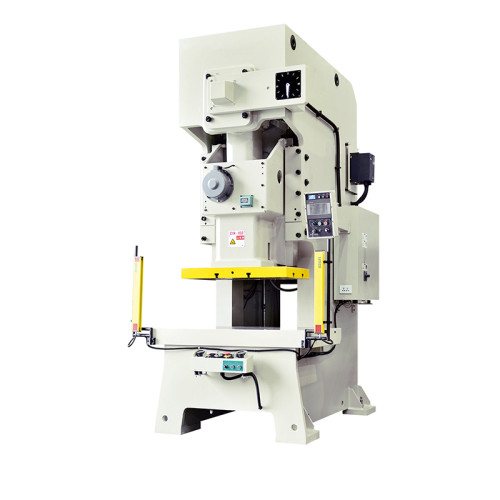
How to Automate a Sheet Metal Stamping Line?
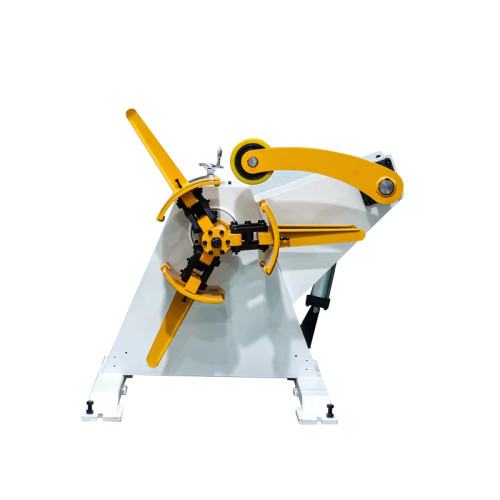
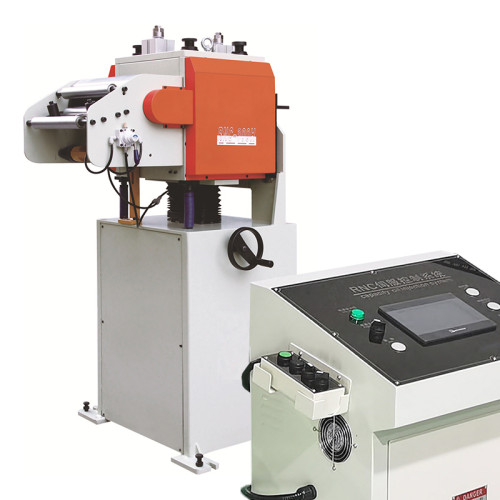
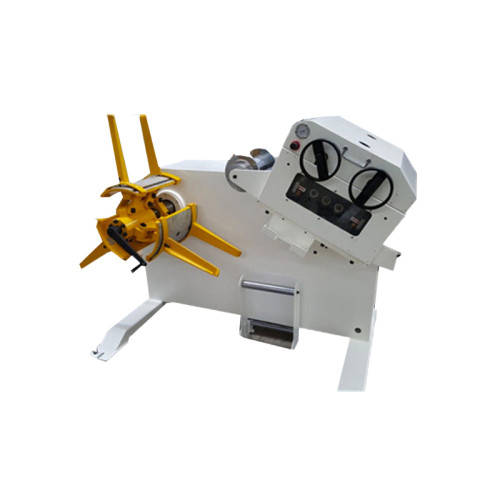
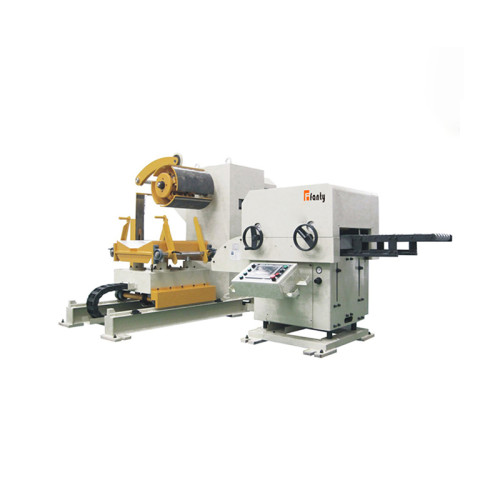
Automating a sheet metal stamping line is one of the most impactful investments a manufacturing facility can make. Manual feeding and handling of coil stock is slow, inconsistent, and increasingly difficult to sustain in today's labor-constrained environment. A fully automated stamping line transforms raw coil steel into finished stamped parts with minimal human intervention, dramatically improving throughput, quality, and safety. In this comprehensive guide, FANTY Machinery explains exactly how to automate your sheet metal stamping line step by step, covering equipment selection, integration, and optimization. A fully automated stamping line maximizes throughput and minimizes labor costs. The benefits of stamping line automation go far beyond labor reduction. Here are the key drivers that push manufacturers toward full automation: An automated sheet metal stamping line consists of several integrated subsystems that work in sequence: Here is the sequence of operations in a fully automated sheet metal stamping line: FANTY supplies all line components — decoiler, straightener, feeder, control system — as a matched set. This eliminates compatibility issues and single-source responsibility for performance. Every component is designed and manufactured to CE standards, with safety guards, light curtains, emergency stops, and interlocks integrated into the control logic. Our team has commissioned over 200 automated lines across 60+ countries. We provide on-site installation supervision, commissioning, and remote monitoring after handover. From automotive tier-1 suppliers to appliance manufacturers, FANTY's automated stamping lines are trusted by leading manufacturers worldwide. Our 370-person team, including 80+ R&D engineers, ensures continuous innovation and reliability. The cost depends on coil size, press tonnage, automation level, and existing equipment compatibility. A basic retrofit with NC feeder and straightener may cost $20,000–$50,000, while a complete greenfield line with decoiler, straightener, feeder, and control system ranges from $50,000 to over $200,000. FANTY provides detailed quotes based on your specific production requirements. Yes. Most existing C-frame and gap-frame presses can be retrofitted with an NC servo feeder and straightener. The key requirements are that the press has a consistent stroke timing signal (cam switch or encoder) and sufficient bolster area for feeder mounting. FANTY has retrofitted hundreds of existing presses across various makes and models. A typical installation and commissioning takes 3–7 days on-site, depending on line complexity. This includes mechanical installation, electrical connection, control system programming, and operator training. FANTY's pre-configured control cabinets and recipe-based programming significantly reduce setup time. Daily: check lubricant levels, inspect feed rollers for wear, verify sensor alignment. Weekly: clean straightener rollers, check belt tension on servo drives. Monthly: inspect electrical connections, calibrate feed length using a test strip. FANTY provides a detailed maintenance schedule and spare parts list with every installation. Yes. Progressive die lines and transfer press systems can be integrated with synchronized feeders and conveyors. FANTY has implemented multi-press automation for complex parts requiring multiple forming operations, with centralized control and coordinated feeding between stations. Ready to transform your press shop into a highly efficient production line? FANTY Machinery offers complete automation solutions for sheet metal stamping lines, from individual NC servo feeders to fully integrated turnkey systems. With over 12 years of experience, CE-certified quality, and equipment installed in more than 60 countries, we have the expertise to deliver measurable results.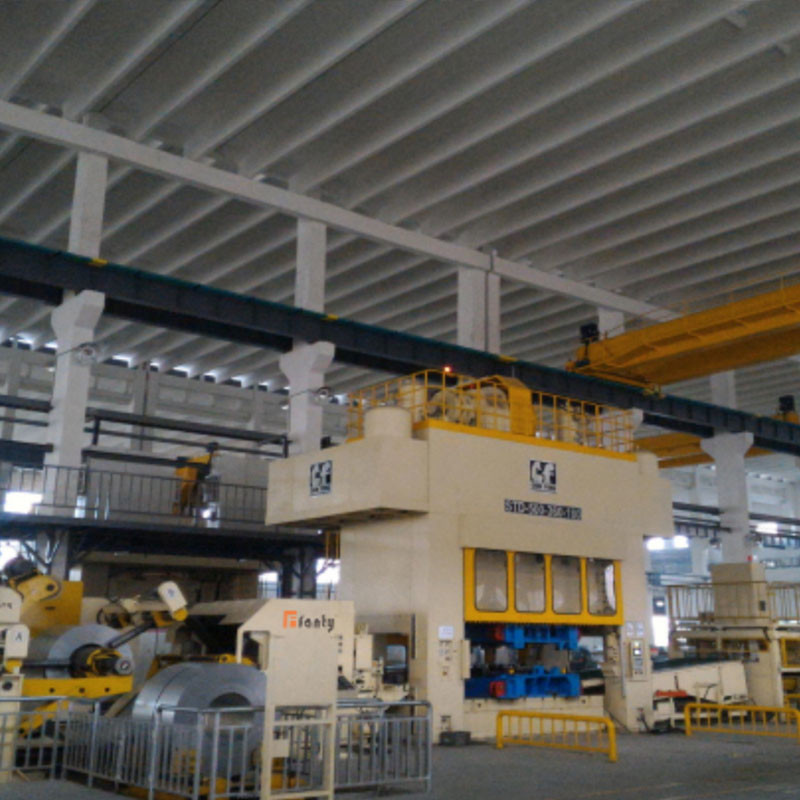
Why Automate Your Stamping Line?
Core Components of an Automated Stamping Line
Component Function Automation Level FANTY Recommendation Coil Loading Car Transports coil from storage to decoiler mandrel Motorized, remote-controlled Hydraulic lifting car with photo-eye positioning Decoiler (Coil Cradle) Holds and uncoils the coil, releasing material steadily Auto-expanding mandrel, hydraulic arm control Motorized decoiler with variable speed control Straightener Removes coil curvature and residual stress from the strip NC servo controlled, roller gap adjustment NC Servo Straightener with 7–11 rollers NC Servo Feeder Advances precise strip length into the press each stroke Fully programmable, ±0.05 mm accuracy High-torque AC servo motor feeder Press (Punch Press) Stamps the part using dedicated tooling and die PLC-controlled clutch, SPM programming High-speed press with safety light curtain Scrap Chopper / Rewinder Disposes of scrap skeleton or rewinds remaining strip Automatic activation on press signal Motorized scrap winder with tension control Control System Coordinates all line components via PLC/HMI Touchscreen control, recipe storage FANTY integrated control cabinet with remote access 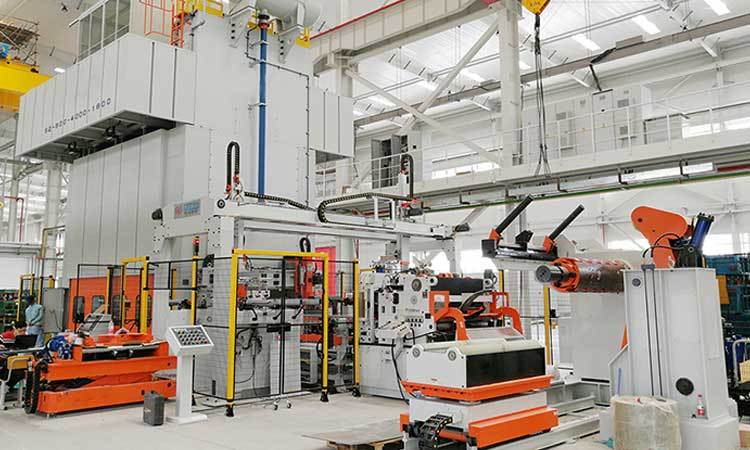
Step-by-Step Automation Process
Key Considerations for Automation Success
FANTY's Integrated Automation Solutions
End-to-End Integration
CE-Certified Safety
Global Installation Support
Proven Track Record
Frequently Asked Questions About Stamping Line Automation
How much does it cost to automate a sheet metal stamping line?
Can existing presses be retrofitted with automation?
How long does it take to commission an automated stamping line?
What maintenance is required for an automated stamping line?
Can I integrate multiple presses into one automated line?
Automate Your Stamping Line with FANTY