Why Does Coolant Mist Cut NC Servo Feeder Accuracy?
The complaint arrived on a Tuesday morning from a plant stamping HVAC panels: the same job that ran clean on Friday was now failing its hole-position gauge after lunch, and nobody had touched a setting.
This is the story of that week.
It traces a 0.38 mm feed length loss back from the die to the feed rolls.
It also explains why coolant mist does more damage than a plain oil film, and what an NC servo feeder can and cannot recover by adjusting the machine alone.

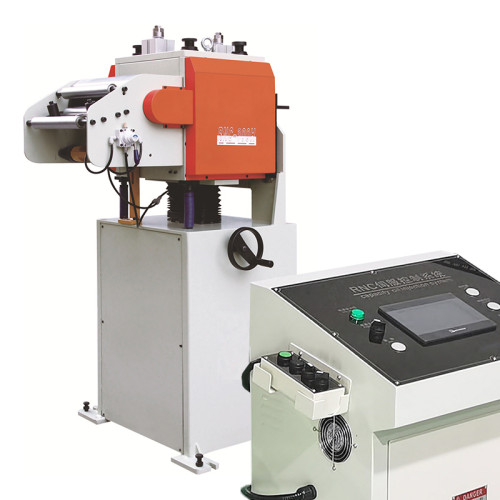
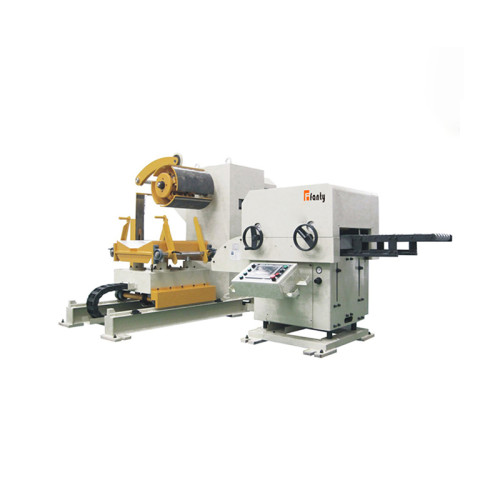
The line was 1,600 mm wide, feeding 2.0 mm SPCC at 180 strokes per minute into a progressive die with a heavy drawing lubricant.
Nominal feed length was 320.00 mm. By the end of the second shift it was running 319.62 mm, and the gauge was rejecting roughly one part in ninety.
The Complaint Arrived on a Tuesday Morning
The maintenance log for Friday showed nothing unusual. Feed length had been trimmed once at 06:40 and held until the end of the shift.
Monday was a holiday. On Tuesday, the first-off at 06:15 measured 320.02 mm and passed. By 13:30 the same check measured 319.68 mm.
Two facts shaped the investigation. The drift was progressive rather than sudden, and it reset almost completely after any stop longer than twenty minutes.
A sudden change points at a component. A progressive change that resets with time points at something accumulating on a surface.
What the First-Off Sheet Showed Over a Shift
The operator had been recording feed length every two hours, which is the only reason the pattern was visible at all.
| Time | Feed Length | Roll Surface | Where It Costs You |
|---|---|---|---|
| 06:15 | 320.02 mm | Dry, matt | Nothing. This is the condition the settings were tuned for |
| 09:00 | 319.91 mm | Faint film, tacky | Inside tolerance, so the drift is invisible to the gauge |
| 11:00 | 319.79 mm | Visible film, glossy | The setter starts trimming, which hides the cause |
| 13:30 | 319.62 mm | Film plus airborne grit | Gauge failures begin at roughly 1.1% scrap |
| 14:00 after a 25-min stop | 319.98 mm | Partly dried | Looks like the problem fixed itself, which delays the diagnosis |
The recovery after a stop was the giveaway. A worn roll or a failing encoder does not improve while the machine sits idle. A film does.
Tracing the Loss From Die to Feed Rolls
Work backwards. The die was fine: the pilot pins were entering cleanly and the strip was not short-feeding into the pilot.
The servo was fine: the encoder count matched the command, and the drive reported no following error above 0.02 mm.
That left the interface between the roll and the strip. If the rolls rotate exactly as commanded and the strip does not travel with them, the loss is slip.
The white cloth test settled it. Wiping the lower feed roll with a clean lint-free cloth after four hours produced a grey-brown smear that felt tacky between the fingers.
Why Coolant Mist Beats Oil Film
A plain oil film reduces friction but stays where it is put. Coolant mist behaves differently because it carries three things at once.
It carries the lubricant itself, drawn from the die area by the press's own air movement and deposited on the nearest cool surface, which is usually the feed roll.
It carries fine metal particles. Drawing lubricant picks up die wear debris, and those particles embed in the film rather than being wiped away.
It carries water, which flashes off and leaves a concentrated, tacky residue that is far more slippery than the original lubricant.
The result is a friction coefficient that falls as the shift progresses. The servo keeps delivering the same rotation and the strip keeps arriving slightly short.
The Four-Point Check That Found It
The check took forty minutes and needed no instruments beyond a cloth, a spring scale and the machine's own display.
- Cloth wipe on both rolls. Wipe at the start of the shift and again after four hours. Any tacky residue confirms a film is forming.
- Feed length before and after wiping. If the number moves back toward nominal after a wipe, the loss is slip rather than mechanical wear.
- Roll pressure reading. Compare the current gauge pressure with the commissioning sheet. This line had drifted from 3.2 to 3.6 bar as setters chased grip.
- Air movement at the die. Hold a strip of tissue near the feed rolls. If it lifts, the press is pushing mist upstream.
Raise the pressure and you make it worse. More roll pressure compresses the film into the roll texture and squeezes lubricant across the strip, which is exactly what the setters had been doing for two days.
How much feed length does a coolant film typically cost on a 2 mm strip?
Expect 0.2-0.4 mm of drift over a six-hour shift on a misty line. On a 320 mm feed that is enough to fail a hole-position gauge set at ±0.2 mm.
How often should feed rolls be wiped on a mist-heavy press?
Every four hours as a starting point, moving to every two hours if the die runs a heavy drawing lubricant above 8% concentration. A dry press can go a full shift.
Does increasing roll pressure recover the lost feed length?
Not on a contaminated roll. Above roughly 4 bar the film smears instead of clearing, and the drift often accelerates while the roll surface starts printing on the strip.
Can the controller compensate for a slipping roll?
It can add length, but it is a band-aid. Compensation of more than 0.3 mm hides the film and leaves you blind to a real grip or die problem underneath.
What air pressure does an air knife need to clear mist from the feed rolls?
Around 4 bar across the full strip width, angled away from the rolls rather than at them. Blowing directly onto the rolls drives the film into the texture.
How much scrap does the fix remove on a 180 SPM line?
On this line, gauge rejections fell from 1.1% to 0.3% within a single shift of adding extraction and a four-hour wipe interval. At 180 SPM that is roughly 2,900 saved parts per shift.
What You Can and Cannot Recover by Adjusting the Feeder
A servo feeder is a positioning device, not a cleaning device. It can hold ±0.05 mm on a clean strip, and it will hold that figure only as long as the strip actually moves with the rolls.
What adjustment can fix. Roll pressure within the design window, a change of roll surface finish, and a shorter cleaning interval are all legitimate and effective.
What adjustment cannot fix. A mist source inside the press.
If the die area is generating airborne lubricant faster than the rolls can shed it, no roll material or pressure setting will hold the feed length across a shift.
What compensation hides. Adding length in the controller makes the part pass while the underlying friction is still falling. The next symptom is usually pilot pin damage, which is far more expensive than a wipe.
Be equally careful with the opposite claim. A roll with a very aggressive texture will hold grip through the mist and print a visible pattern on a cosmetic panel.
There is a real trade-off between grip and surface finish.

Fixing It Without Rebuilding the Line
The plant solved it in one weekend for less than the cost of a week's scrap.
Extraction at the die. A local exhaust hood over the die area pulled the mist away before it reached the feed rolls. This was the single largest change.
An air knife ahead of the rolls. Mounted 200 mm upstream, angled away from the roll face at 4 bar, it cleared the residual film without driving lubricant into the roll texture.
A four-hour wipe interval on the shift card. Written into the operator's routine with a signed check, not left to judgement.
Roll pressure back to the commissioning figure. Restoring 3.2 bar removed the smearing the setters had introduced while chasing grip.
Total downtime was six hours on a Saturday. The alternative on the table had been a roll-change package and a heavier feeder, which would not have addressed the mist at all.
Writing the Fix Into the Shift Routine
Fixes that live in one engineer's head do not survive a staff change. Three items belong on the shift card.
Record feed length at the start and end of every shift, not only at first-off. The drift is what matters, and a single check cannot show it.
Wipe and sign. A four-hour interval with an operator signature is the difference between a routine and an intention.
Log the roll pressure. If it drifts upward, someone is chasing grip instead of finding the cause.
The error budget behind this diagnosis is worth understanding in full.
The our coil line knowledge base separates slip from servo error, back tension and pilot timing, so you can size each contribution before you buy hardware.
Our engineering team of 80-plus spends most of its field time on exactly that separation, and you can review our machines to see how the grip window is specified.
Where to go next
This article sits in the feed accuracy branch of the coil line guide library, one layer below the error budget pillar. It is one field case out of the many ways a strip stops moving with the rolls.
Read the feed accuracy error budget