Why Does Aluminium 5182 Need Different Feed Settings?
The press ran the same die, the same feed length and the same speed. In steel, 4,000 parts came out clean. In 5182 aluminium, the first 200 showed roll marks and the feed length drifted.
Nobody had changed a setting, which is exactly why the operator called it a machine problem first.
Three material properties account for everything that happened, and each one maps to a setting that has to move in the opposite direction to intuition.
An NC straightener feeder set up for mild steel carries all of those settings into aluminium, and each one is wrong in a different direction.
The Job That Fed Perfectly in Steel and Failed in Aluminium
The evidence was consistent across three coils. Marks appeared on the top surface in a band 40 mm wide, spaced at the feed length.
Feed length drifted by 0.25 mm over 300 strokes, always short, never long. That pattern points to slip rather than to encoder error.
Strip edges showed a slight burnish, which the tool room read as guide contact and the line team read as normal.
Two departments, two explanations, and neither one addressed the material. That is where most aluminium feeding problems begin.
Three Properties That Change the Setup
Work hardening is the first. 5182 hardens quickly under strain, so every pass through a roll changes the material the next pass sees.
Galling is the second. Aluminium transfers to steel roll surfaces under pressure, and the transferred layer then marks the next metre of strip.
Springback is the third. The elastic recovery of 5182 after bending is larger than mild steel at the same yield, so the same penetration produces less permanent set.
Each of those maps to a specific setting: penetration for springback, roll pressure for galling, and pass scheduling for work hardening.
Hardness and temper are the two numbers worth requesting. A 5182 coil at H32 behaves nothing like one supplied at O temper.
Coil set matters more on aluminium because it yields at lower stress, so a set that would relax in steel simply stays in the strip.
Camber from slitting is the third thing to check. It arrives looking like edge wave and gets blamed on the straightener within a shift.
Ask the mill for coil set and camber limits in millimetres per metre, then reject anything outside the norm you have measured on your own line.
Adjust one without the others and the improvement moves the defect rather than removing it.
Feed Roll Pressure Has to Come Down, Not Up
The instinct on any feed problem is more pressure. On aluminium that instinct is the cause of the problem.
Excess pressure embeds aluminium into the roll surface. Once that layer forms, every subsequent part carries its imprint until the roll is polished.
Pressure should be the minimum that prevents slip, established by a slip test at the fastest speed in the schedule, not by feel.
On 1.2 mm 5182 a typical setting is 60 to 70 percent of what the same gauge of mild steel needs, because the material conforms to the roll more readily.
Wipe the rolls at every coil change during the first week. The transfer layer builds faster than most operators expect and is far easier to remove early.
Two operators setting pressure by feel will produce two different results, which is why the slip test matters more than the gauge reading.
A slip test takes ten minutes. Mark the strip and the roll, run 50 strokes, and compare commanded length against measured length.
Straightener Settings: Less Penetration, More Roll Contact
Springback means the strip needs more bending to reach the same permanent set, so penetration generally goes up, not down.
That is the opposite of the feed roll advice, which is why the two settings have to be reasoned about separately on aluminium.
Roll contact improves flatness on aluminium because the material is more sensitive to local pressure variation across the width.
On a five-roll head running 1.2 mm 5182, one extra half turn of penetration at the entry pair usually removes the centre buckle that appears otherwise.
Watch the exit pair instead. Over-penetration there puts a permanent curve into the strip that the die then has to flatten.
Roll diameter has an outsize effect here. A small roll bends the section through a tighter arc and work hardens the surface more per pass.
Worked Settings for 1.2 mm 5182
The table below is the setup that ran clean for eleven days on this job, 1,000 mm wide, 1,200 SPM strokes, 320 mm feed length.
| Setting | Mild steel baseline | 5182 setting | Why It Moves That Way |
|---|---|---|---|
| Feed roll pressure | 5.5 bar | 3.4 bar | Galling risk rises faster than grip need falls |
| Entry penetration | 0.6 mm | 0.9 mm | Higher springback needs more bending |
| Exit penetration | 0.4 mm | 0.3 mm | Less residual curve into the die |
| Line speed | 180 SPM | 160 SPM | Work hardening per pass rises with speed |
| Roll wipe interval | Weekly | Every coil | Transfer layer forms within 300 strokes |
The speed reduction is the least popular line in that table and the one that kept quality stable across three shifts.
It is also temporary. Once the roll surfaces are conditioned and the pressure is right, speed can usually return to 175 SPM without marks.
Where the Same Settings Still Mark the Surface
Roll condition sets the floor on achievable surface quality. A roll with a polished chrome finish behaves differently from a ground steel roll on aluminium.
Lubricant choice matters as much as pressure. A lubricant designed for steel may not leave a film thick enough to separate aluminium from the roll.
Ambient conditions contribute too. Aluminium picks up moisture films differently, and a humid summer week can bring back marks that disappeared in winter.
And a die that strips hard will pull the strip against the feed rolls, which no roll setting can fully compensate for.
Treat the settings as a starting point validated on your own rolls, not as a specification transferable between machines.
Changing Over From Steel: A Four-Point Checklist
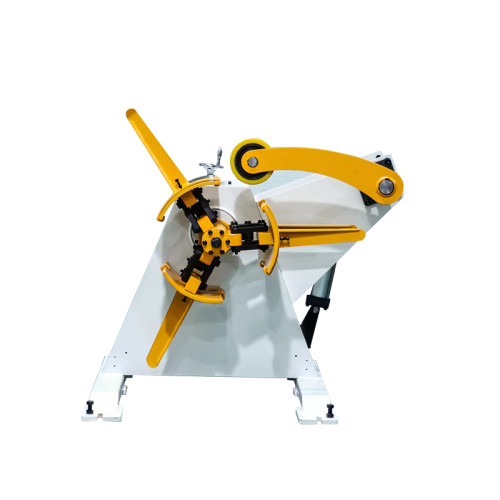
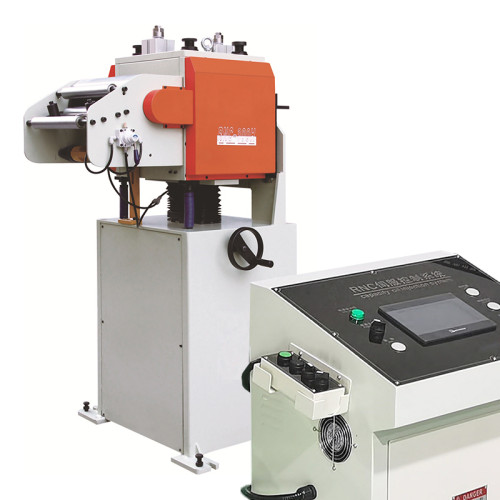
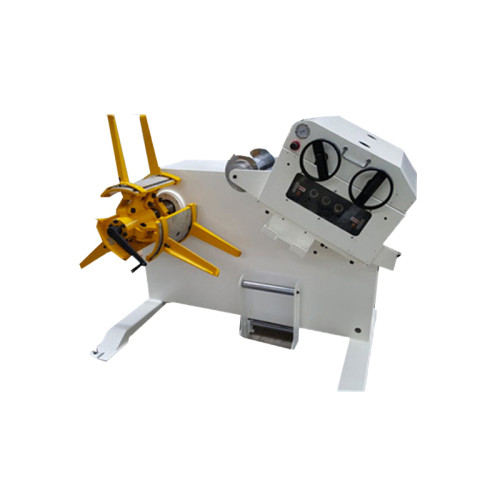
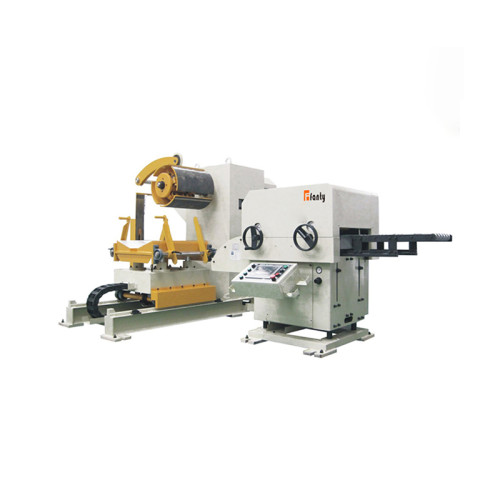
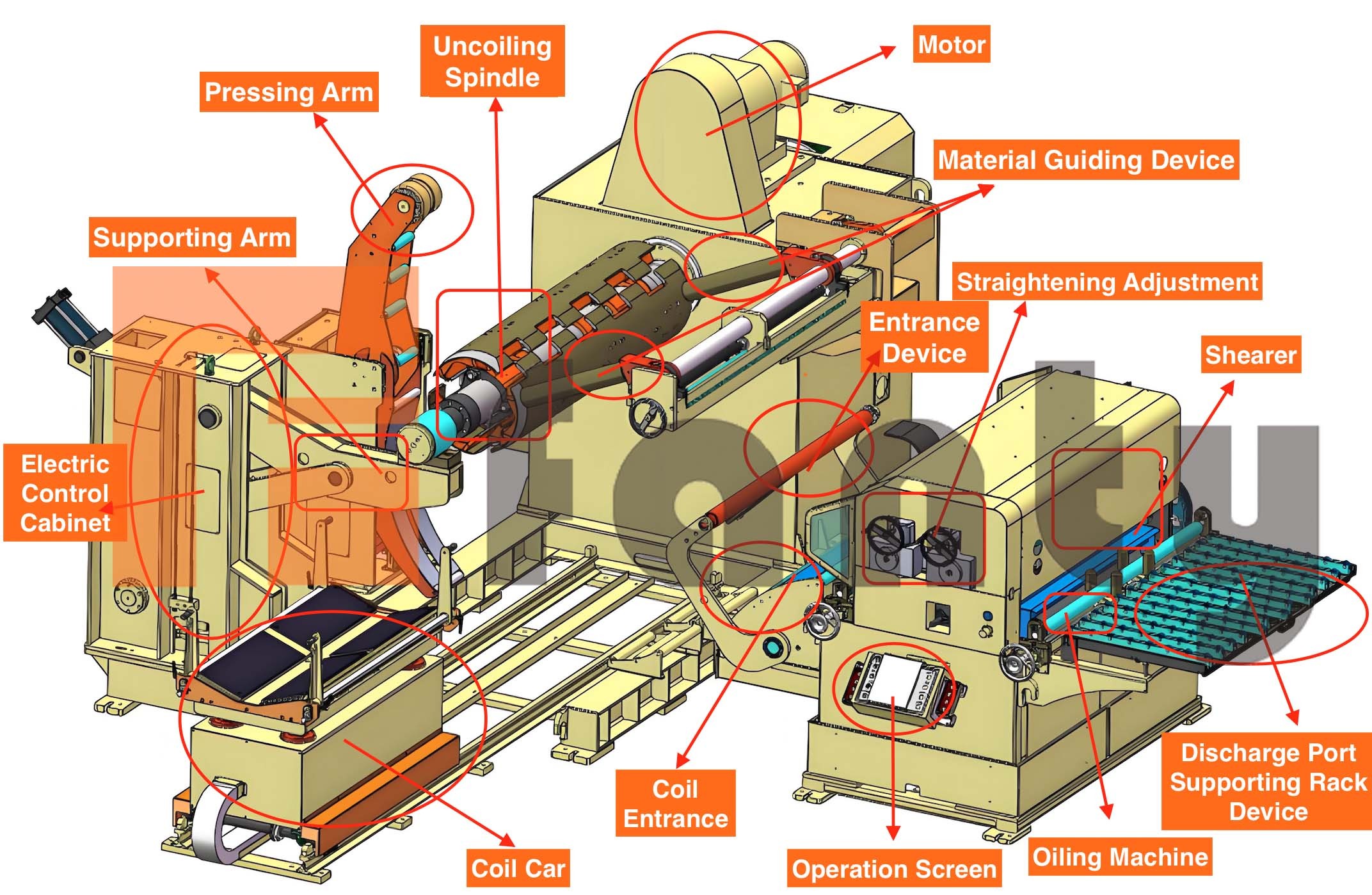
The coil line range lists roll diameter and roll count per model, and both figures decide how much of this checklist you have to work through.
A machine with large rolls and few of them needs different treatment from one with nine small rolls at close pitch.
- Ask for temper, coil set and camber limits with every coil, not just the alloy designation.
- Set feed roll pressure by slip test at maximum schedule speed and record the value on the machine.
- Polish the feed rolls and the straightener rolls before the first aluminium coil, not after the first complaint.
- Run a slip test at maximum schedule speed and record the pressure at which slip begins, then set 10 percent above it.
- Increase entry penetration in half-turn steps until centre buckle disappears, then back off one step.
- Wipe rolls at every coil change for the first week, then extend the interval based on what you actually see.
- Log the settings against the coil number, so a repeat order starts from a known point rather than from scratch.
That checklist takes ninety minutes and saves the three days of experimentation that this job actually consumed.
Where to go next
Material change is one of four variables that move feed accuracy, and the one most often left out of an error budget. The feed accuracy guide covers the other three.
The Coil Line Guide LibraryHow much should feed roll pressure drop for 5182 aluminium?
To about 60 to 70 percent of the mild steel value at the same gauge. Establish it by slip test at maximum speed rather than by feel.
Does aluminium need more or less straightener penetration?
More at the entry pair, because springback is higher. Less at the exit pair, because residual curve shows up in the die.
Why do roll marks appear after about 300 strokes?
Aluminium transfers to the roll surface, and once the layer forms it marks every following part. Wipe at every coil change until the surface stabilises.
Can the line run 180 SPM on 1.2 mm 5182?
Usually yes once rolls are conditioned and pressure is correct. Expect to start at 160 SPM for the first shifts while the surface settles.
Does the same setup work on 5754 or 6061?
No. 5754 work hardens differently and 6061 in sheet form behaves differently again. Treat each alloy as a new setup validated on your own rolls.
What lubricant suits aluminium coil feeding?
One formulated for aluminium, with a film strong enough to separate strip from roll. Steel lubricants often leave too thin a film at these pressures.