Which Suits a High-Mix Press: NC Servo Feeder or Blanks?
A job shop with thirty active part numbers asked the wrong question for two years.
The question was whether to buy an NC servo feeder or keep feeding the press with pre-cut blanks.
The right question was which of the thirty numbers could pay for a coil line, because the answer is different for a bracket made 40,000 times a year and a cover made 3,000 times a year.
Both routes are legitimate. They simply fail in different places, and the failure mode of the wrong choice is expensive in a way that is hard to see on a quotation.
This comparison sets the two routes against each other on capital, material yield, labour and changeover, then gives the volume bands where each one wins.
The accuracy side of coil feeding — where the error comes from between the coil and the die — is worked through in the coil line guide library, and the feeding equipment itself is listed in the product range.
Three Ways to Put Material Into a Press
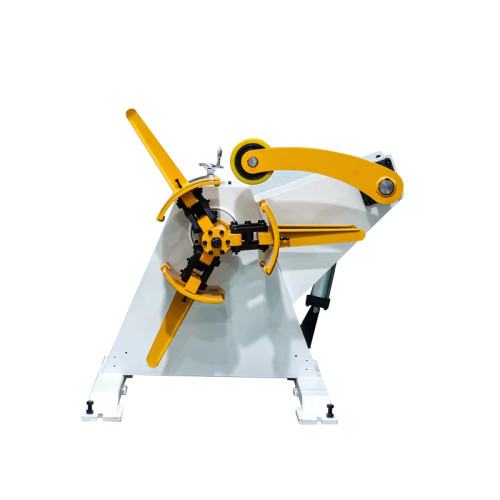
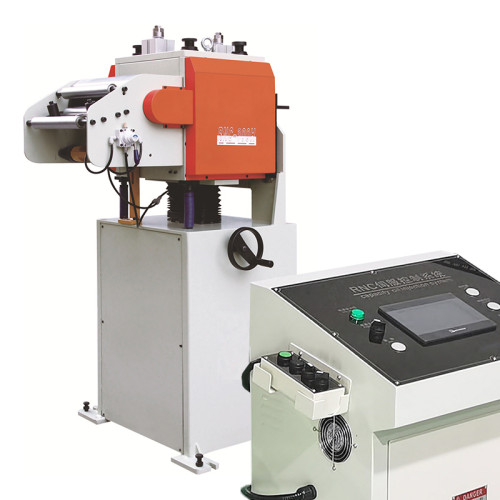
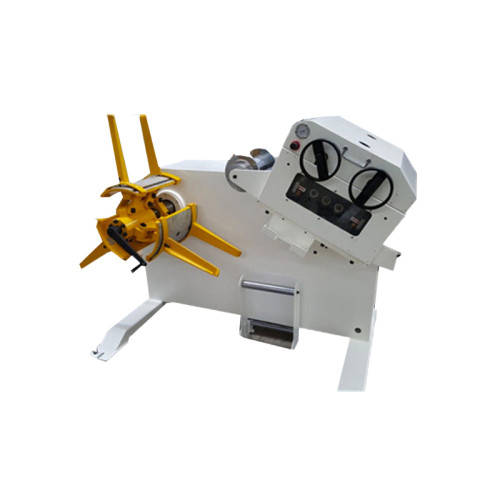
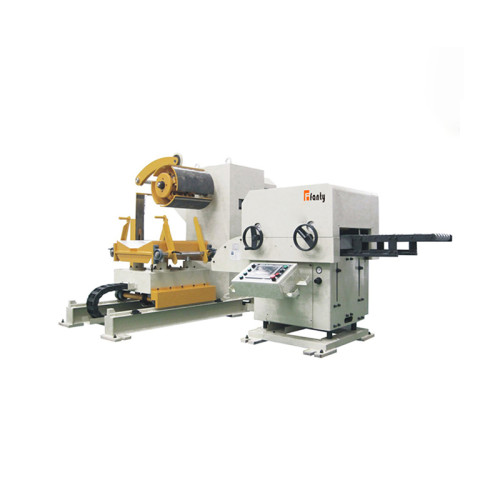
Coil into the press. A coil sits on a decoiler, the strip is straightened and fed by an NC servo feeder, and the press takes it directly.
The line runs from coil to finished part with one operator, and the material arrives in the cheapest form steel is sold in.
Blanks into the press. A blanking supplier or an in-house blanking press delivers flat, cut rectangles or shapes that a destacker or magnetic feeder singulates into the die.
The press no longer cares about coil width, coil set or skeleton scrap, and the die can be designed without a scrap chute.
Both, in sequence. A coil line feeds a blanking press, and the blanks go to a second press for forming. This is the standard layout for a part family that shares one blank size.
It buys the material yield of a nesting die and the flexibility of blank feeding downstream, at the cost of two presses and two setups.

What Each Route Costs Before the First Good Part
| Route | What it gives the run | What it costs you | Where it stops working |
|---|---|---|---|
| Coil plus NC servo feeder | Cheapest form of steel, one operator, continuous feed, no blank handling, feed accuracy held to a few hundredths of a millimetre | Capital for the decoiler, leveler, feeder and coil handling; 15 to 30 minutes of changeover per coil; skeleton scrap you cannot sell as blanks | Short runs. Below roughly 5,000 parts a year the changeover and setup swallow the labour saving |
| Pre-cut blanks plus destacker | Low capital, minutes to change part number, no coil handling, flat material with no coil set to remove | Blank price includes the blanking press, die, labour, stacking and freight; double handling; double-blank risk at the destacker | High volume. Above roughly 20,000 parts a year the blank premium and handling labour exceed the coil line's capital cost |
| Coil to blanking press, then blanks to a second press | Nesting yield from the blanking die, flexible forming downstream, one coil feeds several part numbers | Two presses, two dies, two setups, and a blank buffer that ties up working capital | Small plants with one press. The layout only pays when the blank is shared by several forming dies |
Where the Coil Route Loses on Material Yield
Take a 300 × 220 mm blank in 2.0 mm mild steel, run from a 1,000 mm wide coil.
Three blanks across use 900 mm, leaving 100 mm of edge trim. The feed pitch is 220 mm plus a 4 mm bridge, so 224 mm of coil is consumed per row.
Yield is 3 × 300 × 220 divided by 1,000 × 224, which is 88.4%.
A blanking die that nests the same part at an angle might reach 92 to 94%. That four to six point gap is the coil route's real material penalty.
On 500 tonnes of steel a year at around 700 dollars a tonne, five points is roughly 17,500 dollars a year of extra material.
The penalty is predictable and needs no labour, which is why high-volume lines accept it. It is only acceptable because the alternative — buying blanks — carries a larger premium per part.
Where the Blank Route Loses on Everything Else
The blank route looks cheap because the blank price hides three costs that a coil line pays directly.
Handling. Every blank is picked, stacked, banded, moved, unbanded and singulated. A coil is moved once by crane and then feeds itself.
Space. One 5-tonne coil occupies about 1.2 m² of floor. The same material as stacked blanks needs three to four times that area once pallets, aisles and a buffer are counted.
Failure modes. A destacker can feed two blanks, and a double blank destroys a die faster than a short feed does. A servo feeder misfeeds, which die protection usually catches in the same stroke.
None of these appear on a quotation, and all three appear on the monthly cost sheet.

Which Route Fits Below 5,000 Parts a Year
Volume per part number, not total shop volume, decides this. Use these bands as a starting point and then correct them with your own changeover times.
- Under 5,000 parts a year. Blank feeding normally wins. Capital is lower, the die can be simpler, and the part number changes in minutes without touching a coil.
- 5,000 to 20,000 parts a year. This band is decided by material yield and labour rate. Run the arithmetic on your own blank price, not on a supplier's list price.
- Above 20,000 parts a year with good nesting. Coil feeding wins, and the margin grows with volume because the labour is fixed.
- Above 50,000 parts a year, even with poor nesting. Handling and labour dominate. A five-point material penalty is smaller than the cost of moving blanks twice.
- Any volume with an irregular outline. If the part cannot nest in a rectangle, coil feeding wins earlier because a blank forces you to buy a rectangular blank and scrap the difference.
Where This Comparison Breaks Down
The volume bands are a starting point, and there are five situations where they will point you the wrong way.
Shift pattern. The bands assume one shift. On three shifts the labour on the blank route triples while the coil line still needs one operator, so the crossover moves down sharply.
The die, not the feeder. A coil-fed die needs pilots, a scrap path and enough strength to survive a misfeed.
Converting a blank-fed die can cost more than the feeding equipment, and that number belongs in the comparison.
Pre-nested blanks. If your supplier delivers blanks cut from a nested die, the blank route inherits the coil route's yield and pays only for handling. The four to six point penalty disappears.
Die speed. A feeder rated at 200 strokes a minute is irrelevant if the die runs comfortably at 60. Compare the line's throughput against the die's, not against the feeder's.
Material condition. Coil arrives with coil set, crossbow and camber that a leveler has to remove. Blanks arrive flat and carry a burr.
Neither is free, and the comparison above counts only the coil side of that ledger.
The Changeover Number That Decides It
Most shops compare capital cost and stop there. The number that actually separates the two routes is the changeover share of the job.
Take a run of 2,000 parts at a 60 stroke-per-minute die. Press time is about 33 minutes.
If the coil route needs 25 minutes to change over — new coil, thread, set the feed length, prove the first part — changeover is 43% of the job.
If the blank route needs 6 minutes, changeover is 15%. On that run, the coil line cannot win, whatever its material yield.
Now take 40,000 parts. Press time is 11 hours, and 25 minutes is under 4% of the job. The coil line wins on material and labour without argument.
The practical rule: if changeover is more than a quarter of the total job time, feed blanks or invest in quick die change and coil-end handling before you buy the line.
At what annual volume does an NC servo feeder beat pre-cut blanks?
Between 5,000 and 20,000 parts a year per part number, depending on material yield and labour rate. Above 20,000 the coil route normally wins on labour alone.
How much material does coil feeding waste on a 300 × 220 mm blank?
Roughly 11.6% from a 1,000 mm coil — an 88.4% yield with three blanks across and a 4 mm bridge. A nested blanking die can recover four to six of those points.
How many blanks does one 5-tonne coil yield?
About 4,800 blanks at 300 × 220 × 2.0 mm, since each blank weighs roughly 1.04 kg. That is one crane lift against 4,800 individual handlings.
How long does a coil changeover take against a blank stack change?
Plan on 15 to 30 minutes for a coil, including threading and first-part approval, against 3 to 8 minutes for a new stack of blanks.
That gap is the whole argument for blank feeding on short runs.
Where to go next
Choosing the feeding route is the first decision. Holding the feed accuracy that route promises is the second, and it is covered end to end in the guide library.
the coil line guide library