Which Stamping Job Loses Most When the Coil Line Stops?
Thirty minutes of stopped coil line costs one job USD 22 a minute and the next job almost nothing. Same press, same line, same operator.
The difference is what sits downstream of the stoppage: buffer stock, customer terms and how much material has to be scrapped before the die is producing again.
Most plants carry a single downtime figure, usually lifted from a finance template, and apply it to every job. That number is wrong in both directions, and it hides where the real exposure sits.
Put a Number on One Stopped Minute
Start with contribution per minute, not with cost per hour. Contribution is what the job earns after material and direct labour, and it is the figure that disappears when the press stops.
A progressive job running 60 SPM with a two-out die produces 120 parts a minute. At USD 0.18 contribution per part that is USD 21.60 a minute.
A 40-minute coil change therefore costs USD 864 in contribution before anybody counts the scrap.
Machine overhead is the second layer. If the line absorbs USD 65 an hour, that is USD 1.08 a minute whether it runs or not.
It matters for costing, but it does not vanish when the line stops, so do not double-count it as a loss.
Restart cost is the third layer, and it is the one nobody measures.
Every stop ends with a re-threading sequence, a first-piece check and a handful of scrapped strokes while the strip settles into the straightener again.

Which Jobs Absorb a Stop and Which Cannot
The table ranks jobs by what a half-hour stoppage really costs. The third column is where the money actually leaves the building, and it is rarely the labour line.
| Job type | Cost of a 30-minute stop | Where the loss hides |
|---|---|---|
| Long-run bracket, four hours of finished buffer | Near zero today, overtime later | The buffer moves the cost to a Saturday shift, where it is invisible in the downtime report |
| Automotive part on daily call-off | USD 600 to 900 in contribution | Expedited freight and premium overtime, neither of which appears against the press |
| Pre-painted or coated strip | USD 400 plus 40 to 90 scrapped parts | Restart marks and coating damage on the first metres after threading |
| 0.4 mm stainless or copper | USD 500 plus material scrap | Material value per metre is high, so every scrapped stroke costs several times a CR stroke |
| Tight-tolerance progressive die, 0.05 mm | USD 900 to 1,400 | A full re-setup after the stop, plus the risk of a damaged pilot or a shaved die section |
Read the table as an exposure map rather than a ranking. A plant with three automotive jobs and one coated job carries most of its downtime risk in four part numbers, not across the whole schedule.
Is USD 22 a minute a realistic coil line downtime cost?
For a 60 SPM two-out job at USD 0.18 contribution, yes. The same line running a 4-out die at 120 SPM would be nearer USD 86 a minute, which is why one figure cannot cover a plant.
How many parts does a restart scrap on a 1.2 mm job?
Typically 8 to 20 strokes before the strip is tracking and the feed length is stable. On a 2-out die that is 16 to 40 parts, and the count rises sharply below 0.6 mm.
Does a four-hour finished-goods buffer really remove the cost?
It removes it from the shift and adds it to overtime. Above roughly 300 parts a day of buffer, the cost shows up as a 6 to 10 percent labour premium instead.
At what stoppage frequency does a second decoiler pay back?
Above about 12 coil changes a shift with a 6-minute change, a second decoiler pays back in 14 to 20 months on a single high-contribution job.
Should the downtime figure include the operator?
Only if you can redeploy them. On a 200 SPM line the operator is usually tied to the line, so their cost stays in the job whether it runs or not.
Where the Restart Bill Lands
Restart is a separate cost centre from the stoppage, and on thin or coated material it is the larger of the two.
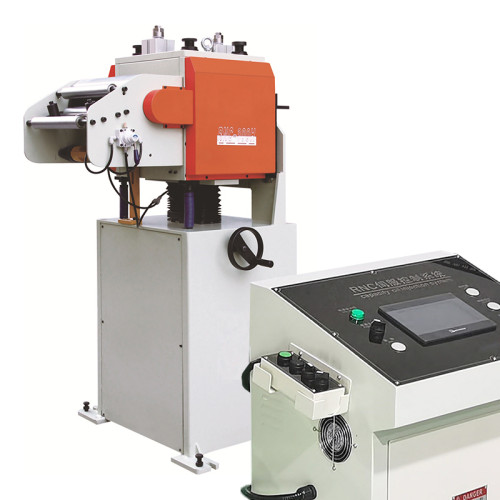
Threading a coil means releasing the straightener, feeding strip through the rolls and re-establishing the loop.
The first strokes after that run with a strip that has not been straightened to the same setting, so flatness and feed length both drift for a few cycles.
On 1.2 mm CR the drift is usually inside tolerance by stroke six. On 0.5 mm aluminium it can take twenty, and on pre-painted strip the rolls leave a mark on the first metre that no setting change will remove.
Die protection is the other exposure. A short feed or a double thickness at restart is exactly the condition that breaks a pilot punch. One damaged pilot costs more than a week of accumulated downtime.
Four things go wrong in sequence after every thread, and each has a cheap check attached to it.
- Feed length settles last, so check the first five strokes against the dial rather than the drawing.
- Loop height drifts upward while the strip is still stiff from the coil outside diameter.
- Straightener gap has to be re-zeroed whenever the coil is changed to a different heat.
- Pilot release timing is the last thing to confirm, and the first thing blamed when a punch breaks.
Written as a five-minute checklist, those four checks remove most of the restart scrap on a job that changes coils more than twice a shift.
What a Buffer or a Second Coil Buys Back
Once the exposure is on paper, the investment question gets easier. The table compares the four options we see chosen most often, with the constraint that comes attached to each.
| Option | What it recovers per shift | Where it costs you |
|---|---|---|
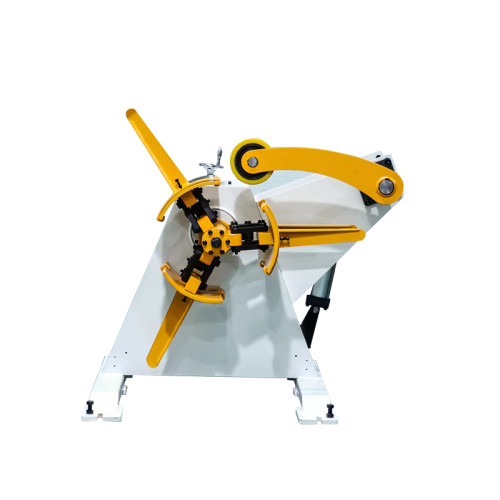
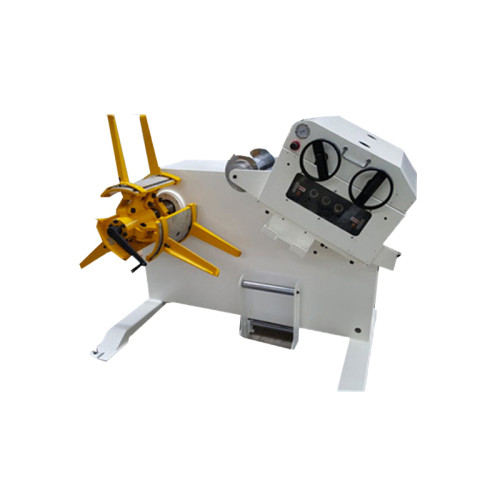
| Second decoiler on the same line | One full coil change, 5 to 7 minutes | Floor space and a second mandrel to maintain; only pays on jobs above 10 changes a shift |
| Accumulator loop or strip buffer | 2 to 4 minutes per coil change | Adds strip length that must be straightened, so flatness at the loop exit needs its own check |
| Quick-die-change package | 20 to 40 minutes per changeover | Capital that sits idle on a single long-run job |
| Die protection with feed monitoring | Prevents the pilot break, not the stop | False trips until the thresholds are tuned, which takes a month of production |
Choose by the exposure map, not by the catalogue. A plant whose cost sits in restart scrap needs die protection and a better threading routine, not a second decoiler.
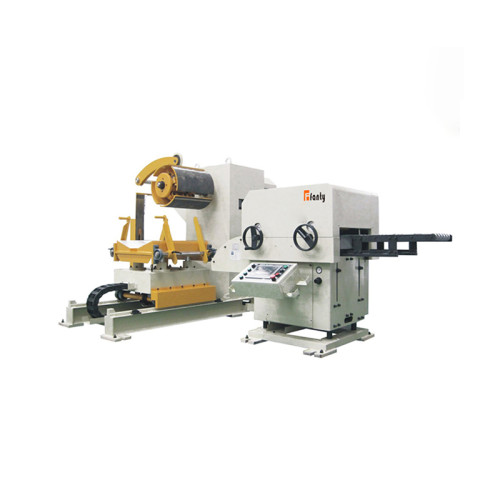
FANTY builds lines for roughly 200 active installations, and the pattern is consistent. The plants that cut downtime fastest are the ones that measured three real stoppages before spending anything.
The Figure That Flatters the Model
The arithmetic above is only honest if you accept three places where it overstates or understates the truth.
First, it assumes every lost part was going to be sold this week. In a plant running to a finished-goods warehouse, a stop often costs nothing at all, because the schedule absorbs it.
The cost only materialises when the buffer runs out.
Second, it assumes contribution is known per job. Many plants carry a standard cost that spreads overhead evenly, which makes a low-volume high-margin job look identical to a high-volume commodity one.
The model then points at the wrong press.
Third, it treats the stoppage as lost time rather than as a signal. A line that stops eight times a shift for coil changes needs a different decoiler, not a faster operator.
A line that stops twice a shift for feed faults needs a straightener setting, not a buffer.
Where the model genuinely fails is on multi-press cells. One coil line feeding two presses has an exposure that is not the sum of the two, because the second press keeps running while the first is down.
How to Test Your Own Number in One Week
You do not need a consultant to produce a defensible figure. You need three stoppages recorded properly.
- Log the reason, the duration to the minute, and whether the line was stopped or merely slow.
- Count the parts scrapped from restart to the first good part, and weigh them.
- Note whether the customer call-off was met from buffer or from overtime.
- Repeat on your highest-contribution job and your lowest, so the spread becomes visible.
Three records per job type is enough to separate a real exposure from a felt one, and the comparison usually changes which line gets the capital.
The line-side numbers that make this arithmetic work are set out in the coil line guide library, which breaks the error budget down from the decoiler to the die.
Machine data for the options compared above sits in the stamping equipment index, including decoiler capacity, loop length and die-height ranges by model.
Where to go next
Downtime cost is one half of the payback case. The other half is what the extra equipment adds to the machine price and to the floor, and that comparison belongs in the purchasing cluster.
See the feed accuracy error budget