What Causes a Servo Feeder to Double-Feed?
A double-feed announces itself as a bent pilot pin, not as an alarm. By the time the press stops, the strip has already moved twice its programmed length and the die has taken the hit.
Operators call every misfeed a double-feed, which is why the fault gets fixed by guesswork. This is the diagnostic sequence we run on site, ordered by how often each cause turns out to be the real one.
What a Double-Feed Looks Like Before the Press Stops
Three faults get confused on the shop floor, and each one needs a different fix. Separate them before touching a setting.
Double-feed. The strip advances twice the programmed length. The part is long, the pilot holes no longer line up, and the scrap curl is noticeably longer than the pitch.
Short feed. The strip advances less than programmed. The part is short and the pilot pin drags the strip forward as the ram descends.
No feed. The rolls turn but the strip does not move. That is a grip problem, not a control problem, and the part comes out unformed at the same station every stroke.
Look at the last good part and the first bad one side by side. The difference in length tells you which of the three you have, and that single measurement saves the next hour.
The Six Causes, Ordered by How Often We Find Them
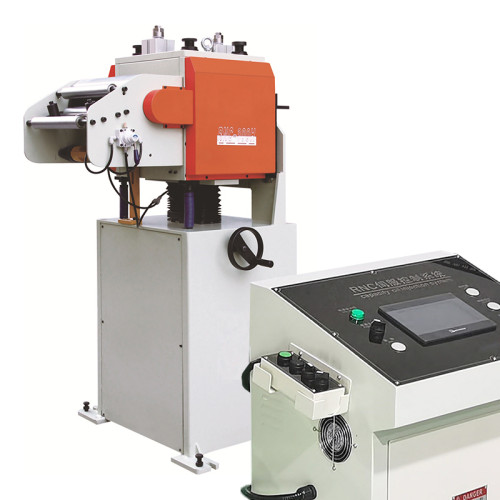
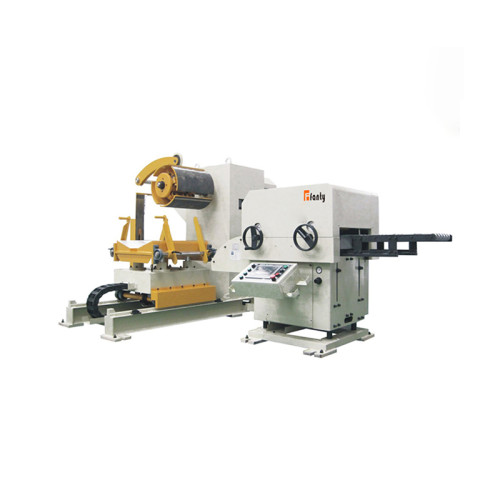
The order below is not theoretical. It comes from service calls on the NC servo feeder we build, across 60+ countries, and the first two account for more than half of them.
| Cause | How it shows in the scrap | Where it costs you |
|---|---|---|
| Pilot release timed too early | Long part, pilot pin bent in the same direction every time | Die repair every few weeks; the timing is a two-minute change nobody makes |
| Roll pressure too low for the gauge | Intermittent long or short parts, worse on oily strip | Grip is marginal, so the fault moves around and looks random |
| Worn or polished feed rolls | Slip under load, always at higher speed | New roll set is a consumable cost, but the scrap before you notice is not |
| Encoder coupling slip | Feed length drifts by a few percent, no pattern | Every part is slightly wrong, so nothing looks like a failure |
| Anti-backup or brake slip | Strip creeps back after the feed, pilot then pulls it forward | Die damage from a double hit is the expensive part |
| Feed length register not saved | Correct after a reset, wrong after the next changeover | A recipe that does not persist costs a setup every shift |

Why the Pilot Release Timing Decides Half of These
A servo feeder does not move the strip on its own authority. It moves the strip, and then the die takes over through the pilot pins. If the release timing is wrong, the two fight each other.
Release too early. The pilot enters the hole while the rolls still have grip. On the upstroke the pilot pulls the strip forward as the ram rises, and the next feed starts from a displaced position.
Release too late. The pilot hits the strip surface instead of the hole. You get a mark at the pilot station and, on thin gauge, a distorted hole that grows every stroke.
The correct window is short. On a 200 SPM press running 0.8 mm SPCC, the pilot should be clear of the strip within 15 to 20 degrees of crank rotation before the feed starts.
Check it with a strobe or a slow-motion phone video at 30 SPM. Crank angle, not time, is the unit that matters, because the fault reappears whenever the press speed changes.
How to Prove Which Cause You Have in Fifteen Minutes
Run these in order and stop at the first failure. Each step removes a whole group of causes rather than confirming a single one.
- Mark the strip at the roll exit and run ten strokes in manual. Measure the pitch with a rule, not with the HMI.
- Repeat at half speed and at full speed. A fault that disappears at low speed is grip, not control.
- Disable pilot release for one coil and run. If the fault vanishes, the timing is the cause and the feeder is innocent.
- Watch the encoder coupling through one full stroke. Any visible lag under reversal means slip.
- Pull the strip backwards by hand with the rolls closed. Movement over 1 mm points at anti-backup or brake.
- Save the recipe, power down, power up and reload. A length that changes across a restart is a software fault.
Six checks, fifteen minutes, and you have either found the cause or eliminated every one of the six. Both outcomes are worth the quarter of an hour.
What a Double-Feed Does to the Die Before You Notice
The feeder is the cheap part of this failure. The die is where the money goes, and the damage starts before the press stops.
Pilot pins bend first. A pilot entering a displaced hole bends rather than shears, and a bent pilot then marks every part until somebody sees it. Two pins and a stripper plate is a normal repair bill.
Slugs follow. A double hit on a piercing station shears a slug that has nowhere to go. It embeds in the die face and takes a print on the next fifty parts.
Feed length errors hide in tolerance. If the encoder slips 2 percent on a 250 mm pitch, the part is 5 mm long.
That is outside tolerance but inside the range where nobody checks, so the fault runs for a shift before scrap is caught.
The economics are simple. A pilot pin costs a few dollars. A die repair after a double hit costs days of production, and the line sits idle while a toolroom works.
Where the Blame Belongs Somewhere Else
Not every double-feed is a feeder fault, and a service call that starts by adjusting the machine can make a die problem worse.
Die-side causes. A worn pilot pin, a slug stuck in a pilot hole, or a stripper that lifts the strip late will all pull the strip forward. The feeder records a correct feed and gets blamed anyway.
Material causes. A weld seam in a coil is 0.1 to 0.2 mm thicker. It lifts the rolls, loses grip for one stroke, and then the next feed overshoots. Two bad parts per coil, and the operator calls it random.
Press causes. A crankshaft with 0.5 degrees of torsional lag at speed changes the release window without changing any setting. The fault appears only above a certain SPM.
Where the feeder genuinely cannot compensate is a strip with more than 0.05 mm of thickness variation across the coil width. Grip depends on consistent contact, and no pressure setting fixes a crowned strip.
How to Keep It From Coming Back
Most repeat double-feeds come from one habit: adjusting the setting instead of recording it. The machine is fixed, the shift ends, and the next changeover starts from zero.
Log the pressure per gauge. A chart on the machine frame with the pressure for each thickness beats a memory. For 0.8 mm cold-rolled strip on a 1,000 mm wide unit, that figure typically sits between 4 and 5 bar.
Check pilot timing after every die change. The window belongs to the die, not to the feeder, so it moves when the tool does. Add it to the changeover sheet as a required sign-off.
Replace feed rolls on condition, not on calendar. Measure the roll surface, or watch for the fault appearing above 150 SPM. A polished roll tells you before the scrap does.
| Check | Interval | What it catches | Where skipping it costs you |
|---|---|---|---|
| Pilot release timing | Every die change | Early or late release against the new tool | Two bent pins and a stripper plate |
| Roll pressure per gauge | Every material change | Marginal grip that slips only at speed | Scrap that runs for a shift before anyone sees it |
| Roll surface condition | Around 250,000 strokes | Polished or flaking roll faces | Intermittent overshoot you cannot reproduce |
| Encoder coupling | Monthly | Slip that drifts the feed length slowly | Every part slightly long, none rejected |
| Anti-backup grip | Monthly | Strip creep between feed and pilot | A double hit on the piercing station |
Our error-budget walkthrough in the coil line guide library puts numbers on each of these contributions, which is how you decide whether to chase timing or replace rolls first.
How many strokes should a feed accuracy check cover before I trust it?
Fifty strokes at production speed, measured on every tenth part. Ten strokes hides a 2 percent encoder slip that shows clearly over fifty.
At what thickness variation does a servo feeder start to slip?
Above 0.05 mm across the strip width, grip becomes inconsistent. A weld seam adding 0.15 mm will lose the roll for one stroke every coil.
Can a 200 SPM press double-feed without any feeder fault?
Yes, if the die stripper lifts late. The strip is still clamped when the feed starts, and the rolls drag it against the pilot.
How much roll pressure does 0.8 mm cold-rolled strip need?
Typically 4 to 5 bar on a 1,000 mm unit, rising to 6 bar for 2 mm. Below 3.5 bar the rolls polish and slip within a week.
What feed length error is normal on a servo feeder?
±0.05 mm at 200 SPM on a healthy machine. Anything drifting past 0.1 mm is a wear or coupling issue, not a tolerance question.
Does a double-feed always damage the die?
Not always, but assume it did. A 5 mm overshoot on a 250 mm pitch will bend a pilot pin on most progressive tools before the press stops.
Where to go next
This diagnosis belongs with the feed-accuracy material in our cluster, where each error source from coil to die is costed separately.
The equipment specification pages listed on the model specification pages give the roll pressure range and torque margin for each model, which is the baseline these checks are run against.