Is a Hot Press Shop Derating Your Servo Feeder?
At 09:00 the NC servo feeder held ±0.05 mm on 0.8 mm SPCC. By 15:00 it was drifting to ±0.14 mm and the operator was re-setting the same job every hour.
Nothing had been changed. No die was swapped, no roll was cleaned, no parameter was touched.
The only variable was the weather. Ambient in the bay had gone from 29°C to 42°C, and the cabinet beside the press had no cooling at all.
This is one of the most common summer faults on a servo feeder, and it is almost always diagnosed as a mechanical problem first.
Six weeks of production data and one thermal camera settled it in an afternoon.
A 42°C Afternoon and a 0.4 mm Feed Error
The cell ran a 250 mm wide, 0.8 mm cold-rolled strip at 180 strokes a minute, feeding 38 mm into a two-station progressive die.
Acceptance had been ±0.05 mm over 200 strokes, measured with a dial indicator on the strip and confirmed by pilot marks.
In the first week of June the morning shift passed and the afternoon shift failed. Same coil, same die, same operator.
The toolroom had already been through the die twice and found nothing. Clearance was on drawing, pilots were tight, and the strip came from the same heat number.
The drift was not random. Feed length grew by 0.02 mm per 100 strokes after about 14:00, then stabilised near 0.13 mm long.
A long feed on a servo feeder usually means slip or a lost pulse. Neither explained a repeatable afternoon pattern.
What made it obvious was the alarm log: three drive overload warnings a week, all between 14:00 and 16:00, none at night.
What the Drive Cabinet Was Actually Doing
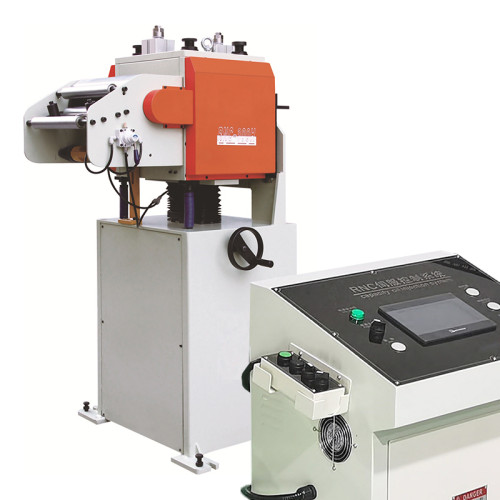
The cabinet sat 900 mm from the press frame, on the operator side, with its door facing a south-facing wall of glass.
A thermal camera showed 58°C at the top of the enclosure and 61°C on the drive heatsink. Ambient at the intake grille was 46°C.
The intake filter had not been changed since installation, and a pallet of blanks had stood against the door for most of the spring.
The drive was rated for 40°C ambient. Above that, most manufacturers derate output current by 1.5 to 2.5 percent per degree.
At 58°C internal, an 18°C rise, the drive had lost roughly 32 percent of its rated current.
The motor derates too, though more slowly. A servo motor rated at 40°C loses about 1 percent of its torque per degree above that figure.
A servo feeder at 180 SPM needs most of that current for 40 milliseconds per stroke. Once the limit is reached, the drive clips acceleration to protect itself.
Clipped acceleration means the rolls reach strip speed later in the cycle. Late grip, at the same commanded length, is a long feed.
The controller reported the commanded length, not the achieved one, so nothing looked wrong on the HMI until the parts were measured.
The Derating Curve Nobody Reads
Every drive manual carries an ambient-versus-current table. Almost nobody reads it until a hot week forces the issue.
The table below uses a typical 2 percent per degree derating, applied to the internal cabinet temperature rather than the room.
| Cabinet internal | Available torque | Feed error at 180 SPM | Where it misleads |
|---|---|---|---|
| 40°C | 100% | ±0.05 mm | Only true with the door closed and filters clean |
| 46°C | 88% | ±0.07 mm | Still inside a loose tolerance, so nobody investigates |
| 52°C | 76% | ±0.10 mm | Compensated by a longer dwell, so speed drops quietly |
| 58°C | 64% | ±0.14 mm | Overload alarms appear only on the heaviest strokes |
| 64°C | 52% | ±0.20 mm or trip | Drive faults, and the line blames the die |
The right-hand column matters more than the numbers. Each row fails in a way that looks like something else.
At 52°C the line still makes parts. It simply runs slower than the rate on the quote, and the rate is never measured again after acceptance.
Three Fixes, Priced
There are four ways to buy back the lost torque, and they differ by a factor of ten in cost.
| Fix | Cost | Cabinet drop | Where it costs you |
|---|---|---|---|
| Clean filters, add exhaust fan | $600 | 6 to 8°C | Needs filter changes every 6 weeks in a dirty bay |
| Move cabinet off the sunlit wall | $1,200 | 4 to 6°C | Longer motor cables; re-route at a shutdown |
| Cabinet air conditioner, 1.5 kW | $3,800 | 14 to 18°C | 1.5 kW continuous load and a condensate drain |
| Upsize the drive one frame | $5,400 | 0°C | Does not fix a 58°C cabinet; only buys margin |
The plant chose the air conditioner and the fan together, for $4,400, and cabinet internal temperature settled at 41°C in a 44°C bay.
Feed error returned to ±0.06 mm on the afternoon shift, which was inside the drawing tolerance and one thousandth outside the acceptance figure.
That last thousandth was recovered by re-tuning the acceleration ramp, not by cooling. Heat explained most of the drift, not all of it.
When Cabinet Heat Is Not the Problem
Thermal derating is a real fault and a convenient explanation. It is also the wrong one in about half the cases that look like it.
If the drift follows coil weight rather than time of day, the cause is slip, not temperature. Heavy coils hang harder on the rolls and change the grip.
If the drift appears after a die change and stays, check the pilot release timing before opening the cabinet.
If the error is lateral rather than longitudinal, heat is irrelevant. That is a guide or a camber problem.
If the cabinet is cool and the fault remains, measure the incoming supply. A 12 percent voltage sag on a shared transformer produces the same clipped acceleration.
A thermal camera costs $400 and answers the question in ten minutes. Guessing costs a week of production and a new drive nobody needed.
What the Log Showed the Following Week
The plant logged cabinet temperature, feed length and stroke rate for five working days after the fix.
Cabinet temperature stayed between 38°C and 42°C. Feed length held within 0.04 mm across the shift, with one excursion after a coil change.
The excursion traced to a coil with a 12 mm edge wave, not to the feeder. Flat strip feeds consistently; wavy strip does not.
Stroke rate rose from 164 to 178 SPM once the drive stopped clipping, which recovered about 8 percent of output nobody had noticed was missing.
Eight percent on a two-shift cell is 640 extra strokes a shift. At 38 mm pitch that is 24 metres of strip, or roughly 60 kg of material a shift.
The night shift had never shown the fault. Ambient fell below 30°C by 22:00, and the cabinet recovered within an hour of the line starting.
That number paid for the air conditioner in eleven weeks, before any scrap improvement was counted.
Checks Before the Next Summer
- Measure cabinet internal temperature at 15:00 on the hottest day, not at 08:00 during a maintenance visit.
- Check filter condition monthly in a bay with press lubricant mist; a clogged filter adds 8 to 12°C on its own.
- Log achieved feed length from a linear encoder or a dial indicator, never from the commanded value on the screen.
- Record incoming voltage during peak shift; a shared transformer sags exactly when the bay is hottest.
FANTY has commissioned more than 200 coil lines, and cabinet siting is one of the few installation decisions that still gets made by whoever is on site that day.
Where the cabinet goes belongs in the layout drawing, with the press frame and the sun path on it.
Drive selection, roll configuration and controller options for the NC servo feeder range are listed in the coil feeding equipment range.
If the drift survives cooling and voltage checks, the error budget in the coil line guide library shows which of the remaining contributions can actually be reduced.
At what cabinet temperature does a servo feeder start losing accuracy?
Measurable drift usually starts around 50°C internal on a drive rated for 40°C. At 58°C the same machine held ±0.14 mm instead of ±0.05 mm.
Does a 1.5 kW cabinet air conditioner cost more than it saves?
Not on a two-shift cell. It draws about 1.5 kW, or $1,440 a year at $0.12, against 8 percent recovered output worth far more than that.
Can I just upsize the drive instead of cooling the cabinet?
Only if the cabinet is already near 45°C. A larger drive in a 58°C enclosure derates from a higher base but still loses 30 percent of its margin.
How much feed error does a 10°C cabinet rise add at 180 SPM?
Roughly 0.03 to 0.04 mm on a 38 mm feed, which is enough to fail a ±0.05 mm acceptance check on its own.
Is a hot cabinet covered by the feeder warranty?
Usually not. Most warranties exclude ambient above 40°C and require the enclosure to be ventilated to the manual's figure. Read that clause before the first summer.
How fast can a thermal survey be done on a running line?
About 20 minutes: cabinet top, drive heatsink, motor body and incoming terminals. Take it at peak ambient, with the line at production rate.
Where to go next
This article belongs to the feeding cluster, where accuracy is treated as a sum of contributions rather than a single setting.
If your drift is not thermal, the error budget separates servo positioning, roll slip and pilot release timing by size.
Read the feed accuracy error budget