Is a Damaged Coil Core Worth Saving?
Every loading bay has a version of this argument. A coil arrives with a deformed core, the uncoiler will not take it, and three people disagree about whether to repair it.
The coil is worth a few hundred dollars. The line standing idle is worth considerably more per hour than the repair costs in total.
Putting both on the same page turns an argument into arithmetic, and the arithmetic usually points one way quite clearly.
The Cost of a Core That Will Not Go On
Start with what the delay costs. A mid-size line standing still burns labour, lost output and, on some contracts, a penalty clause per late delivery.
Two operators and a line supervisor at fully loaded cost is roughly USD 130 an hour in most North American plants.
Lost output on a 200 SPM line running 400 mm feed is around 4,800 parts an hour, which at 30 cents contribution each is USD 1,440.
Add the two and the clock runs at about USD 1,570 an hour. A four-hour repair therefore costs more than most coils are worth.
That is the number to write on the whiteboard before the discussion starts, because it reframes every option that follows.
Storage is the cheapest fix in this whole article and the one most often skipped. Coils stored upright on a proper saddle do not deform.
A coil kept on its side for six months takes a set that no expander removes, because the deformation runs across the body rather than the bore.
Four Kinds of Core Damage and What Each Does to the Line
Out-of-round core is the most common. The coil will not pass the mandrel segments, and forcing it damages the mandrel as well.
Collapsed core is worse. The inner wraps have buckled inward, and the coil will accept a mandrel but will not pay off cleanly.
Oval core from storage is the third. It usually goes on but causes eccentric rotation, which converts into tension variation at the strip.
Rusted or scaled core is the fourth, and it is the one that quietly damages mandrels. Abrasive core surfaces wear mandrel segments every time a coil is loaded.
Only the first two justify stopping the line in most plants. The other two can be scheduled and dealt with at a planned changeover.
Core material changes the diagnosis as well. Fibre cores swell in humid weather and bind on a mandrel that was a comfortable fit in February.
Steel cores rust, and rust is abrasive. A rusty core wears mandrel segments faster than a hundred clean coils will.
If a coil will not go on with light hand pressure, stop immediately. Forcing it seats the coil off-axis and damages the segments.
Repair, Rework or Scrap: The Decision Table
Three options, four damage types, and one column that carries the actual answer: how many hours each option consumes before strip flows again.
| Damage type | Repair option | Hours to strip flowing | Where It Costs You |
|---|---|---|---|
| Out of round, under 8 mm | Hydraulic core expander | 1 to 2 hours | Expander rental and two people |
| Out of round, over 8 mm | Rewind to a new core | 4 to 6 hours | Rewinding cost plus 3 to 5 percent coil loss |
| Collapsed inner wraps | Strip off damaged wraps | 2 to 3 hours | Lost tonnage plus a manual handling risk |
| Oval from storage | Load and run at reduced speed | 0.5 hours | Tension variation and possible flatness reject |
| Rusted core | Clean or scrap | Varies widely | Mandrel wear that shows up months later |
The table makes the decision for most cases. Under eight millimetres of distortion, expanding the core is faster than any alternative.
Above that, rewinding usually wins on time even though it wastes material, because four hours of line time is worth more than the lost tonnage.
The expander itself is a rental item in most cities, and the lead time decides the outcome more often than the damage does.
Four hours waiting for a tool costs more than the tool does. Plants that handle damaged coils more than once a month should own one.
Coils that arrive damaged repeatedly point at a handling problem upstream, not at bad luck on your dock.
What Repairing Actually Involves on an Uncoiler
A hydraulic core expander is a segmented tool that pushes the core back to round from the inside. It needs a mandrel-free setup, which means the coil sits on a floor cradle.
Two people can position it in twenty minutes and expand in stages over another forty. Rushing it cracks the core and converts a repairable coil into scrap.
The coil then goes on the mandrel normally, but the inner wraps are still strained. Run the first ten metres at reduced speed and watch for strip wandering.
If the coil pays off with a visible wobble, the core is round but the inner wraps are not, and the only remaining fix is stripping the damaged section.
Apply expansion pressure in stages with a pause between each. A single full-pressure stroke cracks cores that staged pressure would have saved.
Measure the bore again after expansion. If it is still more than 3 mm out, the coil will run eccentrically and belongs in the rewind queue.
Record every repair against the supplier and the carrier, because the pattern matters more than the individual event.
Where Repair Is Not Worth Attempting
A core with a visible crack across its width will fail again under mandrel expansion pressure, often with the coil already loaded.
Coils stored on their side for months can have a core that looks round and a body that has taken a permanent set. Repairing the core does not fix the set.
High-strength material above 420 MPa rarely tolerates re-expansion. The core cracks before it returns to round.
And any coil destined for a surface-critical job should be scrapped once its core has been deformed, because the inner wraps carry marks that travel downstream.
Knowing when to stop is worth as much as knowing how to repair. A failed attempt costs the same four hours plus the coil.
Ask how long a coil sat in a warehouse before it shipped. Core damage is frequently a storage problem that arrives looking like a transport problem.
Freight claims need evidence within days. Photograph the bore before anything comes off the truck, not after the argument starts.
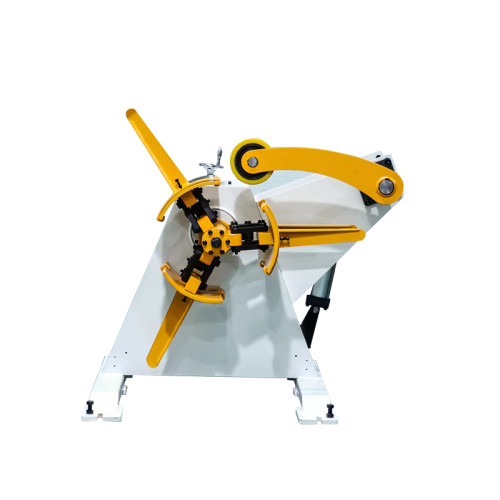
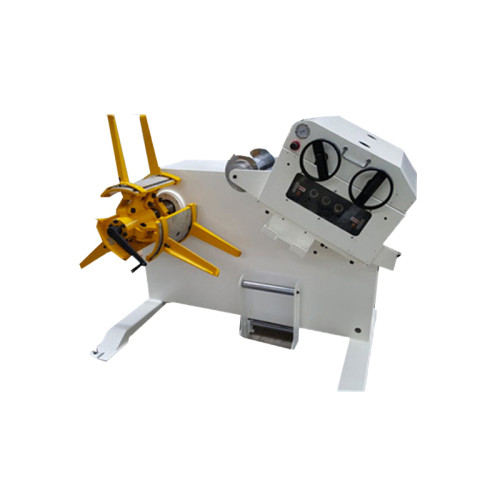
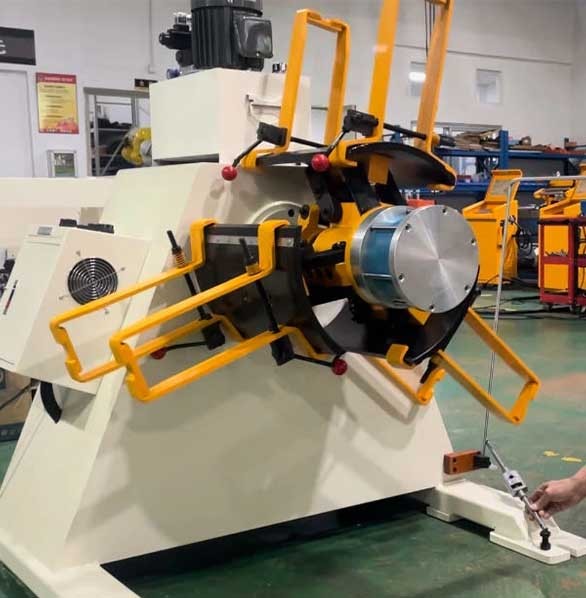
The decoiler and coil handling range lists mandrel expansion and coil weight per model, which sets how much distortion your own machine can absorb.
- Store coils upright on saddles, never on their side, and never more than two high.
- Photograph the bore before unloading and keep the image with the freight paperwork.
- Stop at 8 mm of distortion. Beyond that the coil is a rewind, not a repair.
A Rule of Thumb for the Loading Bay
- Measure the distortion across the bore before anything is unloaded. Under 8 mm is a repair, over 8 mm is a rewind.
- Write the line's hourly cost on the bay board. Arguments end faster when the rate is visible.
- Keep a core expander available on site or on a known rental lead time. Four hours of waiting for one costs more than owning it.
- Log every damaged coil with the supplier and the transport reference, because the pattern usually points at one leg of the journey.
- Photograph the core before repair. It is the only evidence that supports a claim against the carrier.
The fifth item pays for itself the first time a carrier disputes a claim, which happens more often than plants expect.
Where to go next
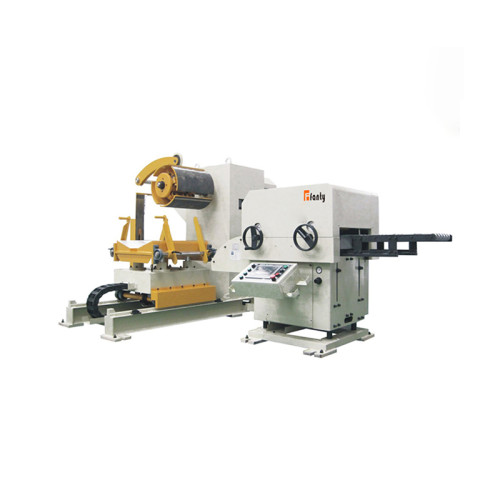
Core damage sits at the loading end of the coil handling chain, where most unplanned stoppages start. The decoiler specification guide covers capacity, mandrel type and control choice.
The Coil Line Guide LibraryHow far out of round can a 508 mm coil core be and still be used?
About 8 mm on a 508 mm bore. Beyond that, a hydraulic expander is unlikely to return it to round without cracking the core.
What does a line stoppage cost per hour on a 200 SPM line?
Roughly USD 1,500 an hour on a 200 SPM line with two operators, counting labour and lost contribution but not penalty clauses.
Can a collapsed core be repaired on the mandrel?
No. The inner wraps have buckled and will not straighten under expansion. Strip them off and rewind, or scrap the coil.
Is it cheaper to rewind or to scrap a badly deformed coil?
Rewind, if the coil is over 3 tonnes and the line is running. Scrap only makes sense when the coil is small and the schedule has slack.
How long does core expansion take with two people?
About one hour, including positioning the cradle and staged expansion. Rushing it below forty minutes usually cracks the core.
Do rusted cores really damage mandrels?
Yes. Abrasive scale wears the segment faces, and the wear shows up months later as poor concentricity on every coil.