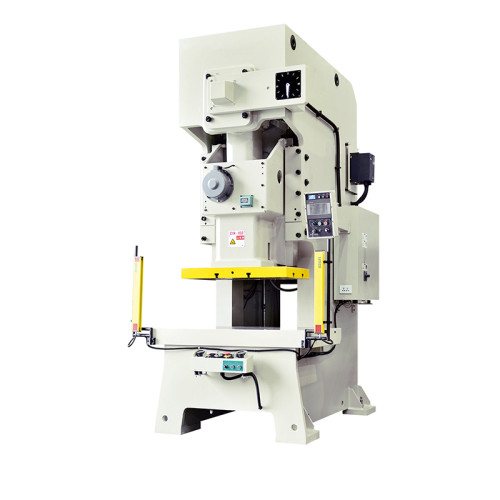
How to Trace Feed Errors on an HSLA Straightener Feeder?
HSLA 340 does not announce itself. It feeds cleanly for the first coil and then starts drifting, usually on the afternoon shift.
The press gets blamed, then the feeder, then the die. In most of the cases we are asked to look at, the material grade is the trigger and the setup is the cause.
This walks through the four feed errors that appear when a shop runs NC straightener feeder settings written for SPCC, and how to trace each one without guessing.
The wider error budget these faults sit inside is laid out in the coil line guide library, and the machine range is listed under our machines.
Start With the Symptom, Not the Material Grade
Feed problems on high-strength steel rarely arrive as one clear fault. They arrive as a stack of small ones that hide each other.
The first job is to separate what the material changed from what was always marginal. Mild steel at 1.6 mm forgives a loose roll gap. HSLA 340 at the same thickness does not.
Write down three numbers before touching a single setting: the feed length measured at the die, the feed length the controller commanded, and the coil diameter when the error appears.
Those three numbers split the problem in half. If the error tracks coil diameter, the cause sits upstream of the feed rolls. If it is constant, look at the rolls and the die.
Measure at the die, not at the feeder. A feed length that looks perfect at the encoder can be 0.4 mm short by the time the strip reaches the first station.
A single number taken once is not a measurement. Take the feed length three times per coil, at the head, the middle and the tail, and write all three down.
Most HSLA feed complaints turn out to be a trend rather than a constant, and a trend only shows up when you sample more than once.
Four Causes, in the Order They Usually Turn Up
On an HSLA line, four causes account for the great majority of feed complaints we see. They are listed in the order they most often prove to be the answer.
- Roll slip as yield strength rises. Grip force that held SPCC at 0.6 mm penetration will slide on HSLA 340 at the same setting. The strip creeps during the index and arrives short.
- Springback at pilot release. HSLA carries more residual stress after forming, so the strip pushes back against the pilot as the die opens. Timing that was safe on mild steel now strips the pilot early.
- Straightener head overload. Higher yield strength needs more penetration to flatten. A head set for mild steel runs out of adjustment and leaves residual bow in the strip.
- Incoming coil shape. HSLA coils often arrive with more crossbow and edge wave than the mild-steel coils the line was bought for, and the defect survives the straightener.
Two of those four are setup issues that cost nothing but time. The other two can point to a genuine capability limit, which is a different conversation.
The order matters because two of these causes produce nearly identical symptoms. Roll slip and insufficient penetration both leave the strip short at the die, and adjusting the wrong one makes the fault worse.
Where the shop has recently changed grade, slip is the more likely of the two. Where the machine has run the same grade for years and the fault appeared after a roll change, penetration is the place to look first.
How to Prove Which Cause You Have
Each cause leaves a different fingerprint. Run the four checks in sequence and the first one that returns a clear result is almost always the answer.
| Check | What you measure | What a positive result points to | Where the test misleads |
|---|---|---|---|
| Ink mark across the strip | Distance from mark to roll exit after one index | Roll slip, if the mark moves less than the strip | A worn roll coating hides slip on the first pass |
| Feed length at the die | Dial gauge against the commanded length | Pilot timing or springback, if the shortfall varies by station | A loose die block reads as a feed fault |
| Drive current during index | Peak current against the mild-steel baseline | Head overload, if current climbs above the baseline by more than 20 per cent | Cold oil raises current without any material change |
| Strip flatness before the head | Coil shape at the entry guide | Incoming coil defect, if bow is present before straightening | Entry guides can mask edge wave until the strip relaxes |
Run the ink test first. It takes ten minutes, needs no instrumentation, and settles the slip question that otherwise confuses every later measurement.
If the ink mark moves with the strip, grip is fine and the cause is downstream. If it lags, the rolls are sliding and the rest of the tests will only mislead you.

Run the control test before touching a setting. One coil of the previous grade at the previous recipe tells you whether the material changed anything at all.
What the Fix Costs on an HSLA Line
Most HSLA feed faults are corrected by settings rather than parts, which is the good news for anyone who has just changed grade.
Roll pressure is usually the first adjustment. Raising it by one setting point typically restores grip, and on a 1.6 mm HSLA 340 strip the pressure rise needed is around 15 to 20 per cent.
Where the ink test shows slip, correcting roll pressure is the cheapest fix on the list. It costs nothing but an hour of setup time.
Change one variable at a time and re-run the ink test after each change. Two adjustments made together leave you unable to say which one worked.
Straightener penetration comes next. Add penetration in small steps and check flatness after each one, because past the correct point the strip starts to curve the other way.
The expensive fixes are the ones that point at the machine. A roll set with insufficient grip, or a head that cannot reach the penetration HSLA needs, cannot be tuned out.
Where that happens, the decision is between a roll set change and a different machine. Both are capital questions, and neither should be decided on the strength of one bad shift.
Where the Material Is Not the Problem
Not every feed fault on an HSLA job belongs to the grade. Assuming it does wastes the shift you need to find the real cause.
A worn encoder coupling, a sticky pilot in the die, a coil with a weld through it, or a guide that has drifted all produce symptoms that look exactly like a material change.
The test is a control run. Feed one coil of the mild steel the line ran last month, at the same settings. If the fault persists, the material is not the cause.
There is a harder limit worth naming. If the straightener head was sized for mild steel at the thickness on the order, HSLA may simply exceed what it can flatten.
That is a specification boundary, not a setup problem, and no amount of adjustment removes it. Recognising it early saves weeks of fruitless tuning.
Run the control coil before buying anything. It takes one coil and one shift, and it separates a material problem from a machine problem that has been there all along.
Keeping the Line in Adjustment
The faults above come back when a recipe is copied between grades instead of being stored per grade.
Build a recipe library keyed on grade, thickness and width, and hold the roll pressure and penetration values as the first two lines of each entry.
Record the strip flatness before the head as well. When an incoming coil is already bowed, that note explains a defect that would otherwise be blamed on the machine.
Review the recipes every six months. Roll wear moves the effective penetration point slowly, and a setting that was correct in January can be two steps out by July.
Write the recipe on the machine, not in a folder. A stored recipe that nobody can find at shift change is the same as no recipe at all.
Where several grades share the line, colour-code the recipe entries by yield strength so an operator can pick the right one without reading the material certificate.
On a line running 200 SPM with frequent grade changes, the recipe discipline is worth more than any single hardware upgrade, because it converts a two-hour trial into a two-minute change.
What buyers and setup engineers ask about HSLA feeding.
At what yield strength does HSLA start changing the feed recipe?
Above roughly 340 MPa the difference becomes measurable. At 420 MPa, grip pressure typically needs to rise 15 to 25 per cent over the mild-steel setting.
How much scrap does a grade-specific recipe remove?
On one 1.6 mm HSLA 340 job, storing separate recipes cut the first-hour scrap from about 60 parts to under 15. The saving came from skipping the trial, not from a faster line.
Does a seven-roll head help on HSLA?
Only if roll diameter is adequate. Extra rolls at small diameter add marks without adding flattening. A five-roll head with larger rolls often outperforms a seven-roll head with small ones.
How long does the first HSLA setup take?
Allow two to four hours for the first coil of a new grade, including the ink test and the flatness checks. Later coils of the same grade should be under 15 minutes.
Where to go next
This article covers the faults a grade change creates. The full error budget that decides how much of the tolerance any single station owns is set out in the guide library.
our coil line knowledge base