How to Size an NC Straightener Feeder for Your Press Line?
Choosing the right NC Straightener Feeder size is the single most important buying decision for any stamping line. An oversized unit wastes money and floor space, while an undersized machine causes endless feeding errors, strip jams, and press downtime that quietly destroys your production schedule.
This guide walks through every parameter you must calculate before you order a 3-in-1 decoiler straightener feeder, and it shows exactly how FANTY engineers size machines for presses running from 25 tons up to 600 tons.
Why Feeder Sizing Decides the Fate of Your Whole Line
Every stamping line is only as strong as its weakest link, and in most workshops that weak link is the material feeding system.
Think about the economics for a moment. A typical progressive die stamping line with a 200-ton press can produce thousands of parts per hour, and each part carries its own margin. If the feeder cannot keep up, that margin disappears.
Conversely, an oversized NC servo feeder costs more to buy, consumes more floor space, uses more energy, and often runs at lower efficiency because the servo motor never reaches its ideal operating point.
FANTY has built coil handling systems for twelve years across a 45,000 square meter factory with 370 employees and more than 80 R&D engineers, and our engineers always tell customers the same thing: measure first, then size.
The machine that fits your actual coil range, your actual feed length, and your actual press speed will always outperform the machine that merely looks impressive on a datasheet.
The Six Parameters That Define Your Machine Size
There is no single magic formula for sizing an NC Straightener Feeder, because the machine must satisfy six independent requirements at the same time. The table below summarizes each parameter, how to calculate it, and the classic mistake buyers make with it. Read the table carefully, then work through your own numbers before you compare quotations from different suppliers.
| Parameter | How to Determine It | Common Mistake |
|---|---|---|
| Material width | Widest strip you will ever run, plus 20-40 mm clearance for strip wander | Sizing for the average width instead of the maximum width |
| Material thickness | Thickest material at full width; check yield strength of the material grade | Ignoring high-tensile steel, which needs more straightening force |
| Coil weight | Heaviest coil the crane and the floor can handle, including the coil OD | Buying a decoiler whose coil OD cannot accept the actual coil diameter |
| Feed length | Longest blank or progressive die feed step you will ever run | Assuming longer feed length does not affect feeder pitch accuracy |
| Feed speed | Press stroke rate x feed length per stroke; leave 20% headroom | Buying a feeder that meets speed at small feed lengths only |
| Die type | Progressive, transfer, or single-hit dies impose different feed profiles | Buying a general feeder without matching the acceleration curve |
Let us look at two of these parameters more closely, because they cause the most confusion on real shop floors. Material width is straightforward in theory, but strips do not travel in a perfectly straight line.
Guide rollers and side guides need clearance, and a coil that has a slightly loose edge will wander by several millimeters even on a good decoiler.
If your widest part is 200 mm wide, a machine rated for 220 mm is a safe choice, while a machine rated for exactly 200 mm will give you headaches every time a coil is not perfectly wound.
The same logic applies to thickness: a 3-in-1 decoiler straightener feeder rated for 3.2 mm mild steel may not handle 2.0 mm stainless or 2.5 mm spring steel, because the straightening rolls have to overcome the yield strength of the material, not just its thickness.
Match the Feeder to Your Press, Not the Other Way Around
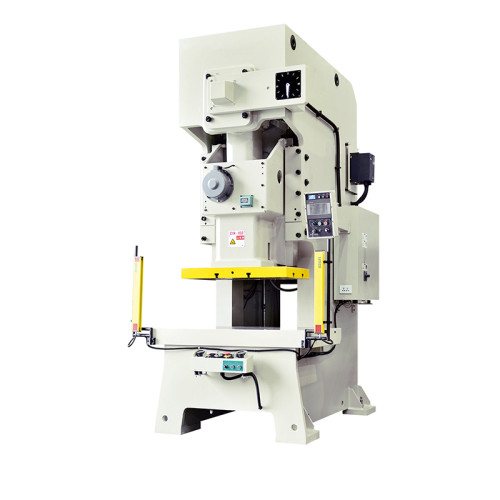
The press is the heart of your line, and the NC servo feeder must serve it, not fight it. The first question is press tonnage, because it tells you the approximate size of the material you are likely to run.
A 25-40 ton press typically runs strip up to 150-200 mm wide and 1.0-2.0 mm thick, which calls for a compact machine. A 110-200 ton press can drive strip up to 400-600 mm wide, and a 300 ton and above press line usually handles wide strip, thick plate, or both.
Second, you need the press stroke rate expressed in strokes per minute, because the feeder must deliver the feed length within the non-pressing portion of each stroke cycle.
At 100 SPM with a 50 mm feed step, the feeder has less than 0.3 seconds to complete its motion, so the servo motor and the drive train must be sized for that acceleration, not just for a nominal top speed.
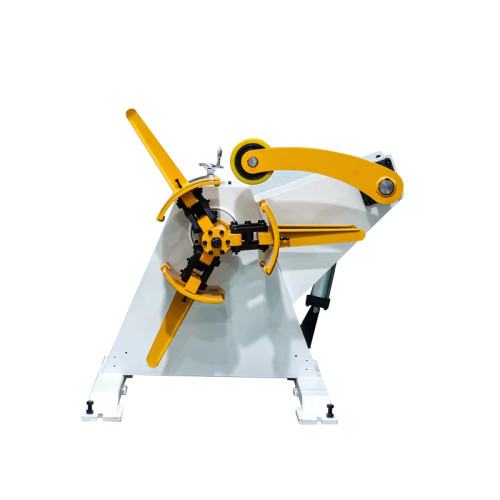
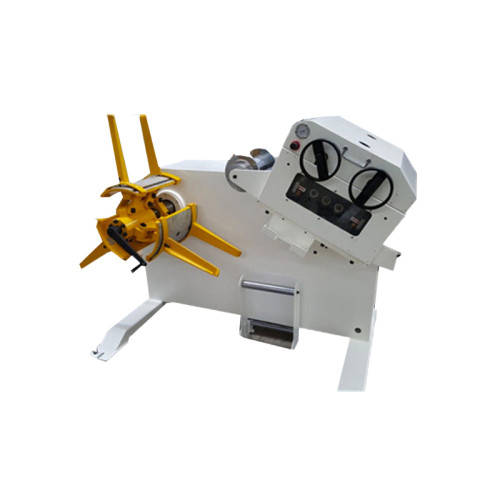
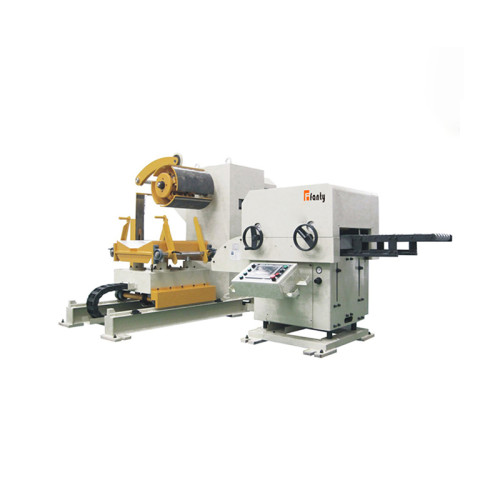
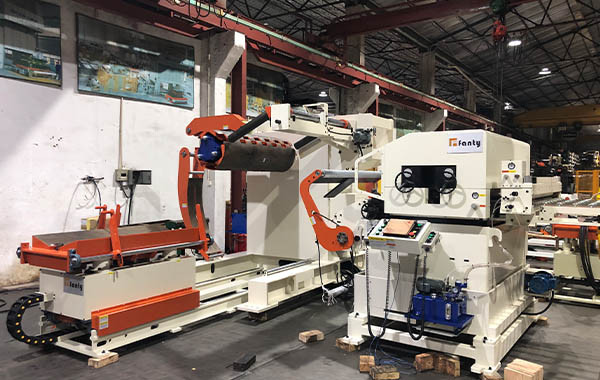
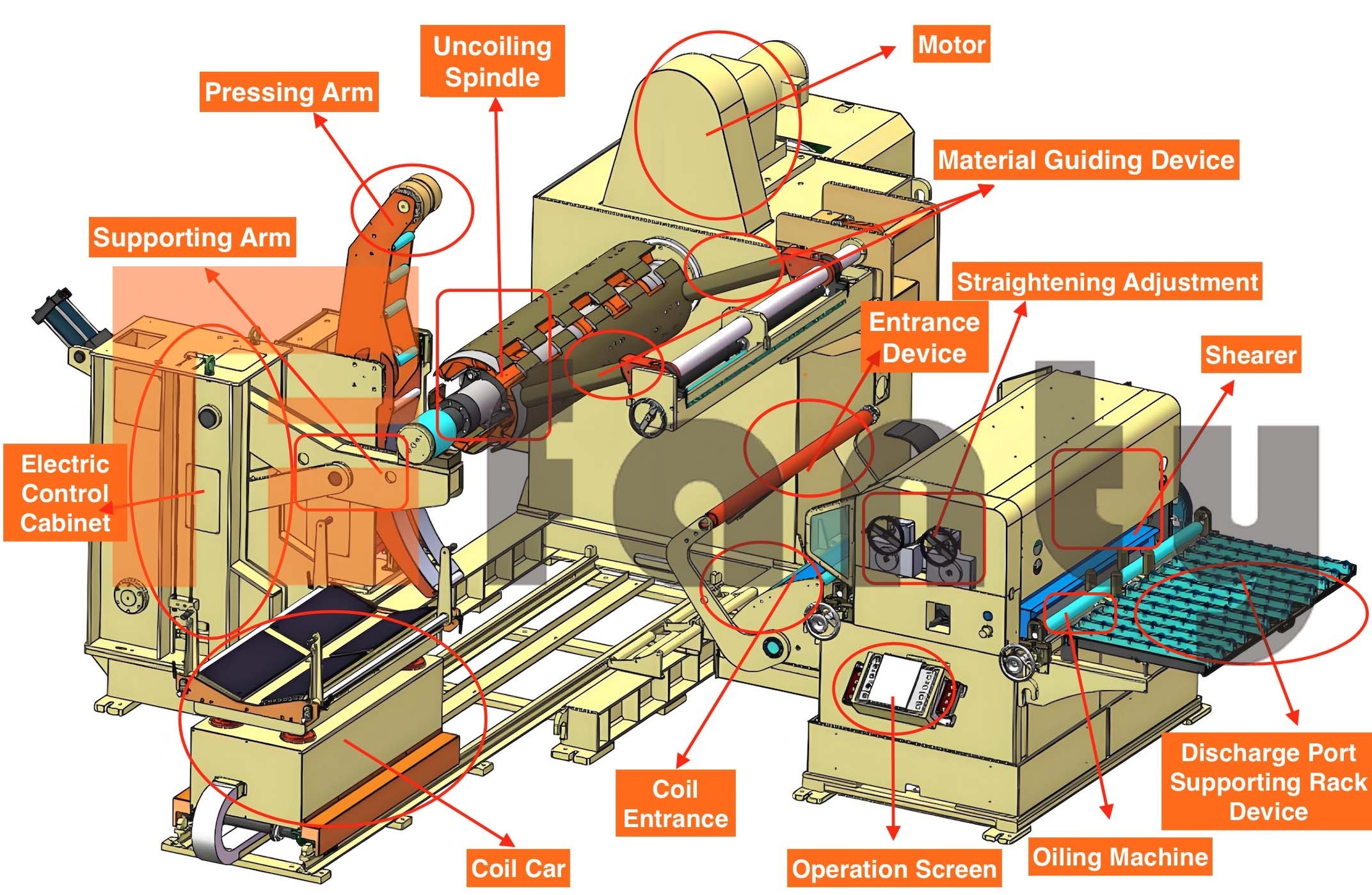
This is where the three-in-one architecture earns its keep. Because the decoiler, the straightener, and the feeder share one frame and one control system, the servo can synchronize the unwind tension with the feed motion in real time.
The result is a much shorter material path between the straightening rolls and the die entry, which reduces strip buckling, improves pitch accuracy, and keeps the whole line compact.
If you are wondering how much floor space you will save, remember that FANTY machines are designed to put all three functions in a single footprint, and our engineers have installed more than 200 active lines across more than 60 countries, so the layouts are proven in real production, not just on paper.
Calculate Feed Length and Speed Before You Sign Anything
Feed length and feed speed are the two numbers that most buyers get wrong, and both errors point in the same direction: the feeder is undersized for the real workload. The required average feed speed is the feed length multiplied by the strokes per minute.
Long feed lengths deserve special attention, because the accuracy challenge grows with the distance.
A 20 mm feed step and a 400 mm feed step place completely different demands on the servo system: at long lengths, the inertia of the moving strip and the compliance of the feeding rolls become dominant, and only a properly tuned servo loop with encoder feedback can hold the pitch within tight tolerance.
FANTY servo feeders hold feeding accuracy at ±0.05 mm, which covers progressive die work at speeds up to 200 SPM. When you compare suppliers, ask exactly what pitch accuracy is guaranteed at your specific feed length and speed, not just at the machine nominal rating.
The Sizing Checklist FANTY Engineers Use on Every Inquiry
When a customer sends us a press specification, our engineers work through the checklist below before recommending a machine size. You can use the same checklist to audit any quotation you receive, and if a supplier cannot answer every item, that is a red flag.
- Press tonnage and stroke rate, with the maximum SPM you plan to run
- Material type, width range, thickness range, and coil weight range
- Longest feed length and the accuracy tolerance your die requires
- Available floor space and ceiling height for coil loading
- Power supply, compressed air availability, and crane lifting capacity
- Future plans: wider coils, thicker material, or higher speed in the next five years
The last item is the one that separates a good purchase from a great one.
Three-Step Sizing Process That Never Fails
Once you have gathered your parameters, the actual sizing decision can be made in three disciplined steps.
One more practical detail: always verify the coil outer diameter. Many buyers specify coil weight and forget that a heavy coil also has a large OD, and a decoiler arm must expand to hold that coil both at its smallest ID and at its maximum OD after the coil is wound.
A coil that weighs 5 tons with an outer diameter of 1,400 mm is a completely different machine from a 5 ton coil with a 1,000 mm OD. Give your supplier the actual coil dimensions from your steel mill, not just the weight, and you will avoid the most common dimensional mismatch in the industry.
Five Sizing Mistakes That Cost Stamping Shops Real Money
After twelve years of building coil feeding lines, FANTY engineers have seen every sizing mistake in the book, and five of them repeat themselves in nearly every workshop. The first is sizing for today instead of tomorrow, which we already covered.
The fourth mistake is buying a feeder without checking the die entry height. The material path must line up with your die, and a mismatch forces you to add spacer blocks, angle plates, or worse, to rebuild the feeder mount.
The fifth and most expensive mistake is buying a machine that meets the paper specification but was never tested at the actual combined condition of full width, full thickness, and full speed. Insist on seeing the machine run at your worst-case parameters, or at least ask for the performance curve of the servo system.
A reputable manufacturer such as FANTY, with CE-certified machines and more than 80 R&D engineers behind them, will happily share real performance data, because that data is what wins long-term customers in more than 60 countries.
Frequently Asked Questions About Feeder Sizing
What does the NC in NC Straightener Feeder mean?
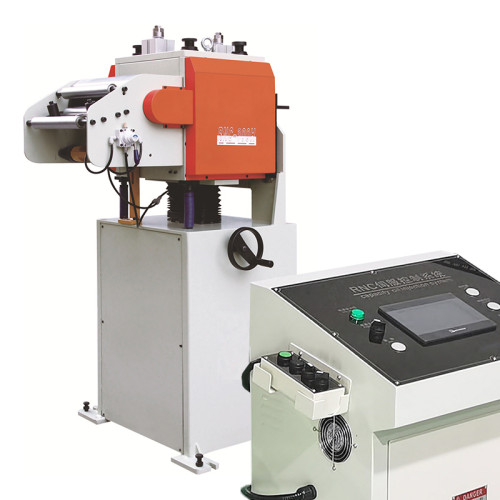
The NC stands for numerical control. An NC servo feeder uses a servo motor and a controller to set the feed length digitally, so you can change the pitch in seconds by typing a new value on the touchscreen instead of adjusting mechanical cams or limit switches. This is why an NC Straightener Feeder is the standard choice for modern progressive die stamping.
Can a 3-in-1 decoiler straightener feeder replace separate machines?
Yes, and that is exactly the point of the three-in-one design. The decoiler, straightener, and feeder are integrated into one unit with one control system, which saves floor space, shortens the material path, and improves pitch accuracy.
For most stamping shops running strip up to a few hundred millimeters wide, the integrated machine is more reliable and easier to maintain than three separate units.
What happens if I buy a feeder that is too small for my coil?
An undersized feeder slips, stalls, and buckles the strip, and it cannot hold feed length accuracy at speed. You will see inconsistent pitch, damaged dies, and frequent downtime. In severe cases the decoiler arm cannot even support the coil, which is a safety hazard. Sizing up by 20 percent is cheap insurance compared with the cost of a replacement machine.
How do I know the required feed accuracy for my die?
Check the pitch tolerance printed on your die drawing or the part specification. Progressive dies commonly require ±0.05 mm to ±0.1 mm, and FANTY NC servo feeders hold ±0.05 mm. If your die is a transfer die with long moves, discuss the acceleration profile with the manufacturer, because long feed lengths change the dynamic behavior of the servo system.
Related reading
Part of the the coil line guide library — the full library of coil handling, straightening and feeding guides from FANTY.
Get the Right NC Straightener Feeder Size the First Time
Send us your press tonnage, material range, and feed length, and our engineers will size your 3-in-1 decoiler straightener feeder with real production data, not guesswork. FANTY machines are CE certified, built in a 45,000 m2 factory, and trusted by stamping shops in more than 60 countries.
Request Your Free Sizing Report