How Much Does It Cost to Import an NC Straightener Feeder?
The quotation says USD 46,000 FOB Shenzhen. Eight weeks later the file on your desk shows USD 58,400 paid, and nobody has overcharged you — the difference is freight, insurance, duty, port charges, inland trucking, rigging and a commissioning visit that never appeared on the offer sheet. NC Straightener Feeder import cost is a landed-cost question, not a machine-price question, and on a single 1,300 mm line the gap between the two numbers typically runs 22–30%.
What follows is the breakdown I walk through with buyers before they release a deposit: the six line items that always exist, the four that only appear when something goes wrong, and the wording that keeps the second group off your invoice. If you have not fixed the machine specification yet, start with the standard builds and their shipping weights in the product range — every freight number you receive depends on that weight.
What the Machine Price Actually Covers
An FOB price covers the machine, the control cabinet, the standard tooling set, factory testing, export packing and delivery to the port of loading. That is it. It does not cover the sea voyage, the crane at your end, or the engineer who has to align the line to your press.
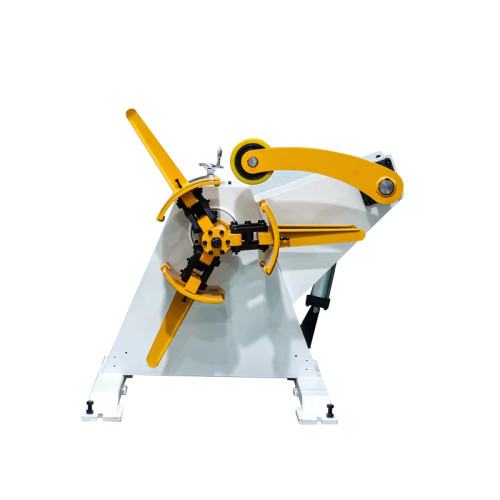
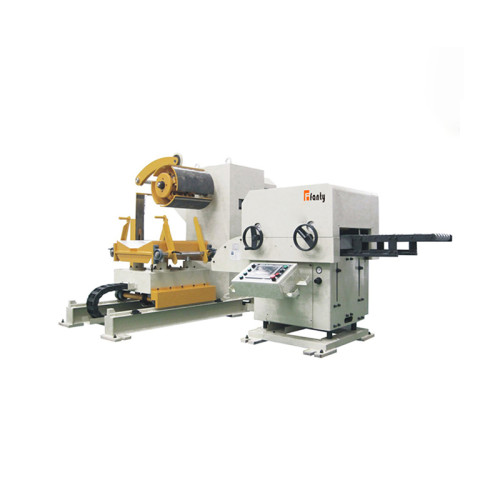
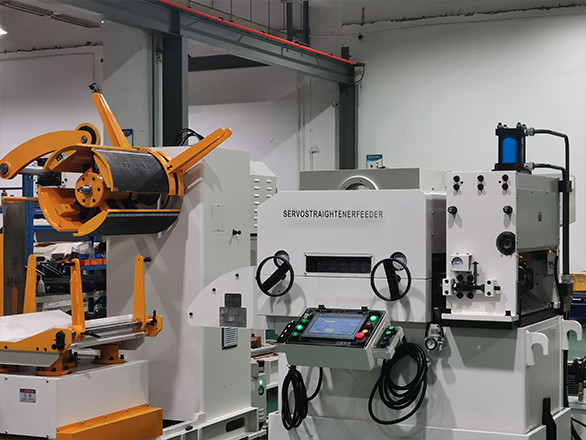
Two details change the number more than anything else on the offer sheet. The first is shipping weight — a 1,300 mm wide NC Straightener Feeder with a 5-ton decoiler and a coil car typically ships at 9–11 tonnes, and an 1,800 mm build can pass 16 tonnes. The second is whether the machine ships as one welded frame or as three bolted modules. A single frame is stiffer and needs less site alignment, but it forces a flat-rack or breakbulk booking, which can add USD 4,000–9,000 against a 40 ft container.
Ask for the packing list and the total gross weight before you ask for the price. Suppliers who quote a price without a weight are quoting a number you cannot compare against anyone else's.
The Six Line Items Between FOB and Your Dock
Every shipment I have costed contains these six. Ranges below reflect a 9–11 tonne line moving from South China to a US East Coast or Northern European port; your route will shift them, but the proportions hold.
| Line item | Basis | Typical range | Who controls it |
|---|---|---|---|
| Export packing | Often included in FOB, sometimes billed separately | USD 0–1,200 | Supplier |
| Ocean freight | Per container or per tonne, depending on frame size | USD 2,400–6,500 | Freight forwarder |
| Marine insurance | 0.3–0.6% of CIF value | USD 180–350 | Buyer, via forwarder |
| Import duty | HS code and destination; 0–8% of CIF | USD 0–4,300 | Customs authority |
| Port, THC and clearance | Fixed fees plus brokerage | USD 700–1,500 | Forwarder and broker |
| Inland trucking and rigging | Distance, crane size, unloading window | USD 1,200–4,000 | Buyer |
Add those to the FOB figure and you get the number that matters. On a USD 46,000 machine the six items commonly land between USD 9,000 and USD 16,000, which is why a 30% spread between two suppliers' quotations usually says more about their packing and freight arrangements than about their engineering.
One practical note on the table: the two rows you can actually negotiate before signing are ocean freight and rigging. Freight is negotiable because the supplier can often book space at a better rate than you can; rigging is negotiable because a crane booked three weeks ahead costs roughly half of one booked for next Tuesday.
Costs That Only Appear When Something Goes Wrong
Four charges never show up in a budget, and all four are avoidable with paperwork rather than money.
- Demurrage and detention. A container sitting at the terminal past its free days bills by the day. A missing certificate of origin or a valuation query can hold a box for five working days; on a US East Coast port that is commonly USD 1,500–3,500 in charges you did not plan for.
- Re-crating at destination. If the export crate is built for a 40 ft container but the machine arrives by flat-rack, someone has to strip and rebuild the protection before the crane lifts it. Budget USD 600–1,400 and two lost days.
- A second lifting attempt. If the lifting points are not marked or do not match the centre of gravity on the drawing, the crane stands idle while your rigger re-rigs. That is an hourly charge, and it is the single most common surprise on first-time imports.
- A second commissioning trip. When a line is commissioned before the foundation has cured, the levelling is done twice. The engineer's return flight and hotel come out of your budget, not the supplier's.
None of these are freight-rate problems. They are documentation and sequencing problems, and they cost five to ten times more than the paperwork that prevents them.
The HS Code Question You Should Settle Before Ordering
Classification drives duty, and the classification of coil-processing machinery is not as obvious as it looks. A straightener that also decoils and feeds is normally classified as a machine tool accessory or as metal-rolling machinery depending on the destination tariff schedule; the same physical machine can sit under two different headings with a 0% and a 3.7% duty rate.
Ask your customs broker to confirm the heading in writing against the machine's function, not against its name. Then put that heading into the purchase contract so the supplier's invoice description, the packing list and the commercial invoice all use the same words. Mismatched descriptions are the most common trigger for a valuation hold.
If your destination offers preferential treatment under a trade agreement, the certificate of origin has to be issued in the correct format and before departure. Getting one reissued after the vessel sails typically costs more than the duty it saves.
What Payment Terms Cost You
Payment structure is part of the price. Three arrangements cover most orders, and each carries a different real cost.
30/70 by telegraphic transfer. You pay 30% with the order and 70% against the bill of lading copy. The money cost is low, but you carry the risk that the machine does not match the drawing. This is the structure most buyers use when they have inspected the machine in the factory or have worked with the supplier before.
Letter of credit at sight. The bank charges run 0.1–0.25% of the value plus a negotiation fee, so on a USD 46,000 machine expect USD 150–300 plus your own bank's issuance charge. In exchange you get a documentary check: the supplier cannot draw unless the shipping documents match. On a first order with a new supplier, that check is usually worth the fee.
30% deposit with the balance against commissioning. This is the structure that protects you hardest and costs the supplier most, because it holds 70% of their cash for eight to twelve weeks. Suppliers who accept it are either confident in the machine or pricing the risk in. Expect a 2–4% higher machine price when you ask for it.
A Worked Landed-Cost Budget
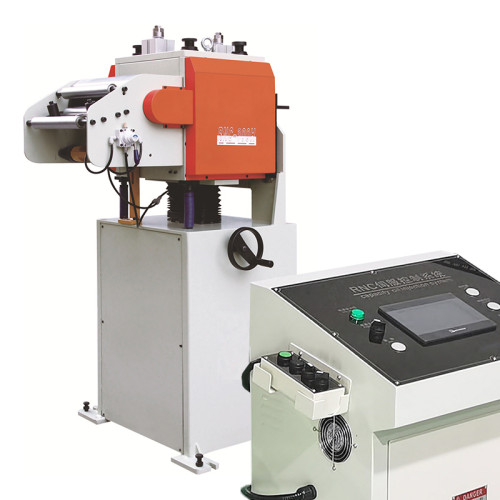
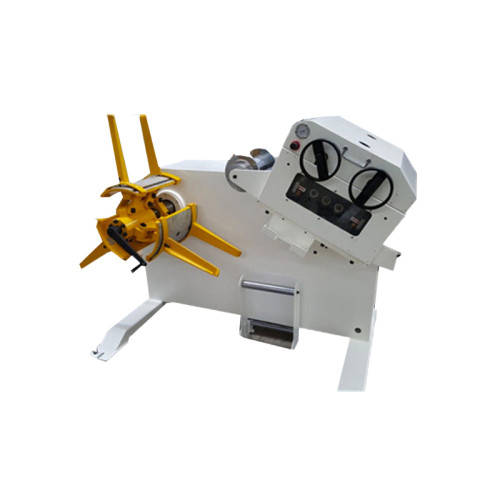
Here is the arithmetic on a realistic order: a 1,300 mm NC Straightener Feeder with a 5-ton hydraulic decoiler, a coil car, and a 7-roll straightening head, rated 0.3–4.5 mm, shipping from Shenzhen to Rotterdam.
| Stage | Amount (USD) | Running total |
|---|---|---|
| Machine, FOB Shenzhen | 46,000 | 46,000 |
| Ocean freight, 40 ft HC | 3,150 | 49,150 |
| Marine insurance at 0.4% | 197 | 49,347 |
| Duty at 1.7% of CIF | 839 | 50,186 |
| Port charges and brokerage | 1,080 | 51,266 |
| Inland trucking, 320 km | 1,450 | 52,716 |
| Crane and rigging, 40 t | 2,300 | 55,016 |
| Commissioning, 4 days | 2,600 | 57,616 |
| Operator training, 2 days | 780 | 58,396 |
The landed cost is USD 58,396 against an FOB price of USD 46,000 — a 27% uplift. Two of those rows are worth attacking. Rigging at USD 2,300 came from a crane booked with four days' notice; the same lift booked three weeks out was quoted at USD 1,500. Commissioning at four days assumed the foundation was ready and level to within 3 mm over the machine length; on a site that is not ready, that number doubles.
The comparison that matters is not this total against another supplier's FOB price. It is this total against another supplier's landed cost, including their commissioning days and their packing method. Two suppliers quoting USD 46,000 can differ by USD 6,000 once the machine is running on your floor.
Five questions come up in almost every import review I sit in on, and the answers move the budget by more than the machine discount does.
Is it cheaper to buy FOB or CIF?
CIF looks simpler because the supplier arranges the freight, but you lose visibility on the rate. On a 10-tonne machine the difference between a good and a poor freight booking is often USD 1,500–2,500, and under CIF that difference is buried in the machine price where you cannot negotiate it. Buy FOB and book the freight yourself, or ask for both prices and compare.
How much should I budget above the machine price?
For a 1,300 mm line moving to Europe or North America, plan 22–30% above FOB, of which roughly half is freight and port charges and half is duty, inland transport, rigging and commissioning. Builds over 1,800 mm with a single welded frame sit at the top of that range because they cannot ship in a standard container.
Can the supplier deliver duty paid?
Some will quote DDP, and it can be convenient, but the supplier is then paying duty as a non-resident importer, which usually means a higher price and less control over classification. If classification matters for your duty rate — and it does — keep the import in your own name so you can argue the heading directly with your broker.
What usually causes a shipment to sit at port?
A commercial invoice description that does not match the HS heading, a certificate of origin issued late, or a valuation query when the machine price is well below the broker's reference range. All three are documentation issues, and all three are settled before the vessel sails or not at all.
Should I visit the factory before paying the deposit?
If the order is above roughly USD 40,000, yes — and the visit is usually cheaper than the alternative. Inspect the frame welds, run the machine on your own material if you can ship a sample coil, and confirm the packing method on the floor. A factory visit costs one return flight; a re-crated machine at destination costs more.
Five Clauses Worth Writing Into the Purchase Order
- Gross weight and packing method, stated as a number. "One 40 ft high-cube container, gross 10,200 kg, machine split into three bolt-together modules" is enforceable. "Export packing" is not.
- Commissioning days included, with a defined starting condition. Name the number of days, who pays travel, and the foundation tolerance the buyer must meet before the engineer flies. Without the second half, the first half is meaningless.
- Acceptance criteria tied to a material and a speed. Feeding accuracy of ±0.05 mm is a claim; ±0.05 mm on 1.5 mm SPCC at 180 strokes per minute is a test. Write the material grade, thickness and stroke rate into the clause.
- Spare parts list with prices, valid for 24 months. A coil line stops for a worn feed roll or a pressure switch, not for a frame. Locking part prices at order time is free leverage.
- Documentation set, named item by item. Commercial invoice, packing list, certificate of origin, CE declaration where applicable, electrical schematic, hydraulic schematic, and the commissioning report. A missing schematic costs a week of production time later.
FANTY has shipped coil-processing lines to more than 60 countries, and the pattern is consistent: the buyers who get the closest to their budget are the ones who asked for the packing list and the weight before they asked for the discount. Our own builds carry CE marking and a 12-year record on this product family, which matters mainly because it means the documentation set is standard rather than bespoke.
One final cost worth naming, because it is the largest and the least visible: the cost of a line that is two weeks late. Two weeks of idle press time on a three-shift operation is worth more than every freight line on this page combined. Paying 3% more to a supplier with a commissioning record beats saving 3% with a supplier who has never shipped to your continent.
Get a Landed-Cost Quotation, Not Just a Machine Price
Send us your strip width, thickness range and destination port. We will return the FOB price, the shipping weight, the packing method and a commissioning schedule in one document, so you can compare landed cost against landed cost.
Request a Landed-Cost Quotation