How Does an NC Straightener Feeder Improve Strip Flatness?
Strip flatness is the quiet foundation of every good stamping part. When coil material arrives with coil set, cross-bow or edge wave, the die sees a strip that does not lie flat, and the part quality suffers no matter how accurate the press is.
An NC straightener feeder solves this at the source by combining precision straightening with servo-controlled feeding in one machine.
This article explains the physics of strip flattening, the defects that come out of a poorly straightened coil, and how NC control turns straightening from a guess into a repeatable, measurable process.
What "Flat" Really Means for Stamping
Flatness is not the same as level. A strip can sit level on a table and still carry internal stress that makes it lift, wave or bow the moment it is clamped in the die. For stamping, what matters is that the strip lies flat against the die face with no gap, so the punch cuts cleanly and the part holds its dimensions.
Residual coil set, which is the permanent curvature left by winding the steel into a coil, is the most common enemy of flatness, and removing it is the straightener's main job.
The real goal is stress uniformity. A straightener works by bending the strip alternately over a series of work rolls, each pass taking the material beyond its yield point slightly and progressively, so that the residual stress evens out across the width and thickness.
The result is a strip that stays flat when unclamped, which is exactly what a progressive die needs for reliable piloting and consistent part geometry.
How the Straightener Works
A straightener contains an alternating set of work rolls: typically an upper bank and a lower bank, with the strip passing between them in a sine-wave path. The depth of intermesh, or how far the upper rolls press into the lower roll line, determines the bending severity.
This is where the machine architecture matters. A conventional straightener requires the operator to set intermesh by hand and judge the result by eye, so every coil change brings a trial-and-error session.
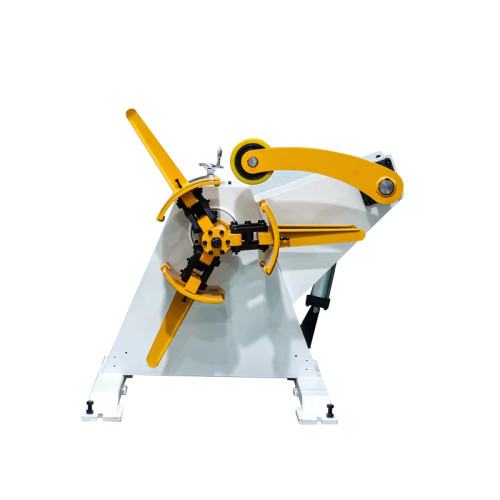
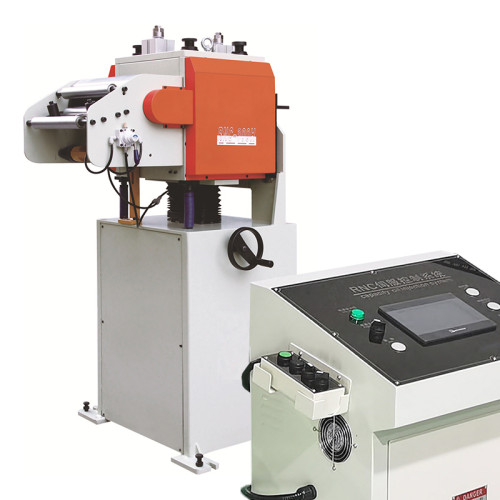
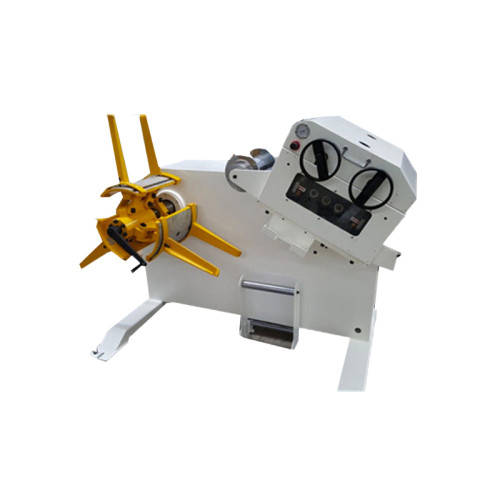
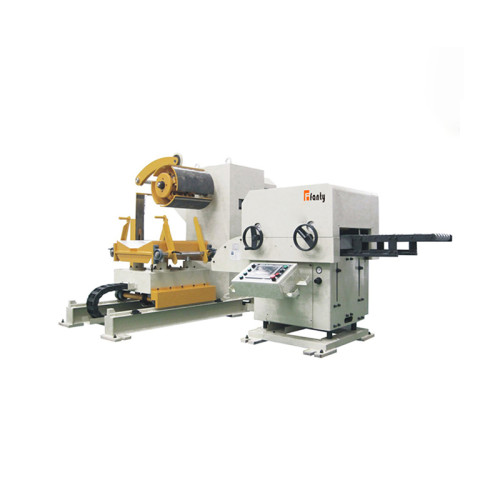
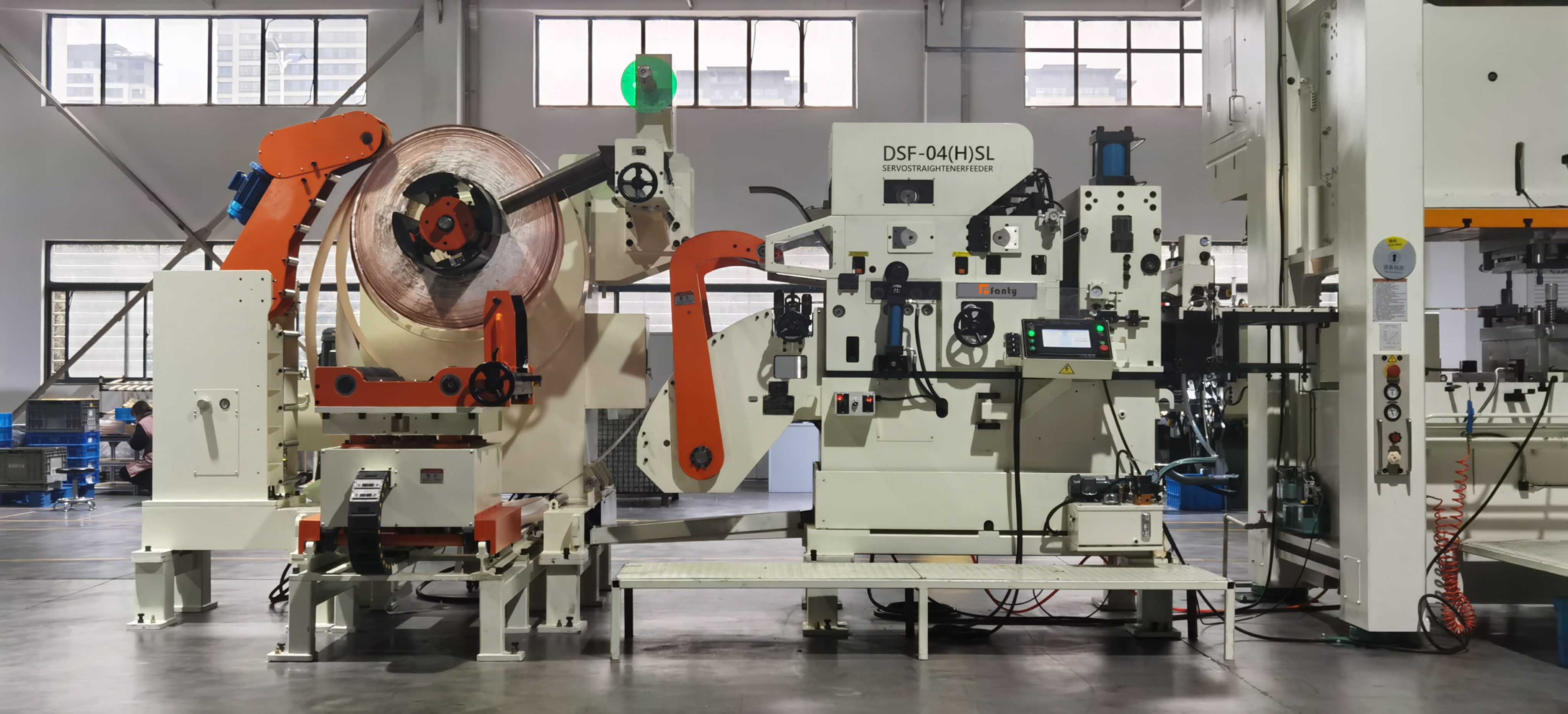
An NC straightener feeder integrates the straightener with a servo feed system and a controller that stores the correct intermesh for each material program. The operator selects the recipe, the rolls move to the stored position, and the line starts feeding flat strip immediately.
That repeatability is the practical difference between a straightener that works sometimes and one that works every time.
Flatness Defects and Their Likely Causes
Different defects point to different problems in the straightening process. Use this table to match the symptom with the adjustment:
| Defect on the Strip | What It Looks Like | Likely Straightener Cause | Corrective Action |
|---|---|---|---|
| Coil set remains | Strip curves back toward the coil direction | Insufficient work roll intermesh | Increase intermesh; check roll count vs thickness |
| Edge wave (wavy edge) | Strip edges ripple, center flat | Uneven roll gap across the width | Re-level rolls; check roll crown |
| Center buckle | Center of strip ripples, edges tight | Excessive center tension | Adjust roll gap distribution; reduce intermesh |
| Cross bow | Strip curls across its width | Rolls not parallel or misaligned | Check roll parallelism and bearing wear |
| Skew or twist | Strip runs diagonally through the feeder | Feed rolls and straightener misaligned | Verify centerline alignment of the line |
| Surface marking | Roll marks on the strip surface | Intermesh too deep or dirty rolls | Reduce intermesh; clean or re-grind rolls |
Notice that several defects are width-related: they come from uneven roll contact across the strip width rather than from too little bending overall.
That is why good straightener design pays attention to roll parallelism and roll crown, and why a machine built by a manufacturer with serious engineering resources, like FANTY's 80-plus R&D engineers, produces strip that stays flat instead of merely looking flat in the straightener.
NC Control: Repeatability Replaces Guesswork
The advantage of an NC straightener feeder is not that it straightens better in one pass; it is that it straightens the same way on the hundredth pass as on the first. The controller stores intermesh, roll pressure, feed speed and feed length for each material program.
Servo control adds another dimension: coordinated feeding. In an integrated machine, the straightener and the feeder share a control axis, so the strip is pulled through the straightening rolls at a speed matched to the feed cycle.
This prevents the stretching and the micro-slip that can occur when a feeder pulls against a straightener running at its own uncontrolled speed. The result is both flatter strip and more consistent feed length, which is why integrated NC straightener feeder lines outperform separately purchased units on both measures.
What Better Flatness Delivers on the Line
- Fewer rejects. A flat strip pilots reliably, so punch-to-die alignment holds and dimensional drift drops sharply.
- Longer die life. Evenly flat strip loads the die evenly, slowing wear on pilot stations and cutting edges.
- Faster changeovers. Stored recipes set the straightener in seconds, removing manual adjustment from every coil change.
- Higher usable speed. Stable flat strip tolerates higher feed rates without buckling at the die entry.
- Consistent part quality across shifts. The process no longer depends on who set the rolls this morning.
FANTY has spent 12 years building coil feeding systems, with a 45,000 square meter factory, 370 employees and more than 200 active installations in over 60 countries. Every one of those lines depends on the same principle: material condition is decided before the die, and the NC straightener feeder is where that decision is made. When the strip arrives at the die flat, stress-free and at the right pitch, the rest of the stamping process has the best possible chance to run at full speed.
Frequently Asked Questions
How many straightening rolls do I need for good flatness?
It depends mainly on material thickness and yield strength. Thin, soft material needs more rolls with smaller pitch to bend it progressively without marking; thick, high-strength material needs fewer but larger rolls with more force capacity. A typical NC straightener feeder for 0.5 to 3.2 mm strip uses 9 to 13 work rolls. Tell the supplier your material range and let the engineers size the roll bank correctly.
Can straightening work-harden the material?
Excessive bending can work-harden the strip and change its properties, which matters for parts that are formed after stamping. The goal is the minimum intermesh that removes coil set without over-bending. Stored recipes prevent over-processing by keeping the proven intermesh for each grade, so the same material is never straightened differently from one run to the next.
Why does my strip still wave after straightening?
Edge wave and center buckle are width-related defects caused by uneven roll contact, not by insufficient intermesh. Check roll parallelism and roll crown first. If the rolls are worn or crowned incorrectly, no amount of intermesh adjustment will flatten the strip evenly. This is a maintenance condition, not a tuning condition.
Is an NC straightener feeder worth it for thin-gauge stamping?
Especially for thin gauge. Thin strip is more sensitive to coil set and more easily distorted by feeding, so the benefit of precise, repeatable straightening is larger. The stored-program control also pays off in job shops that switch materials frequently, because every changeover starts from a proven setup instead of a fresh guess.
Related reading
- why pass line height matters
- five-roll straightening up to 4 mm
- how to hit a flatness spec on a coil line
Part of the 3-in-1 decoiler straightener feeder — the full library of coil handling, straightening and feeding guides from FANTY.
Get Consistently Flat Strip in Your Line
Send us your material range, strip widths and press speeds, and our engineers will recommend the right NC straightener feeder configuration for your stamping requirements.
Request a Machine Recommendation