How to Read an NC Straightener Feeder Specification Sheet?
If you have ever opened a machine quote and felt the numbers blur together, you are not alone. A specification sheet is the single most honest document a supplier can give you, yet most buyers never learn how to read one properly.
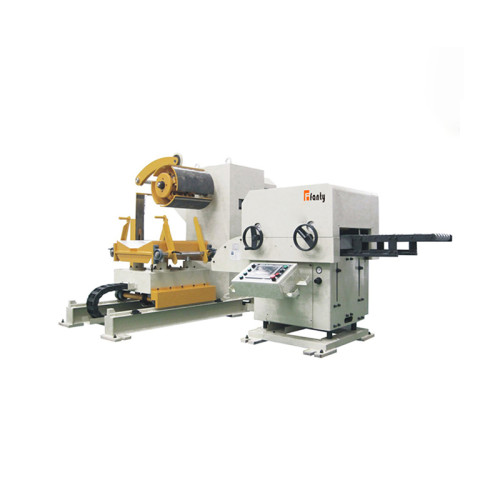
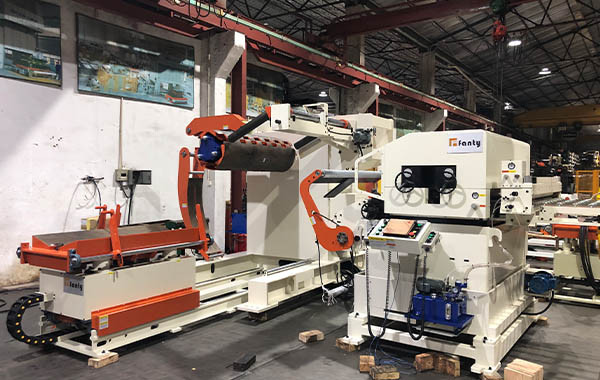
This guide walks you through every line of a typical NC Straightener Feeder specification sheet, explains what each number really means on your shop floor, and shows you which details separate a reliable 3-in-1 decoiler straightener feeder from a machine that will disappoint you after the first year.
By the time you finish this article, you will be able to compare quotes with confidence, spot hidden limitations, and ask the right questions before you spend a single dollar.
Why the Specification Sheet Is the Real Contract
The brochure tells you what the supplier wants you to believe. The specification sheet tells you what the machine can actually do.
A machine that is quoted with a maximum coil width of 400 mm will not feed a 450 mm coil no matter how much you want it to. A feeder rated at 200 strokes per minute will not reliably hit 220. These are not negotiable marketing claims; they are engineering limits.
Reading the sheet correctly means you know exactly which jobs the machine can handle today and which jobs it will never handle, so you can match the equipment to your real product mix instead of your dream product mix.
There is a second reason the spec sheet matters: it is the basis of every comparison you will make. When three suppliers quote you three different NC servo feeder models, the only fair way to compare them is line by line, parameter by parameter.
A machine with a heavier frame, a stronger servo motor, and a more rigid straightener will cost more, but it will also hold its accuracy longer and handle tougher material. The spec sheet lets you see exactly where the extra money goes.
The Seven Parameters That Decide Everything
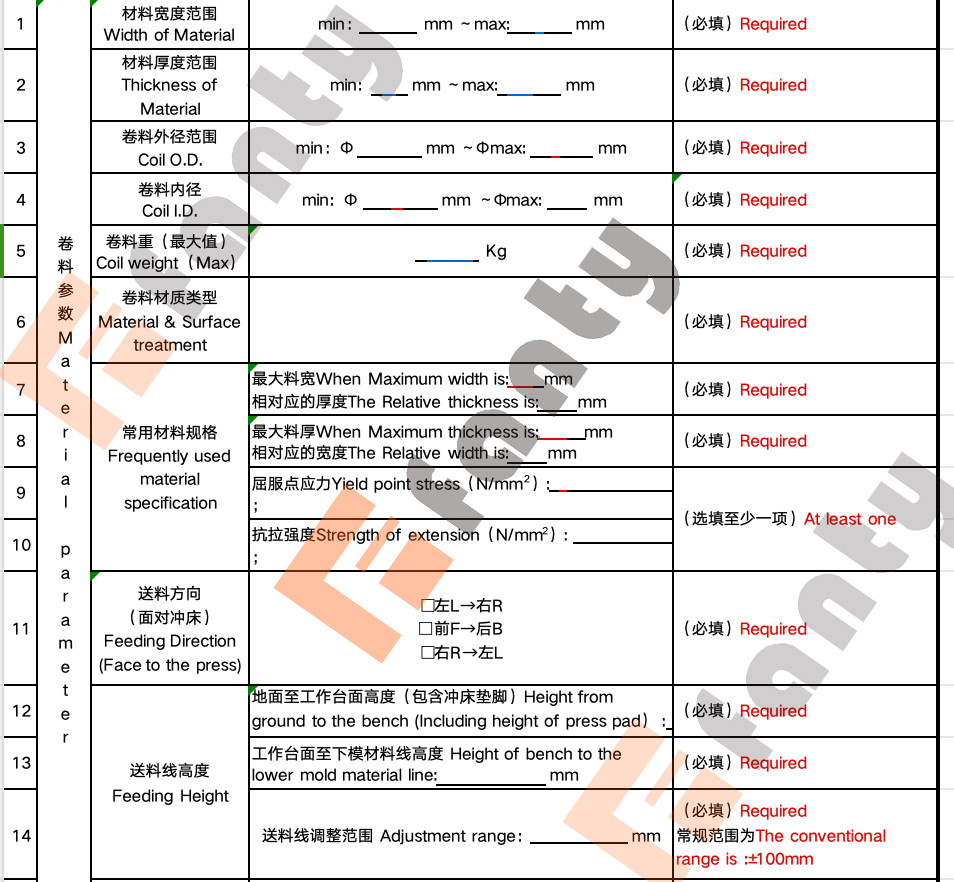
Not every number on the sheet deserves the same attention. In my experience supporting stamping plants, seven parameters determine 90 percent of the outcome. If you check nothing else, check these seven lines on every NC Straightener Feeder quote you receive.
| Parameter | What It Means | Why It Matters to You |
|---|---|---|
| Coil width range | Minimum to maximum strip width the machine accepts | Defines which coils fit your line; a mismatch stops production |
| Material thickness range | Thinnest and thickest material the straightener can flatten | Thin material needs more straightening rolls; thick needs more power |
| Feeding speed / SPM | Maximum strokes per minute the feeder supports | Sets the ceiling on your press output; check both peak and sustained |
| Feed length accuracy | Positioning tolerance, typically stated in millimeters | Determines part quality; look for values at or below ±0.05 mm |
| Maximum feed length | Longest single feed stroke per cycle | Long parts require a feeder with enough stroke capacity |
| Servo motor power | Rated power of the drive motor | Higher power feeds heavier strip without stalling at speed |
| Uncoiler capacity | Maximum coil weight and inner diameter | Heavy coils need a stronger decoiler arm and braking system |
Pay special attention to the accuracy figure. A genuine NC Straightener Feeder with a closed-loop servo drive should hold feed length within ±0.05 mm under normal conditions. If the sheet quotes a looser tolerance, ask why.
Sometimes the supplier is simply being conservative, and sometimes the machine genuinely cannot do better. Either way, you need to know before you commit to tight-tolerance jobs for automotive or electronics customers.
Speed Ratings: Peak versus Sustained
The most common mistake buyers make is treating the maximum speed figure as the speed they will run every day. A specification sheet might say 200 SPM, but that number usually describes the mechanical ceiling with light material, a short feed length, and a perfectly balanced coil.
Ask the supplier two questions about speed. First, what SPM can the machine hold continuously for an eight-hour shift? Second, what feed length is that speed measured at? A machine that sustains 180 SPM at a 50 mm feed length is a very different machine from one that sustains 180 SPM at a 150 mm feed length.
The second one has a stronger servo drive and a more rigid frame, which is exactly what you pay for.
When you compare an NC servo feeder against a pneumatic or mechanical feeder, remember that speed is not the only dimension. Accuracy, repeatability, and the ability to change feed length from the control panel matter just as much in a modern stamping shop.
The specification sheet should tell you the resolution of the encoder and the response time of the servo loop, not just the headline SPM number.
Red Flags That Should Make You Walk Away
A good specification sheet is specific. A bad one is vague. When you see phrases like "suitable for most materials" or "feeds at high speed" without numbers, treat that as a warning.
- Missing accuracy specification for a servo machine
- No servo motor brand or power rating listed
- Straightener roll count and diameter not stated
- Control system software version not mentioned
- No frame material or machine weight listed
- Warranty terms buried or absent from the quote
Machine weight is one of the most telling numbers on the sheet.
How a Serious Manufacturer Writes Its Specs
At FANTY Machinery, we have spent twelve years building NC Straightener Feeder systems and supporting stamping plants in more than 60 countries. Our specification sheets are written to be read, not admired.
FANTY operates a 45,000 square meter factory with 370 employees and more than 80 R&D engineers. Our machines are CE certified and are running in over 200 production lines worldwide.
When you read a FANTY specification sheet for a 3-in-1 decoiler straightener feeder or a standalone NC servo feeder, you will find concrete numbers for accuracy, speed, capacity, and control, because hiding those numbers would only hurt you and hurt us.
The best test of a supplier is simple: ask them to explain every line on their own sheet. A manufacturer that knows its machine inside out will answer without hesitation. A reseller that does not will stall. That conversation alone tells you more than any brochure, and it costs you nothing but a phone call.
Frequently Asked Questions
What is the most important number on an NC Straightener Feeder spec sheet?
For most buyers, it is the feed length accuracy figure. A genuine NC Straightener Feeder with a closed-loop servo drive should hold ±0.05 mm. Accuracy directly controls scrap rate and part quality, so it deserves more attention than headline speed.
Should I trust the maximum SPM rating on the sheet?
Treat it as the mechanical ceiling, not the production speed. Ask the supplier what speed the machine sustains over a full shift with your material and feed length. The gap between peak and sustained speed tells you how robust the servo drive and frame really are.
Why does machine weight matter when comparing feeders?
Weight is a proxy for rigidity. A heavier frame resists deflection under load, which keeps straightening quality and feeding accuracy stable over years of operation. If two machines claim the same specs, the heavier one is usually the safer investment.
How can I verify that a quoted NC Straightener Feeder matches my coils?
Compare three lines against your actual coils: coil width range, material thickness range, and coil weight capacity. If any of your existing coils falls outside those numbers, the machine will not run them, regardless of what the salesperson promises.
Related reading
Part of the the coil line guide library — the full library of coil handling, straightening and feeding guides from FANTY.
Ready to Compare NC Straightener Feeder Quotes with Confidence?
Talk to the FANTY team about your coil width, material, and target SPM. We will send you a complete specification sheet and a line-by-line explanation of every parameter.
Request Your Specification Sheet