How Much Scrap Should a Coil Line Generate Per Shift?
A single scrap number is a poor management tool. It moves when the job mix changes, it moves when a new operator starts, and it says nothing about which part of the process is losing material.
Split it into three and the picture becomes specific. Coil end loss, setup loss and running loss each have their own cause and their own fix.
The calculation below uses a coil feeder line running 300 mm strip, because narrow coils make the coil end component large enough to see clearly.
Scrap Is Three Numbers, Not One
Coil end loss is what remains on the mandrel when the coil is too short to feed safely. Every line has some, and it scales with coil count rather than with tonnage.
Setup loss is what a die change consumes: the trial parts, the strip threaded and discarded, the first-piece approval run.
Running loss is everything produced inside a run that fails inspection, plus the strip consumed between a fault appearing and someone noticing.
Only the third responds to process work. The first two respond to equipment and scheduling, which is why blaming operators for a single scrap figure is usually misdirected.
Coil weight and strip section decide how much material a metre represents, so convert every loss to metres before comparing two shifts.
One percent on a 3-tonne coil is 30 kg, which sounds small until twelve coils a shift turn it into 360 kg.
Coil End Loss: The One Everybody Accepts
A coil of 300 mm by 1.2 mm strip at 3 tonnes holds roughly 1,050 metres. The last 8 to 12 metres cannot be fed safely because the tail will not hold tension.
That is about 1 percent per coil, and it is genuinely unavoidable on a line without a coil joining system.
What is avoidable is leaving 25 metres on a coil because the operator does not want to be caught by a tail at the end of a run.
Measure it. Take the remnant weight at three coil changes and see what the number actually is, rather than what the standard says it should be.
A remnant policy written in metres, displayed at the machine, usually halves this loss within a month without any capital spending.
Setup Loss: What a Die Change Really Costs
A die change on a coil-fed press consumes strip in three ways: threading, trial strokes and pilot proving.
Threading a new coil through a servo feeder takes 2 to 4 metres depending on line length and whether the operator threads by hand or with a powered assist.
Trial strokes consume one feed length each. Twelve trial strokes at 350 mm is 4.2 metres, which is a normal, disciplined number.
Pilot proving adds another five to eight strokes on most progressive dies. Anything beyond twenty total trial strokes is a setup problem, not a scrap problem.
Multiply by die changes per shift and the figure becomes material. Six changes a shift at 8 metres each is 48 metres, or 4.6 percent of a 1,050-metre coil.
Convert that to money at USD 780 a tonne and a shift loses roughly USD 230 in material before labour or machine time is counted.
A plant that halves die changes instead of chasing running loss saves more, faster, and without a single process change.

Running Loss: Where the Real Gap Sits
Running loss is the only component that responds to how the line is set up, and it is usually the largest of the three in a plant that has not measured them separately.
A line running 1.5 percent running loss on 1,050-metre coils is losing about 16 metres per coil to in-run rejects and unnoticed faults.
| Loss type | Typical share | Driver | Where It Costs You |
|---|---|---|---|
| Coil end | 1.0 to 1.5 percent | Coil count and remnant policy | Scales with how many coils you run, not tonnage |
| Setup | 2.0 to 4.5 percent | Die changes per shift | Six changes a shift doubles this against three |
| Running | 0.8 to 3.0 percent | Line setup and detection speed | The only one process work can reduce |
| Handling damage | 0.2 to 1.0 percent | Coil storage and loading | Often counted as running loss, which hides it |
Handling damage deserves its own line. Marks from a badly set guide or a scored roll look like running loss in the data and behave like a handling problem in the fix.
Coil damage before the line is a fourth category that most plants absorb silently. Dented wraps become running loss at the first die.
Worked Example: One Shift on a 300 mm Coil
Twelve coils in a shift, three die changes, 300 mm by 1.2 mm material at 3 tonnes each. Total strip consumed is about 12,600 metres.
Coil end loss at 10 metres per coil is 120 metres. Setup loss at 8 metres per change is 24 metres. Running loss at 1.2 percent is 151 metres.
Total is 295 metres, or 2.3 percent of the shift. That is a reasonable number for a plant with three changes and no joining system.
Now hold everything and raise die changes to six. Setup loss doubles to 48 metres and total scrap rises to 2.5 percent, with no change in process quality at all.
Put the two scenarios side by side and the management decision becomes obvious. Fewer die changes beats any amount of operator coaching.
That is why scrap reduction programmes fail when they target operators and ignore changeover count.
Set the programme target on the three components separately, or it will be met by moving loss from one column to another.
When the Scrap Number Is Judged Wrong
A scrap percentage compared between two plants with different job mixes tells you almost nothing. Narrow coils lose more at coil end; short runs lose more at setup.
It also misleads across a product change. A new part with a difficult blank layout can raise the percentage while the process is actually improving.
And it hides the difference between scrap that is recycled and scrap that is rework. Rework consumes labour and does not show up in a tonnage-based figure.
Judge the trend within a job, not across jobs, unless the comparison is normalised to coil count and die changes.
A shift with twelve coils and no die change should not be compared with a shift of four coils and six changes. The second will always look worse.
Comparing a narrow-coil plant with a wide-coil plant on percentage is close to meaningless without normalising for coil count.
Normalise to metres lost per die change and metres lost per coil, and the comparison becomes fair.
Three Thresholds to Write Into the Shift Report
- Remnant weight at coil change, in kilograms, per coil. A trend upward means the tail policy is slipping.
- Trial strokes per die change. Above twenty, the setup is consuming strip that no process improvement will recover.
- Metres between detected faults and the last good part. This is the number that running loss actually measures.
- Coils received with handling damage, counted separately so it never gets absorbed into running loss.
Four numbers on a shift report replace one percentage that nobody can act on. They also end the monthly argument about whose fault the scrap is.
Add metres consumed per good part. It is the only figure that folds yield, rework and setup into a single number.
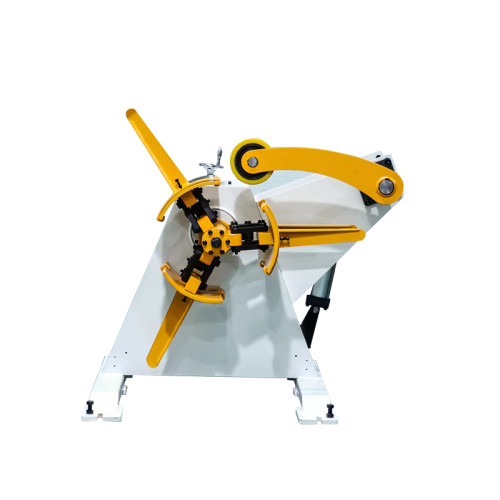
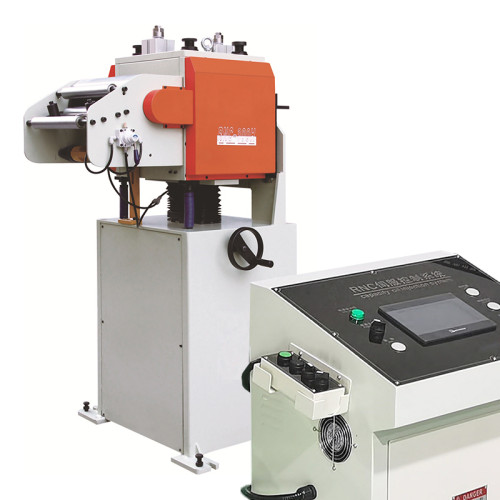
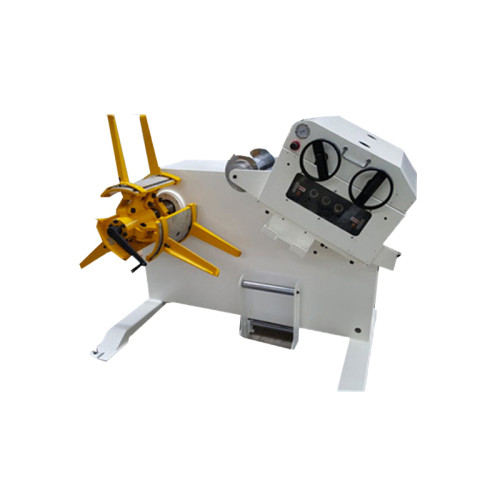
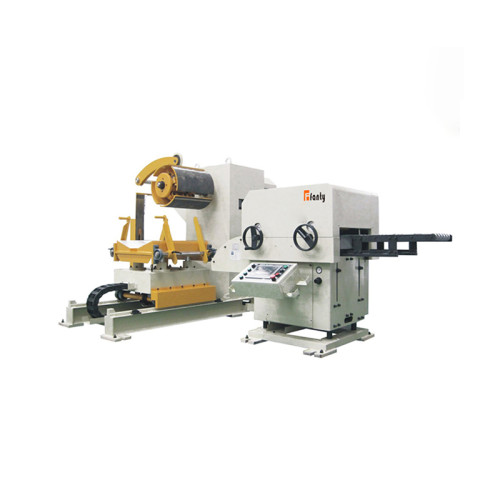
The coil feeder range gives coil weight capacity per model, which is what a scrap-per-shift calculation has to be built on.
Get those five numbers on a daily report and the monthly scrap meeting becomes a five-minute review instead of an argument.
Where to go next
Scrap accounting only becomes useful once the line's tolerances are known. Too tight produces running loss, too loose produces customer rejects, and the error budget guide connects the two.
The Coil Line Guide LibraryIs a 2 percent scrap rate normal for a coil-fed line?
Between 2 and 3 percent on a line with three die changes a shift and no coil joining. Below 1.5 percent usually means the measurement is incomplete.
How many metres are lost at coil end?
Eight to twelve metres on a 3-tonne coil of 300 mm strip. A loose remnant policy can push this to 25 metres and double the loss.
How many trial strokes should a die change use?
Twelve to twenty including pilot proving. Above twenty, the setup routine is costing more than the scrap figure suggests.
Does a coil joining system pay back on a 300 mm line?
Only above about 25 coils a shift. Below that, the joining equipment costs more than the coil end loss it removes.
Why does scrap percentage rise when production improves?
Because setup loss and coil end loss are fixed per event. Running more short runs raises the percentage even when every run is cleaner.
Should handling damage be counted as scrap?
Yes, but on its own line. Mixing it into running loss hides a fix that is usually cheap and quick.