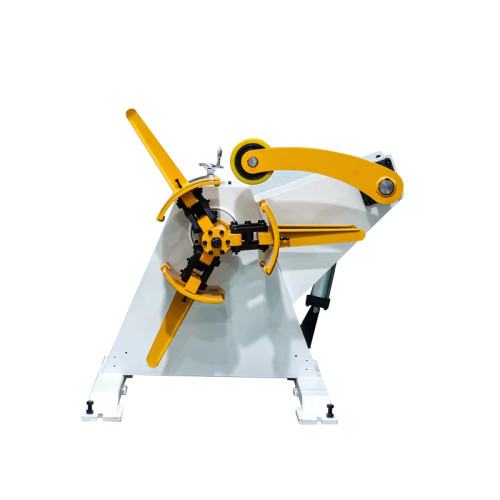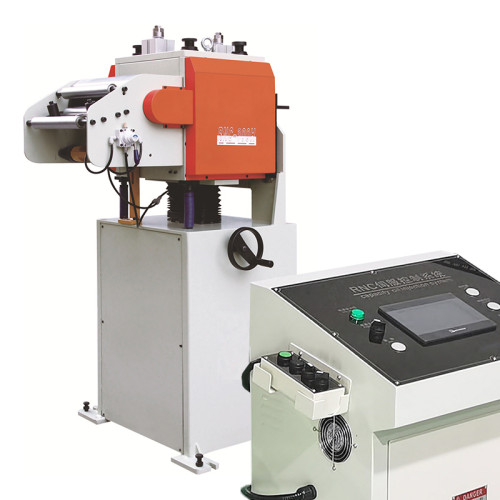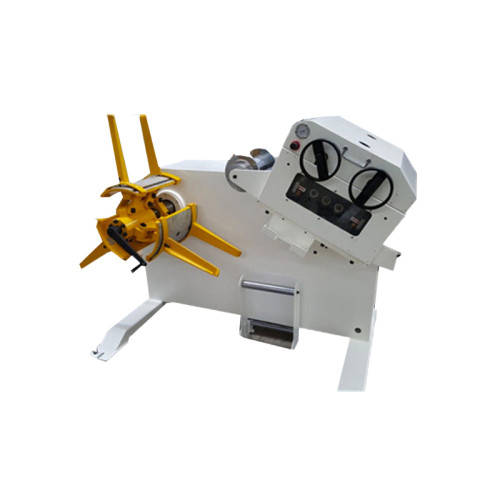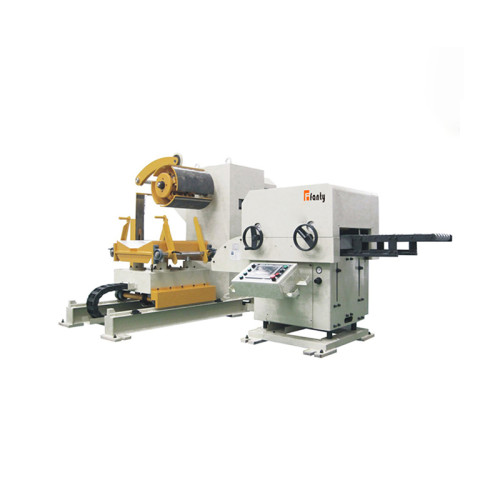
How Much Maintenance Does a Decoiler Need Each Year?
Ask three plants how much maintenance a decoiler machine needs and you will get three answers, all wrong in the same way.
They will quote a schedule in months. The machine does not wear in months. It wears in running hours, in coil changes and in tonnes of strip pulled off the mandrel.
An hour-counted plan for the decoiler and its uncoiler is shorter than a calendar plan and catches the failures that actually stop a line.
Maintenance Is Priced in Hours, Not Months
A decoiler on a two-shift line running 4,000 hours a year ages four times faster than the same machine on a single shift.
Yet both plants get the same page in the manual, because the manual is written for a nominal duty cycle that few plants actually run.
Three counters tell you where a decoiler actually is in its life. Running hours on the mandrel drive. Coil changes, which wear the mandrel segments and the chuck faces.
And total tonnes uncoiled, which is what loads the main bearing.
Track all three and the maintenance interval stops being a guess.
On a line running 1,250 mm coils at 5 tonnes, a plant doing 600 coil changes a year is loading the mandrel bearing far harder than one doing 200 changes on the same coil weight.
Coil changes are the harder counter to estimate. Most plants can read running hours off the drive, and almost none record changes.
That is why two plants with identical decoilers can report completely different reliability.
The one counting hours replaces a brake pad before it drifts; the one counting months replaces it after a coil has already run loose.
Add a simple tally to the production sheet. Twelve months of data will tell you more about mandrel wear than any generic interval.
The Hour-Counted Plan
This is the interval structure we hand over with a new decoiler, and it is built around the three counters rather than around the calendar.
| Interval | What Gets Done | Where Skipping It Costs You |
|---|---|---|
| Every 250 hours | Mandrel segment grease, hold-down arm pivot, brake air filter check | A dry segment scores the coil bore and the next coil will not seat square |
| Every 1,000 hours | Brake pad thickness, drive chain tension, loop arm linkage, all fasteners torqued | Brake drift shows up as loop hunting, and loop hunting marks strip |
| Every 2,000 hours | Mandrel segment wear measured, chuck face runout checked, gearbox oil sampled | Segment wear past 0.3 mm lets the coil slip, and slip turns into a coil break |
| Annually, or 5,000 hours | Main bearing grease purge, hydraulic oil change if fitted, full alignment check against the line | Misalignment of 2 mm across the line is enough to throw strip out of the guides |
Look at the last row. Alignment is the item plants postpone because the machine is still running, and it is the one that quietly ruins the strip path downstream.
A decoiler that has drifted 2 mm out of line does not fail. It makes every coil slightly harder to thread, and the symptom appears two machines away.
Write the interval table onto the machine rather than into a binder. A laminated card fixed to the decoiler guard gets read; a manual on a shelf does not.
That is why the annual check belongs on the plan even when the plant sees no problem. It is a measurement, not a repair.

The Ten Checks That Prevent Most Stops
These ten checks cover the great majority of unplanned decoiler and uncoiler stops we get called out to. Most take under five minutes.
- Measure mandrel segment wear at four points around the circumference, not just one
- Check chuck face runout with a dial gauge while the mandrel is expanded and empty
- Record brake pad thickness and compare it with the previous reading, not with a nominal figure
- Test the hold-down arm through a full stroke, loaded and unloaded
- Confirm the loop arm moves freely through its full travel and returns without sticking
- Look for hydraulic weeping at the rotary joint before it becomes a pool on the floor
- Check the coil car rails for debris, which is the usual cause of a car that will not seat
- Verify the emergency stop and the loop-low interlock with the machine unloaded
- Inspect the peeler and the snubber roll for flat spots, which show as a repeating mark on the strip
- Write every reading into the same log, so the next person compares to a trend instead of to a guess
The ninth item is the one that explains most surface marks blamed on the strip supplier. A flat spot on a snubber roll repeats once per revolution and looks like a mill defect.
The first five checks take under fifteen minutes in total. Run them weekly and the monthly interval stops being a repair list.
The second item catches a problem that is almost invisible until it is expensive. A chuck face running 0.2 mm out will not stop a coil from seating, but the coil will not sit square.
Where a Maintenance Plan Misleads You
An interval table is a starting point, and there are four situations where following it exactly will still let you down.
When the material changed but the plan did not. Running 2.5 mm HR instead of 1.2 mm SPCC roughly doubles the load on the mandrel and the brake, and no hour counter notices.
When the plan is calendar-based. A machine that sat idle for two months is not maintained by being inspected on schedule. Grease separates in the joint whether the mandrel turned or not.
When the operator adjusts instead of reporting. An operator who compensates for a drifting brake by changing the loop setting has hidden a fault that will surface as a coil break.
When the readings are not comparable. Segment wear measured with a calliper in one plant and with a rule in another produces two different numbers and no trend.
The honest limit is this. A maintenance plan reduces unplanned stops, it does not remove them. Consumables fail early, and a plan that promises zero breakdowns is selling something nobody can deliver.
Track the ratio of planned to unplanned work as well. A plant spending 80% of its maintenance hours on breakdowns has a plan on paper and nothing on the floor.
What a plan does deliver is a machine whose condition you can state in numbers when someone asks why a coil came off the mandrel badly.
What to Keep on the Shelf and What to Order
A maintenance plan is only as good as the parts behind it. Two of the items below belong on the shelf; the rest do not.
Keep brake pads and mandrel segment grease in stock. Both are consumables, both are cheap, and both stop the line when they run out.
Keep one spare loop arm sensor. It is a low-cost part with a long lead time if you have to order it after a failure.
Do not stock a mandrel assembly. It is expensive, it is matched to the machine, and the failure mode that requires one is rare enough that the money is better spent on the annual alignment check.
Set a reorder point on each consumable rather than a stock level. Two brake pads on the shelf is a stock level; a card that triggers a reorder when the count reaches two is a system.
Order hydraulic seals at the first sign of weeping rather than at failure. A rotary joint seal that is ordered early costs a fraction of a joint replaced after it has scored.
The wider question of what each specification line costs to own, including the parts and the site work around the machine, sits in the coil line guide library.
The six questions below are the ones that come up when plants move from a calendar schedule to an hour-counted one.
How many hours between mandrel greasings on a 4,000-hour line?
Every 250 running hours. On a two-shift plant that is roughly monthly; on a single shift it stretches to about ten weeks.
At what segment wear should a mandrel be replaced?
Measure it. Past 0.3 mm of wear the coil can slip under load, and slip on a 5-tonne coil is how a coil break starts.
How often should brake pads be replaced once they reach 2 mm?
Inspect at 1,000 hours and replace when thickness falls below the maker's figure, typically 2 mm. A pad at 2 mm still works and drifts under heat.
Does a decoiler need an alignment check every 5,000 hours?
Yes. A 2 mm drift across the line is invisible in normal running and shows up as strip wandering in the guides two machines away.
How much does a year of decoiler maintenance cost on a 5-tonne machine?
For a 5-tonne hydraulic decoiler on two shifts, budget 1.5 to 2.5% of machine value per year in parts and labour, excluding major repairs.
Is a 4,000-hour service interval realistic?
Only for a single-shift plant. At 4,000 hours a year the annual service is a full teardown check, not an inspection.
Where to go next
Capacity, mandrel type and control interact with everything above. The full specification chain for a decoiler sits in the coil line knowledge base, one layer below this article.
The Coil Line Guide Library