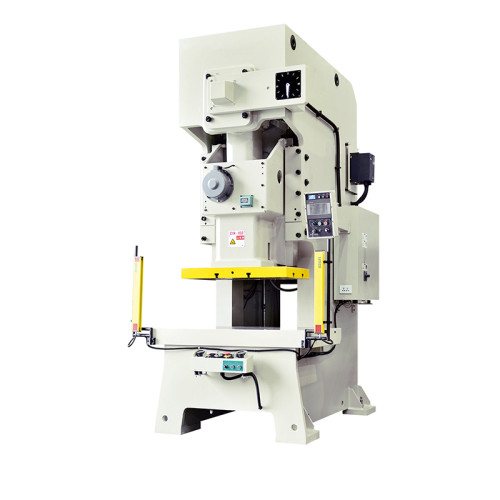
How Much Does Shipping an NC Straightener Feeder Cost?
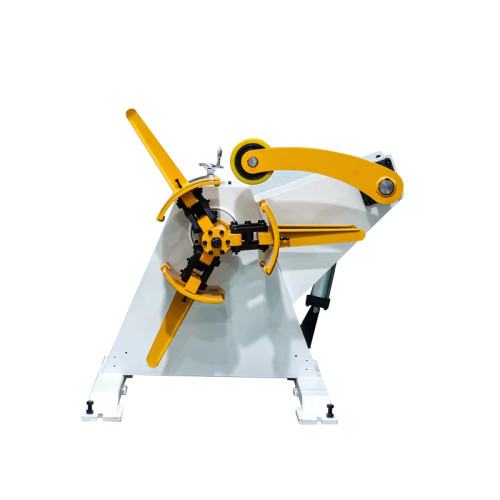
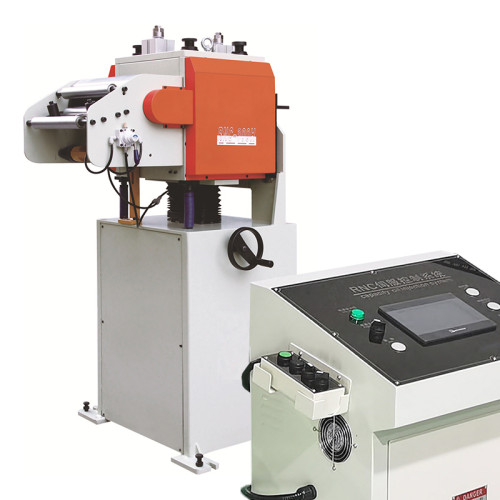
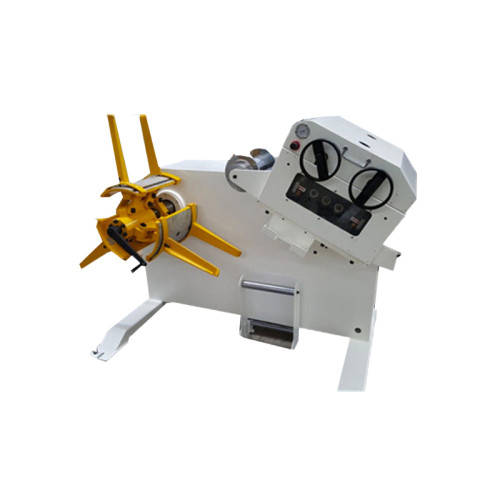
Buyers often compare machine quotations side by side and forget that an NC Straightener Feeder is a three-to-eight-ton precision machine that has to cross an ocean, clear customs, and travel to your plant before it earns a single yuan of revenue.
Two quotes that look close at the factory gate can diverge by thousands of dollars once freight, insurance, duty, port handling, and inland trucking are added.
This guide breaks down every cost line that appears between the supplier's EXW price and the moment the crate sits on your workshop floor, and gives you a simple worksheet you can use to compare offers honestly.
The numbers below reflect typical routes from Asian manufacturing hubs to North America, Europe, and the Middle East in 2026. Freight rates move with the market, so treat them as reference points rather than quotes. The method, however, does not change: if you can put every element of the landed cost on one sheet, you can negotiate like a professional instead of guessing.
Why the Incoterm Changes Everything
The single biggest mistake in machinery buying is comparing prices under different Incoterms. An EXW (Ex Works) price looks attractive until you discover that you own the risk from the moment the machine leaves the factory door.
Before you compare two NC Straightener Feeder offers, force both suppliers to quote on the same Incoterm and the same port. Ask each one to break out the machine price, the packing cost, the freight, and the insurance separately. A supplier who cannot or will not itemize is usually hiding margin inside the logistics line, which makes honest comparison impossible.
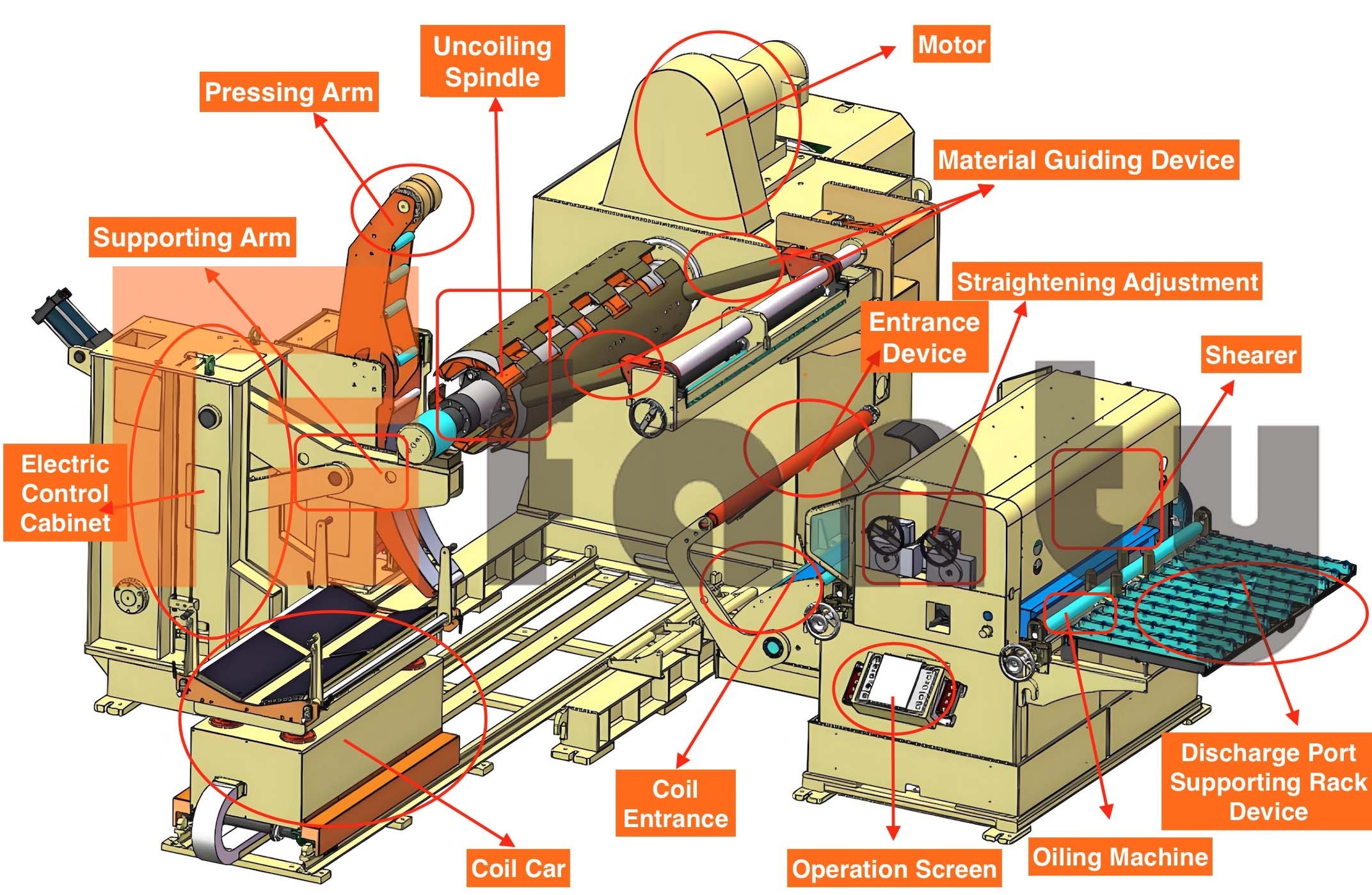 Machinery structurer.
The Seven Cost Lines in Every Machinery Import
Whatever route your NC Straightener Feeder takes, the same seven cost lines appear. Add them all to get the true landed cost.
- Ocean freight. Charged per cubic meter or per ton, whichever is higher, for a full or shared container.
- Marine insurance. Typically 0.2 to 0.5 percent of the CIF value for a standard all-risks policy.
- Import duty and VAT. Varies by country and by tariff classification; stamping equipment often attracts lower duty than consumer goods.
- Port handling and terminal fees. Unloading, storage, and customs inspection charges collected at the destination port.
- Customs brokerage. The agent's fee for clearing your shipment, usually a few hundred dollars.
- Inland trucking. Low-bed transport from the port to your plant, quoted by distance and weight.
- Unloading and rigging. Crane hire and labor to move the crate from the truck and position the machine.
Notice what is missing from that list: the machine price itself.
Reference Freight Costs by Destination
The table below gives indicative 2026 freight and insurance ranges for a standard NC Straightener Feeder shipment of roughly four to six tons in a 40-foot open-top or flat-rack container. Actual quotes depend on season, port congestion, and the forwarder you choose.
| Destination | Ocean freight (USD) | Marine insurance | Typical transit |
|---|---|---|---|
| US West Coast (Los Angeles) | 3,200 - 4,800 | 0.3% of CIF value | 16 - 22 days |
| US East Coast (New York) | 4,500 - 6,200 | 0.3% of CIF value | 28 - 36 days |
| Northern Europe (Hamburg) | 3,800 - 5,600 | 0.25% of CIF value | 30 - 38 days |
| Mediterranean (Genoa) | 4,200 - 6,000 | 0.3% of CIF value | 28 - 35 days |
| Middle East (Jebel Ali) | 2,800 - 4,200 | 0.3% of CIF value | 18 - 26 days |
| Southeast Asia (Singapore) | 1,500 - 2,600 | 0.2% of CIF value | 7 - 12 days |
These numbers assume a single machine, not a full production line. A complete decoiler-straightener-feeder package with several units may require two containers, which changes the per-unit freight economics completely. Always confirm the gross weight and dimensions with the supplier before your forwarder quotes.
Import Duty and Taxes by Region
Duty rates are the least understood part of the landed-cost calculation, and the most expensive to get wrong. Stamping and coil-feeding equipment usually falls under machinery tariff headings that many countries tax more gently than finished consumer goods, but the exact rate depends on the customs code your broker assigns.
In the European Union, most metal-forming machinery attracts a duty in the low single digits, and VAT is added at the importing country's rate.
In the United States, the rate depends on the current tariff schedule, which has changed significantly in recent years; a customs broker can confirm the correct code before shipment.
In many Southeast Asian and Gulf markets, duty is modest but documentation requirements are strict, so a missing CE certificate or commercial invoice delays the clearance and racks up storage fees.
The practical advice is simple: send your supplier's packing list, commercial invoice, and machine photos to a licensed broker in your own country before you sign the purchase order. Ask for a written estimate of duty and VAT. A ten-minute email can save you from a four-figure surprise at the port.
Packing, Insurance, and the Risks You Cannot See
Machinery crates look robust, but an NC Straightener Feeder contains precision rollers, servo drives, and an HMI panel that do not tolerate shock, humidity, or rough handling. Three packing details matter more than the thickness of the plywood.
First, the machine should be bolted to a steel skid with clear lifting points marked on the crate.
Second, the control cabinet and the straightener head should be protected against condensation with desiccant and sealed film, because the temperature swing between a tropical port and a cold warehouse can produce internal moisture that damages electronics.
Third, the crate should carry a tilt indicator or shock label so the handling crew treats it with care. When FANTY ships a straightener feeder, we photograph the machine at the factory gate, record the meter reading, and include the pictures with the shipping documents so both sides can verify the condition on arrival.
Marine insurance is cheap compared with the machine. A standard all-risks policy covers loss and damage during the voyage, but it rarely covers inland trucking after the port unless you extend it. Ask your forwarder to add a warehouse-to-warehouse clause so the cover follows the machine all the way to your foundation bolts.
Your Total Landed Cost Worksheet
Print this worksheet and fill it in for every quote you receive. The supplier who wins on the worksheet, not the one who wins on the brochure, is the machine you should buy.
- Machine price (EXW or FOB): the base number from the quotation.
- Export packing and crating: sometimes included, sometimes charged at 2 to 4 percent.
- Ocean freight: from the forwarder's written quote.
- Marine insurance: 0.2 to 0.5 percent of the CIF value.
- Import duty: your broker's written estimate.
- VAT or sales tax: apply your local rate to the duty-inclusive value.
- Port handling and terminal fees: ask the broker for the port's published tariff.
- Customs brokerage fee: typically 200 to 600 dollars.
- Inland trucking: low-bed rate per kilometer to your plant.
- Unloading and rigging: crane hire and labor for installation day.
Add lines one through ten and you have the true cost of putting the machine on your floor. That final number is the one you should compare, budget against, and use when you calculate the payback period for the line.
Five Questions to Ask Before You Accept a Shipping Quote
Use these five questions to test any forwarder or supplier before you commit to a logistics plan.
Do you quote on the same Incoterm as the other supplier?
Force every bidder onto EXW, FOB, CIF, or DDP consistently. Comparing an EXW price with a CIF price is comparing apples with the shipping cost hidden inside one of them.
What is the gross weight and crate size of the machine?
Ask the supplier for the exact packed dimensions and weight in writing. Undersized quotes from forwarders blow up when the actual shipment turns out to be heavier or taller than declared.
Is the machine too tall for a standard container?
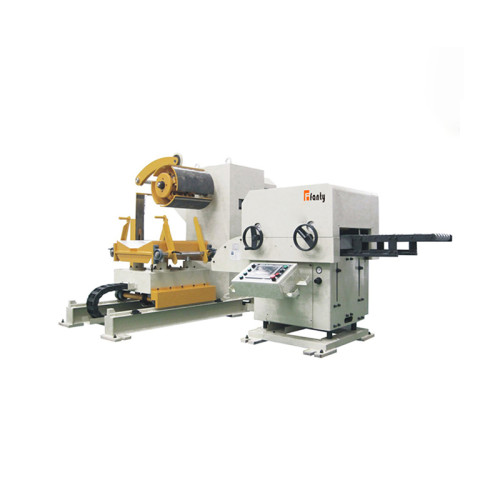
A full 3-in-1 decoiler straightener feeder with the straightener head raised can exceed standard container height. Confirm whether the shipment needs an open-top, flat-rack, or break-bulk arrangement before the freight is booked.
Who files the customs entry and when?
Confirm the broker has the commercial invoice, packing list, CE declaration, and bill of lading at least three days before the vessel arrives. Late documents are the most common cause of port storage charges.
What happens if the machine is damaged in transit?
Ask the supplier how claims are handled and what evidence they need. Photograph the crate on arrival before the truck leaves, note any damage on the delivery receipt, and notify the insurer within the time limit stated in the policy.
Related reading
Part of the the coil line guide library — the full library of coil handling, straightening and feeding guides from FANTY.
Need a Transparent Shipping Estimate for Your NC Straightener Feeder?
Tell us your port and we will send the packed dimensions, gross weight, and a suggested logistics route with the quotation. FANTY ships coil-feeding lines to more than sixty countries and works with forwarders who know how to handle precision machinery.
Request a Quote with Landed-Cost SupportFanty · NC Straightener Feeder
Coated, High-Strength or Thin Gauge? Each Needs Different Rolls
Roll finish and pressure setting decide whether you mark the surface or hold flatness. Send your material spec and we size the straightener feeder properly the first time.
Get a Free QuoteFANTY Machinery · 13 years on stamping automation · 2,000+ coil lines installed · engineers reply within 24 hours