Can a Five-Roll NC Straightener Feeder Handle 4 mm?
Roll count is the first number on every quotation and the last thing most buyers question. Five rolls, seven, nine, eleven — the assumption is that more is better, so the enquiry goes out asking for nine and the price comes back higher than expected. On heavy gauge the assumption is usually wrong, and on 4 mm strip it is wrong in a specific and predictable way.
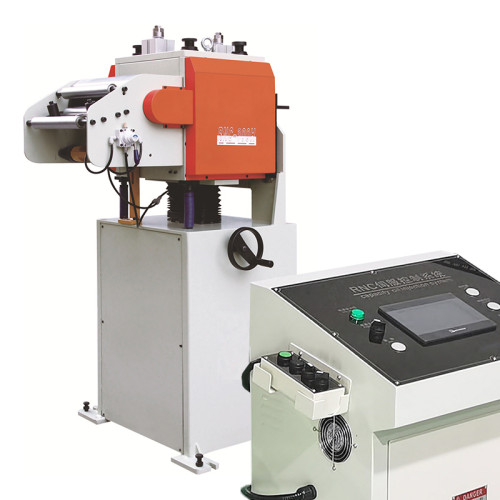
Whether a five-roll NC Straightener Feeder can handle 4 mm has less to do with the count than with the diameter of the rolls carrying it. This comparison sets three common configurations side by side, marks where each one runs out of capability, and ends with the question worth asking before you choose. If you are still comparing machines rather than configurations, start from the NC Straightener Feeder range.
What Roll Count Actually Buys You
Straightening works by bending the strip past its yield point in alternating directions, then reducing the amount of bending pass by pass until the strip leaves the last roll flat. Each roll pair creates one reversal. Five rolls give four reversals, seven give six, nine give eight.
More reversals mean the residual stress pattern through the strip thickness is evened out more gradually. That matters for two reasons: the strip comes out flatter at the same overall force, and the machine can hold flatness at a finer setting without marking the surface.
What roll count does not do is raise the maximum thickness a machine can process. Thickness capability comes from three other things, and they all sit in the roll body rather than in the count:
- Roll diameter. The bending radius the strip is forced through is set by roll diameter and penetration. Larger rolls bend thick strip without exceeding the roll's own load capacity.
- Roll body and shaft stiffness. A roll that deflects under load cannot hold a straight pass line, and a deflected pass line produces a strip that is straight on one side and bowed on the other.
- Frame and screw capacity. The force needed to bend 4 mm × 600 mm strip is substantial, and it has to travel through the adjusting screws without springing back.
This is why two machines with the same roll count can have completely different thickness ratings, and why a five-roll unit built around 150 mm rolls will out-perform a nine-roll unit built around 70 mm rolls on 4 mm material.
Three Configurations Side by Side
The three builds below cover the majority of coil straightening machines sold for strip between 0.5 mm and 6 mm. The comparison assumes a 600 mm strip width.
| Configuration | Typical roll diameter | Comfortable thickness range | Flatness on 4 mm SPCC | Best suited to |
|---|---|---|---|---|
| Five rolls, heavy body | 140 – 170 mm | 1.5 – 6.0 mm | 3 – 6 I-units with correct penetration | Heavy gauge, moderate flatness demand |
| Seven rolls, medium body | 90 – 120 mm | 0.8 – 4.0 mm | 2 – 4 I-units | Mixed gauge, good general purpose |
| Nine rolls, precision body | 60 – 85 mm | 0.3 – 2.5 mm | Not recommended at 4 mm | Thin gauge, high flatness demand |
Read the third column and the answer to the question in the title becomes visible. Five rolls handle 4 mm comfortably — provided the rolls are large. Nine rolls do not, not because of the count but because a nine-roll machine is built with small rolls to keep the pass line short and the frame compact, and those rolls are not sized for 4 mm strip.

Where Five Rolls Runs Out of Room
A five-roll machine has four reversals to work with. On heavy strip that is enough for coil set and cross bow, which are the two defects that matter most on 4 mm material, but it leaves no spare passes for anything else.
The limit shows up in three situations. Camber — a curvature in the plane of the strip — is not corrected by a five-roll straightener at all, because the roll arrangement bends the strip across its width, not across its length. A five-roll machine will pass camber straight through, and if your coils carry camber you need either a coil with better slitting or a different correction method.
The second limit is surface marking. With four reversals, each pass has to do more work than it would in a nine-roll machine. More work means more contact pressure, and on pre-painted, coated or polished material that shows. If your strip is visible in the finished product, the extra passes of a seven-roll machine are worth paying for even at thicknesses a five-roll unit can handle.
The third is flatness specification. A five-roll machine set correctly will hold 3 to 6 I-units on 4 mm SPCC, which satisfies most structural and bracket work. If the drawing calls for 2 I-units or better, four reversals is not enough to get there on heavy gauge, and no amount of operator skill changes that.
Seven Rolls: The Middle That Fits Most Lines
Seven rolls is the configuration most coil lines end up with, and on a mixed-gauge shop it is usually the right answer. Six reversals give enough passes to correct coil set, cross bow and mild camber-adjacent waviness, and the 90 to 120 mm rolls are large enough for 4 mm strip while still being small enough to set finely on 0.8 mm material.
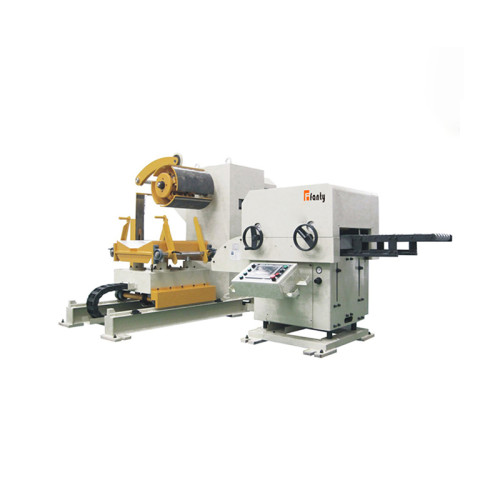
The trade-off is a longer pass line. A seven-roll head is roughly 40% longer than a five-roll head at the same roll diameter, which matters in a 3-in-1 decoiler straightener feeder where the head sits between the decoiler and the feed section. A longer head means a longer machine footprint and a slightly longer strip path, and it is one reason compact installations sometimes accept the five-roll compromise.
On a seven-roll machine running 4 mm strip, the practical flatness result is 2 to 4 I-units, and the last two passes are usually set to a penetration of only a few hundredths of a millimetre. That fine adjustment is what the extra rolls are for, and it is the adjustment operators most often leave at the factory setting.
Nine Rolls and Above: When the Extra Passes Pay
Nine and eleven-roll heads exist for thin, hard and surface-critical material. Their advantage is real: eight reversals at low penetration each will flatten 0.5 mm stainless or 0.8 mm aluminium to better than 1 I-unit, and they do it without the surface marking that heavy penetration causes.
On 4 mm strip that advantage disappears. A nine-roll head built for 0.3 to 2.5 mm uses rolls in the 60 to 85 mm range, and forcing 4 mm material through it overloads the roll bodies, the shafts and the frame screws at the same time. Some machines will physically accept the strip and produce a part; the flatness will be worse than a correctly set five-roll machine, and the roll bearings will have a shortened life. Where a supplier quotes a nine-roll machine for a 4 mm application, ask for the roll diameter and the roll body load rating in writing.
There is a legitimate case for more rolls on heavy gauge, but it comes with larger rolls rather than smaller ones — a nine-roll head with 120 mm rolls is a different machine from a nine-roll head with 70 mm rolls, and only the first one belongs on a heavy-gauge line. Machines in this class typically cost 25 to 40% more than a comparable five-roll unit, and they earn that back only if the flatness requirement is genuinely tight.
Is roll count or roll diameter the more important specification?
Diameter, for thickness capability. Count, for flatness and surface quality. A quotation that gives the count without the diameter is not telling you what the machine can process, and the diameter is the number to ask for first.
Can a five-roll machine be upgraded to seven rolls later?
In most cases no. The roll head is a machined assembly with the roll positions fixed in the frame, so adding rolls means replacing the head, and that is not an economical retrofit. Choose the configuration on the strip mix you expect over the machine's life, not on the job in front of you today.
What flatness should a buyer specify for 4 mm strip?
Ask for the number in I-units at a stated strip width and thickness, not as a word like "flat". For most structural and bracket work, 4 to 6 I-units is a reasonable requirement. Below 2 I-units on 4 mm material, expect to pay for a seven or nine-roll head with large rolls.
Does a heavier roll head slow the line down?
Slightly, because the strip path is longer and the head carries more inertia. In practice the limitation on heavy gauge is the press and the die, not the straightener. The same platform running thin gauge on a different head will comfortably reach 200 SPM.
How do I check the roll body is actually rigid enough?
Ask for the roll body diameter, the shaft diameter and the bearing size, then compare them with the machine's rated width and thickness. As a rough guide, the shaft diameter should be at least a quarter of the roll body diameter on a heavy-gauge head. A supplier who cannot quote those three numbers is quoting a catalogue page.
Choosing for the Strip You Actually Buy
The decision is simpler than the quotation sheet makes it look. Three questions settle it.
What is the thickest material you will run in the next five years? Not the heaviest job you have today — the heaviest one you might quote for. If that number is 4 mm or above, the machine needs large rolls, and a five or seven-roll head with 120 mm rolls and above is the correct choice.
What is the thinnest? A head built for 4 mm strip cannot be set finely enough for 0.5 mm material, because the penetration resolution that works at heavy gauge is too coarse at light gauge. Shops that run both ends of the range usually need either two machines or a head with a two-range penetration adjustment.
Does the strip surface matter? If the strip is visible in the finished part, or coated, or polished, the extra passes of a seven-roll head earn their cost even at thicknesses a five-roll machine could manage. If the strip is hidden inside a bracket, four reversals are enough.
A 45,000 m² facility building these heads as complete 3-in-1 decoiler straightener feeder units sees the same pattern in every enquiry: buyers who specify roll count alone end up with either a machine that is heavier than they needed or one that cannot hold the flatness their drawing calls for. Specify the thickness range, the flatness figure and the surface requirement, and let the roll count follow from those three numbers.
Choosing a straightener configuration for a specific strip range? Tell us your thinnest and thickest material, the width and the flatness requirement, and our engineers will recommend the roll diameter and count that fits.