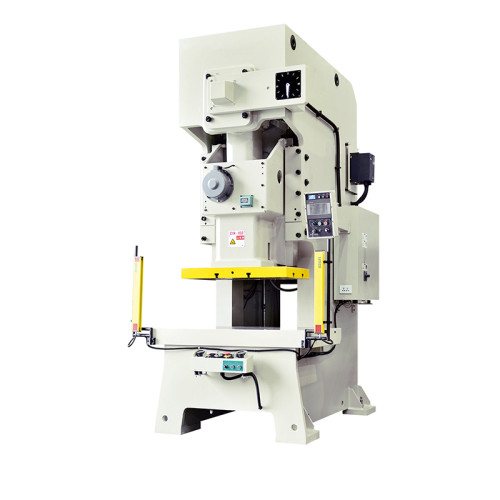
How Does an NC Servo Straightener Boost Stamping Precision?
In precision stamping, material flatness is everything. If your strip arrives at the die with residual coil set, waves, or edge curvature, even the most accurate feeder cannot compensate.
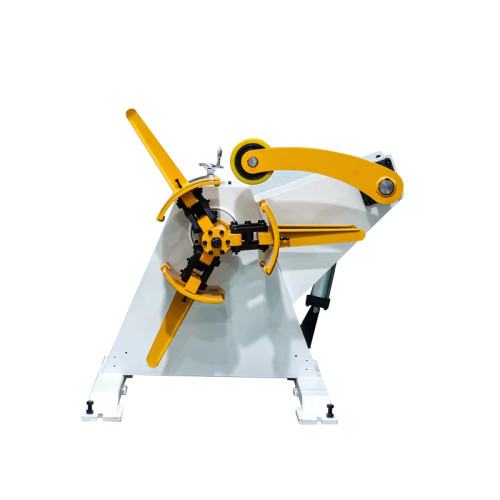
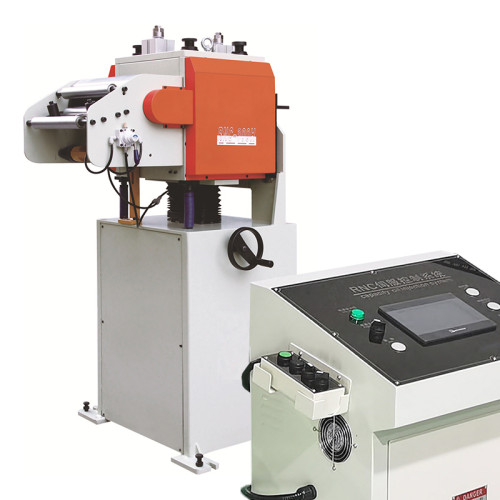
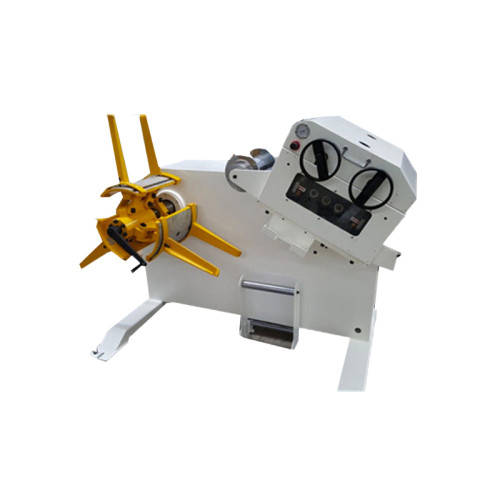
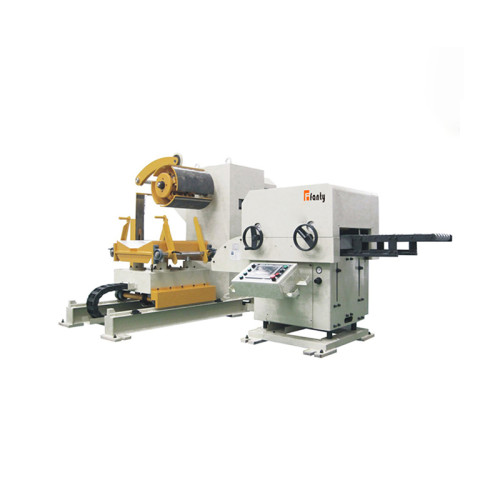
An NC servo straightener — the straightening component of a modern NCdecoiler straightener feeder — uses servo-controlled roller gaps to deliver material flatness within ±0.1 mm per meter.
This comprehensive guide explains how NC servo straightening works, why it outperforms manual systems, and how it transforms stamping precision across multiple industries.
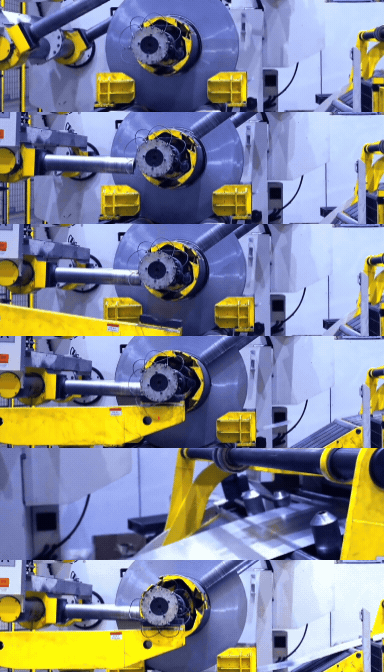
Understanding NC Servo Straightening Technology
Traditional straighteners use manual screw adjustment to set roller gaps. An operator turns a hand wheel to open or close each roller pair based on material thickness.
An NC servo straightener replaces the hand wheel with a precision servo motor that adjusts each roller gap through a ground gearbox. The operator selects the material thickness on the touchscreen HMI, and the straightener automatically sets the correct gap with ±0.01 mm precision — every time.
This eliminates human error and guarantees consistent straightening across every coil, every shift, and every operator. The system can store up to 100 material recipes, allowing instant recall of optimal roller gap settings for different materials, thicknesses, and yield strengths.
How the Servo Adjustment Mechanism Works
The core innovation is the servo-driven adjustment mechanism. Each roller pair is connected to a precision screw jack driven by a small servo motor.
When the operator enters a new material thickness, the PLC calculates the required roller gap based on a pre-calibrated linear relationship and commands each servo motor to turn the exact number of revolutions. A linear potentiometer or magnetic scale confirms the actual gap position, closing the feedback loop.
If any roller deviates from its target position due to mechanical play or thermal expansion, the servo corrects it automatically.
This closed-loop positioning system maintains accuracy within ±0.01 mm regardless of temperature changes, mechanical wear, or material variations. In contrast, a manual straightener may drift by ±0.05 mm or more over the course of a production shift as the machine warms up and components expand.
Manual vs NC Servo Straightener Comparison
| Feature | Manual Straightener | NC Servo Straightener |
|---|---|---|
| Gap Adjustment Time | 30-60 seconds per roller pair | Under 2 seconds — fully automatic |
| Adjustment Precision | ±0.05 mm (operator dependent) | ±0.01 mm (digital closed-loop) |
| Job Change Time | 5-15 minutes | Under 30 seconds |
| Consistency Across Operators | Variable — depends on skill | Identical every time |
| Recipe Storage | None — operator recalls from memory | Up to 100 recipes stored digitally |
| Material Flatness Achievable | ±0.3 mm/m typically | ±0.1 mm/m guaranteed |
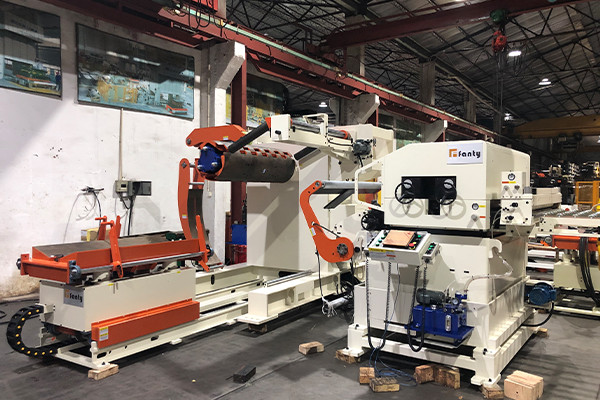
Applications That Benefit Most from NC Servo Straightening
While any stamping operation benefits from better material flatness, certain applications see dramatic improvements with NC servo straightening:
Automotive Body Panel Stamping
Automotive body panels require exceptional surface quality. A wave of 0.2 mm in the strip can translate to visible oil-canning on a door panel or hood surface. Automotive stampers using NC servo straighteners report 40-60% fewer surface-reject parts compared to manual straightening.
The ability to store specific straightening profiles for different steel grades (DC04, BH, HSS 340) eliminates trial-and-error setup at job change.
Progressive Die Stamping for Electronics
In progressive die stamping of electronic connectors and terminals, material flatness directly affects pilot pin entry. A strip that is not perfectly flat can cause the pilot pin to miss the pilot hole, resulting in a misfeed that can destroy the die.
NC servo straightening ensures consistent flatness across the entire coil length, reducing misfeed-related die damage by up to 70%.
High-Speed Stamping of Appliance Components
Home appliance stamping runs at high speeds (150-250 SPM) for extended periods. Manual straighteners require periodic re-adjustment as rollers warm up and material properties vary across the coil. NC servo straighteners maintain consistent settings automatically, allowing uninterrupted production runs lasting 8-12 hours without adjustment.
Measurable Benefits
- 50% faster changeovers — digital presets eliminate manual adjustment time, allowing more production runs per shift
- 30% less scrap — consistent flatness reduces misfeed-related material waste by a significant margin
- No operator skill dependency — any operator achieves the same settings, reducing training time and human error
- Longer die life — flat material reduces uneven die loading and edge cracking, extending die maintenance intervals
- Lower rejection rates — consistent material quality reduces customer returns and quality inspection costs
Frequently Asked Questions
Can an NC servo straightener handle high-strength steel?
Yes. FANTY's NC servo straighteners are rated for materials up to 1,200 MPa yield strength, featuring hardened rollers (HRC 60+) and heavy-duty gearboxes capable of handling AHSS and HSS materials common in automotive applications.
Does NC straightening work for thin materials under 0.5 mm?
Yes, with the correct roller configuration. Thin materials require smaller roller diameters (typically 30-40 mm) and finer gap control resolution. FANTY offers dedicated thin-strip packages for 0.2-0.5 mm material used in electronics and connector stamping.
How do I maintain an NC servo straightener?
Daily: clean rollers with a soft cloth to remove oil and debris. Weekly: lubricate guide rails and check servo motor couplings. Monthly: calibrate servo zero positions using the built-in calibration routine. FANTY includes a detailed maintenance guide and remote diagnostic support with every machine.
Can I retrofit an NC servo straightener to my existing stamping line?
Yes. FANTY offers retrofit packages that replace the manual adjustment mechanism on existing straighteners with servo motor kits, including the control interface and touchscreen HMI. Most retrofits are completed within one day.
Related reading
- how leveling improves strip flatness
- how to set roll pressure
- how to hit a flatness spec on a coil line
Part of the 3-in-1 decoiler straightener feeder — the full library of coil handling, straightening and feeding guides from FANTY.
Want to see how an NC servo straightener improves your stamping precision? Contact FANTY Machinery for a free consultation and demonstration.
Fanty · NC Straightener Feeder
Still Fighting Strip Memory After Straightening?
Send the strip thickness, material grade and target flatness. We specify roll diameter, roll count and NC feed pitch so the line holds tolerance from the first coil, not the fiftieth.
Get a Free QuoteFANTY Machinery · 13 years on stamping automation · 2,000+ coil lines installed · engineers reply within 24 hours