How Does a Telescoped Coil Behave on a Decoiler?
The coil came off the truck with 60 mm of telescope, and the operator loaded it anyway because the press was waiting.
Twenty minutes later the strip was paying out at an angle, the edge guide was working against a moving target, and the coil had started to walk on the mandrel.
A telescoped coil is not a damaged coil. It is a coil whose wraps have slid sideways, and how badly it behaves depends on how far they slid.
This is what the machine does with one, how to measure it in ten minutes, and where the honest answer is to send it back.
What the Operator Sees in the First Minute
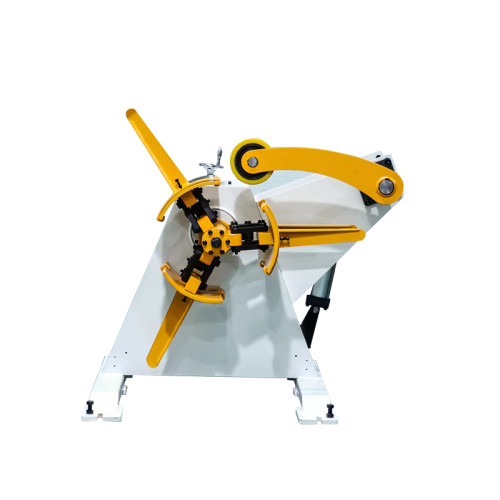
The mandrel expands into the coil bore, and on a telescoped coil it does not meet a cylinder. It meets a cone.
The segments touch the narrow end first. Pressure on the wide end is either absent or comes from the outer wrap, which is the weakest part of the coil.
Three symptoms follow in order. The coil sits off centre, the strip pays out at an angle, and the outer wraps start to slip against the inner ones.
Off centre by 40 mm is enough to make a 1,250 mm coil unloadable on a line with a fixed edge guide, because the guide travel runs out before the strip runs true.
The angled payout is worse than it looks. A 1.5 degree lead angle over a 900 mm span puts 24 mm of lateral error into the strip before the guide sees it.
On a decoiler with a snubber roll, the roll presses the outer wrap down and holds the cone together. Remove it and the coil can collapse into a spiral on the floor.
Mandrel pressure tells the same story. A hydraulic mandrel rated at 180 bar reaches full expansion on a round bore in two seconds; on a cone it may never reach it, because the segments stop against the narrow end.
Watch the pressure gauge during the first expansion. A reading that climbs and holds below the set value is a coil that is gripping on one edge only.
Brake behaviour changes too. A coil that has shifted has a different moment of inertia on one side, and the brake has to hold tension on a strip that is paying out at an angle.

Three Places a Coil Loses Its Alignment
Telescoping is created before the coil reaches your plant, and the cause decides whether it can be recovered.
Winding tension. A recoiler that winds the outer wraps looser than the core lets them slide under their own weight. Slit coils on a light mandrel are the usual case.
Handling. A clamp truck squeezing a soft coil, or a C-hook lifting one that is not strapped, shifts wraps in a single movement. The telescope then looks like a step, not a taper.
Storage. Coils stacked on a floor and left for months creep. The bottom wrap flattens, the stack leans, and the coil takes a permanent set that no mandrel will correct.
The shape tells you which one happened. A smooth taper over the full width is winding tension. A sharp step is handling. A coil that is oval as well as telescoped has been stored badly.
None of the three is caused by your uncoiler, which matters when a supplier and a customer start assigning blame over a rejected coil.
Slit coils deserve a note of their own. A 0.6 mm by 120 mm slit strand wound at 4 percent tension has almost nothing holding the wraps together laterally.
A 3 degree tilt on the recoiler is then enough to build a 30 mm taper before the coil is even strapped.
That is why slit coils arrive telescoped more often than full-width master coils from the same mill, and why the receiving check matters most on narrow material.
A Ten-Minute Check Before You Load It
Most of these coils are usable. The check separates the ones that are from the ones that will cost a shift.
Put a straight edge across the coil face and measure the offset between the outermost wrap and the innermost. That number is the telescope.
- Telescope under 15 mm. Load it. The mandrel will pull the wraps back into line once expansion pressure reaches the core.
- 15 to 40 mm. Load it with the snubber roll engaged and reduce payout speed to 60 percent for the first 30 metres.
- 40 to 80 mm. Check the bore. If it is still round, a rewind at the service centre costs less than the scrap this coil will make.
- Over 80 mm, or oval. Do not load it. On a 5-tonne coil the outer wraps can slide far enough to trap the mandrel segments.
- Bore check. Measure the inside diameter at four points. More than 8 mm of variation means the mandrel cannot expand evenly, whatever the telescope measures.
Four Fixes and What Each One Costs
Fixing telescope at the line is mostly a losing game. Fixing it upstream is cheap, and the table shows why.
| Fix | What you get back | Where it bites you |
|---|---|---|
| Rewind at the service centre | A round, aligned coil with a known bore | A rewind charge per tonne and two to four days of lead time |
| Coil upender and saddle storage | Stops new telescope forming in your own yard | Floor space and a handling step at goods-in |
| Longer mandrel segments | Grip across the full coil width instead of one end | A wider mandrel body reduces the bore range it can take |
| Cut off the telescoped wraps | Salvages 85 to 95 percent of the coil | Scrap value on the removed wraps, and a new outer edge to thread |
Cutting the wraps is what most plants actually do, and it works when the telescope sits in the outer 10 to 15 wraps.
Cut with a shear, not a grinder, and deburr the new lead edge. A burr on the first wrap will mark every metre that follows it through the line.

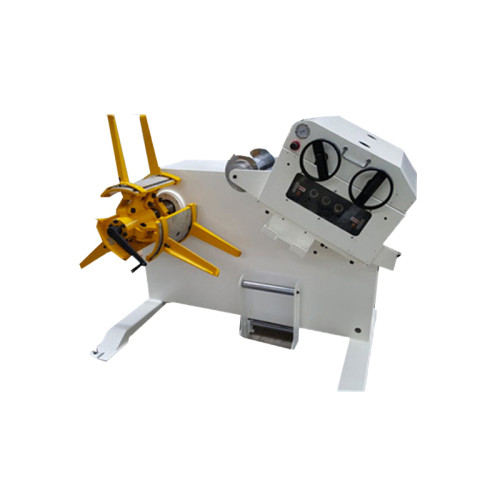
Longer mandrel segments are worth considering at the purchase stage rather than afterwards. A 1,500 mm wide decoiler with a 1,200 mm mandrel body will always grip a wide coil at one end only.
Rewind pricing is usually quoted per tonne and per pass. Expect $18 to $30 per tonne on a 5-tonne coil, which on a $900 coil is 10 to 17 percent of the material value.
A coil upender costs less than a rejected coil per year on most plants, and it also removes the clamp-truck squeeze that creates the sharp-step telescope in the first place.
Cases the Machine Cannot Recover
Three cases exist where no adjustment on the uncoiler will recover the coil, and pretending otherwise costs more than rejecting it.
A bore outside the mandrel range. If the coil was wound on a 508 mm bore and the mandrel covers 450 to 530 mm, expansion is fine. At 610 mm it is not, and shimming is a workshop accident waiting to happen.
Wraps that have interleaved. When the outer wrap has slipped under the one beneath it, unwinding pulls a double thickness. The line will jam at the first pinch roll, every time.
Creep damage from storage. A coil that has sat on a floor for a year takes a set that shows as a repeating wave every revolution. No amount of tension removes it.
One more honest limit: a snubber roll hides telescope rather than curing it. It keeps the coil together while the strip pays out, and it does nothing for the lateral offset that reaches the guide.
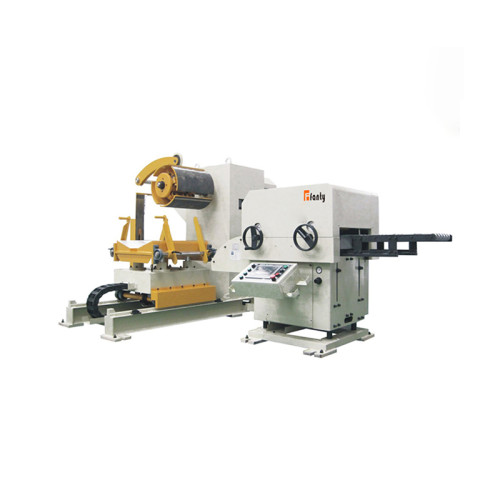
FANTY has built decoilers and uncoilers for 12 years, and the calls that end in a replacement coil almost always start with a telescope over 80 mm that was loaded anyway.
One measurement trap is worth naming. Telescope read on the outer wrap understates the problem, because the outer wraps are the ones that moved.
Measure at three points around the circumference and record the largest figure, not the average.
Keeping the next coil round
The cheapest fix is a goods-in rule, and it takes one person with a straight edge and a form.
Measure telescope at receiving, record it against the coil number, and put the number on the coil tag. Operators then make the load decision from data instead of from the schedule.
Store on saddles or in a cradle, never flat on the floor, and never more than two high without a rack.
Specify bore and telescope tolerance in the purchase order. A mill or service centre that knows 40 mm will be rejected ships tighter coils, and the argument disappears.
Our own coil handling equipment is specified with the mandrel body length and bore range stated on the drawing, because those two numbers decide how much telescope a machine can absorb.
If the coil is round and the line still walks, the problem has moved downstream, and the guide and the pass line are the next place to look.
At what telescope, 40 mm or 80 mm, should a coil be rejected?
Over 80 mm, or any coil whose bore varies by more than 8 mm. Below 15 mm the mandrel usually recovers the wraps during expansion.
Does a snubber roll fix a coil with 60 mm of telescope?
No. It holds the outer wraps down while the strip pays out. It does not correct the lateral offset, which is what the edge guide has to absorb.
How much of a 5-tonne telescoped coil is salvaged by cutting the outer wraps?
85 to 95 percent when the telescope sits in the outer 10 to 15 wraps. Beyond that the cut removes too much and the rewind is the cheaper route.
Where to go next
The decoiler cluster covers this ground in a fixed order: capacity first, then type, mandrel and control.
The pillar page covers how mandrel length and bore range are specified, which is the decision that determines how much telescope a machine can take.
Read the decoiler specification guide