How Does a Straightener Feeder Handle 6 mm Heavy Gauge?
Walk a 6 mm coil line and a 1.5 mm line side by side and the difference is not the control panel. It is the steel underneath it.
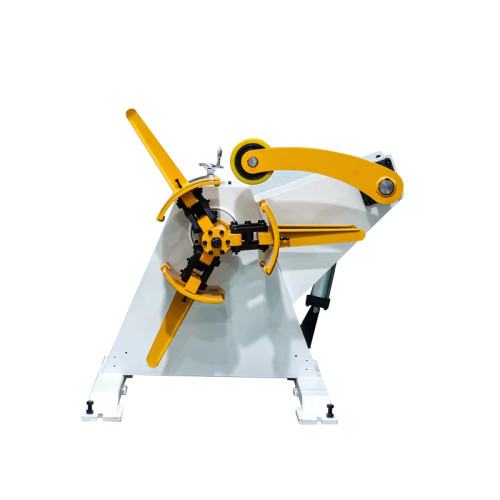
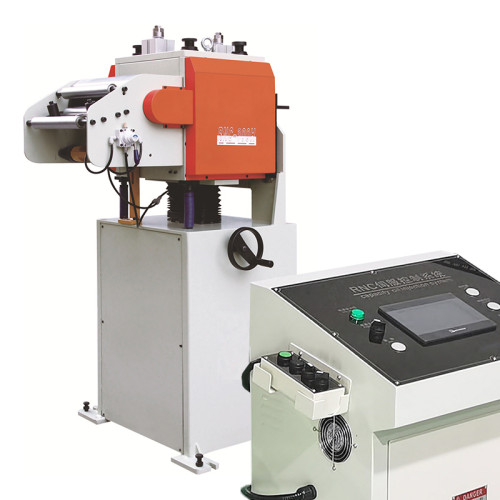
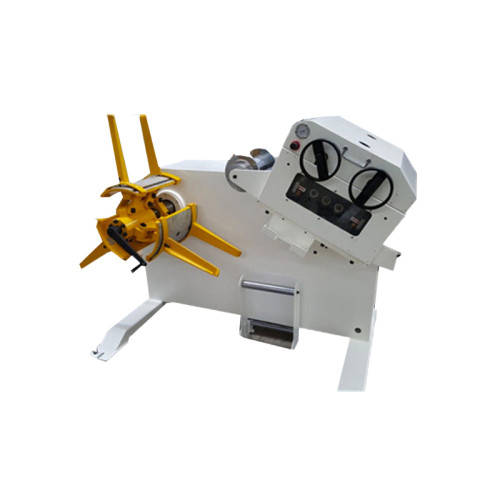
Rolls grow from 60 mm to 120 mm, the housing gets taller, and the entry side carries a coil that weighs three times as much.
This article explains what changes on a straightener feeder when the strip runs 3 to 6 mm, and the point where a compact integrated machine stops being the cheaper answer.

Heavy gauge is a structural problem before it is a control problem.
Once thickness passes roughly 4 mm, bending load, roll diameter and coil weight all move together, and the machine that carries them has to be built around them.
What Moves When Thickness Doubles
Six parameters move when you go from 1.5 mm to 6 mm at the same strip width. Each one moves a different cost.
| Parameter | At 1.5 mm Mild Steel | At 6 mm SPHC | Where It Costs You |
|---|---|---|---|
| Straightening roll diameter | 50 to 60 mm | 90 to 120 mm | Taller housing, more floor space, rolls that cost several times more to replace |
| Roll count in the bank | 7 to 9 | 5 to 7 | Fewer rolls, but each is heavy enough to need a lifting point for service |
| Leveler motor power | 5.5 to 7.5 kW | 22 to 37 kW | Larger cabinet, heavier supply cable, and a real running cost every hour |
| Coil weight on the mandrel | 3 to 5 t | 10 to 15 t | Heavier machine, deeper foundation, larger coil car and a bigger aisle |
| Line speed | 40 to 60 m/min | 15 to 25 m/min | Lower output per hour; the press, not the feeder, becomes the ceiling |
| Feed clamping force | Spring or light pneumatic | Hydraulic | More marking risk on the strip surface and a hydraulic pack to maintain |
The roll-diameter row is the one buyers underestimate. A 120 mm roll does not fit in a housing designed around a 60 mm roll.
That single dimension pushes the whole machine up, and the height then drives the frame stiffness, the crane requirement and the shipping crate.
Height is what catches people out in an existing building.
A heavy-gauge machine can stand 400 to 600 mm taller than the thin-gauge unit it replaces, and that is a roof clearance question before it is a price question.
How Much Straightening Force the Strip Actually Asks For
Bending force rises roughly with the square of thickness and in direct proportion to width and yield strength.
Double the thickness at the same width and the rolls carry about four times the load. Nothing else in the calculation is as aggressive as that exponent.
A 1,250 mm strip in 6 mm SPHC typically lands in the 30 kW class. The same width in HSLA 420 pushes past 45 kW.
This is where most heavy-gauge orders go wrong. The machine is sized on thickness, then the material arrives with a yield strength 40 percent above the assumption.
The result is a line that runs, but only at reduced penetration and reduced speed, and the flatness spec quietly fails on the first production coil.
Ask the supplier to show the force calculation with your grade and your width in it. A figure quoted per millimetre of thickness, with no grade, is not a calculation.
A useful cross-check is motor power per 100 mm of strip width. A 6 mm mild steel line normally sits between 2 and 3 kW per 100 mm, and a quotation well below that range deserves a second look.
When Separate Units Beat a 3-in-1 Above 4 mm
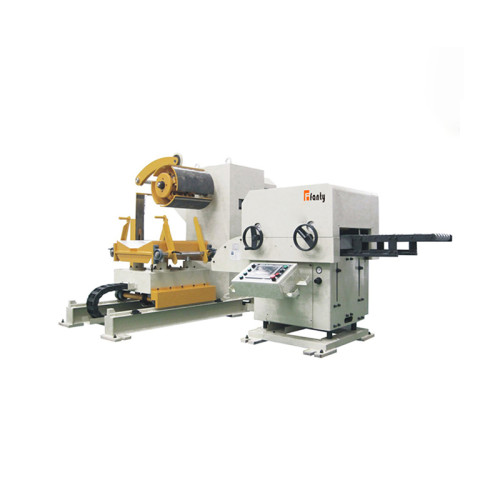
The integrated machine wins on floor space and alignment below about 4.5 mm. Above that the trade changes shape.
| Configuration | What It Gives the Run | Where It Costs You |
|---|---|---|
| 3-in-1 up to 4.5 mm | One frame, one alignment, 30 to 40 percent less floor length | The frame and rolls grow faster than the space saving once thickness climbs |
| Separate decoiler, leveler and feed | Each unit sized to its own load, and each serviceable on its own | Three foundations, three alignments, and 40 to 60 percent more floor length |
| Separate units for 6 mm HSLA | The leveler is sized on yield strength rather than thickness | Highest capital cost and the longest commissioning window |
| Heavy-gauge 3-in-1 to 6 mm | Still compact, and still the shortest route from coil to die | Roll gap and penetration settings leave little margin on high-yield grades |
The crossover is not a hard line. Most builders place it between 4.5 and 6 mm, and a higher yield strength moves it downward.
If your mix is 80 percent 3 mm and 20 percent 6 mm HSLA, the integrated machine is usually still correct. If the mix reverses, price the separate configuration before you sign.
What Changes on the Coil Handling Side
Heavy strip is stiff enough to hold itself, which removes one problem and creates three others.
- Coil car and mandrel. A 12 t coil needs a car rated above the load, not at it, and a mandrel that expands under hydraulic pressure.
- Peeler and threader. A 6 mm strip end is heavy and sharp; manual threading is a two-person job and a hand injury waiting to happen.
- Coil break control. Thick high-yield coils can crack at the outer wrap when they are unbanded cold, which is a material problem no accessory fixes.
- Loop control. A heavy strip takes longer to form a stable loop, so the pit or accumulator has to be longer than the speed calculation suggests.
A snubber roll, which is standard on thin coated stock, is usually unnecessary here. At 6 mm the coil keeps its own wraps tight.
What you need instead is entry guidance that can survive contact with a stiff strip edge without deflecting.

Which Assumptions Break First
Published capacity figures for heavy gauge are written against assumptions that your shop may not meet.
Mild steel at full width. A 6 mm rating is normally quoted on SPHC. Step up to HSLA 420 and the same machine loses 30 to 40 percent of its usable penetration.
Nominal coil geometry. Coil weight ratings assume a stated inside and outside diameter. An undersized bore on a heavy coil changes the grip, not the tonnage.
Flat strip assumed. A catalogue flatness number is measured on a straight, uniform strip. Real heavy-gauge coils arrive with cross-bow and edge wave from the mill.
A test coil is not a production coil. One well-wound 12 t coil in a clean test bay will outperform the tenth coil off a truck in February.
None of this is a reason to avoid the machine. It is a reason to hold the supplier to a calculation rather than a table.
Flatness is where these assumptions surface first, and the roll-by-roll settings behind it are set out in the coil line guide library.
Documents a Heavy-Gauge Quote Owes You
Four documents decide whether a heavy-gauge quotation is a calculation or a guess.
Ask for the leveling force calculation with your grade and width in it. Ask for the roll diameter and the housing drawing. Ask for the coil weight the entry structure was designed for.
Ask for the flatness figure with the measurement method attached.
If all four arrive with your material written on them, the price is probably the real price. If any one is missing, the number is a starting point for a change order.
Feeding accuracy on thick high-yield stock is a separate budget, and it is broken down in our coil line knowledge base.
FANTY has built coil handling equipment for more than 200 production lines, with 80 engineers working on leveling and feed geometry alone.
Our NC straightener feeder range covers 0.6 to 6.0 mm, and the heavy-gauge frame is sized on a force calculation rather than a thickness table.
If you are comparing machine sizes for a heavy-gauge order, the coil line product range lists the standard roll diameters, motor ratings and coil weights.
Four questions decide most heavy-gauge purchases. These are the ones we are asked first.
At what thickness does a 3-in-1 stop being the right choice?
Between 4.5 and 6 mm for mild steel, and lower for HSLA. At 6 mm HSLA 420 the frame and roll sizes usually favour separate units.
How much more motor power does 6 mm need than 3 mm?
Roughly four times, because bending load scales with thickness squared. A 3 mm line in the 7.5 kW class typically becomes a 30 kW line at 6 mm.
Do you still need a snubber roll on 6 mm coil?
Usually not. Strip above about 4 mm holds its own wraps tight. Keep the money for entry guides and a threading table instead.
Can a heavy-gauge line run at 200 SPM?
Not normally. Most 6 mm lines run 15 to 25 m/min, which on a 300 mm pitch works out nearer 20 to 30 strokes per minute.
Where to go next
This article sits in the stamping applications branch of the coil line guide library. It works through one material band rather than the full specification chain.
Read the flatness and roll setting guide