How Does a Rust Band on a Stored Coil Reach the Die?
Twelve coils of 2.0 mm CR4 sat in an unheated port shed from November to April, passed goods-in on a tape measure and a coil tag, and cost the plant $4,300 before the third coil was finished.
Nothing was wrong with the mandrel, the brake or the alignment. The problem was a rust band 25 to 60 mm wide along both edges, hidden under two wraps of dry-looking outer coil.
Edge rust on a stored coil is a slow, quiet defect. It survives handling, survives the uncoiler, and shows up as marks on the finished part three operations later.
This is what happened, how the band was traced back to a storage decision, and the goods-in check that catches it in ten minutes.
The Coil That Passed Goods-In
The receiving check was three items: coil tag against the packing list, width with a tape, and a visual pass on the outer wrap. All three passed.
The outer wrap was dry and lightly oiled. The coil had been strapped with two bands and stood upright on a timber saddle, which is the correct posture for storage.
What the check could not see was the edge, because the edge of a 1,250 mm coil standing upright faces sideways and sits in the shadow of the wrap above it.
The first sign came at the press. Parts from the outer third of the coil carried a faint brown smear along one edge, about 40 mm in from the trim line.
By the second coil the smear had become pitting that survived the wipe-down, and the die had picked up enough scale to mark the strip on the same edge every stroke.
What Five Months of Condensation Does at the Edge
Steel does not rust because it is wet. It rusts because moisture condenses on a surface that has dropped below the dew point of the air around it.
A shed with a steel roof and no insulation does exactly that. The roof cools overnight, water forms on the underside, and it drips onto whatever is beneath.
The coil edge is the first place to suffer for a geometric reason. The cut edge has no oil film from the mill, no scale, and the largest surface-to-volume ratio on the whole coil.
Edge rust also creeps inward between wraps. Water that enters the edge gap wicks along the strip by capillary action and stays there, because the wrap above it seals the top.
Five months of that cycle produces three distinct zones on the same coil: a dry outer wrap, a wet band 25 to 60 mm wide along each cut edge, and clean strip in the middle.
Coils stored in the same shed but standing on a timber pallet with 100 mm of air underneath showed roughly half the band width. Air under the coil matters more than air around it.

Reading a Coil Before It Goes on the Mandrel
A rust band is diagnosable in ten minutes with a torch, a straight edge and a pair of gloves. Do it before the coil is loaded, not after.
- Stand at the coil edge with a torch at a low angle. Rust reads as a matte brown band; oil reads as a sheen.
- Slide a steel rule 40 mm between two wraps at the band and look for staining on the inner face, not just the outer.
- Scratch the worst spot with a brass scraper. A stain lifts; pitting leaves a crater you can feel with a fingernail.
- Measure the band width at four positions around the coil. A band that varies by more than 15 mm came from dripping, not from humidity.
- Record the shed's overnight temperature and the dew point for the week before arrival, if the site keeps a log.
The third check is the one that decides what to do next. A stain can be cut back three wraps and used. Pitting cannot be removed by any amount of uncoiling, and the coil becomes a claim or a scrap decision.
What the Rust Does Once the Coil Is Uncoiled
An uncoiler does not damage a rusty coil. It simply exposes it, and the exposure is where the cost appears.
The first effect is on the roll set behind the coil. Loose oxide flakes transfer to the first roll they touch, and a roll with a build-up of scale marks every metre that follows.
The second effect is on the die. Flakes that survive the rolls arrive at the first piercing station and act as an abrasive between the punch and the die plate, which shows up as a burr on one side of the hole.
The third effect is on the finished surface. Rust that has pitted the strip cannot be coated over, so parts from the band fail a visual or a salt-spray check even when the dimensions are perfect.
| What you see | What caused it | What it costs before you catch it |
|---|---|---|
| Brown smear along one edge of the part | Stained but unpitted strip from the band | Wipe-down labour, and a customer note if it is visible |
| Roll marking that repeats every revolution | Oxide transferred from strip to the first roll | Roll polish, four hours of downtime, and 200 m of strip to re-run |
| Burr on one side of a pierced hole | Abrasive scale between punch and die plate | Die maintenance and a burr-height check on every part |
| Pitting that survives cleaning | Through-thickness corrosion at the edge | The whole coil, because no process recovers it |
| Coil that uncoils with a visible wave | Uneven friction from a wet band on one side | Flatness complaints that trace back to the coil, not the rolls |
On the twelve coils in this case, the plant cut back four wraps on nine of them and scrapped the band on three. Scrap ran 1.8 percent of mass, the roll polish cost one shift, and the total landed near $4,300.
How wide does an edge rust band get after 5 months in an unheated shed?
25 to 60 mm on 2.0 mm CR4, measured from the cut edge inward. The band is wider on the edge that faces the shed door and narrower where two coils stood back to back.
Does cutting back 3 wraps remove an edge rust band?
It removes the stain and leaves the band, because the corrosion sits between wraps rather than on the outer one. Cut back until the inner face of the strip shows no staining, which is usually four to six wraps.
Is a 90-day claim window long enough to catch edge rust?
Only if the coil is inspected on arrival. A band that appears after five months of storage falls outside every standard supply term, so the inspection date decides whether the cost is recoverable.
What No Mandrel or Brake Can Prevent
It is worth being direct about the limits, because buyers often ask whether a better uncoiler would have prevented this.
No mandrel prevents edge rust. The mandrel grips the bore and the bore is the one surface that stays dry. Corrosion happens at the edge, which no part of the machine touches.
A covered coil is not a protected coil. Wrapping the coil traps the moisture that condenses on the wrap. Nine of the twelve coils in this case were wrapped, and the wrap made the band narrower but deeper.
Brake tension changes nothing. A tighter coil does slow the wicking between wraps, but it also seals the moisture in. The effect is a delay, not a prevention.
Where the arithmetic misleads. Scrap mass understates the cost. The band is 3 to 5 percent of the mass and 100 percent of the marks, because the outer edge is what the die sees first on every stroke.
There is one genuine machine-side lever. A coil that is uncoiled, inspected and re-strapped before storage exposes the band while it is still stain rather than pit.
That is a handling decision, not a machine specification.
The Goods-In Rule That Stops It Next Time
The fix in this plant was a storage specification, not a machine change. Four conditions cover most of the risk.
| Storage condition | What it prevents | What it costs to put in place |
|---|---|---|
| 100 mm of air under every coil | Ground and floor-slab condensation | Timber dunnage, $8 to $15 a coil |
| Roof insulated or lined, no drips above coils | The band that varies around the circumference | Site work, and often the largest item |
| Six-month maximum dwell, first in first out | Wicking between wraps over a wet season | Discipline on the coil list, no cash cost |
| Edge inspection at goods-in with a torch | Claim deadlines that expire while the coil sits | Ten minutes a coil |
The fourth row is the one that pays for itself. Most coil supply terms give 30 to 90 days to raise a quality claim, and a coil that sits for five months has no claim left by the time the band reaches the die.
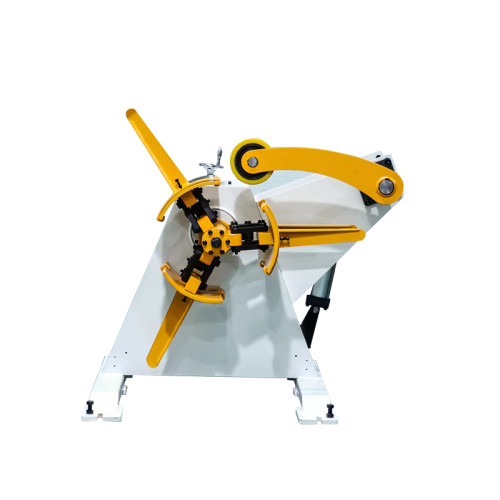
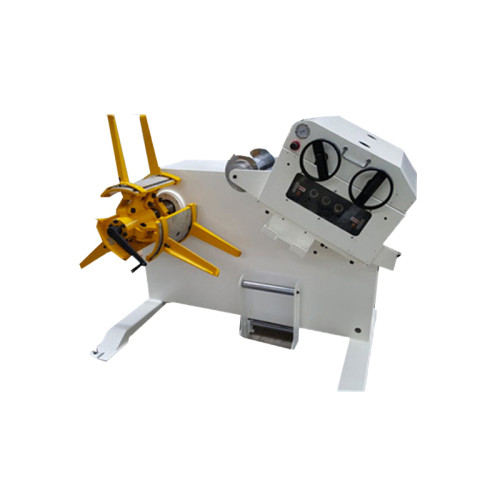
Base dimensions, mandrel ranges and coil mass limits for our builds are set out in the decoiler specification sheets, and coil diameter matters here because a larger coil holds more wraps of wet edge.
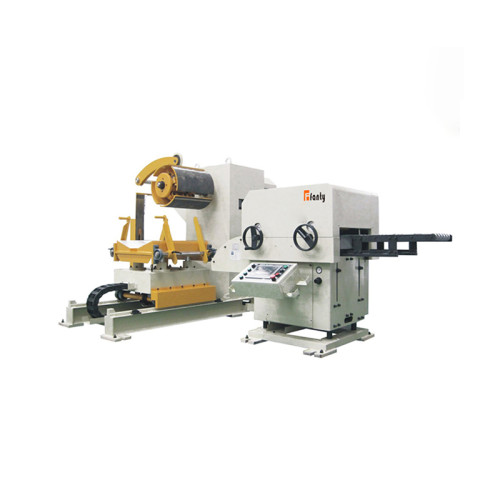
The coil line guide library walks the specification chain from capacity through mandrel to control, and coil condition is the input that chain assumes most often without checking.
A decoiler and a plain uncoiler handle a rusty coil identically, because both grip the bore and neither touches the edge. The difference between them is drive and brake, not corrosion.
Where to go next
Coil condition is the first input in any specification, and it is the one buyers most often inherit from a supplier rather than choose.