How Does Coil Feeding Change Transformer Core Stamping?
A core line that runs beautifully on 0.5 mm mild steel can tear itself apart on 0.35 mm electrical steel, using the same settings and the same operator.
The strip is harder, thinner and far less forgiving about how you straighten it.
This article compares three ways to feed transformer core stamping from coil, and works out where an NC straightener feeder earns its place.
It covers the strip numbers that decide the method, what electrical steel does to a roll stack, and the cases where blanks still win.

Transformer and motor cores are not like a bracket or a panel. The part has to conduct flux, not just hold a shape.
That single difference changes which feeding route is rational.
Match the Feed Method to the Strip, Not the Part
Four strip numbers decide almost everything about how a core line should be fed.
- Thickness. Non-oriented electrical steel for cores runs 0.35-0.65 mm; grain-oriented grades go down to 0.23 mm. Below 0.5 mm, roll pressure becomes a magnetic issue, not just a shape issue.
- Hardness and silicon content. Higher silicon raises resistivity and lowers core loss, but it also makes the strip brittle. Grades around 3% silicon will crack before they will stretch.
- Coating. The insulating layer is typically 1-3 µm and is easily scuffed. Roll pressure that is fine on bare steel can polish it off.
- Coil width against part width. A narrow lamination cut from a wide coil wastes edge material; a coil matched to the part width removes the trim scrap entirely.
Get these four right and the feed method usually picks itself.
Three Ways to Feed a Core Line
All three routes are in production today. The third column is the one buyers tend to discover after installation.
| Feed Method | What It Gives the Run | Where It Costs You |
|---|---|---|
| Pre-cut blanks, magazine or hand fed | No straightening at all, so no work hardening is added to the magnetic path | Sheet cost runs 15-30% above coil, sheared edge burr is uncontrolled, and every press cycle carries labour |
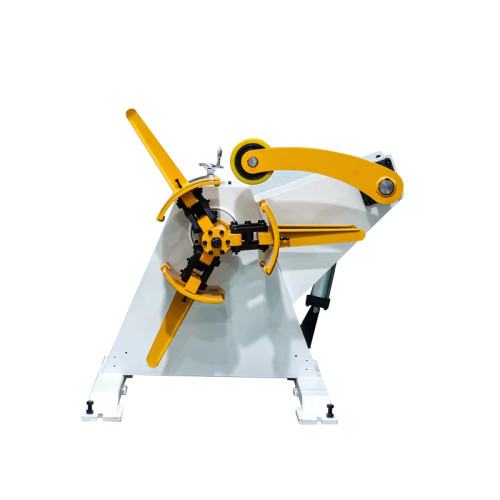
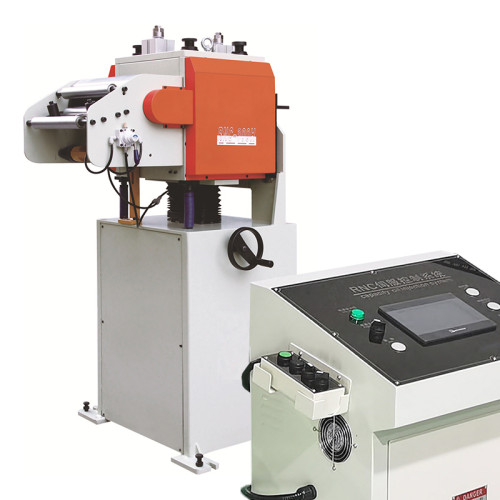
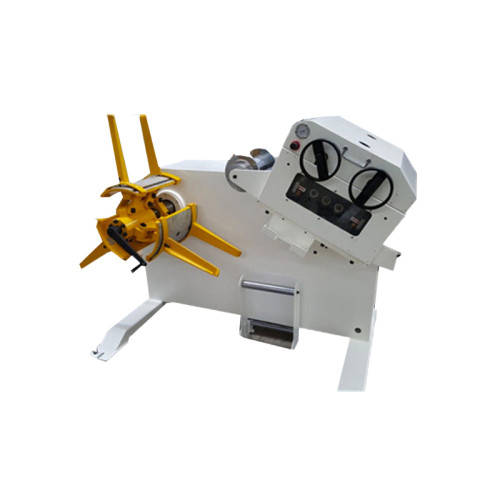
| Coil with separate decoiler, straightener and feeder | Each unit can be sized, replaced and maintained on its own; wide material is easier to handle | Six to nine metres of floor, three alignment points, and pass line drift between units adds directly to feed error |
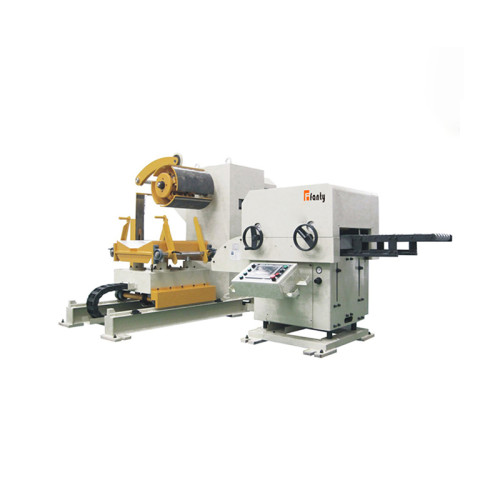
| Coil with a 3-in-1 machine | One pass line and one alignment, roughly 3.5-4.5 m of floor, changeover in minutes | The roll stack is shared, so straightening pressure chosen for flatness can over-work thin electrical steel |
On a core line the first row is not the primitive option it looks like. For low volumes and mixed grades it is often the correct one.
Where Blank Feeding Still Wins
Three situations make pre-cut blanks the rational choice, and none of them is about machine cost.
- Mixed grades on one press. If the schedule alternates between 0.35 mm grain-oriented and 0.65 mm non-oriented strip, a coil line spends its day being reset. Blanks arrive already cut to the right grade.
- Very low annual volume. Below roughly 200,000 laminations a year, the coil line's changeover and setup time can exceed the labour it saves.
- Prototype and pre-production builds. Tooling is still moving. Blanks let you prove the die before committing to a coil route that assumes a fixed part width.
What blanks do not give you is a controlled edge. That is the trade you are making.
What Electrical Steel Does to a Straightener
This is the part of the decision that gets skipped, and it is the part that produces most of the complaints after startup.
Straightening is cold working. Bending strip back and forth raises dislocation density in the crystal structure. In a core, that shows up as higher core loss and lower permeability.
On mild steel nobody measures it. On a 0.35 mm lamination, a 5-8% rise in core loss is a customer complaint.
Roll pressure is therefore a compromise, not a setting. Enough pressure removes bow and wave. Too much destroys the magnetics and can crack a brittle grain-oriented grade at the edge.
Coating damage is invisible at the machine. You cannot see a polished insulating layer on a running strip. You find it later, as short circuits between laminations and hot spots in the core.
Tension matters more than on a normal line. A decoiler brake set for thick mild steel will stretch thin electrical steel and create edge wave before the straightener ever touches it.
None of this rules out a coil route. It means the roll stack has to be chosen for electrical steel, not borrowed from a general-purpose machine.

Burr Height Is the Number That Decides the Method
On a core line the feed method and the tooling have to be chosen together, because the defect that matters is created by both.
| Defect | What It Does to the Core | Where the Fix Costs You |
|---|---|---|
| Burr above 0.03 mm | Stacking factor drops, interlamination loss rises, more stacking pressure is needed to close the core | A shaved or fine-blanked die adds tooling cost and shortens die life between grinds |
| Edge wave in the strip | Laminations do not seat, stacks sit loose, magnetising current climbs | More roll penetration flattens the wave and adds exactly the residual stress the core cannot tolerate |
| Crossbow across the width | The stack leans, and assembly jigs fight the part instead of guiding it | Correcting crown means a roll change and a production stop, not a setting tweak |
| Over-straightened strip | Core loss typically rises 3-8% against the mill's published figure | Reducing penetration restores the magnetics and can leave measurable bow in its place |
| Scuffed insulating coating | Interlaminar short circuits, local heating, premature insulation failure | Lower roll pressure protects the coating and weakens grip, so feed accuracy suffers instead |
Notice that every row in the third column trades one problem for another. There is no setting that removes all five.
Setting a Line for 0.35 mm Silicon Steel
When a coil route is chosen, four settings separate a line that runs from one that fights the material.
Keep penetration low and roll count higher. A 7-roll head at light penetration removes bow with less total bending than a 5-roll head pushed hard.
Set decoiler brake tension to the strip, not the coil weight. Thin electrical steel needs light, constant back tension. Excess tension shows up as edge wave long before it shows as a slip.
Set the feed roll gap on the loose side of the tolerance. On coated strip, a gap set to bare-steel practice will mark the surface within a few thousand strokes.
Check the first-off lamination, not the first-off panel. Burr height, flatness and stack fit are the acceptance numbers here, and all three are measured on the part.
FANTY builds these lines in a 45,000 m² plant and has installed more than 200 coil lines, several of them on electrical steel. The roll stack is the part that gets re-specified for the material.
When the Coil Route Is the Wrong Answer
A coil line is not automatically the modern choice. It is the right choice under a specific set of conditions, and it is worth naming them.
When the part width is less than 40% of the coil width. You are paying to uncoil and straighten material that becomes scrap on the first station.
When the grade changes more than twice a week. Changeover time, scrap strip at each start, and the risk of mixing grades outweigh the labour saved.
When the customer cannot tolerate any added residual stress. Some high-efficiency core designs specify magnetic properties that only a stress-relief anneal after stamping can deliver.
In that case the feeding route is a minor variable, and the anneal is doing the real work.
State these limits in the offer. A buyer who discovers them after installation will read the whole quotation differently.
The coil line guide library sets out how the error budget runs from the decoiler through to the die, which is the framework behind these choices.
Machine specifications are listed on our products index.
What burr height is acceptable on a 0.35 mm transformer lamination?
Under 0.02 mm is the usual target for a stacked core, and 0.03 mm is often the practical reject line. Above that, stacking factor falls and the core needs more closing pressure.
Does a 3-in-1 machine work on 0.27 mm grain-oriented steel?
It can, with a light-penetration roll stack and low back tension. The limit is usually the shared roll pressure, not the feeding function. Test on your own coil before committing.
How many rolls does a straightener need for 0.5 mm silicon steel?
Seven rolls is a common minimum for visible flatness on 0.5 mm, and nine is typical below 0.4 mm where light penetration has to do more of the work.
How much does pre-cut blank feeding add to part cost?
Typically 15-30% on material, plus labour per press cycle. On volumes above roughly 500,000 laminations a year, a coil route usually closes that gap.
Where to go next
This article sits in the stamping applications branch of the coil line guide library, one layer below the feed accuracy pillar. It compares feeding routes for one material family rather than specifying a machine.
Read the coil line error budget guide