Can One Decoiler Serve Two Press Lines?
A toolroom in northern Italy had two 250-tonne presses eleven metres apart and one decoiler machine between them. The layout drawing showed a rail, an arrow and the word "shared".
Nobody drew the twenty minutes it takes to re-datum a coil on the second press.
Sharing one uncoiler between two presses is a real option, and it is a good one in the right plant. It is also the option most often sold on floor space alone, with the downtime ignored.
Three arrangements exist. Each has a different cost curve, and one of them fails on physics rather than on price.
Three Ways to Share a Coil Supply
The first arrangement is two separate uncoilers, one per press. It is not really sharing, but it is the baseline every other option has to beat on cost and uptime.
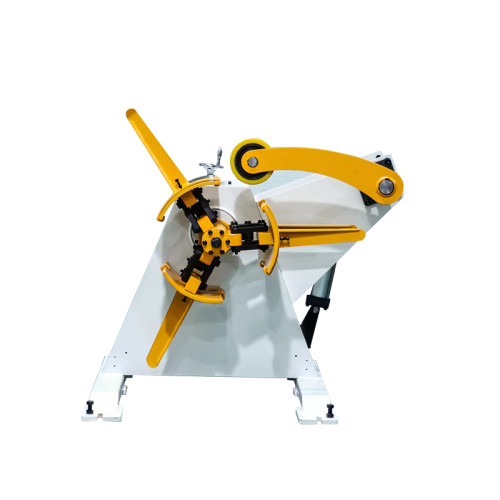
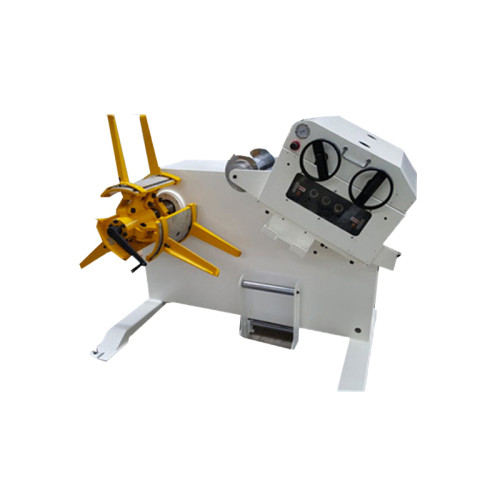
The second is one decoiler on a traversing base, running on rails between two press centre lines. The machine moves; the coil stays loaded until the strip is finished.
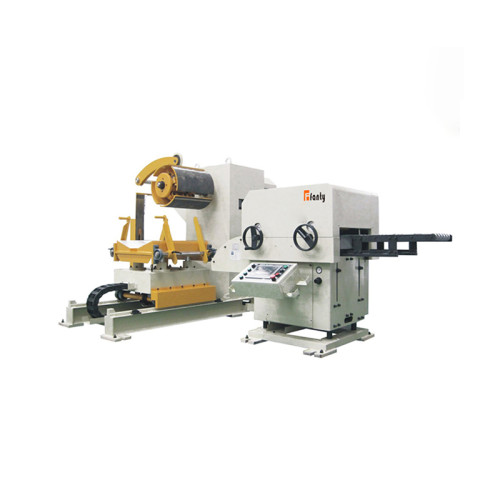
The third is one decoiler feeding a strip accumulator, which then splits to two lines through a diverter. This is the only arrangement that can feed both presses at the same moment, and only for a limited time.
Each one answers a different question. Two uncoilers answer "how do we never wait". A traversing base answers "how do we avoid buying a second machine".
An accumulator answers "how do we keep the second press running during a coil change".
Getting the question wrong is expensive, because the three options differ by a factor of nearly two on capital cost and by an order of magnitude on changeover discipline.
What Traversing Between Two Presses Really Costs
A traversing base needs a rail bed that carries the full coil load plus the machine, and that bed has to be level to about 0.2 mm over its length or the base binds.

An 8-tonne coil on a 3.5 m rail run needs a foundation slab of its own, usually 400 mm thick with a 2 m apron each side. That is poured work in the middle of a press bay, and it is not reversible.
Re-datumming is the cost nobody models. Moving the base is mechanical and takes four minutes. Re-establishing the strip path, the loop and the guide setting on the second press takes another fifteen to twenty.
So a traversing decoiler is a time-sharing device. It does not let two presses run together; it lets one press run while the other waits, with a 20-minute handover between them.
That is perfectly adequate when the second press runs one shift and the first runs three. It is a disaster when both presses are scheduled at 85% utilisation, because the handovers land in the busiest hour.
Strip path geometry decides the rail length. Below six metres between press centre lines, the loop can be managed with a pit.
Above eight metres the strip sags enough to need a support roller, and that roller needs its own alignment.
Where an Accumulator Buys You Time
An accumulator holds strip, not time, and the conversion is where most proposals fall apart. Size it in metres and then divide by line speed.
A 40 m accumulator on a line running 300 mm pitch at 120 strokes a minute consumes 38 m every minute. Forty metres of buffer therefore covers 63 seconds of production.
Sixty-three seconds does not cover an eighteen-minute coil change.
What it covers is the gap between the old coil running out and the new coil being threaded, if a second operator is already standing at the uncoiler.
That is a genuine gain in a plant with a coil car and a trained helper. It is worth nothing in a plant where the same operator runs both the press and the coil change.
The diverter is the hidden cost. Splitting one strip path into two needs a powered diverter, two sets of guides and a control interlock that prevents both lines from demanding strip at once.
Interlocks are where accumulator projects overrun. The mechanical part is a known quantity; the control logic that decides which press has priority is written once, for your plant, and debugged on site.
Layout Rules That Decide It Before Price Does
Four layout numbers eliminate most of the debate. Distance between press centre lines, available rail or pit length, crane coverage over both coil positions, and the walking route between the two operators.
If the presses are more than eight metres apart, a traversing base stops being practical and the choice collapses to two uncoilers or an accumulator.
If the crane cannot reach both coil loading positions, every change needs a forklift move, and that adds ten minutes to a cycle you were trying to shorten.
If one operator cannot see both press control stations from the coil position, you need two people, and the labour saving that justified the project disappears.
The specification sequence for the machine itself — capacity, type, mandrel, control — is set out in the coil line guide library, and it applies unchanged whether the machine is fixed or traversing.
| Arrangement | What it gives the run | Where it costs you | Capex index |
|---|---|---|---|
| Two uncoilers | Both presses fully independent, no handover | Double the floor, double the maintenance, two operators at coil change | 100 |
| One decoiler on rails | One machine, one mandrel, one maintenance route | 15–25 min re-datum per switch; rails and slab in the bay | 65–70 |
| Decoiler plus accumulator | Up to 60 s of buffer at production speed | Diverter, interlock logic, and a buffer too small for a full change | 160–180 of one unit |
The index is against two comparable uncoilers at 100. Note that the accumulator option is priced against one machine and still costs more than two, which is why it rarely wins on a simple payback test.
Five questions come up in every one of these layout meetings, and the answers are what usually settle the argument.
Can one decoiler keep two presses running at the same time?
Only with an accumulator, and only for about 60 seconds at production speed. A 40 m buffer covers 63 seconds on a line consuming 38 m a minute, which is not a full coil change.
How far apart can two presses be and still share a decoiler?
Six to eight metres between centre lines for a traversing base. Beyond eight metres the strip sags enough to need a support roller, and the rail foundation cost climbs sharply.
How long does a traversing decoiler take to switch presses?
Fifteen to twenty-five minutes: four minutes of travel, ten to fifteen of re-datumming the strip path, and a first-part check. Two switches a shift removes about 40 minutes of press time.
Is one 8-tonne decoiler cheaper than two 5-tonne units?
Yes, at roughly 65–70% of the capital cost, before rails and foundations. It becomes the more expensive option the moment one bearing failure stops both presses for a shift.
Does a 3.5 m rail run need its own foundation?
Yes. Expect a 400 mm slab with a 2 m apron at each end for an 8-tonne coil, level to about 0.2 mm over the run. Cutting that into an existing bay is the single largest hidden cost.
The Cases Where One Decoiler Cannot Work
Sharing fails when the two presses need different materials at the same time. One uncoiler holds one coil, and no amount of rail changes that.
It fails again when the two jobs need different strip tension. A 0.6 mm panel job and a 3 mm bracket job want different brake settings, and a shared machine means re-setting between them every switch.
The single point of failure is the argument that kills the idea in high-volume plants. One bearing failure on the shared uncoiler stops two presses, and the cost of that stoppage is measured in four figures an hour.
Safety is the last constraint and the one most often glossed over. Two operators working at one coil, with a press running six metres away, needs a physical guard and a clear procedure, not just a painted line.
Where the numbers mislead. A payback calculation built on the second press running at 30% utilisation will look excellent.
Run that press at 80% and the same model turns negative, because the handovers now collide with production.
Pricing the Three Options Honestly
Price the two-uncoiler option first, even if you do not intend to buy it. It is the only number that tells you what the sharing premium is actually buying.
Then add the installation cost of the rails or the pit, which never appears on the machine quotation and usually runs 8–12% of the machine price in a finished bay.
Then add the labour model. A shared arrangement needs a second person at every change unless the coil car is automated, and that is a recurring cost, not a one-off.
Compare the three totals over five years, not over the purchase order. The cheapest machine on the quotation is rarely the cheapest arrangement on the floor.
- Machine price for the arrangement you actually want, plus the second uncoiler you did not intend to buy
- Rails, pit or foundation work, quoted by a civil contractor rather than estimated from the machine drawing
- Labour model for a second person at every coil change, priced as an annual cost and not as a one-off
- Control integration for a diverter and its priority logic, which is always site-specific
Where to go next
This sits in the decoiler cluster, under the specification pillar that covers capacity, type, mandrel and control.
If you are still fixing the machine itself, that page is the better starting point than a layout drawing.
Read the decoiler specification guide