Why Does a Coil Line Draw More Power Than Its Nameplate?
A coil line rated 45 kW will almost never pull 45 kW. It will pull 20 to 26 kW for most of a shift, spike past 70 kW for two seconds, and then hand you a demand charge set by that spike.
Buyers who size the supply from the nameplate alone either overpay for a transformer or spend their first year resetting breakers.
What follows is the arithmetic we go through with purchasers before they sign a utility connection. It comes from commissioning logs on more than 200 coil lines FANTY has put into production across 60+ countries.
Where the Extra Kilowatts Come From
A nameplate figure is a sum, not a measurement. Somebody adds up every motor on the machine and prints the total on a plate.
Nothing in that number accounts for duty cycle, power factor, or the fact that two motors rarely peak together.
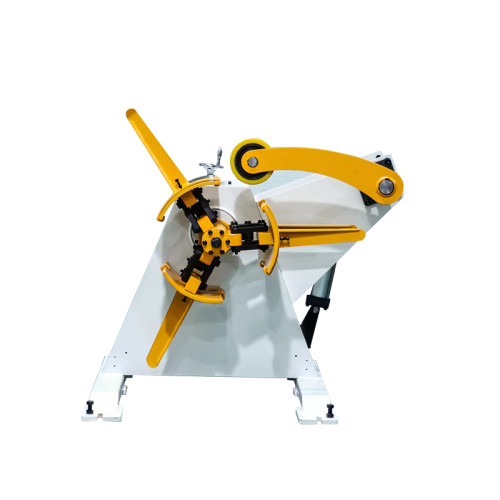
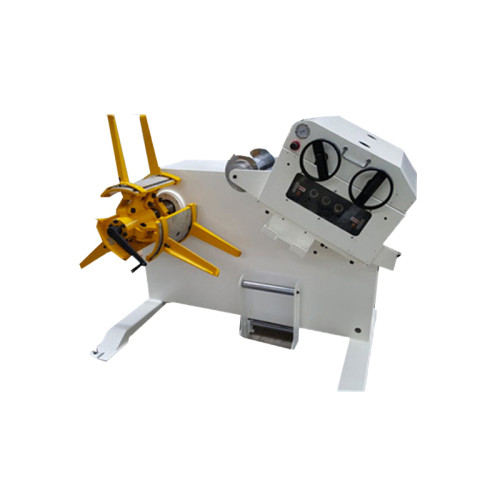
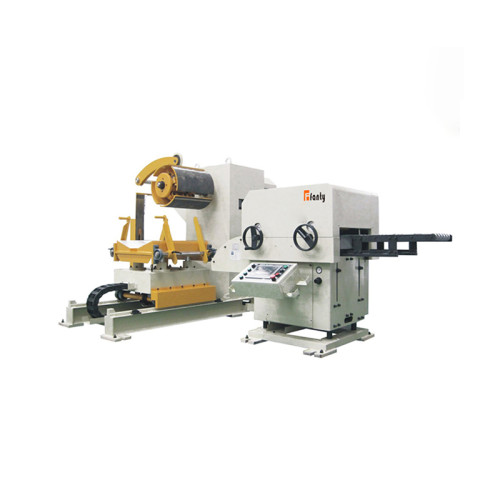
Take a 1,300 mm three-in-one line as a working example. The decoiler drive is 7.5 kW. The feed and straighten servo pair is 22 kW. The hydraulic power unit is 11 kW. The coil car is 4 kW.
That totals 44.5 kW, and the machine ships described as a 45 kW line.
Run the same line at 200 SPM on 1.2 mm CR with a 60 percent duty cycle and the average draw settles between 20 and 26 kW.
The nameplate overstates steady draw by roughly 40 percent, and it understates the peak by a factor of two or three.
Both errors cost money. Sizing the supply to the average gives you nuisance trips.
Sizing to the nameplate gives you a transformer and a cable run that were never needed, and a utility contract you cannot easily renegotiate.

Which Loads Sit at Full Draw All Day
Four loads dominate the idle bill, and only one of them is doing useful work while it draws.
The hydraulic power unit. A fixed-displacement pump with a relief valve runs continuously and dumps pressure over the relief when nothing is moving. On an 11 kW unit that is 7 to 11 kW of heat for hours.
A pressure-compensated pump or a servo pump drops to 1 or 2 kW at rest.
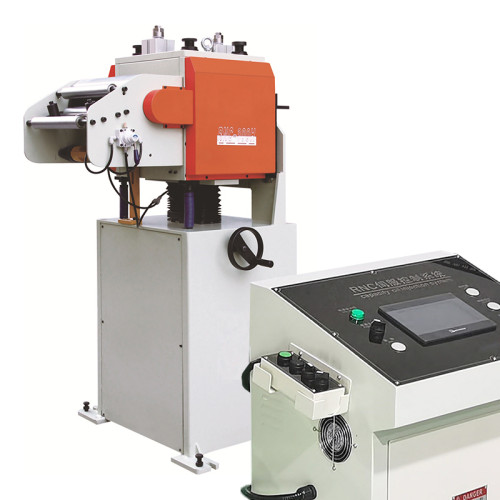
Cabinet cooling. Servo drives and transformers need air conditioning in most climates. That unit runs whenever the line is powered, not whenever it is producing, and it typically draws 1.5 to 3 kW.
Controls, HMI and lighting. Small individually, consistent in total. Budget 1 to 2 kW for the panel, the screen, the tower light and the work lights over the line.
Decoiler brake or regeneration. Back tension is created by converting strip motion into heat. On a 1,250 mm coil running at 30 m/min that is 2 to 4 kW that never appears on any motor rating.

How to Measure Real Draw Without a Power Analyser
A clamp meter with min, max and average capture is enough for a decision, provided you measure three states rather than one.
State one is powered but idle: main breaker closed, no strip threaded, hydraulics at rest. State two is running empty with the rolls closed on nothing. State three is running under load at production speed.
Clamp each outgoing breaker in the line's own panel, not the building main. Hold each state for at least fifteen minutes and record the average. The gap between idle and running is your process load.
The idle figure is what you pay for the 6,000 hours a year the line is powered but not producing.
Use a true-RMS meter with a low-pass filter when you clamp a cable feeding a drive.
A basic meter on a PWM output reads 10 to 30 percent off in either direction, and the error is not consistent enough to correct afterwards.
If the plant already has sub-metering, one shift of kWh logging beats any instantaneous reading. It captures the coil changes, the lunch stop and the die repair that a fifteen-minute sample misses.
Does a 45 kW coil line need a 45 kW supply?
No. Size to 1.25 times the coincident peak in kVA, not to the nameplate. On a typical 45 kW line that lands near 50 kVA, and a 45 kW supply will hold it if the hydraulic pump is soft-started.
How much does a coil line add to the bill over 4,000 production hours?
At 22 kW average, 4,000 hours is 88,000 kWh. At USD 0.11 per kWh that is about USD 9,700 a year, before demand charges and before the idle hours are counted.
Is idle draw really 30 percent of running draw?
On a hydraulic-heavy line, yes, and sometimes more. We have logged 8 kW idle against 24 kW running on an 11 kW pump arrangement, which is a third of the production figure burned while nothing moves.
Can a 30 kW supply run a 45 kW line at 150 SPM?
Usually, if the coil car and the pump are interlocked so they cannot start together. Without that interlock the same line trips a 30 kW breaker roughly once a week.
Why a 45 kW Line Trips a 30 kW Supply
Three things happen at once during a start, and only one of them shows up in the average.
A direct-on-line hydraulic pump pulls six to eight times its full-load current for half a second to two seconds. A servo axis accelerating a heavy coil pulls its rated current plus the inertia term.
A coil car lifting a two-tonne coil adds its own starting surge.
Diversity saves you most of the time. Not every load peaks together, so the design figure is the sum multiplied by 0.6 to 0.8. That is why a 30 kW supply usually survives a 45 kW line.
What breaks it is power factor. At 0.87, 30 kW of real power needs 34.5 kVA, and a supply sold as 30 kW is rarely 34.5 kVA of capacity once cable drop and transformer impedance are counted.
Three fixes work, in order of cost. Sequence the loads so the coil car cannot start while the pump is loading. Fit a soft starter or a star-delta on the pump. Then, and only then, buy more supply.
What the Utility Connection Should Be Sized For
The table below is the version we hand to a customer's electrical contractor. Column three is the part most sizing sheets leave out.
| Load on the line | What it actually draws | Where it costs you |
|---|---|---|
| Hydraulic power unit | 7 to 11 kW continuous on a fixed-displacement pump; 1 to 2 kW idle on a pressure-compensated unit | Pump upgrade costs money up front and pays back on idle hours only if the line runs single-shift |
| Feed and straighten servo | 8 to 14 kW average, 22 kW on acceleration | Peak sets the supply size even though it lasts two seconds |
| Decoiler drive or brake | 2 to 7 kW depending on coil mass and tension | Regenerative braking returns energy only if the drive has a braking resistor and the meter runs both ways |
| Cabinet cooling and controls | 2 to 4 kW whenever the line is powered | Runs through every stoppage, every break, every weekend |
| Coil car | 4 kW, intermittent, high starting surge | Interlock sequencing is cheaper than a bigger transformer |
Size to 1.25 times the coincident peak in kVA. Ask the builder for the peak, not the nameplate, and ask for the interlock list that goes with it. A supplier who cannot produce either has not commissioned many lines.
What a Nameplate Cannot Tell You
The limits of this arithmetic matter as much as the arithmetic itself, and they are the reason a quote should never be accepted on a kW figure alone.
A nameplate carries no duty cycle. Two lines with identical totals can differ by 40 percent in annual consumption because one runs 200 SPM on thin stock and the other runs 90 SPM on 4 mm.
It carries no harmonic content either. Drive-heavy lines inject distortion that heats transformers and neutral conductors without showing up as extra kW on a clamp meter.
Demand charges are the other blind spot.
Most industrial tariffs bill the highest fifteen-minute average in the month, so a single bad start can set the month's charge regardless of how efficient the rest of the shift was.
And a reading taken at the building main tells you nothing about one line. If the press, the compressor and the welders share the panel, the number belongs to the building, not to the machine you are evaluating.
What to Put in the Power Supply Clause
Four items belong in the purchase contract, and none of them are usually there.
- Coincident peak in kVA, stated as a number, with the interlock list that produces it.
- Idle draw at the control cabinet, measured at the factory test, not estimated from the motor list.
- Power factor and expected harmonic distortion, so your contractor can size the cable and the filter.
- The utility connection you are expected to provide, in writing, including whether the pump is soft-started.
Every one of these is cheaper to negotiate than to fix. A 45 kW line that trips its supply in week one costs more in lost production than the transformer would have.
The machine specification itself is worth reading alongside the electrical data.
The equipment specification index lists the drive and hydraulic options by model, which is where the idle-draw difference between two quotes usually hides.
Where to go next
Power draw is one line item in the larger question of which specifications earn their cost and which are simply carried. The cluster's cost pillar takes each specification line apart and puts a number against it.
Read the coil line specification cost guide