Why Does Strip Buckle Between the NC Servo Feeder Rolls?
The operator called it a feeding problem. The strip was bowing up between the last feed roll and the die entry, about 0.6 mm of lift in the middle of a 250 mm feed, and it happened on roughly one stroke in fifteen. Parts were still within tolerance most of the time, which is exactly why the line kept running for three weeks before anyone called it in.
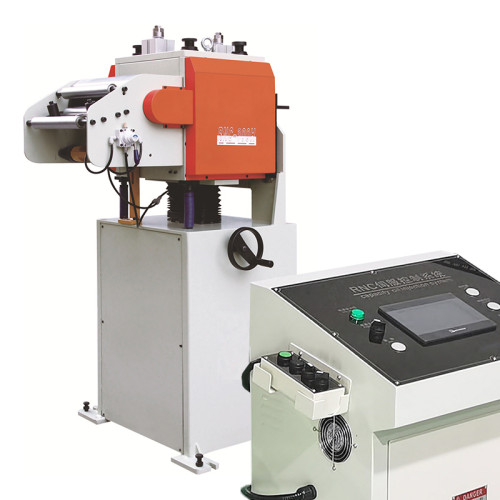
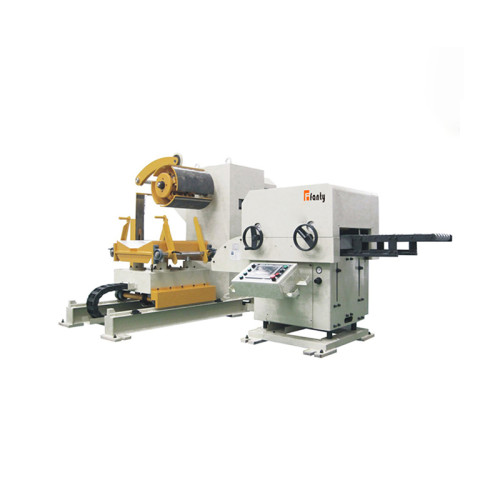
By the time I got there, two people had already adjusted the roll pressure twice in opposite directions. Both were wrong, and both had made the problem harder to find. Buckling between the rolls is never the fault itself. It is the visible result of an imbalance between the force pushing strip forward and the resistance holding it back, and on an NC Straightener Feeder there are five places that imbalance can come from. This is the sequence I use to isolate them, and it works on a 3-in-1 decoiler straightener feeder as well as on a standalone unit. Our NC servo feeder range is built to hold ±0.05 mm, and buckling is the most common reason a line stops achieving that.
Buckling Is a Symptom, Not a Fault
Strip is a column in compression whenever the feeder pushes it and something downstream resists. A short column buckles at a much higher load than a long one, which is why the distance between the last feed roll and the die entry matters more than most people expect.
Two conditions have to be true for a buckle to appear. The compressive load must exceed the strip's critical buckling load, and there must be somewhere for the strip to go — a free span without support. Remove either condition and the buckle disappears, even if the underlying imbalance remains.
That gives you two families of fix: reduce the compressive load, or shorten and support the free span. Diagnosis is about deciding which one your line needs.
Roll Pressure: The Most Common Cause
This is where both of my predecessors went wrong, in opposite directions.
Too little pressure lets the strip slip during acceleration. The drive commands 250 mm, the rolls deliver 249.4 mm, and the strip stops short. Nothing buckles, but feed accuracy fails.
Too much pressure is the buckling cause. Excessive roll force pinches the strip and drags the surface, and more importantly it creates a hard grip that lets the servo drive push far harder than the strip needs. The compressive load in the free span rises, and once it passes the critical value, the strip lifts.
On 0.4 mm cold-rolled steel, the usable window between slip and buckle is narrower than most operators assume. A pressure setting that works at 0.8 mm will buckle 0.4 mm strip every time.
The right setting is the lowest pressure that holds feed accuracy at full acceleration. Not the highest the regulator allows.
Roll Gap and Alignment Errors
A roll gap that is not parallel across the strip width creates a differential feed. One edge travels slightly further than the other, and the strip leaves the feeder with a small angular error that shows up as a diagonal buckle rather than a centred one.
Look at the shape of the buckle before you touch anything. A centred buckle suggests a load problem. A buckle that sits toward one edge, or a strip that snakes rather than bows, points at alignment.
- Check roll parallelism with a feeler gauge at three points across the width. A 0.02 mm difference is enough to matter on thin strip.
- Confirm the strip enters square. A strip that runs against one guide rail arrives at the die at an angle and buckles predictably at the same station every stroke.
- Inspect roll condition. A flat spot or a polished band on one roll changes the effective grip across the width and produces the same signature as a misaligned gap.

Back Tension and Loop Control
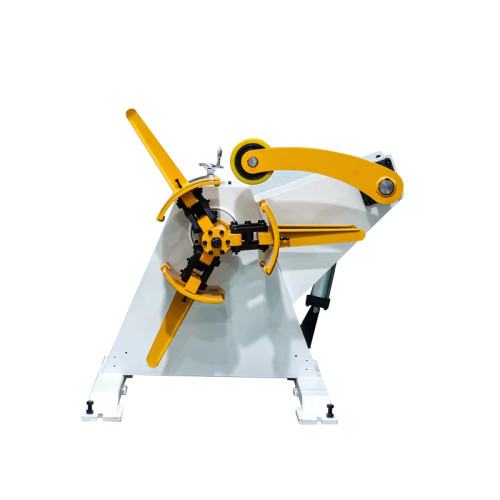
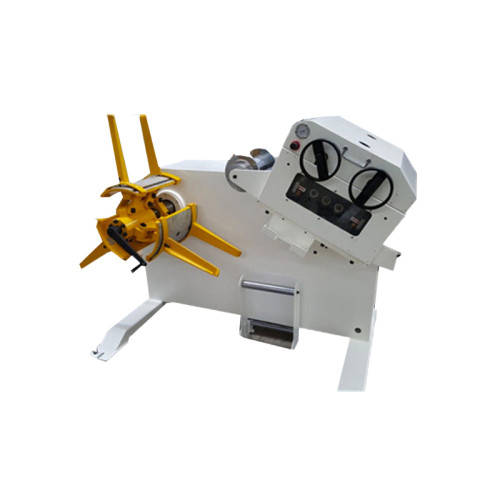
If the decoiler is holding back harder than it should, the feeder has to overcome that drag on every stroke. That drag adds directly to the compressive load in the free span.
Back tension has a legitimate job. It keeps the loop from ballooning and stops the coil from unwinding on its own. The problem is that the required tension scales with coil weight, and a brake set for a full 1,500 kg coil is far too strong for the last 200 kg of that same coil. Operators rarely reset it between coils.
A quick field test: run one coil with the brake backed off to the minimum that still prevents coil rotation at rest. If buckling reduces or disappears, back tension was contributing. Then set it properly rather than leaving it loose.
Loop sensor position matters too. A sensor that holds a very short loop keeps the strip under constant tension but leaves almost no buffer, so every acceleration spike is transmitted straight into the free span.
Thin Strip and Long Feed Lengths
Critical buckling load falls with the cube of thickness. Halve the thickness and the strip becomes roughly eight times easier to buckle. This is why a line that runs perfectly at 1.2 mm starts lifting strip the day someone loads 0.5 mm material, even with every setting unchanged.
Feed length works the other way. A longer feed means a longer unsupported span between the feeder and the die, and critical load falls with the square of span length. Doubling the free span cuts the buckling threshold to about a quarter.
Put those two together and you have the real explanation for most "it only happens on this job" complaints: thin material plus a long feed.
A Six-Step Diagnosis Sequence
Work through these in order. Each step takes minutes, and stopping at the first step that shows a change saves you from adjusting four things at once.
- Step 1 — Measure the buckle. Height, position across the width, and which stroke in the cycle. Shape tells you more than size.
- Step 2 — Log feed accuracy. Compare commanded against actual position. If accuracy is fine at full pressure, the pressure is not the problem.
- Step 3 — Reduce roll pressure in 0.2 bar steps until slip appears, then come back up one step. That is your setting.
- Step 4 — Back off the decoiler brake to minimum and retest. A change here confirms back tension as a contributor.
- Step 5 — Shorten the free span. Add a support roller or move the feeder closer to the die and retest.
- Step 6 — Soften the motion profile. Stretch acceleration time by 15 percent and see whether the buckle survives.
On the line I opened this article with, Step 3 found it. Roll pressure had been set for the previous job's 1.2 mm material and never changed. Dropping it by 1.4 bar removed the buckle entirely, and feed accuracy at full speed actually improved.
Matching Symptom to Cause
Use this table as a starting point when you have a few minutes and no data logger.
| What you see | Likely cause | First check |
|---|---|---|
| Centred buckle, every stroke | Roll pressure too high | Reduce pressure in 0.2 bar steps |
| Buckle toward one edge | Roll gap not parallel | Feeler gauge at three points |
| Buckle only on thin material | Pressure set for thicker stock | Compare pressure to the last job card |
| Buckle only at high speed | Motion profile too aggressive | Extend acceleration time 15% |
| Buckle after a coil change | Back tension reset needed | Back the brake off and retest |
| Buckle with strip snaking | Strip not entering square | Check guide rail contact and strip edge |
| Intermittent buckle, no pattern | Coil set varying through the coil | Check flatness at start and end of coil |
Questions Operators Ask
Is more roll pressure always better for accuracy?
No, and this is the most expensive misconception on a coil line. Pressure above what the strip needs adds nothing to accuracy and pushes the strip closer to its buckling limit. Set the minimum that holds position at full acceleration.
Why does the buckle only show up above 150 SPM?
Because acceleration rises with speed. The compressive load the drive applies during the acceleration phase grows, and once it crosses the critical value the strip lifts. Below that speed the same setting is fine, which is why the problem seems speed-related when it is really load-related.
Will a support roller fix it permanently?
It shortens the free span, which raises the buckling threshold. That may be enough. If the underlying load imbalance is large, a support roller only moves the failure point to a higher speed.
Can a worn feed roll cause buckling?
Yes, indirectly. A polished or flat-spotted roll grips unevenly, so the drive compensates with more force on the section that still grips. The result is a buckle that appears in a repeating pattern tied to roll rotation.
Does straightener setting affect buckling?
It can. An over-straightened strip carries residual stress that changes its effective stiffness, and a badly set straightener can also introduce a slight curve that encourages the strip to lift. Confirm flatness off the straightener as part of the diagnosis.
A line that runs at 200 SPM without buckling is not running at the edge of its capability — it is running with the roll pressure, back tension and motion profile all matched to the material in the machine. That matching is the whole job, and it takes an afternoon rather than a week once you know which knob to turn first.
Strip Buckling on Your Coil Line?
Send us your strip thickness, feed length and current settings. Our engineers will tell you which of the five causes is most likely and what to change first.
Get a Diagnosis From Our Engineers